 ZS Laser Equipment
Advanced Laser Cladding Solutions for Surface Enhancement and Component Repair
Laser overlay cladding is an advanced surface engineering technology widely used to improve the wear resistance, corrosion resistance, and service life of industrial components. By using a high-energy laser beam to melt alloy powder onto a substrate surface, a dense metallurgical bonding layer can be formed with excellent mechanical and chemical properties.
Compared with traditional hardfacing and thermal spraying processes, laser cladding provides higher precision, lower heat input, and superior bonding strength. It has become an increasingly important technology in industries such as oil and gas, power generation, mining, heavy equipment manufacturing, and mold repair.
ZS Laser provides reliable Laser Overlay Cladding Machines designed for industrial production, component repair, and surface reinforcement applications.
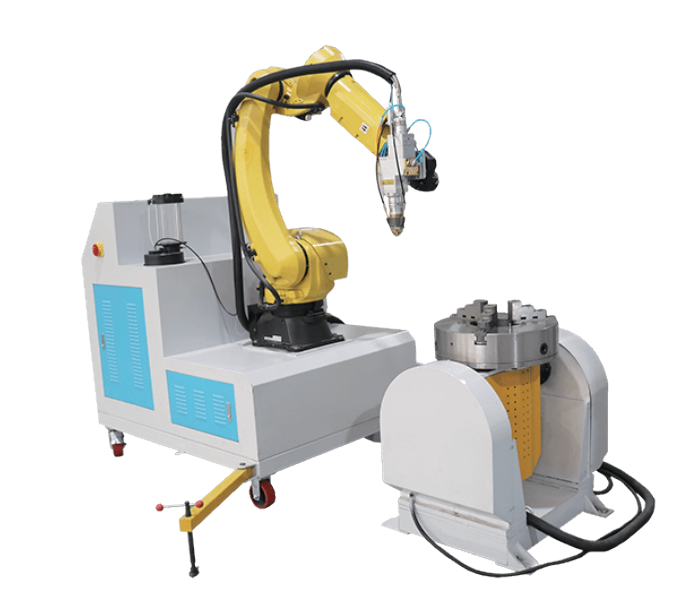
Robot Laser cladding machine
What Is Laser Overlay Cladding?
Laser overlay cladding, also known as laser cladding or laser metal deposition, is a process in which metal powder or wire is melted by a high-energy laser beam and deposited onto the surface of a base material.
During the process, the laser creates a localized molten pool on the substrate surface while alloy powder is simultaneously delivered into the melt pool through a controlled powder feeding system. As the molten material solidifies, it forms a dense cladding layer that is metallurgically bonded to the base material.
This process allows manufacturers to either repair worn components or enhance the surface properties of new parts without affecting the overall structure of the base material.
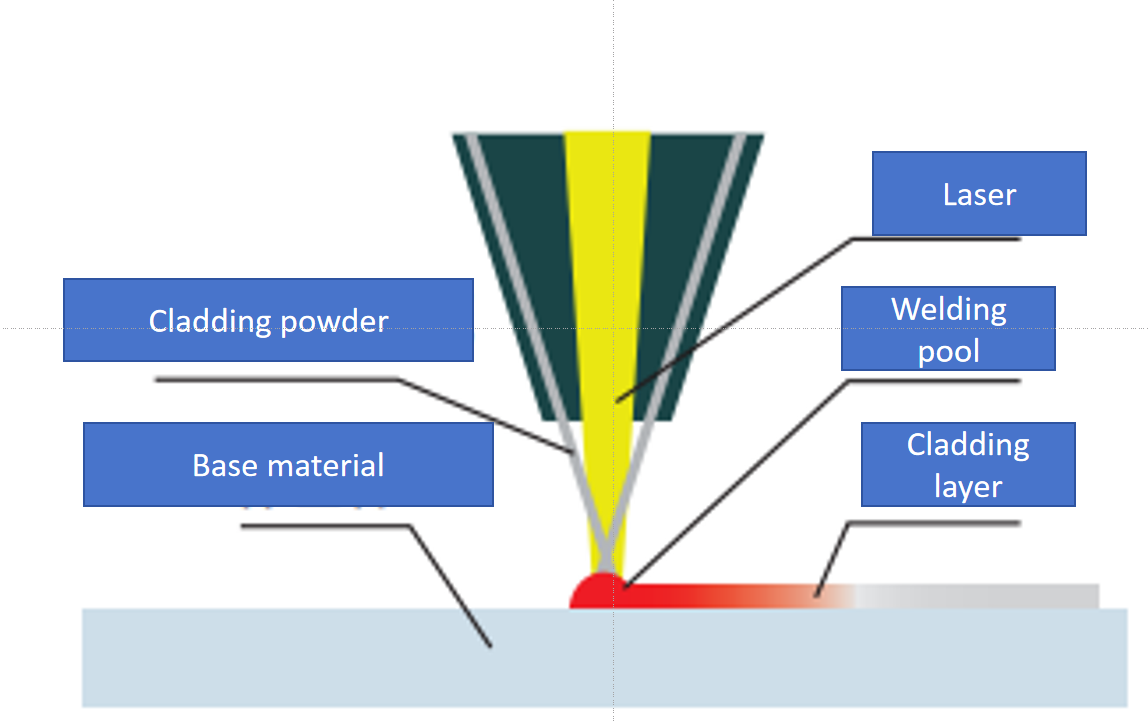
Laser cladding schematic diagram
How Laser Cladding Works
The laser cladding process typically consists of several key steps:
Laser Energy Generation
A high-power fiber laser produces a focused beam that creates a localized molten pool on the surface of the substrate.
Powder Feeding
Alloy powder is delivered into the melt pool through a precision powder feeder and cladding head.
Metallurgical Fusion
The powder particles melt together with a thin layer of the substrate, creating a metallurgical bond between the cladding layer and the base material.
Solidification and Layer Formation
After the laser passes, the molten material rapidly solidifies to form a dense, wear-resistant coating.
This precise thermal control results in minimal dilution and excellent bonding quality.
Key Advantages of Laser Cladding Technology
Laser cladding offers several important advantages compared with traditional overlay welding and coating processes.
Strong Metallurgical Bonding
Unlike thermal spraying methods that rely mainly on mechanical adhesion, laser cladding produces a true metallurgical bond between the coating and the substrate. This ensures high bonding strength and long-term durability.
Minimal Heat Affected Zone
Laser cladding uses highly localized heat input, which significantly reduces the heat affected zone. This minimizes distortion and maintains the structural integrity of the component.
Precise Material Deposition
The process allows accurate control of cladding thickness and width, enabling precise surface reinforcement without excessive material usage.
Improved Surface Properties
Cladding layers can significantly enhance:
Wear resistance
Corrosion resistance
High-temperature resistance
Oxidation resistance
Efficient Material Utilization
Compared with traditional hardfacing processes, laser cladding uses materials more efficiently, reducing waste and lowering operational costs.
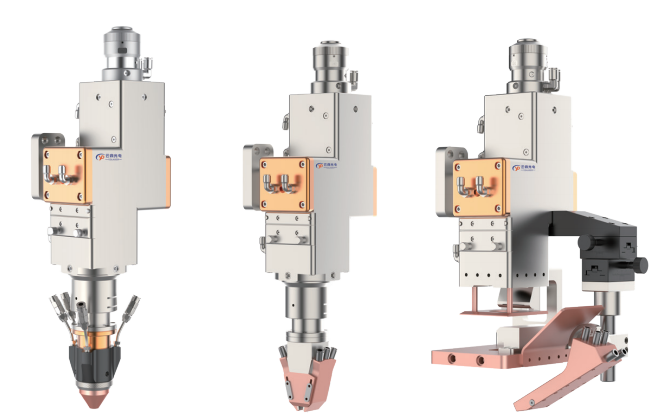
Multiple cladding head options
Materials Used in Laser Cladding
Laser cladding technology supports a wide range of base materials and alloy powders.
Common Base Materials
Carbon steel
Stainless steel
Alloy steel
Cast iron
Tool steel
Typical Cladding Materials
Nickel-based alloys
Cobalt-based alloys
Iron-based alloys
Tungsten carbide reinforced powders
Stainless steel powders
The choice of cladding material depends on the specific application requirements such as wear resistance, corrosion protection, or high-temperature performance.
Typical Applications of Laser Overlay Cladding
Laser cladding is widely used in many industrial sectors where components operate under harsh conditions.
Oil and Gas Industry
Laser cladding is commonly used to enhance the durability of components exposed to corrosion and wear.
Typical applications include:
Valve sealing surfaces
Pump shafts
Drill tools
Pipeline components
Power Generation Industry
Power plant equipment often requires protection against high temperature and erosion.
Common applications include:
Turbine components
Boiler parts
High-temperature mechanical components
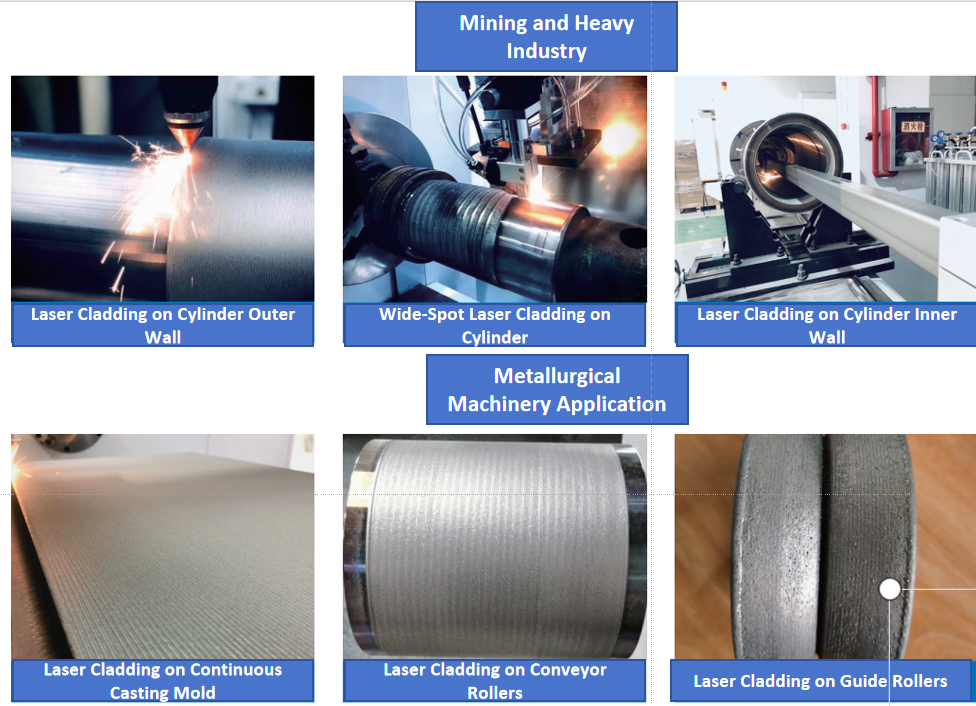
Laser Cladding Application
Mining and Heavy Industry
Mining equipment experiences severe abrasion during operation. Laser cladding can extend the service life of key components.
Typical applications include:
Wear-resistant rollers
Crushing equipment parts
Conveyor components
Mold and Tooling Repair
Laser cladding is widely used for repairing expensive molds and tools, restoring their original dimensions and functionality.
Applications include:
Injection molds
Die casting molds
Stamping tools
Hydraulic and Mechanical Components
Many hydraulic parts benefit from surface reinforcement through laser cladding.
Typical components include:
Hydraulic rods
Cylinder surfaces
Mechanical shafts
Types of Laser Cladding Systems
Depending on the application requirements, different system configurations can be used.
CNC Laser Cladding Machines
These systems are suitable for cylindrical or shaft-type components and provide precise control of deposition paths.
Robotic Laser Cladding Systems
Robot-based systems offer greater flexibility for complex three-dimensional components and irregular surfaces.
Automated Laser Cladding Production Lines
For high-volume manufacturing environments, automated systems can integrate cladding, inspection, and finishing processes.
Key Components of a Laser Cladding Machine
A complete laser cladding system typically includes the following major components:
Fiber Laser Source
Provides stable high-power laser energy required for the cladding process.
Powder Feeding System
Ensures precise and consistent delivery of alloy powder into the melt pool.
Laser Cladding Head
Focuses the laser beam and directs powder into the melt pool.
CNC Motion System
Controls the movement of the laser head and workpiece with high positioning accuracy.
Cooling System
Maintains stable operating temperatures for the laser source and optical components.
Control Software
Manages process parameters, motion control, and system monitoring.
Technical Specifications
Typical specifications for industrial laser cladding machines include:
| Parameter | Typical Range |
| Laser Power | 1000W – 15000W |
| Machine Appearance | Customized according to the processed products |
| Laser Source | Fiber/semiconductor/semiconductor fiber-coupled laser |
| Type of cladding head | Multiple options available as needed |
| Positioning Accuracy | ±0.03 mm |
| Motion Axes | 3 – 6 axes |
Specifications may vary depending on machine configuration and application requirements.
Laser Cladding vs Traditional Hardfacing
Compared with traditional hardfacing processes such as TIG welding or plasma transferred arc (PTA) cladding, laser cladding offers several advantages.
| Process | Heat Input | Dilution | Precision |
| TIG Overlay | High | High | Medium |
| PTA Cladding | Medium | Medium | Good |
| Laser Cladding | Low | Low | Excellent |
Laser cladding produces a cleaner and more controlled coating layer while minimizing deformation and dilution.
Why Choose ZS Laser Laser Cladding Machines
ZS Laser focuses on developing reliable laser processing equipment for industrial applications.
Our laser cladding systems are designed with:
Stable fiber laser sources
High-precision powder feeding systems
Advanced CNC motion control
Flexible system configurations for different applications
We provide customized solutions based on customer requirements and component characteristics.
Customization Options
Different industries may require different machine configurations. ZS Laser offers customization options including:
Robotic integration
Rotary axis for cylindrical components
Multi-axis motion systems
Automatic powder feeding systems
Vision alignment systems
These options allow the equipment to adapt to various production environments and part geometries.
Application Testing and Technical Support
Before equipment delivery, ZS Laser can provide application testing to ensure the cladding process meets specific performance requirements.
Our support services include:
Process development and testing
Material compatibility evaluation
Operator training
Remote technical support
Contact ZS Laser for Laser Cladding Solutions
If you are looking for a reliable solution to improve wear resistance, corrosion protection, or repair high-value industrial components, laser overlay cladding technology can provide significant benefits.
Contact ZS Laser today to learn more about our Laser Overlay Cladding Machines and explore the best solution for your application.

WhatsApp
Scan the QR Code to start a WhatsApp chat with us.