 ZS Laser Equipment

In today’s metal fabrication industry, automation, precision, and flexibility have become the key factors that determine a company’s competitiveness. As manufacturers demand higher quality, more complex structures, and greater efficiency, laser tube cutting machines have rapidly become core equipment in more and more factories.
Whether you need to cut round tubes, square tubes, rectangular tubes, or open-profile materials—whether your production requires mass manufacturing, complex holes, irregular shapes, or pre-weld preparation—laser tube cutting consistently delivers high-quality cuts ready for direct assembly.
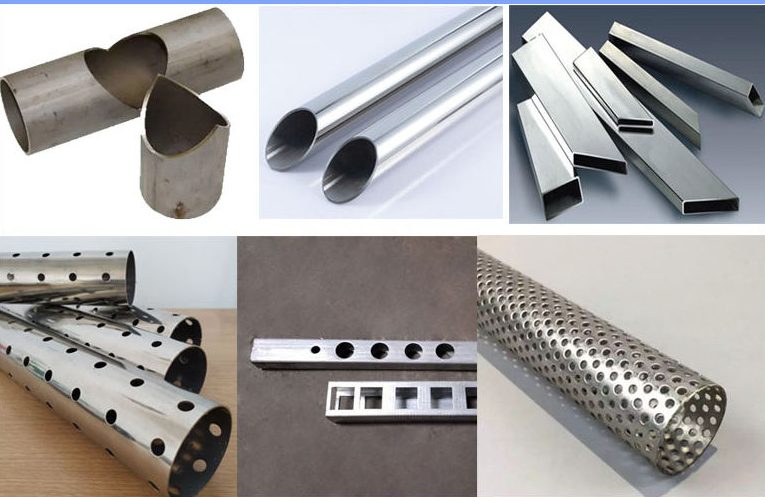
Laser tube cutting samples
This article explains laser tube cutting systematically—from basic principles to equipment types, application scenarios, technical advantages, industry challenges, and practical solutions. After reading, you will clearly understand:
-
What is laser tube cutting? Who is it for? What are the advantages?
-
Why is fiber laser cutting superior to CO₂ laser cutting?
-
Why is tube cutting more complex than flat-sheet cutting? What technologies matter most?
-
How to choose the right laser tube cutting machine?
This is your complete, one-stop guide to everything essential about laser tube cutting.
1. What Is Laser Tube Cutting?
Laser tube cutting uses a laser beam to process metal tubing, enabling:
-
Fixed-length cutting
-
Hole cutting
-
Slotting
-
Complex pattern cutting
-
Chamfering
-
Bevel cutting (3D cutting)
It can process far more than standard round tubes. It is also suitable for:
-
Square tubes
-
Rectangular tubes
-
Oval tubes
-
Irregular-shaped tubes
-
Angle steel, channel steel, and other open profiles (with specialized loading systems)
Laser tube cutting produces clean, burr-free edges with high precision. Parts require no secondary processing and can go directly into welding or assembly.
2. Differences Between 2-Axis and 3-Axis Laser Tube Cutters
2-Axis Cutting (2D Cutting)
Suitable for:
-
Fixed-length cutting
-
Standard hole cutting
-
Simple structural components
Used widely in most standard tube-processing factories.
3-Axis Cutting (3D Cutting)
Supports:
-
Bevel cutting
-
Chamfering
-
High-precision weld-prep cutting
Ideal for automotive structures, furniture manufacturing, mechanical frames, and industries that require high assembly accuracy.
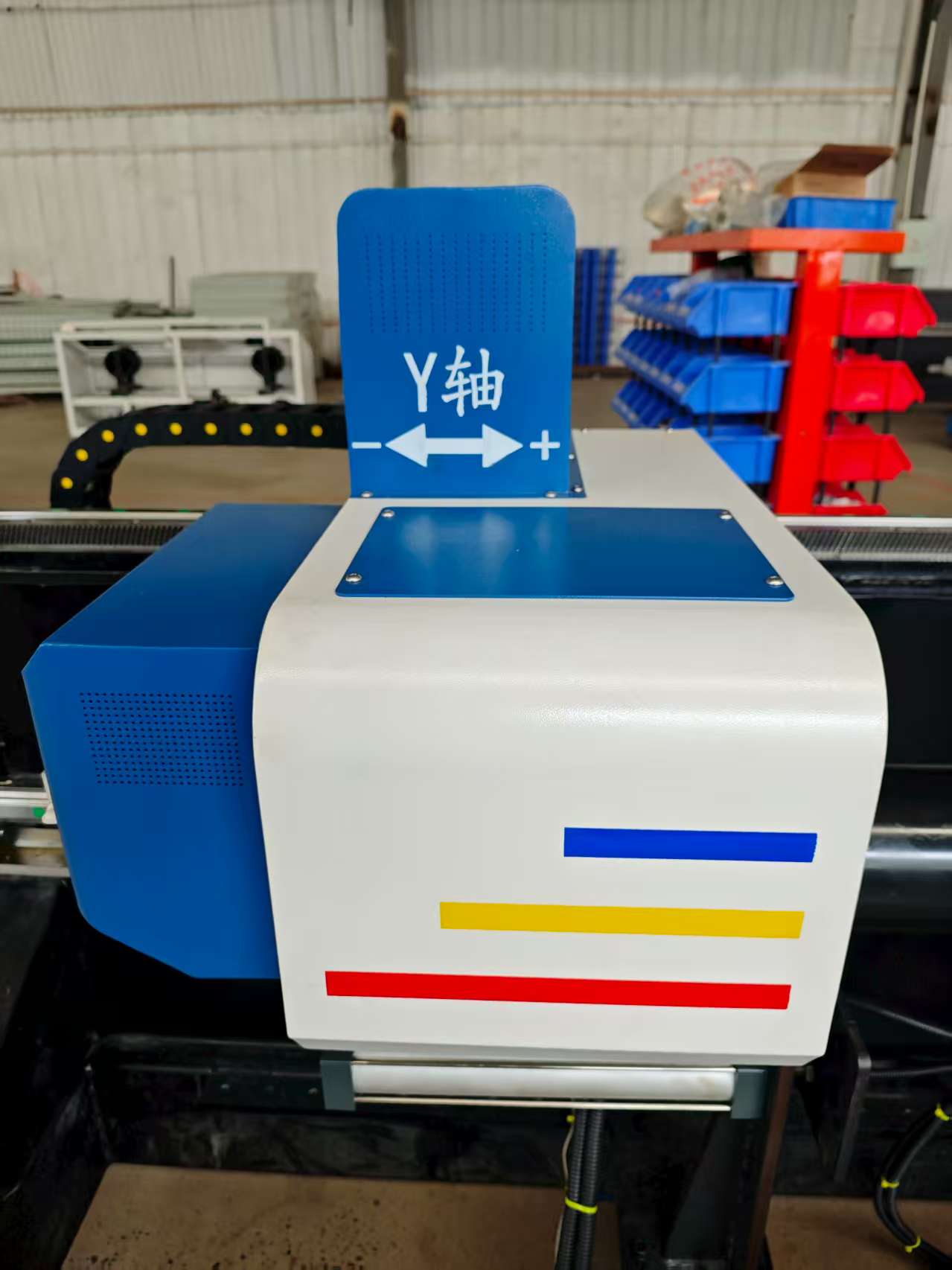
Laser tube cutting machine details
3. When Should You Use Laser Tube Cutting?
For parts that require welding later
Laser cutting provides highly accurate hole and bevel geometry, significantly improving weld strength.
For tubing that must be bent before welding
Laser-cut slots allow for manual bending, reducing the number of parts and the amount of welding required.
For complex shapes or high consistency requirements
Laser cutting is fully automated and ensures excellent repeatability.
When you want fewer post-processing steps and higher productivity
The tube can go straight to assembly or welding without grinding, saving labor and time.
4. Core Advantages of Laser Tube Cutting
1. High Flexibility (Shape, Size, and Thickness Coverage)
Laser tube cutters can handle:
-
Tubes under 1 inch up to 9 inches in diameter
-
Square, rectangular, oval, and irregular profiles
-
Tube lengths of 6–8 meters (20–24 feet)
-
Materials including carbon steel, stainless steel, aluminum, titanium, and copper
Shape, material, and wall thickness are no limitations.
2. Cuts Reflective Materials—Fiber Laser Outperforms CO₂ Laser
The short wavelength of fiber lasers provides high absorption for metals, enabling safe and efficient cutting of:
-
Copper
-
Brass
-
Aluminum
CO₂ lasers reflect easily, posing a high risk to optical components.
Fiber lasers offer additional advantages:
-
Higher energy efficiency (>40%)
-
Lower power consumption
-
More compact size
-
Minimal maintenance (no mirrors, no optical path adjustment)
3. High Efficiency — No Grinding, No Burrs, No Secondary Work
Laser tube cutters combine multiple functions into a single machine:
-
Fixed-length cutting
-
Edge trimming
-
Hole cutting
-
Slotting
-
Complex contour cutting
All without tool changes.
The resulting cuts are clean and ready to weld, meaning:
-
One fewer process → Saves time
-
One fewer workstation → Saves cost
-
Less manual grinding → More stable quality
4. High Precision (Perfect Assembly Without Rework)
Laser tube cutting achieves edge precision up to ±0.1 mm.
With automated clamping and servo drive systems, all parts maintain excellent consistency. Even complex structures fit together precisely, improving welding quality and aesthetics.
5. Reduced Cost (Automation Boosts Productivity)
With an automated cutting workflow:
-
Labor decreases significantly
-
Cutting is faster
-
Material utilization improves
-
Rework rates drop
For small and medium-sized factories, this is one of the fastest ways to increase productivity and competitiveness.
5. Why Is Tube Cutting More Complex Than Sheet Cutting? (Few People Realize This)
Tube cutting presents additional challenges compared to flat-sheet cutting:
1. Tubes are long (typically 6–8 meters)
Requiring automated loading and unloading systems.
2. Tubes naturally bend and may have uneven wall thickness
Requiring smart compensation and automatic correction.
3. Internal weld seams affect hole-cutting accuracy
Weld-seam detection is essential; otherwise, hole positions will shift and cause welding failures.
Advanced systems use:
-
External cameras for detecting external seams
-
Internal cameras for detecting internal seams
-
Automatic piercing-compensation algorithms that adjust power/frequency when passing through seams
This is 10× faster than traditional mechanical probes.
6. Laser Power ≠ Efficiency — Especially in Tube Cutting
Many people mistakenly believe “higher power = better performance.”
In reality:
-
Tube cutting machines typically use ≤5 kW; too much power can cut through the back wall
-
Production cycle time depends on loading + positioning + cutting + unloading, not cutting speed alone
What truly determines productivity:
-
Loading method (bundle loading / step feeding)
-
Weld-seam detection quality
-
Automatic bending-compensation
-
Internal & external seam imaging systems
-
Stability across different material batches
7. Why Laser Tube Cutting Has Become the Industry Standard
In summary, it provides:
✅ Much higher production efficiency
✅ More consistent product quality
✅ Lower labor requirements
✅ Higher material utilization
✅ Higher structural reliability
✅ Greater flexibility for various orders
Whether your industry is automotive parts, furniture, fitness equipment, mechanical frames, agricultural machinery, or steel structures, your core needs are the same:
Higher efficiency, lower cost, and higher quality.
Laser tube cutting achieves all three simultaneously.
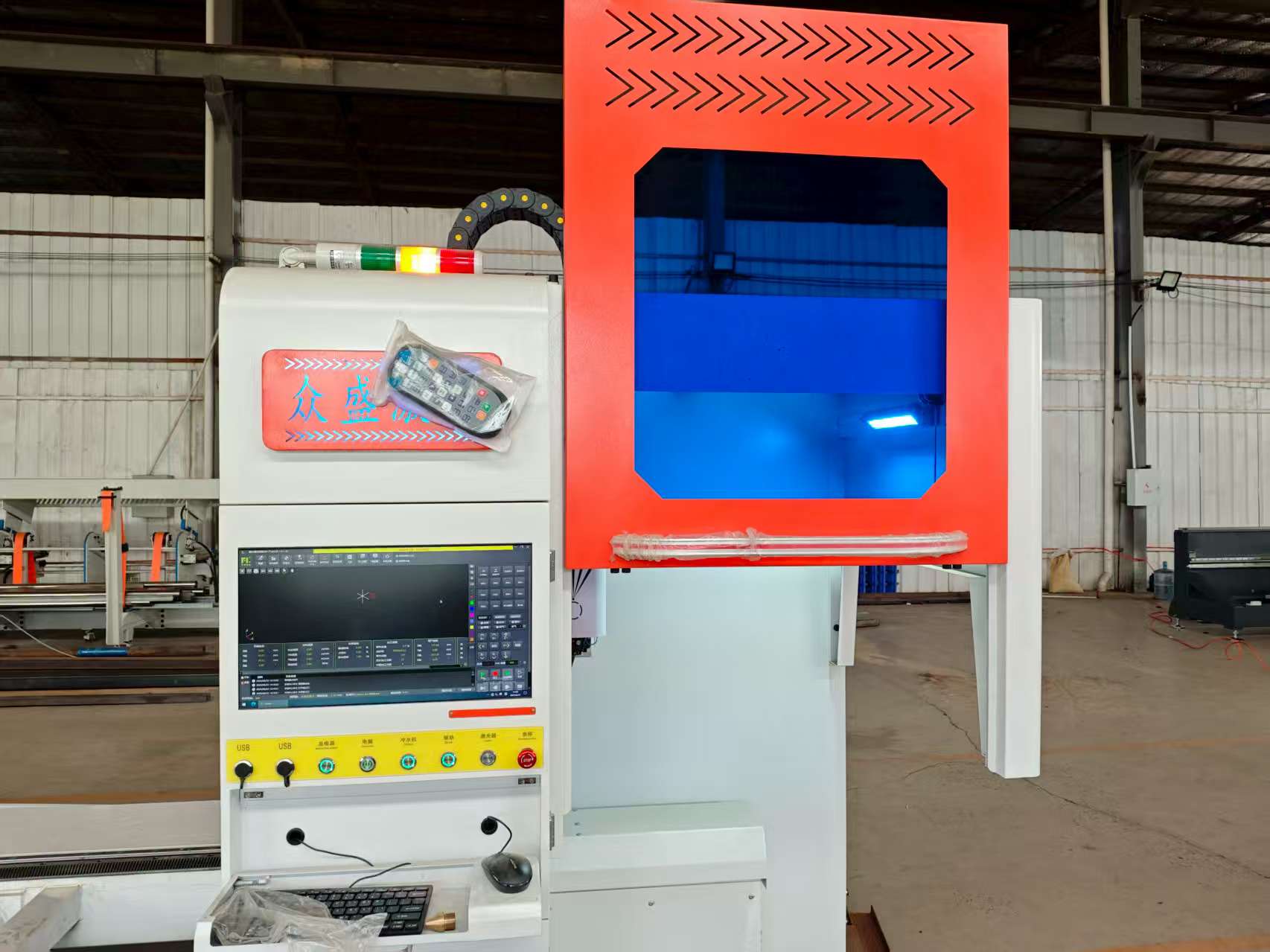
ZS Laser Tube Cutting Machine
8. How to Choose the Right Laser Tube Cutting Machine
Key factors to consider:
-
Laser source type (fiber laser strongly recommended)
-
Loading system (automatic / semi-automatic / bundle loading / step feeding)
-
Internal & external weld-seam detection
-
Maximum cutting length and tube weight
-
Chuck size (120 / 170 / 240 mm)
-
Laser power (typically 1–5 kW)
-
Software capability (compensation, auto edge-finding, seam avoidance)
We can provide:
-
Cutting demonstrations
-
Parameter recommendations
-
Equipment configuration proposals
based on your specific tube samples.
Laser tube cutting is flexible, efficient, and capable of delivering high-quality processing results. It is becoming the essential technology for metal fabrication companies looking to upgrade productivity.
If you are seeking:
-
Higher efficiency
-
Lower scrap and waste
-
Better welding compatibility
-
The ability to produce complex structures
-
Stable mass-production performance
Then a laser tube cutting machine is one of the best investments your factory can make.
Contact ZS Laser today.
We can provide professional recommendations and the ideal machine for your production needs.

WhatsApp
Scan the QR Code to start a WhatsApp chat with us.