 ZS Laser Equipment

Laser welding technology has gained enormous attention in recent years. With advantages such as high speed, clean weld appearance, and reduced post-processing, laser welding machines are often seen as a direct upgrade from traditional welding methods like TIG or MIG welding.However, an industry reality rarely discussed openly is this:
Many companies purchase laser welding machines with high expectations — but some of these machines become underused or even idle within months.
This situation is not caused by poor equipment quality alone. In most cases, the real reason lies deeper: laser welding is not simply a better welding tool — it is a different manufacturing system.Understanding this difference is essential for manufacturers considering laser welding adoption.
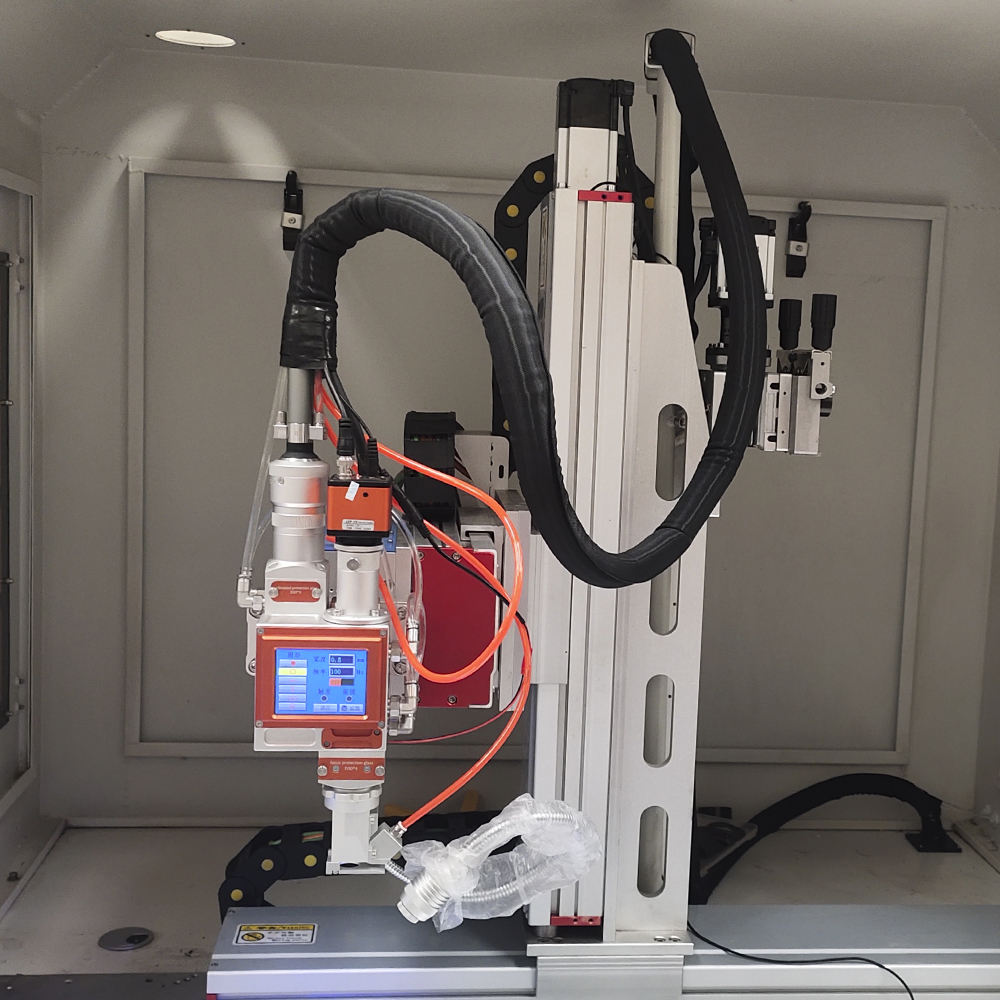
Platform laser welding machine
Six Typical Reasons Many Companies Stop Using Laser Welding Machine
1. Symply treat Laser Welding As Faster TIG Welding
A common misunderstanding is that laser welding is just a faster version of traditional welding.In reality, the two processes operate under very different principles,below is some comparation of these two method:
| Traditional Welding | Laser Welding |
|---|---|
| High tolerance for gaps | Requires precise fit-up |
| Relies on operator skill | Relies on process stability |
| Can compensate assembly errors | Requires accurate preparation |
| Suitable for on-site work | Best in controlled manufacturing environments |
Traditional welding allows operators to compensate for inconsistencies during the process. Laser welding, by contrast, achieves speed and precision by reducing variability — which means upstream production quality becomes critical.When companies fail to adapt their production workflow, problems begin to appear.This is a major reason why laser welding machines have been abandoned.
2. Assembly Precision Is Not Sufficient
One of the most common reasons for unsatisfactory laser welding results in practical applications is that the assembly precision of the welded joint cannot meet process requirements, especially the unstable control of the weld gap.
Compared to traditional TIG welding, laser welding has higher requirements for workpiece assembly consistency. TIG welding can tolerate a gap of 1-2 mm, while laser welding typically requires a gap of less than 0.2-0.3 mm. Under ideal conditions, laser welding is more suitable for structures with smaller gap control and higher consistency.
However, in many actual production environments, the front-end manufacturing process often struggles to achieve this consistency. For example, thermal deformation after cutting, batch fluctuations in part dimensions, simple or insufficiently rigid fixture structures, and positioning errors caused by manual assembly can all lead to unstable weld gaps.
When these problems combine, insufficient penetration, localized burn-through, or discontinuous weld formation may occur during laser welding, thus affecting the overall weld quality and stability.
Therefore, some users may conclude that “laser welding results are unstable” or even “unsuitable” after experiencing it. However, from an engineering perspective, such problems are usually not due to insufficient equipment performance, but rather because the assembly precision and process control at the production end have not yet reached the level of process matching required for laser welding.
3. Product Design May Not Suit Laser Welding
Laser welding performs best in specific scenarios:
✅ Continuous weld seams
✅ Thin to medium thickness materials
✅ Repeatable production paths
But many manufacturers produce parts with:
Frequently changing designs
Mixed material thicknesses
Complex spatial welding positions
Small batch customization
In such cases, parameter adjustment time may exceed actual welding time. Efficiency gains disappear, and operators revert to familiar traditional methods.
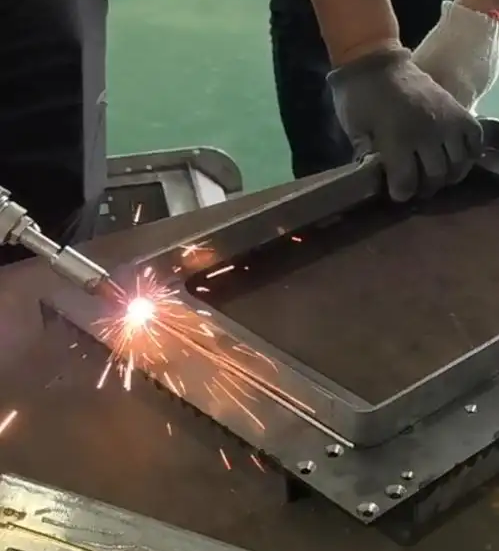
Laser Welding process
4. Equipment Upgraded — Process Unchanged
Another common situation occurs when management invests in new technology without changing workflow.The expectation is simple:
Buy a laser welding machine → productivity automatically increases.
But successful laser welding often requires adjustments in:
Cutting accuracy
Assembly methods
Fixture design
Process planning
Quality control procedures
Without these supporting improvements, installing a laser welding system is like placing a high-performance engine into an unsuitable chassis — the potential cannot be realized.
5. Over-Expectation Created by Market Promotion
In recent years, handheld laser welding has sometimes been marketed as:“A beginner can outperform a 10-year experienced welder.”
This statement is partially true — but only under controlled conditions such as straight welds on thin sheet metal.
Real industrial applications involve:
-
Corner joints
-
Variable gaps
-
Mixed materials
-
Galvanized or contaminated surfaces
When expectations meet reality, disappointment follows. Companies may wrongly assume the technology itself is unreliable.
6. Lack of Production Stability
Laser welding delivers its greatest value in standardized production environments.
It works best when manufacturers have:
Stable product lines
Repeat orders
Standardized fixtures
Predictable workflows
If a workshop constantly switches between unrelated products, operators must repeatedly adjust parameters. Over time, traditional welding becomes more practical despite lower efficiency.
The Essence and Evaluation Logic of Laser Welding Applications
From an industrial application perspective, the value of laser welding lies not in replacing traditional welders, but in driving manufacturing processes towards greater consistency and standardization. It is more suitable for production systems with established stable processes, rather than directly addressing variable issues in unstable manufacturing environments.
Therefore, the differences in the effectiveness of laser welding implementation among different companies are often not determined by the equipment’s technological level, but rather by the maturity and standardization of the overall manufacturing system. The more stable the production process and the higher the product consistency, the more easily the advantages of laser welding are demonstrated.
Based on this logic, a more reasonable evaluation method before purchasing laser welding equipment is to conduct a systematic assessment starting from the manufacturing conditions. For example, whether the product has stable batch repeatability, whether the weld gap can be controlled long-term, whether the fixture system is standardized, and whether the welding process occurs in a fixed workshop environment or on-site installation conditions.
If these basic conditions are not yet clear, then conducting process evaluation and sample testing before equipment deployment is usually more important than directly purchasing the equipment.
How ZS Laser Approaches Laser Welding Solutions
At ZS Laser, we believe successful adoption of laser welding depends on matching technology with real production conditions.Rather than focusing only on machine specifications, we work with customers to evaluate:
Application suitability
Material and joint conditions
Production workflow compatibility
Long-term operational stability
Our goal is not simply to sell equipment, but to help customers build welding solutions that remain productive for years — not months.
If you are unsure whether a laser welding machine is suitable for you, please contact us immediately for a professional evaluation and recommendation.

WhatsApp
Scan the QR Code to start a WhatsApp chat with us.