 ZS Laser Equipment

The automotive industry has always been one of the world’s largest users of welding technology. From traditional passenger vehicles to electric vehicles (EVs), nearly every critical component is joined by welding.
However, modern automotive manufacturing is no longer dependent on manual welding. Instead, automatic welding has become the industry standard, enabling manufacturers to achieve higher production efficiency, consistent weld quality, lower labor costs, and smarter manufacturing.
Today, robotic welding systems, laser welding machines, resistance spot welding equipment, and intelligent vision-guided automation have transformed the way automobiles are produced.
In this guide, we’ll explore how automatic welding is used throughout automotive manufacturing, the most common welding technologies, their advantages and limitations, and why laser welding is becoming one of the fastest-growing welding solutions for the automotive industry.
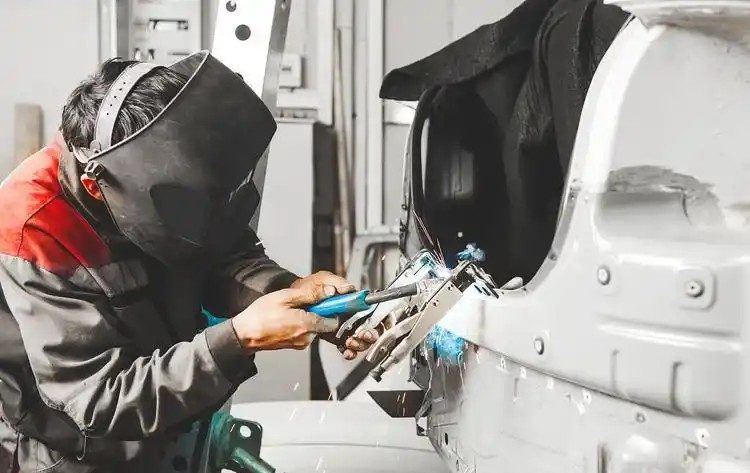
Welding in automotive manufacture
Why Does the Automotive Welding Depend on Automatic Welding?
Unlike general metal fabrication, automotive production involves extremely high manufacturing volumes.
A modern vehicle contains thousands of welded joints. Depending on the vehicle design, a typical passenger car may require 3,000 to 6,000 spot welds, along with numerous seam welds, structural welds, laser welds, and precision joints.
If every weld were completed manually, manufacturers would face enormous challenges:
Inconsistent weld quality
Slow production speed
High labor costs
Increased defect rates
Difficult quality control
More importantly, every vehicle leaving the production line must meet the same safety standards.
A single weak weld on the body structure, chassis, or battery housing may compromise vehicle performance or crash safety.
For this reason, automotive manufacturers rely heavily on automatic welding systems capable of producing identical welds thousands of times every day with minimal variation.
Where Is Automatic Welding Used in Automotive Welding Manufacturing?
Although people often imagine robots welding entire cars, different vehicle components require different welding technologies. Selecting the appropriate welding method depends on material type, thickness, production volume, structural requirements, and appearance standards.
Body-in-White (BIW)
The Body-in-White (BIW) is one of the most automated sections of an automotive factory.It refers to the welded vehicle body before painting and final assembly.Thousands of steel panels are joined together to create the vehicle’s structural framework.
The most common automatic welding technologies include:
- Resistance Spot Welding
- Robot Spot Welding
- Laser Welding
- Laser Brazing
Robot spot welding remains the dominant process because it delivers extremely fast cycle times and high repeatability.
However, laser welding is increasingly replacing spot welding in selected joints because it produces continuous weld seams, improves structural rigidity, and creates cleaner surfaces for premium vehicle designs.
Chassis and Structural Components
The chassis carries the vehicle’s suspension, drivetrain, and other mechanical systems.Compared with body panels, chassis components are generally thicker and require higher mechanical strength.
Common automatic welding processes include:
- Robot MIG Welding
- MAG Welding
- Laser Hybrid Welding
Robotic welding ensures deep penetration while maintaining excellent consistency across large production batches.
Exhaust Systems
Automotive exhaust systems are manufactured using stainless steel tubing and formed sheet metal components.These products require welds that are both leak-proof and corrosion resistant.
Automatic welding methods commonly include:
- TIG Welding
- Laser Welding
- Orbital Welding
Laser welding has become increasingly popular because it minimizes heat distortion while producing attractive weld seams.
Automotive Battery Packs
The rapid growth of electric vehicles has created entirely new welding applications.Battery manufacturing requires extremely high precision because even tiny welding defects may affect battery safety or electrical conductivity.
Typical battery welding applications include:
- Battery trays
- Battery housings
- Cooling plates
- Busbars
- Battery modules
Laser welding has become one of the preferred technologies because it offers:
- Low heat input
- Minimal deformation
- High precision
- Excellent electrical conductivity
- Easy automation
For EV manufacturers, automatic laser welding has become a critical production technology.
Doors, Roofs, and Exterior Panels
Vehicle doors and exterior body panels require both structural strength and attractive appearance.
Automatic welding solutions include:
- Robot Spot Welding
- Laser Welding
- Laser Brazing
Laser brazing is especially popular for roof joints because it produces smooth seams requiring little finishing before painting.
Seat Frames and Interior Structures
Seat frames are typically manufactured from steel tubes and stamped components.
Robot MIG welding remains the most widely used process because it provides excellent strength while maintaining high productivity.
Common Automatic Welding Technologies Used in Automotive Manufacturing
No single welding process can satisfy every automotive application.Instead, manufacturers combine several automatic welding technologies according to different production requirements.
Resistance Spot Welding
Resistance spot welding has been the backbone of automotive manufacturing for decades.Two electrodes clamp metal sheets together while electrical current generates heat to form a weld nugget.
Advantages include:
- Extremely fast welding speed
- High automation compatibility
- Low filler material consumption
- Excellent for sheet metal production
However, it requires access to both sides of the workpiece and is generally limited to lap joints.
Robot MIG/MAG Welding
Robot MIG welding is commonly used for thicker automotive structures.Compared with spot welding, MIG welding provides continuous welds with higher structural strength.
Typical applications include:
- Chassis
- Suspension brackets
- Seat frames
- Truck components
Although highly productive, MIG welding generates more spatter and heat than laser welding.
TIG Welding
Automatic TIG welding is primarily used for stainless steel and aluminum components requiring high weld quality.
Although slower than MIG welding, TIG offers:
- Beautiful weld appearance
- Excellent penetration control
- Minimal spatter
It is commonly found in exhaust systems and specialty automotive components.
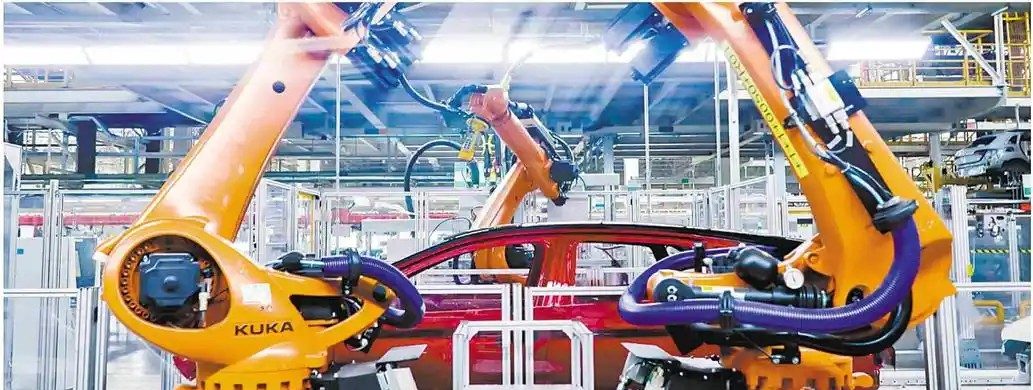
TIG Automatic Welding in Automotive Welding
Laser Welding
Laser welding is one of the fastest-growing technologies in automotive manufacturing.Instead of using an electric arc, a highly concentrated laser beam melts the material to create the weld.
Advantages include:
- Extremely high welding speed
- Very small heat affected zone
- Minimal distortion
- Narrow and attractive weld seams
- Easy robotic integration
- High repeatability
Laser Hybrid Welding
Laser hybrid welding combines laser welding with MIG welding.
This technology offers:
- Higher penetration
- Better gap tolerance
- Faster travel speed
- Excellent structural strength
It is widely used for thick automotive structural components.
Why Is Laser Welding Growing So Rapidly?
Although resistance spot welding remains dominant, laser welding continues to expand throughout automotive production.Several factors explain this trend.
First, vehicle lightweighting requires stronger joints with less added weight.
Continuous laser welds improve structural stiffness while reducing the number of individual spot welds.
Second, electric vehicle manufacturing demands greater precision.
Battery components, aluminum housings, and copper busbars all benefit from laser welding’s high accuracy.
Third, manufacturers seek greater automation.
Laser welding integrates easily with:
- Industrial robots
- Vision inspection systems
- CNC platforms
- Welding positioners
- Automatic loading systems
Finally, laser welding significantly reduces post-processing.Compared with MIG welding, laser welds require much less grinding and polishing, lowering overall production costs.
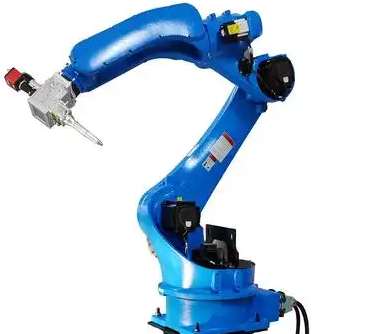
Robotic Laser Welding
What Makes a Complete Automatic Welding System?
Many people think automatic welding simply means adding a robot.In reality, a complete welding automation system consists of multiple integrated technologies.
Typical systems include:
- Industrial robots
- Laser welding machines
- MIG or TIG welding power sources
- Welding positioners
- Rotary fixtures
- Pneumatic clamping systems
- Vision cameras
- Servo motion control
- PLC control systems
- Safety enclosures
- Automatic loading and unloading equipment
- Quality inspection systems
These components work together to ensure every weld is completed with consistent accuracy and repeatability.
Future Trends in Automotive Welding Automation
The future of automotive welding extends far beyond simple robotic automation.Several emerging technologies are reshaping vehicle production.
1.Artificial intelligence is enabling adaptive welding systems capable of adjusting welding parameters automatically.
2.Machine vision systems now identify weld locations without manual programming.
3.Digital twin technology allows manufacturers to simulate entire welding production lines before installation.
4.Collaborative robots are making automation affordable for smaller automotive suppliers.
5.Meanwhile, Industry 4.0 is connecting welding machines, robots, sensors, and factory management software into intelligent manufacturing networks capable of real-time monitoring and predictive maintenance.
As electric vehicles continue to grow, demand for laser welding, battery welding, and intelligent automation will continue to accelerate.
Conclusion
Automatic welding has fundamentally transformed automotive manufacturing. From body-in-white production and chassis fabrication to battery pack assembly and precision stainless steel components, automated welding systems deliver the speed, consistency, and quality that modern vehicle manufacturing demands.
While resistance spot welding, MIG welding, and TIG welding remain indispensable for many applications, laser welding is rapidly becoming the preferred solution for manufacturers pursuing higher productivity, better weld quality, and greater automation—especially in the era of electric vehicles and smart factories.
At ZS Laser, we specialize in complete automatic laser welding solutions for the automotive industry. Our product range includes CNC laser welding machines, handheld laser welders, robotic laser welding workstations, rotary welding positioners, customized fixtures, and fully integrated automated welding systems.
Whether you manufacture automotive body parts, battery enclosures, exhaust components, or precision sheet metal assemblies, our engineering team can provide customized welding solutions, process testing, and technical support to help improve productivity, reduce manufacturing costs, and achieve more intelligent automotive production.

WhatsApp
Scan the QR Code to start a WhatsApp chat with us.