 ZS Laser Equipment

Galvanized steel is widely used in construction, automotive manufacturing, HVAC systems, electrical cabinets, agricultural equipment, and metal fabrication due to its excellent corrosion resistance and relatively low cost.
However, when it comes to welding galvanized steel, many fabricators quickly discover that it behaves very differently from ordinary carbon steel.
Excessive spatter, porosity, poor weld appearance, zinc fumes, and inconsistent weld quality are common challenges.
So what is the best method for welding galvanized steel? Can laser welding be used? And what should manufacturers pay attention to before choosing a welding process?
This guide explains everything you need to know about welding galvanized steel.
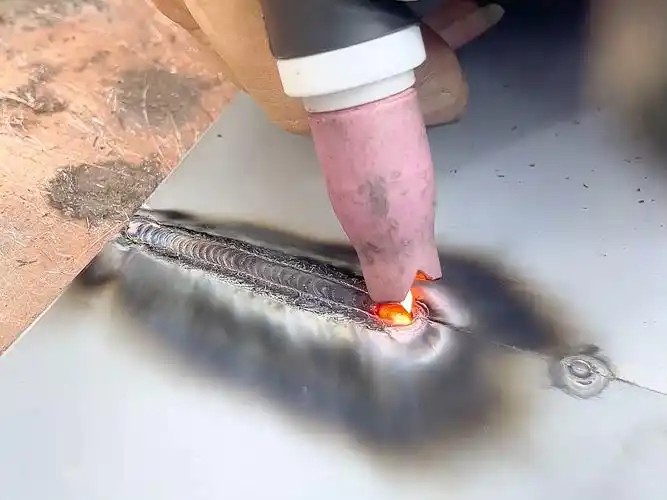
Galvanized steel welding
What Is Galvanized Steel?
Galvanized steel is carbon steel coated with a thin layer of zinc.
The zinc coating protects the underlying steel by preventing rust and corrosion, significantly extending the service life of the material.
Common galvanized steel products include:
Galvanized sheet metal
Galvanized pipes
HVAC ductwork
Cable trays
Automotive body panels
Electrical enclosures
Agricultural equipment
Depending on the application, galvanized steel may use:
Hot-Dip Galvanizing
Steel is immersed in molten zinc.
This creates a thicker zinc layer and provides stronger corrosion resistance.
Electro-Galvanizing
A thinner zinc coating is deposited through electroplating.
The surface finish is smoother and more suitable for precision applications.
Regardless of the coating method, the zinc layer creates unique challenges during welding.
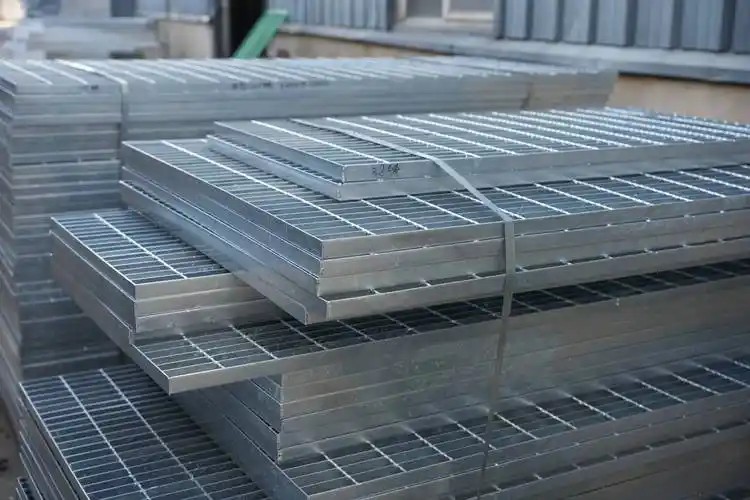
galvanized steel sheet
Why Is Welding Galvanized Steel Difficult?
The main reason lies in the huge difference between the melting point of zinc and steel.
| Material | Melting Point |
|---|---|
| Zinc | 419°C |
| Steel | 1450–1520°C |
During welding, the zinc coating melts and vaporizes long before the steel begins to melt.As zinc vapor rapidly expands, it can create several welding problems.
1. Excessive Spatter
Spatter is one of the most common issues when welding galvanized steel.
When zinc vapor becomes trapped beneath the molten weld pool, pressure builds up rapidly.
The escaping vapor can eject molten metal from the weld zone, creating large amounts of spatter.
This leads to:
- Poor weld appearance
- Additional post-processing
- Reduced production efficiency
2. Porosity
Zinc vapor trapped inside the molten metal can create gas pores.
These pores weaken the weld and reduce sealing performance.
Porosity is especially problematic for:
- Pressure vessels
- HVAC components
- Automotive parts
- Water tanks
3. Weld Defects and Undercut
Continuous zinc evaporation may cause material loss in the weld area.
This can result in:
- Undercut
- Incomplete fusion
- Irregular weld bead formation
4. Harmful Zinc Fumes
During welding, zinc oxide fumes are generated.
Without proper ventilation, operators may experience symptoms commonly known as “metal fume fever.”
For this reason, effective fume extraction is strongly recommended.
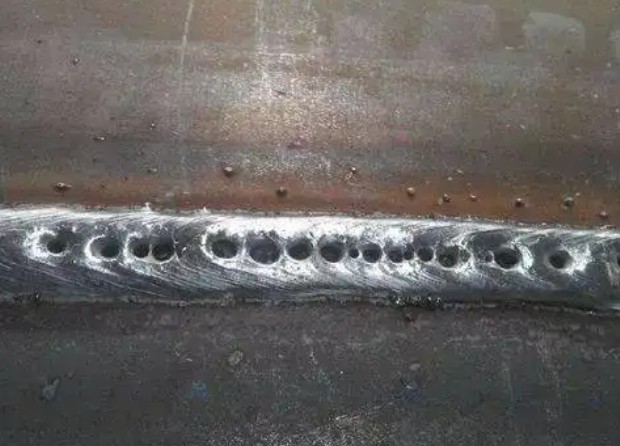
Hydrogen porosity in welding
Points should be noted when welding galvanized sheets
1. Before welding, the zinc layer must be thoroughly cleaned to avoid the generation of toxic gases during welding. Solvents or other cleaning agents can be used for cleaning.
2. Select the correct welding current and voltage to ensure weld quality and stability.
3. Minimize welding time as much as possible to avoid overheating the zinc layer, which can damage and oxidize it.
4. During welding, avoid concentrating large amounts of heat in one location to prevent damage to the zinc layer and corrosion.
5. When performing gas welding or arc welding, use low-temperature welding rods and avoid directly pointing the flame or arc at the zinc layer.
6. After welding, the welded areas should be treated for rust removal and corrosion protection to ensure weld quality and corrosion resistance.
7. Before welding, check the surface of the galvanized sheet for cracks, bubbles, or other defects to avoid quality problems during welding. Dongguan Chaohong Robotics – Welding Details
8. When performing MIG or TIG welding, a suitable gas, such as argon or carbon dioxide, should be selected to ensure the stability of the welding process and the quality of the weld.
9. Galvanized sheets are relatively thin, so the welding current and voltage need to be carefully controlled to avoid over-welding.
10. When performing gas welding or arc welding, attention should be paid to the direction of the sparks and flames, avoiding direct contact with the zinc layer to prevent damage and corrosion.
11.Laser welding technology has unique characteristics in welding galvanized sheets. The method of blowing protective gas in laser welding can solve related weld joint problems.
Laser welding machines use two methods for blowing protective gas when welding galvanized sheets: coaxial blowing and side blowing. The control parameters include the type of protective gas, gas flow rate, side blowing direction, side blowing angle, and nozzle size.
Common Methods for Welding Galvanized Steel
Several welding processes can be used successfully.
Each method has its own advantages and limitations.
MIG Welding
Advantages
- Fast welding speed
- Easy operation
- Suitable for production environments
Disadvantages
- Significant spatter
- High zinc vapor generation
- Requires parameter optimization
MIG welding is commonly used for medium and thick galvanized materials.
TIG Welding
Advantages
- Clean welds
- Better control
- Minimal spatter
Disadvantages
- Slow speed
- Higher labor cost
- Less suitable for mass production
Resistance Spot Welding
Advantages
- High efficiency
- Strong joints
- Suitable for automation
Disadvantages
- Electrode wear caused by zinc coating
- Frequent electrode maintenance required
Arc Welding (Stick Welding)
Stick welding can be used in outdoor environments and maintenance applications.
However, zinc removal near the weld area is often necessary to improve weld quality.
Can Laser Welding Be Used Galvanized Steel?
The short answer is:
Yes, but it is not always the ideal application for laser welding.
Many equipment suppliers simply claim that laser welding can easily weld galvanized steel.
Technically, this is true.
However, the real situation is more complicated.
Why Laser Welding Galvanized Steel Can Be Challenging
Laser welding creates extremely high energy density within a very small area.
While this allows for fast welding speeds, it also causes zinc to vaporize almost instantly.
The sudden release of zinc vapor may lead to:
Violent spatter
Weld instability
Porosity
Surface defects
In severe cases, spatter can travel directly toward the welding head.
This may contaminate or damage:
Protective lenses
Nozzles
Optical components
As a result, consumable costs and maintenance frequency may increase significantly.
For this reason, galvanized steel is generally more difficult to laser weld than bare carbon steel or stainless steel.
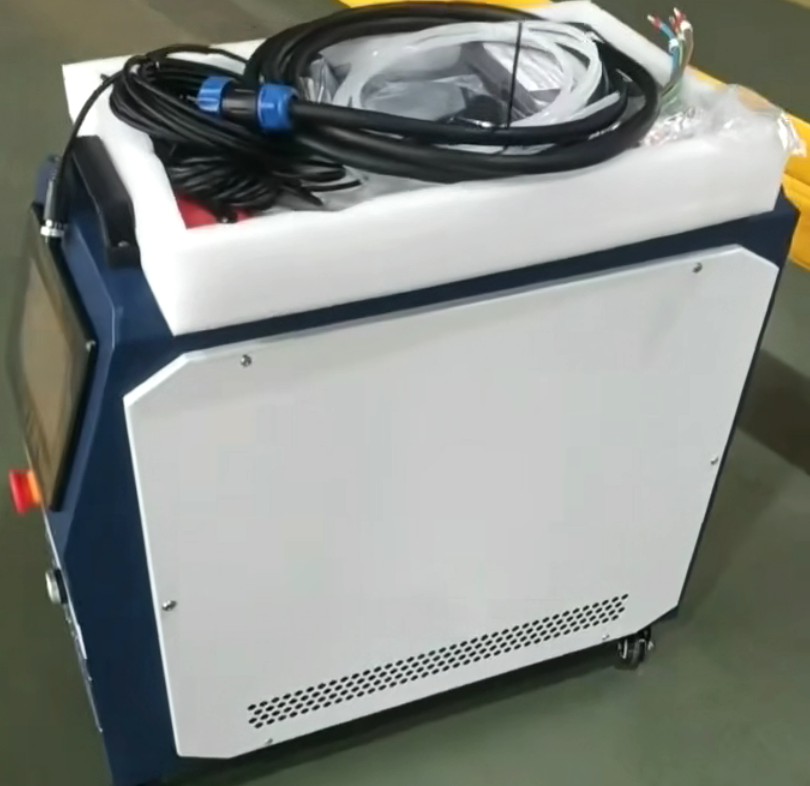
Handheld laser welding machine
How to Improve Laser Welding Results on Galvanized Steel
Although challenges exist, there is some way to use laser welding galvanized steel.
Increase Shielding Gas Flow
A higher shielding gas flow can help:
Remove zinc vapor
Reduce plasma formation
Minimize spatter
Protect optical components
Gas flow optimization is often one of the most important parameters when welding galvanized materials.
Optimize Welding Parameters
Factors such as:
Laser power
Welding speed
Focus position
Beam oscillation settings must carefully adjusted.
There is no universal parameter suitable for all galvanized steel applications.
Conduct Sample Testing Before Production
Because zinc coating thickness varies between suppliers and materials, it’s better to de sample testing before purchasing equipment or starting mass production.
Testing allows manufacturers to evaluate:
Weld quality
Spatter levels
Production efficiency
Lens contamination risk
This step can prevent costly surprises later.
Conclusion
Welding galvanized steel presents unique challenges due to the low melting point of zinc and the large amount of zinc vapor generated during welding.At ZS Laser, we always recommend conducting sample welding tests before selecting a laser welding solution for galvanized steel applications. By evaluating material specifications, coating thickness, and production requirements, our engineers can help determine whether laser welding is the right choice and provide optimized welding parameters for the best possible results.
Need professional advice on welding galvanized steel? Contact ZS Laser today for free sample testing and application support.

WhatsApp
Scan the QR Code to start a WhatsApp chat with us.