 ZS Laser Equipment

If you’ve been researching handheld laser welding machines, you’ve probably noticed that manufacturers often advertise their products as 3 in 1, 4 in 1, or even 5 in 1 laser welding machines.
At first glance, the comparison seems simple.
3 functions.
4 functions.
5 functions.
Naturally, many buyers assume that a 5 in 1 machine must be more advanced than a 4 in 1 machine, and a 4 in 1 machine must be better than a 3 in 1 machine.
However, the reality of the laser welding industry is far more complicated.
In fact, the numbers themselves often tell you very little about the actual performance of the machine.
Before investing thousands of dollars in a laser welding system, it’s important to understand what these terms really mean—and what they don’t mean.
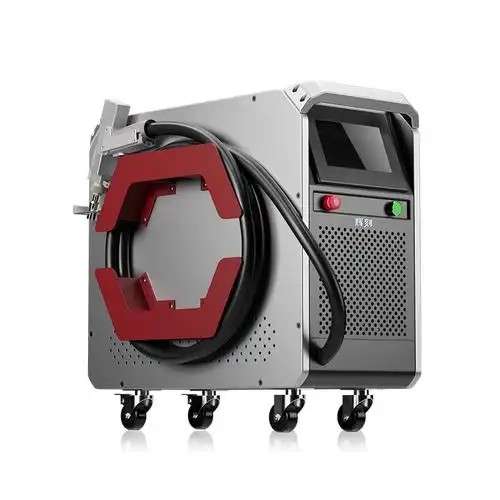
3 in 1 Laser Wedling Machine
Why There Is No Industry Standard
One of the biggest misconceptions in the market is that 3 in 1, 4 in 1, and 5 in 1 are official technical classifications.
They are not.
There is currently no international standard that defines what functions must be included in a 3 in 1, 4 in 1, or 5 in 1 laser welding machine.
Different manufacturers use different definitions.
For example, one supplier may define a 4 in 1 machine as:
- Welding
- Cleaning
- Cutting
- Weld Cleaning
While another supplier may advertise:
- Welding
- Cleaning
- Cutting
- Rust Removal
Both machines may actually be using exactly the same hardware.
The difference is often marketing language rather than engineering design.
This is why buyers should never evaluate a machine solely based on the number printed in the product title.
Understanding the Core Functions
3 in 1 Laser Welding Machines
A typical 3 in 1 machine combines:
Laser Welding
The primary function.
Used for welding:
- Stainless steel
- Carbon steel
- Aluminum
- Galvanized steel
Laser Cleaning
Used for removing:
- Rust
- Oil
- Oxide layers
- Surface contamination
Laser Cutting
Usually designed for:
- Thin sheet metal
- Trimming edges
- Opening holes
- Small fabrication jobs
This cutting capability is useful, but it should not be confused with a dedicated fiber laser cutting machine.
A handheld welding machine can perform occasional cutting tasks, but it is not designed for high-volume production cutting.
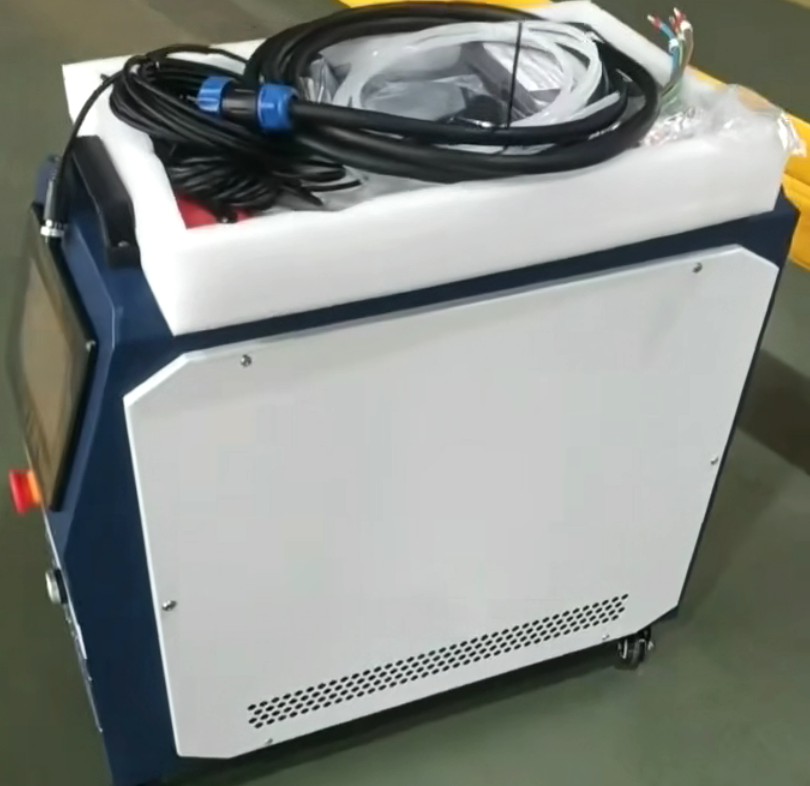
Handheld laser welding machine
What Does a 4 in 1 Machine Add?
Most manufacturers define the fourth function as:
Weld Cleaning
After stainless steel welding, oxidation colors often appear around the weld area.
Common discoloration includes:
- Yellow
- Blue
- Brown
- Black
Traditionally, manufacturers remove these marks through:
- Grinding
- Polishing
- Chemical treatment
Modern laser welding guns can switch into a weld cleaning mode that removes these surface oxidation marks.
As a result, some manufacturers promote this as an additional function and market the machine as a 4 in 1 system.
The important point is that weld cleaning is not a completely separate technology.
It is simply another application of laser beam oscillation and power control.
In many cases, the hardware remains exactly the same.
The Truth About 5 in 1 Machines
This is where marketing becomes even more creative.
Many suppliers advertise:
- Welding
- Cleaning
- Cutting
- Weld Cleaning
- Rust Removal
At first glance, it sounds like the machine gained another independent capability.
But let’s look closer.
Rust removal is already one of the most common applications of laser cleaning.
In other words:
Laser Cleaning = Rust Removal
Laser Cleaning = Paint Removal
Laser Cleaning = Oxide Removal
Laser Cleaning = Surface Preparation
Laser Cleaning = Weld Cleaning
These are different applications of the same technology.
The laser source remains the same.
The welding gun remains the same.
The control system remains largely the same.
Therefore, many so-called 5 in 1 machines are not fundamentally different from 4 in 1 machines.
The additional function often exists primarily in the marketing brochure.
Why the Function Count Can Be Misleading
A common mistake among first-time buyers is focusing on the number of functions instead of the machine’s actual capabilities.
Consider the following example.
Machine A:
- 3 in 1
- Premium laser source
- Stable cooling system
- High-quality welding head
- Professional after-sales support
Machine B:
- 5 in 1
- Low-cost components
- Unstable beam quality
- Poor technical support
Despite having fewer advertised functions, Machine A will almost certainly produce better weld quality, higher uptime, and longer service life.
The number of functions does not determine welding performance.
Engineering quality does.
What Actually Determines Welding Performance?
When evaluating a laser welding machine, buyers should focus on the following factors.
Laser Source
The laser source is the heart of the machine.
Beam quality directly affects:
- Weld penetration
- Welding speed
- Process stability
- Long-term reliability
A high-quality laser source often contributes more to welding performance than any additional advertised function.
Welding Head
The welding head determines:
- Ease of operation
- Spot quality
- Oscillation stability
- Process consistency
Poor welding heads often create more production problems than inadequate laser power.
Cooling System
Laser welding generates significant heat.
A reliable chiller ensures:
- Stable output power
- Longer component life
- Consistent production performance
Control Software
Good software affects:
- User experience
- Process parameter management
- Production repeatability
- Fault diagnostics
Service and Support
For many manufacturers, technical support is more valuable than an extra feature on a specification sheet.
Fast troubleshooting can save far more money than an additional marketing function.
Why Multi-Function Machines Became Popular
The popularity of 3 in 1 and 4 in 1 machines is not accidental.
Many fabrication shops need flexibility.
Instead of purchasing:
- A welding machine
- A cleaning machine
- A cutting machine
A single multi-function platform can handle all three tasks.
This reduces:
- Initial investment
- Floor space requirements
- Operator training costs
For small and medium-sized manufacturers, this flexibility often provides significant value.
However, buyers should understand that these machines are designed to perform multiple tasks reasonably well—not necessarily to replace dedicated equipment in every application.
So Which One Should You Buy?
The answer depends on your production needs.
If your primary goal is welding and occasional cleaning, a quality 3 in 1 machine may be more than sufficient.If appearance is critical and weld discoloration must be removed regularly, a 4 in 1 machine may provide additional convenience.If a supplier offers a 5 in 1 machine, ask exactly which functions are included and whether any additional hardware is actually involved.
In many cases, you may discover that the difference is largely a matter of terminology.
Conclusion
The biggest difference between 3 in 1, 4 in 1, and 5 in 1 laser welding machines is often not the hardware—it is the marketing.
At ZS Laser, we believe that successful laser welding is not about adding more marketing labels to a machine. It is about providing the right solution for the customer’s actual production requirements.
With more than a decade of experience in laser welding technology, ZS Laser offers a complete range of solutions, including:
Handheld laser welding machines
Automated laser welding systems
Tube laser welding solutions
Laser cladding systems
Customized robotic welding workstations
Our engineering team works closely with customers to evaluate materials, joint designs, production volumes, and automation requirements before recommending a solution. This ensures that every system delivers maximum productivity and return on investment.
Whether you are upgrading from TIG welding, exploring automation, or building a new production line, ZS Laser can help you find the most effective laser welding solution—not simply the one with the highest number in its product name.
Contact ZS Laser today to discuss your application and discover which laser welding system is truly right for your business.

WhatsApp
Scan the QR Code to start a WhatsApp chat with us.