 ZS Laser Equipment

Many people search for handheld laser cutting when looking for a flexible solution to cut metal on-site. Some even assume that there is a dedicated handheld laser cutting machine on the market.
In reality, handheld laser cutting is not a standalone machine. It is typically one of the functions integrated into a 3-in-1, 4-in-1, or 5-in-1 handheld laser welding machine. In addition to welding, these machines can also perform metal cutting and laser cleaning, making them an increasingly popular choice for workshops, fabrication shops, maintenance teams, and field installation projects.
However, handheld laser cutting is not designed to replace professional fiber laser cutting machines or laser tube cutting machines. Each type of equipment has its own strengths and ideal applications.
In this guide, we’ll explain what handheld laser cutting is, where it performs best, its limitations, and how to determine whether it is the right solution for your business.
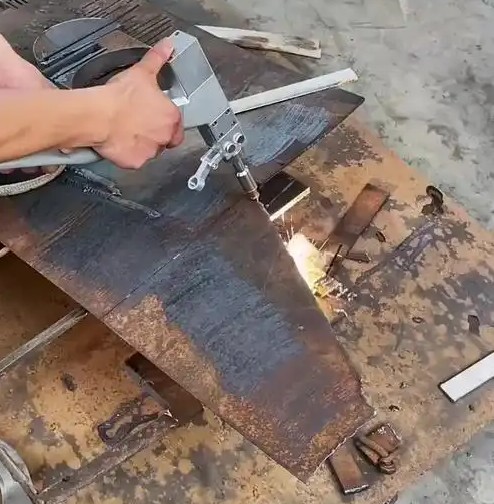
Handheld laser cutting metal sheet
What Is Handheld Laser Cutting?
Handheld laser cutting refers to using the cutting function of a handheld laser welder to cut thin metal sheets or make quick modifications during fabrication and installation.Unlike a CNC fiber laser cutting machine, where the workpiece moves automatically under computer control, handheld laser cutting relies on the operator to manually guide the laser head along the cutting path.
Today, most multifunction handheld laser systems combine several processes into one machine, including:
- Laser welding
- Laser cleaning
- Laser cutting
- Weld seam cleaning (on selected models)
- Remote cleaning (on selected models)
Because one machine can complete multiple tasks, handheld laser welding systems have become a cost-effective solution for companies that need flexibility rather than high-volume production.
What Materials Can Handheld Laser Cutting Handle?
Handheld laser cutting is primarily intended for thin metal sheets commonly used in fabrication, maintenance, and installation work.
Stainless Steel
Stainless steel is one of the easiest materials to process with a handheld laser.
It provides smooth cutting performance with minimal burrs and requires very little post-processing, making it suitable for decorative products, kitchen equipment, cabinets, railings, and stainless steel sheet fabrication.
Carbon Steel
Carbon steel can also be cut efficiently, particularly for maintenance work, structural modifications, equipment repair, and general sheet metal fabrication.
For thin carbon steel plates, handheld laser cutting offers clean edges while generating less heat than many traditional cutting methods.
Galvanized Steel
Galvanized steel sheets are commonly used in electrical cabinets, HVAC equipment, and enclosure manufacturing.
Although handheld laser cutting can process galvanized materials, proper ventilation is important because the zinc coating produces fumes during cutting.
Aluminum
Thin aluminum sheets can be cut successfully with handheld laser equipment.
Because aluminum reflects laser energy more than steel, higher laser power and optimized cutting parameters are generally recommended for stable cutting performance.
Copper and Brass
Copper and brass are highly reflective materials that require more careful parameter adjustment.
For thin sheets, handheld laser cutting is possible, although thicker sections may require specialized equipment or higher-power laser sources.
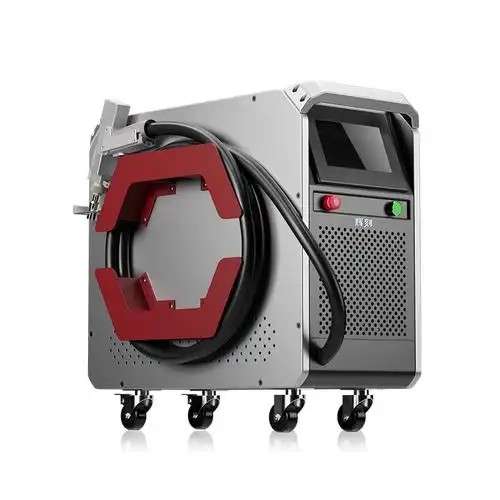
3 in 1 Laser Wedling Machine
Where Is Handheld Laser Cutting Most Useful?
The biggest advantage of handheld laser cutting is flexibility rather than production speed. It excels in situations where mobility and convenience are more important than fully automated manufacturing.
Sheet Metal Fabrication
Many sheet metal workshops occasionally need to modify components after they have been cut or bent.
For example:
- Trimming edges
- Enlarging openings
- Cutting inspection windows
- Correcting dimensional errors
- Adjusting fabricated parts
Instead of returning the part to a large CNC laser cutting machine, operators can complete these adjustments directly using a handheld laser system.
Cabinet Manufacturing
Electrical cabinets, control cabinets, server cabinets, and battery cabinets often require modifications during assembly.
Typical applications include:
- Cutting cable openings
- Modifying mounting holes
- Adjusting panel dimensions
- Trimming reinforcement plates
For these jobs, handheld laser cutting offers excellent flexibility while reducing production delays.
HVAC Industry
Manufacturers and installers frequently process:
- Air ducts
- Ventilation systems
- Air conditioning housings
- Metal pipe accessories
During installation, dimensions sometimes need to be adjusted on-site.
A handheld laser system allows technicians to make these modifications quickly without transporting components back to the factory.
Stainless Steel Decoration
Decorative metal fabrication often involves custom-sized products such as:
- Stair railings
- Handrails
- Door frames
- Window frames
- Architectural trim
- Stainless steel furniture
Because installation dimensions may vary from project to project, handheld laser cutting provides an efficient solution for on-site fitting and finishing.
Equipment Maintenance and Repair
Maintenance teams frequently need to remove damaged components, modify equipment, or replace worn metal parts.
Instead of using grinders or plasma cutters, handheld laser cutting produces cleaner cuts with less heat input, making repair work faster and more precise.
Construction and Field Installation
One of the greatest advantages of handheld laser cutting is portability.
For steel structure installation, industrial construction, and equipment assembly, technicians can bring a single machine directly to the job site and perform welding, cutting, and cleaning without transporting heavy workpieces.
Advantages of Handheld Laser Cutting
Compared with traditional portable cutting methods, handheld laser cutting offers several important benefits.
Fast Switching Between Processes
One machine can perform welding, cleaning, and cutting, eliminating the need for multiple pieces of equipment.
Excellent Portability
Compact handheld laser systems are easy to transport and ideal for field work, repair jobs, and mobile fabrication.
Narrow Cutting Kerf
Laser cutting produces a much narrower cut than plasma cutting, helping reduce material waste while improving edge quality.
Lower Heat Input
Because the laser beam is highly concentrated, the heat-affected zone is relatively small, helping reduce distortion on thin sheet metal.
Lower Operating Costs
Companies no longer need separate machines for welding, cleaning, and occasional cutting, reducing equipment investment and workshop space requirements.
Limitations of Handheld Laser Cutting
Although handheld laser cutting is highly versatile, it is not designed to replace every cutting process.
Understanding its limitations helps users choose the right equipment for their applications.
It Is Not Intended for High-Precision CNC Cutting
If your products require:
- Complex contours
- Tight dimensional tolerances
- Mass production
- Automated nesting
a fiber laser cutting machine is the better solution.
CNC laser cutters provide significantly higher accuracy, repeatability, and production efficiency.
It Is Not the Best Choice for Thick Plate Cutting
Handheld laser cutting performs well on thin sheet metal, but it is not intended for cutting thick steel plates continuously.
For materials such as:
- 16 mm steel
- 20 mm steel
- 25 mm steel
a high-power CNC fiber laser cutting machine delivers much better cutting quality, higher productivity, and greater process stability.
It Is Not Designed for High-Volume Manufacturing
If your factory cuts hundreds or thousands of identical parts every day, automation becomes much more important than flexibility.
Automatic loading systems, CNC motion control, and nesting software make production laser cutting machines far more efficient for large-scale manufacturing.
It Is Not Suitable for Tube Cutting
Many people ask whether handheld laser cutting can process metal tubes.
Technically, it is possible to make simple cuts on some tubes. However, it is not an efficient or accurate solution.
For products such as:
- Round tubes
- Square tubes
- Rectangular tubes
- Angle steel
- Channel steel
- Structural profiles
a laser tube cutting machine is the recommended choice.
Tube laser systems automatically rotate the workpiece, maintain precise positioning, and produce consistent cuts that are impossible to achieve manually.
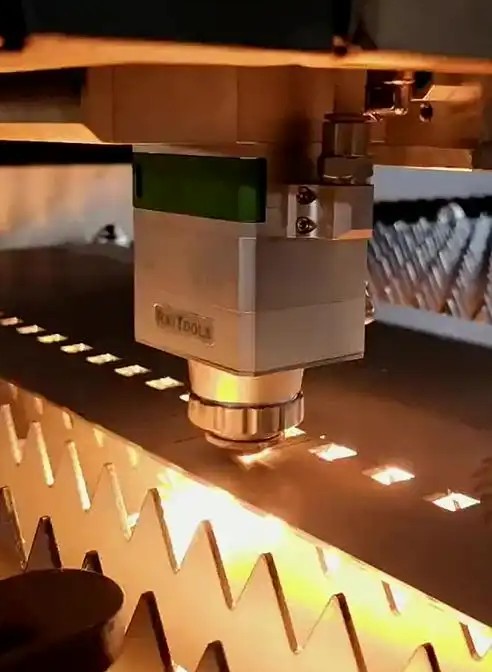
CNC Laser Cutting
When Should You Choose Handheld Laser Cutting?
Handheld laser cutting is an excellent choice if your work involves:
- Sheet metal fabrication
- Equipment maintenance
- On-site installation
- Small-batch production
- Prototype manufacturing
- Product modification
- Cabinet fabrication
- Stainless steel decoration
- General repair work
Its flexibility allows one machine to handle multiple tasks without requiring dedicated cutting equipment.
When Should You Choose Other Laser Equipment?
Handheld laser cutting is not always the optimal solution.For different production requirements, specialized equipment offers significant advantages.
If your primary work involves precision sheet metal manufacturing, a fiber laser cutting machine provides better cutting accuracy, faster production speeds, and fully automated operation.
If your business mainly processes round tubes, square tubes, rectangular tubes, or structural profiles, a laser tube cutting machine delivers much higher productivity and more consistent quality.
Selecting equipment based on your actual production requirements will always achieve better results than trying to use one machine for every application.
Conclusion
Handheld laser cutting is best viewed as a practical extension of a handheld laser welding machine rather than a replacement for industrial laser cutting equipment.It combines welding, cleaning, and cutting into one compact system, making it particularly valuable for maintenance, field installation, sheet metal fabrication, cabinet manufacturing, and other applications where flexibility is essential.
However, when your work requires high-precision CNC cutting, thick plate processing, or automated tube fabrication, dedicated fiber laser cutting machines and laser tube cutting machines remain the better investment.
At ZS Laser, we provide complete laser processing solutions, including handheld laser welding machines with cutting and cleaning functions, CNC fiber laser cutting machines, and laser tube cutting systems. Whether you need a portable solution for field work or a fully automated production line, our engineering team can recommend the most suitable equipment based on your materials, production volume, and manufacturing requirements.
If you’d like to learn more about handheld laser cutting or find the right laser solution for your business, feel free to contact our team for professional advice and application support.

WhatsApp
Scan the QR Code to start a WhatsApp chat with us.