 ZS Laser Equipment

Why Is Aluminum Difficult to Weld?
1. Aluminum Easily Forms a High-Melting-Point Oxide Layer — The Biggest Challenge
Aluminum instantly forms an oxide layer, Al₂O₃, when exposed to air at room temperature. Aluminum has a melting point of only about 660°C, while aluminum oxide has a melting point of approximately 2072°C.
During welding, the aluminum oxide layer can remain solid while the aluminum underneath melts. This can lead to defects such as inclusions, porosity, lack of fusion, and cracking. In severe cases, the weld may become dark and its strength can decrease significantly.
This is one of the main reasons why aluminum is more difficult to weld than steel.
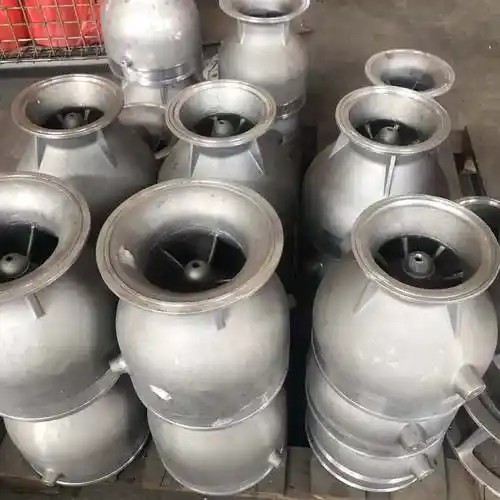
cast aluminum fittings
2. Aluminum Conducts and Dissipates Heat Very Quickly
The thermal conductivity of aluminum is several times higher than that of steel. Heat is quickly transferred away from the welding area.
As a result:
- Heat is difficult to retain, making it harder to establish a stable molten pool and achieve sufficient penetration.
- Large aluminum parts may require higher heat input, while the risk of thermal deformation and burn-through also increases.
3. High Thermal Expansion and Shrinkage
Aluminum has a much higher coefficient of thermal expansion than steel.
During cooling, strong stresses can develop in the weld area, increasing the risk of hot cracking. Thin aluminum parts can also experience significant deformation and warping.
4. Hydrogen-Related Porosity Can Be Serious
The aluminum oxide layer can absorb moisture, while oil and other contaminants can also introduce hydrogen into the welding process.
At high temperatures, hydrogen can enter the molten aluminum. The solubility of hydrogen drops significantly as the aluminum solidifies, causing hydrogen to form pores during cooling.
For applications requiring good sealing performance, excessive porosity can seriously affect the quality of the welded part.
5. Molten Aluminum Has High Fluidity
Once aluminum melts, the molten metal can flow very easily.
When welding thin aluminum sheets, excessive heat input can cause the molten pool to collapse or burn through, making weld formation more difficult to control.
6. Alloying Elements Can Be Lost During Welding
Aluminum alloys such as 6061, 6063, and 5052 contain alloying elements such as magnesium, silicon, and zinc.
Under high temperatures, some alloying elements may evaporate, changing the composition of the weld metal and potentially affecting mechanical and corrosion properties.
2. How Well Does a Handheld Laser Welder Weld Aluminum?
Handheld laser welding, especially water-cooled or chiller-equipped fiber laser welding systems, has several advantages when compared with TIG and MIG welding of aluminum.
1. Strong Energy Concentration and Better Control of the Oxide Layer
Laser welding concentrates a large amount of energy into a small area and can rapidly heat the welding zone.With suitable laser parameters, aluminum oxide can be effectively disrupted during the welding process. Combined with aluminum filler wire and proper surface preparation, this can help reduce welding defects such as porosity and lack of fusion.Before welding, it is still important to remove oil, dirt, moisture, and excessive oxide contamination from the workpiece.
2. Low Heat Input and Better Control of Deformation
Laser welding heats the material locally and concentrates the energy in the welding area. The heat-affected zone can therefore be relatively narrow.For suitable applications, this can provide better deformation control when welding thin aluminum.For example, it can be useful for:
- 0.8–3 mm aluminum sheet
- Aluminum doors and windows
- Sheet metal
- Aluminum decorative products
- Aluminum alloy frames
The final flatness of the finished part can be improved, while the amount of post-weld grinding may also be reduced.
3. Controllable Penetration for Different Thicknesses
For thin aluminum sheet from approximately 0.5–3 mm, lower laser power combined with higher welding speed can help reduce the risk of burn-through while maintaining a good weld appearance.While for thicker aluminum components, such as 6–10 mm materials, multiple-pass welding with filler wire may be considered depending on the alloy, joint design, laser power, and required penetration.The actual welding capability should always be confirmed through testing.
4. Good Weld Appearance and Less Grinding
Handheld laser welding can produce relatively narrow and uniform weld beads.
When the parameters are properly adjusted, the weld can have a clean and attractive appearance, which is useful for aluminum decorative products and aluminum cabinets.
Because less post-weld grinding may be required, the overall finishing workload can also be reduced.
5. Easier to Learn Than TIG Welding Aluminum
Aluminum TIG welding generally requires considerable operator skill.The welder needs to control AC welding parameters, shielding gas, torch movement, arc length, and filler wire at the same time.Handheld laser welding can be easier to learn once the appropriate parameters have been established.For long continuous welds, handheld laser welding can also provide significantly higher productivity than conventional TIG welding in suitable applications.
Limitations of Handheld Laser Welding Aluminum
These limitations should also be considered before choosing a handheld laser welder for aluminum.
1. High Reflectivity and Back Reflection
Aluminum is a highly reflective material. Some of the laser energy can be reflected back toward the welding head.For long-term aluminum welding, it is important to select a handheld laser welding machine with suitable protection against back reflection.The protective lens should also be inspected and cleaned regularly. Contamination on the protective lens can increase the risk of lens damage and affect welding performance.
Therefore, a standard low-cost laser welding machine should not automatically be assumed to be suitable for continuous aluminum welding.
2. Thick Aluminum Parts May Be Better Suited to Automated Systems
For very thick aluminum plates, handheld multi-pass welding can become slower as more filler wire and welding passes are required.For aluminum above approximately 12 mm, depending on the application, submerged arc welding or automated/robotic laser welding may provide better productivity.Handheld laser welding is generally more suitable for small and medium-sized aluminum components and fabrication work.
3. Surface Preparation Is Still Important
Laser welding does not eliminate the need for proper surface preparation.Oil, dirt, moisture, and oxide contamination can still cause porosity, inclusions, and unstable welding.
Before welding, the aluminum surface should be properly cleaned. Mechanical cleaning and degreasing are commonly used to prepare the surface.For mass production, a standardized cleaning procedure should be established to maintain consistent welding quality.
4. Aluminum Alloy Cracking Can Still Occur
Certain aluminum alloys, especially some 6xxx series alloys, can have a higher tendency toward hot cracking during welding.The filler wire and welding parameters therefore need to be selected carefully.
For example, aluminum-silicon filler wire such as 4043 is commonly used for some 6xxx series applications, while 5356 may be selected for other applications.The correct filler should be determined according to the base alloy, required mechanical properties, corrosion requirements, and application.
5. Higher Equipment Cost
Compared with a conventional aluminum TIG welding machine, a water-cooled handheld laser welding machine generally has a higher initial equipment cost.Consumables such as protective lenses and welding wire also need to be considered.
However, higher welding speed and reduced post-weld finishing may offset part of the additional equipment cost in suitable production applications.
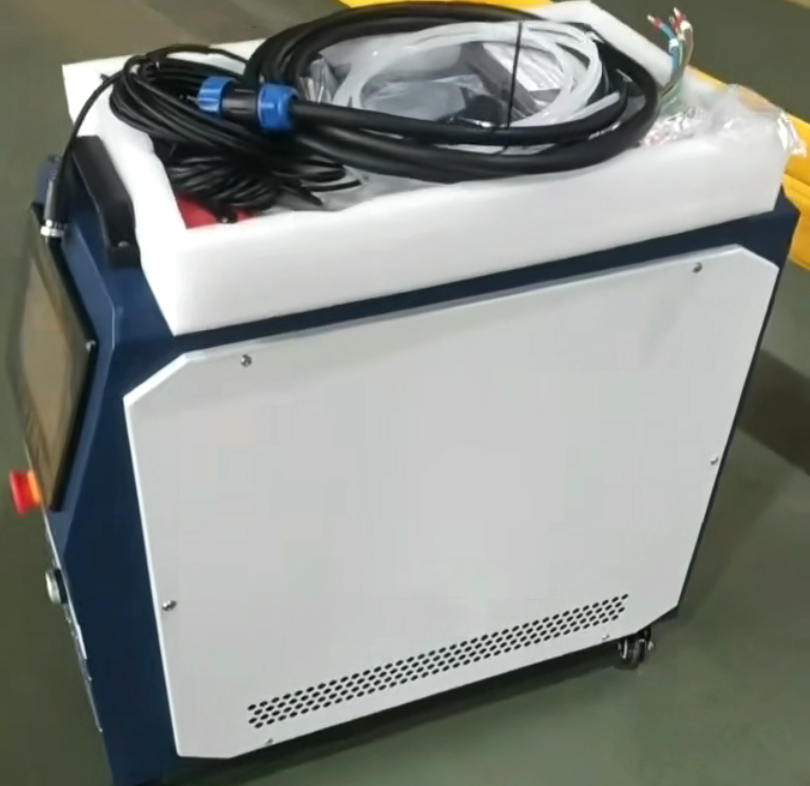
Portable Laser Welding Machine
Actual Performance of Handheld Laser Welding for Different Aluminum Materials
Different aluminum materials can behave quite differently during welding.Here are some experience from ZS Laser.
5xxx Series Aluminum — 5052 / 5083
5xxx series aluminum alloys such as 5052 and 5083 generally have good weldability.They are widely used in:
- Water tanks
- Sheet metal
- Marine components
- Structural parts
When the correct parameters and filler wire are used, they can provide relatively stable welding performance.
6xxx Series Aluminum — 6061 / 6063
6061 and 6063 are widely used for aluminum profiles, doors and windows, frames, and structural components.However, some 6xxx series alloys can have a higher tendency toward hot cracking.Filler wire selection is therefore particularly important.
4043 aluminum-silicon wire is one commonly used option, but the appropriate filler should be selected according to the actual application rather than using one wire for every 6xxx series alloy.
Pure Aluminum — 1060
1060 aluminum has high thermal conductivity and can have a highly fluid molten pool.When welding thin sheets, excessive heat input can easily cause the material to collapse or burn through.Careful control of laser power, welding speed, and filler wire is therefore important.1060 aluminum can be used in applications such as aluminum busbars and decorative components.
Cast Aluminum
Cast aluminum can be more difficult to weld because of its casting structure, impurities, and possible internal porosity.Handheld laser welding can be considered for certain small repair or fabrication applications, but cast aluminum should be evaluated on a case-by-case basis.
For pressure-bearing or safety-critical components, welding procedures and inspection requirements should be carefully considered before production.
Key Points for Improving Aluminum Laser Welding Results
Equipment Selection
For aluminum welding, it is recommended to choose a water-cooled handheld laser welding machine with appropriate protection for highly reflective materials.
For many common aluminum welding applications, 1500W and 2000W systems are commonly considered, although the required power depends on material thickness, joint design, welding speed, and other process conditions.
Consumables
Use aluminum filler wire suitable for the base alloy.
Common choices include:
- 4043 aluminum wire
- 5356 aluminum wire
High-purity argon is commonly used as shielding gas.
The actual gas flow rate should be adjusted according to the welding head, nozzle, joint design, and process parameters rather than using one fixed value for every application.
Welding Process
Before welding:
- Thoroughly clean the aluminum surface.
- Remove oil and contamination.
- Remove excessive oxide contamination.
- Use appropriate filler wire.
- Adjust laser power and welding speed according to material thickness.
- Use multiple passes for applications that require deeper penetration.
For thin aluminum, controlled wobble movement can help manage the molten pool. For thicker aluminum, multi-pass filler welding may be required.
Laser Safety and Back-Reflection Protection
Because aluminum is highly reflective, the welding system should have suitable optical protection.
For long-term production, regularly inspect the protective lens and follow the equipment manufacturer’s maintenance requirements.
Conclusion
Aluminum is challenging to weld, but modern handheld laser welding technology has made the process much easier for many applications. With the right laser power, filler wire, shielding gas, and surface preparation, it can deliver fast welding, low distortion, and good weld appearance.
ZS Laser provides handheld laser welding solutions for aluminum and other metal materials. For specific applications, sample testing can help determine the most suitable machine and welding parameters.

WhatsApp
Scan the QR Code to start a WhatsApp chat with us.