 ZS Laser Equipment

Laser welding has historically faced limitations in some highly regulated applications, particularly where welding procedures had to meet strict code and qualification requirements. The situation, however, is changing. Advances in laser welding technology, process control, joint design, monitoring, and procedure qualification are gradually expanding the range of applications that can be considered. The inclusion of Laser Beam Welding (LBW) in the welding qualification framework of ASME Section IX-2023 is one indication of this development.
This does not mean that laser welding can now be used without restriction in pressure vessels or other code-controlled applications. The applicable construction code, project requirements, material, joint design, qualification results, and inspection requirements still have to be considered. However, as laser welding processes continue to mature and qualification practices develop, applications that were previously difficult or impractical may become technically and procedurally feasible in the future.
Laser Beam Welding in ASME Section IX
Section IX defines laser beam welding as a welding process that produces coalescence using heat from a concentrated coherent light beam. It also distinguishes conventional laser beam welding from Low-Power Density Laser Beam Welding (LLBW).For procedure qualification, QW-215 is specifically titled:
“Electron Beam Welding, Laser Beam Welding, and Low-Power Density Laser Beam Welding.”
For EBW and LBW, excluding LLBW, QW-215.1 requires the WPS qualification test coupon to use joint geometry duplicating that used in production. If the production weld includes a lap-over, the qualification test coupon must also include the lap-over.
The mechanical testing requirements of QW-451 apply under QW-215.2, while QW-215.3 directs the applicable essential variables to the relevant welding-variable tables, including Table QW-264 and Table QW-264.2.
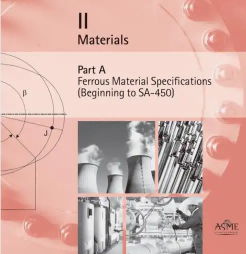
ASME Section IX Cover
Laser Welding Variables
Section IX provides a dedicated Table QW-264 — Welding Variables Procedure Specifications (WPS) — Laser Beam Welding (LBW).The table identifies a number of variables relevant to laser welding, including items associated with:
- Joint configuration and fit-up gap
- Base metals
- Filler metals
- Position
- Preheat
- PWHT
- Shielding gas
- Travel and beam factors
- Optical technique
- Equipment type
- Wavelength
- Spot size
- Oscillation
These variables are important because the Code qualification framework is based on controlling specified welding variables rather than treating all laser welding processes as interchangeable.Section IX also provides Table QW-264.1 for special process variables associated with LBW. This table includes variables such as wavelength, spot size, and oscillation for the applicable welding processes.
LBW and Low-Power Density Laser Welding Are Not the Same
Another important distinction is between Laser Beam Welding (LBW) and Low-Power Density Laser Beam Welding (LLBW).
Section IX provides a separate Table QW-264.2 specifically for Low-Power Density Laser Beam Welding. Its welding variables include items such as heat input, pulse, mode/energy, decrease in power, oscillation, travel/beam factors, optical technique, equipment type, wavelength, and spot size.
Therefore, manufacturers should identify which laser welding process applies before determining the relevant qualification requirements.
What Does This Mean for Laser Welding Manufacturers?
The presence of LBW provisions in Section IX is significant because it provides a defined framework for qualifying laser welding procedures.However, this does not mean that simply having a laser welding machine makes a product ASME compliant.
The qualification still depends on the applicable welding procedure, test coupon, materials, joint configuration, welding variables, and required testing.For example, changing an important qualified variable outside the permitted range may affect the qualification of the existing WPS. Therefore, laser welding parameters should be controlled and documented as part of the qualified welding procedure.
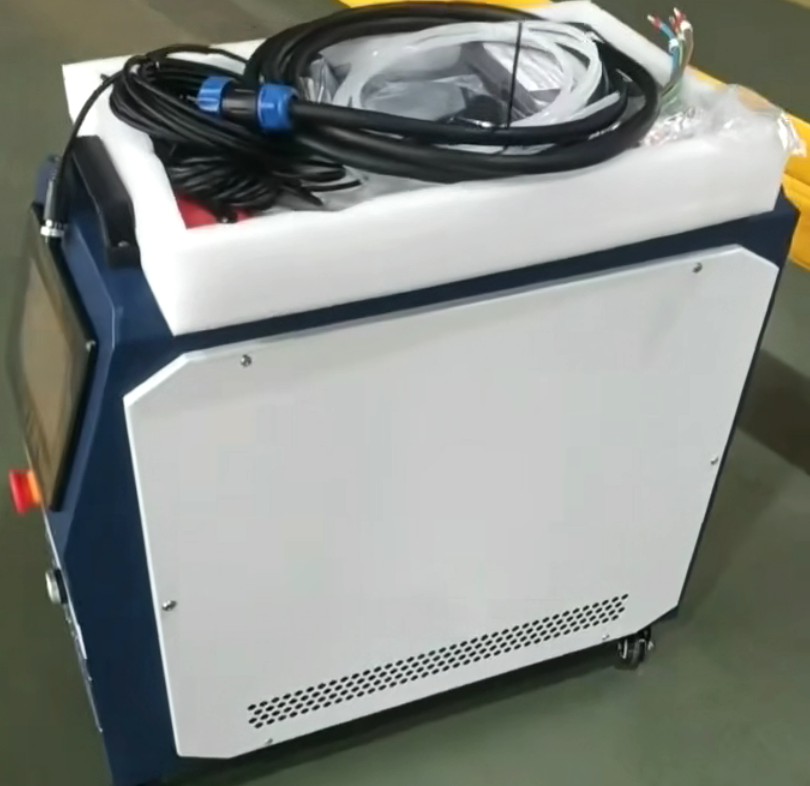
Handheld laser welding machine
Does Section IX Automatically Approve Laser Welding for Pressure Vessels?
No.
This distinction is important.
ASME Section IX is concerned with the qualification of welding, brazing, and fusing procedures and personnel. The fact that LBW is included in Section IX means that laser beam welding can be addressed through the Code’s welding qualification framework.It does not by itself establish that every pressure vessel, pressure-retaining component, or other ASME construction can be manufactured using laser welding.
For an actual pressure-equipment project, the applicable construction Code and project requirements must also be considered.Therefore, the correct conclusion is:
Laser beam welding is covered by ASME Section IX-2023 for welding procedure qualification, but Section IX qualification alone does not mean that laser welding is automatically acceptable for every pressure-vessel application.
Conclusion
ASME BPVC Section IX-2023 clearly recognizes Laser Beam Welding (LBW) and provides specific requirements and welding-variable tables for the qualification of laser welding procedures.For manufacturers working with laser welding in code-controlled applications, understanding QW-215, Table QW-264, QW-264.1, and QW-264.2 is therefore important.
The practical lesson is simple: laser welding can be qualified under the Section IX framework, but the actual production application must be evaluated according to the applicable Code requirements and project specifications.
ZS Laser provides laser welding equipment and customized welding solutions for different materials, joint configurations, and production requirements. For applications involving code-controlled welding, process development and qualification should be evaluated according to the requirements of the specific project.

WhatsApp
Scan the QR Code to start a WhatsApp chat with us.