 ZS Laser Equipment

Welding and metal fabrication are closely related in the manufacturing industry, but they do not mean the same thing. The terms are sometimes used interchangeably, especially when describing metalworking companies, workshops, and industrial production services.
The main difference is their scope. Welding is a specific process used to join metal components, while metal fabrication covers a broader range of operations used to produce metal parts, components, and assemblies.
However, the relationship between these two activities is more complicated than simply saying that welding is part of fabrication. In modern manufacturing, many fabrication companies do not produce complete end products. Instead, they process raw or semi-finished materials into components and subassemblies, which are then delivered to another manufacturer for final assembly.
For example, a metal fabrication shop may cut, bend, drill, and weld steel sheets into a machine frame. The frame is then supplied to an equipment manufacturer, which installs motors, electrical systems, control panels, and other components.
In this guide, we will explain the differences between welding and metal fabrication, how they work together, where prefabrication fits into the manufacturing process, and what equipment is commonly used in each operation.
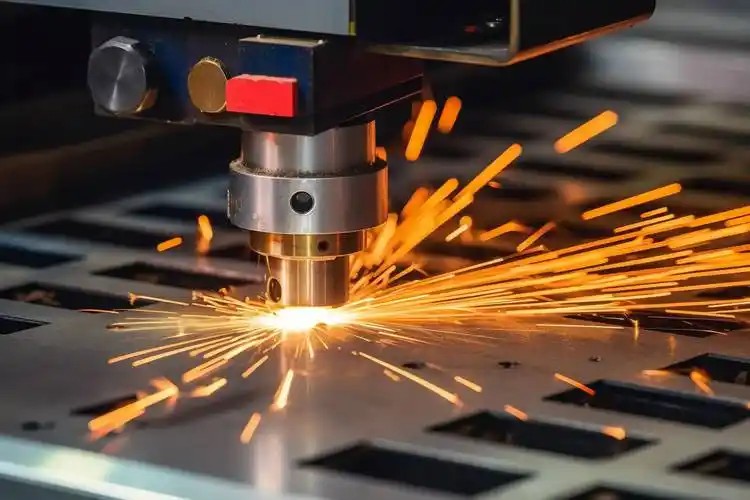
Metal sheet cutting fabrication
What Is Welding?
Welding is a metal-joining process that creates a permanent connection between two or more components. It generally uses heat, pressure, or a combination of both to form a joint.Depending on the welding method, the base metal may be melted, or the materials may be joined through solid-state processes without melting the base materials.
Welding is widely used in manufacturing because many products and structures require strong, reliable connections between separate metal parts.
Common Welding Processes
Different welding processes are suitable for different materials, thicknesses, joint designs, and production requirements.
MIG Welding (GMAW)
MIG welding uses a continuously fed consumable wire electrode and shielding gas. It is widely used in general metal fabrication because it offers relatively high productivity and is suitable for many carbon steel, stainless steel, and aluminum applications.
TIG Welding (GTAW)
TIG welding uses a non-consumable tungsten electrode to create the arc. Filler metal can be added when required. It provides precise control and is commonly used for stainless steel, aluminum, thin materials, and applications requiring clean weld appearance.
Stick Welding (SMAW)
Stick welding uses a flux-coated consumable electrode. It is often used in construction, structural steelwork, maintenance, and outdoor applications because the equipment is relatively portable and does not require an external shielding gas supply.
Laser Welding
Laser welding uses a concentrated laser beam as the heat source to join metal components. It offers high energy density, a relatively narrow heat-affected zone, and the potential for fast processing.
Handheld laser welding machines are used for flexible welding operations, while CNC and robotic laser welding systems are suitable for applications requiring repeatable paths, fixtures, and automated production.
Submerged Arc Welding (SAW)
Submerged arc welding uses a continuously fed wire electrode beneath a layer of granular flux. It is commonly used for thick materials and long weld seams in heavy fabrication and structural steel production.
What Does Welding Produce?
The direct result of welding is a welded joint or a joined assembly.Depending on the project, the welded component may be:
- A joint connecting two metal plates
- A welded pipe or tube assembly
- A metal frame or support structure
- A sheet metal enclosure
- A bracket or mounting component
- A structural steel subassembly
A welded component does not necessarily represent a complete finished product. It may be one part of a larger machine, vehicle, building structure, or industrial system.
What Is Metal Fabrication?
Metal fabrication is the process of transforming raw or semi-finished metal materials into usable components, structures, or assemblies through a combination of manufacturing operations.Unlike welding, which focuses specifically on joining materials, metal fabrication can involve multiple processes, including cutting, bending, punching, drilling, machining, welding, and finishing.
The final output depends on the customer’s drawings, specifications, and production requirements.A metal fabrication company may manufacture a single bracket, a sheet metal cabinet, a welded machine frame, or a large structural component. It does not necessarily need to produce the complete equipment or product in which the component will eventually be used.
Common Metal Fabrication Processes
1. Metal Cutting
Cutting is often one of the first operations in metal fabrication. Raw sheets, plates, tubes, or profiles are cut into the required dimensions and shapes.Common cutting methods include:
- Fiber laser cutting
- Plasma cutting
- Waterjet cutting
- Mechanical shearing
- Saw cutting
The appropriate method depends on the material, thickness, geometry, accuracy requirements, and production volume.
2. Bending and Forming
After cutting, metal components may need to be bent or formed into specific shapes.Common equipment includes CNC press brakes, plate rolling machines, tube bending machines, and stamping presses.
These processes are widely used to produce metal enclosures, cabinets, brackets, panels, frames, and other formed components.
3. Punching and Drilling
Punching and drilling create holes, slots, and other features required for fastening, mounting, or later assembly.
CNC punching machines are frequently used in sheet metal production, while drilling and machining operations are used for components requiring specific hole positions and dimensional accuracy.
4. Welding and Joining
When separate metal parts need to become a single component or assembly, welding may be used.However, welding is not the only joining method in fabrication. Depending on the product, manufacturers may also use:
- Bolting and screwing
- Riveting
- Mechanical fastening
- Brazing
- Adhesive bonding
The choice depends on structural requirements, materials, production methods, and whether the connection needs to be permanent or removable.
5. Grinding and Surface Finishing
After cutting, forming, and welding, components may require additional finishing operations.These can include deburring, grinding, weld-seam finishing, polishing, sandblasting, painting, and powder coating.
The purpose is to meet dimensional, functional, corrosion-resistance, and appearance requirements.
Welding vs. Metal Fabrication: What Are the Main Differences?
The simplest way to understand the difference is that welding focuses on how metal parts are joined, while fabrication focuses on how metal parts and assemblies are produced.
| Comparison | Welding | Metal Fabrication |
|---|---|---|
| Main purpose | Joining metal components | Producing metal parts and assemblies |
| Scope | A specific manufacturing process | A broader production process |
| Main operations | Arc welding, laser welding, resistance welding, etc. | Cutting, bending, punching, drilling, welding, finishing, etc. |
| Equipment | Welding machines, welding guns, torches, fixtures | Laser cutters, press brakes, punching machines, welding systems, and more |
| Main output | Welded joints or assemblies | Components, subassemblies, or complete fabricated structures |
| Key quality concerns | Weld strength, penetration, appearance, defects | Dimensions, shape, tolerances, assembly accuracy, and overall quality |
1. Difference in Scope
Welding is a specialized joining operation. A welding job may involve connecting two plates, welding a pipe joint, or joining several metal parts into an assembly.
Metal fabrication has a wider scope. It may begin with material selection and drawing review, followed by cutting, forming, machining, joining, and finishing.
A fabrication project can include welding, but it can also be completed without welding. For example, a sheet metal component produced through laser cutting and bending may not require any welded joints.
2. Difference in Production Responsibility
A welding operation is primarily responsible for producing the required joint.A fabrication project involves more production considerations, such as:
- Material selection and preparation
- Reading and interpreting engineering drawings
- Cutting dimensions and forming accuracy
- Hole positions and component fit-up
- Welding and joining requirements
- Final dimensions and surface quality
In other words, a good weld does not automatically mean that the complete fabricated component is correct. The parts must also be cut, formed, positioned, and assembled according to the specifications.
3. Difference in Equipment
Welding operations mainly require welding equipment and related accessories.For example, a laser welding workstation may include a fiber laser source, welding gun, cooling system, wire feeder, shielding gas supply, and safety equipment.
Metal fabrication requires a wider range of equipment because it involves different manufacturing operations.A typical sheet metal fabrication workshop may contain fiber laser cutting machines, CNC press brakes, punching machines, drilling equipment, welding machines, grinding tools, and inspection instruments.
The equipment required depends on the types of components the company produces.
4. Difference in the Final Deliverables
This is an important distinction, especially when discussing industrial suppliers.A welding company may be contracted to weld components or complete specific joints. A metal fabrication company may be contracted to manufacture the components themselves, including cutting, forming, welding, and finishing.
However, metal fabrication does not always mean producing a complete end product.A fabrication shop may deliver:
- Individual cut metal parts
- Bent sheet metal components
- Welded frames
- Machine bases
- Structural steel assemblies
- Semi-finished metal subassemblies
These items may be supplied to another manufacturer for further assembly and integration.
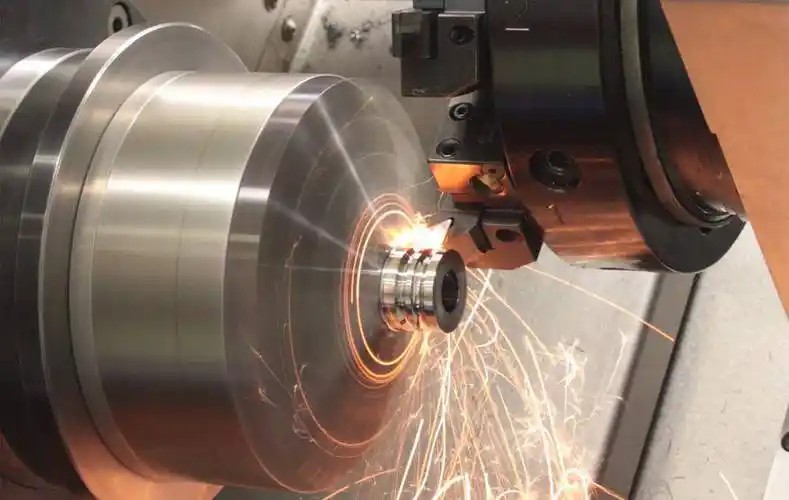
Metal Fabrication
How Welding and Metal Fabrication Work Together
In many industrial projects, welding is one of the processes used within a larger metal fabrication workflow.Consider the production of an industrial machine frame.
First, steel plates and profiles are cut according to engineering drawings. The components are then drilled, machined, or bent where necessary. After preparation, the parts are positioned and welded together to create the frame.
The welded frame may then be ground, inspected, and painted before being delivered to the equipment manufacturer.
The equipment manufacturer can subsequently install motors, transmission systems, electrical components, and control equipment.
The fabrication company has produced the metal frame, but it has not necessarily manufactured the complete industrial machine.
Example: Sheet Metal Cabinet Production
A sheet metal cabinet is a good example of how fabrication and welding work together.
- Laser Cutting: Metal sheets are cut into cabinet panels, doors, brackets, and mounting plates.
- Bending: A CNC press brake forms the flat sheets into the required shapes.
- Welding: Selected panels, brackets, and structural parts are joined where necessary.
- Finishing: Weld seams are ground or cleaned, and the surfaces may be treated or powder-coated.
- Delivery for Assembly: The fabricated cabinet components or cabinet structure are supplied for the next production stage.
The final assembly may involve installing hinges, locks, electrical components, wiring, cooling fans, and control systems.In this case, welding is only one operation within the broader fabrication process.
Example: Automotive Component Production
Automotive manufacturing also relies heavily on metal fabrication and welding.A supplier may produce brackets, support frames, battery enclosures, body components, and other metal parts according to the vehicle manufacturer’s drawings.
The supplier may perform cutting, stamping, bending, machining, and welding before delivering the components to an automotive assembly plant.The automotive manufacturer then integrates these parts with other mechanical, electrical, plastic, and electronic components.This illustrates why fabrication companies often work as suppliers within a larger manufacturing supply chain.
What Is Prefabrication, and How Is It Related to Metal Fabrication?
Prefabrication is another term that is sometimes confused with metal fabrication.Prefabrication generally means producing or assembling components in advance, usually in a factory or workshop, before they are transported to the location where they will be installed or used.The main purpose is to move suitable manufacturing operations away from the final installation site.
For example, instead of cutting, bending, and welding steel components at a construction site, a fabrication workshop can complete these operations in advance. The finished components or subassemblies are then transported to the site for installation.
Metal Fabrication vs. Prefabrication
These terms are related, but they describe different aspects of production.
- Metal Fabrication describes the manufacturing operations used to produce metal components and assemblies.
- Prefabrication describes when and where components are produced relative to their final installation or assembly.
A prefabricated metal component may involve several fabrication processes, including cutting, bending, welding, and finishing.
For example, a steel structure manufacturer may produce beams, columns, brackets, and welded sections in a factory. These components are transported to a construction site, where they are connected and installed.This approach reduces the amount of cutting, welding, and other processing required at the final site.
Not all metal fabrication is prefabrication, however. A custom metal component manufactured and completed in a workshop may be delivered directly to its end user without being part of a larger on-site assembly project.
Welding and Fabrication in Modern Manufacturing
Modern manufacturing increasingly uses CNC equipment, automated production lines, and robotic systems to improve accuracy and productivity.These technologies are changing both welding and metal fabrication.
CNC Metal Fabrication
CNC technology allows manufacturers to process metal components according to digital drawings and programmed instructions.
Common examples include:
- CNC fiber laser cutting
- CNC punching
- CNC press brake bending
- CNC tube cutting
- CNC machining
These systems help manufacturers improve dimensional consistency, reduce manual operations, and produce complex components more efficiently.
Automated and Robotic Welding
For production requiring repeated welds, consistent joint quality, or higher output, manufacturers may use automated welding equipment.
Options include:
- Automatic laser welding machines
- CNC laser welding systems
- Robotic laser welding cells
- Robotic MIG and TIG welding systems
The appropriate solution depends on component geometry, production volume, joint accessibility, material, and required quality.
The Role of Laser Welding in Metal Fabrication
Laser welding has become an important option for certain metal fabrication applications.Compared with conventional arc welding processes, laser welding offers high energy density, a relatively concentrated heat input, and the potential for high processing speeds.
It can be used for stainless steel enclosures, sheet metal components, metal frames, pipes, kitchen equipment, automotive parts, and other fabricated products.Different configurations serve different production requirements:
- Handheld Laser Welding Machines: Suitable for flexible welding tasks, custom fabrication, maintenance, and small-to-medium production.
- CNC Laser Welding Machines: Suitable for repeatable welding paths, precise component positioning, and dedicated production fixtures.
- Robotic Laser Welding Systems: Suitable for automated production, complex workpiece movement, and higher-volume manufacturing.
Laser welding is not the best solution for every fabrication application. Material thickness, joint design, gap tolerance, required penetration, production speed, and cost should all be considered when selecting a welding process.
How to Choose Between a Welding Service and a Metal Fabrication Service
The right supplier depends on what your project actually requires.
If your metal parts are already cut, formed, and positioned, and you only need them joined, a welding service may be sufficient.
If you need a supplier to manufacture components from raw or semi-finished materials, you may need a metal fabrication service.
When evaluating a supplier, consider the following questions:
1. Do you already have finished components?
If yes, you may only need welding or assembly services. If not, you may require cutting, bending, machining, and other fabrication operations.
2. Do you need individual components or complete assemblies?
Some suppliers specialize in individual parts, while others can manufacture welded subassemblies or complete metal structures.
3. What materials and thicknesses are involved?
Different materials and thicknesses require different cutting, forming, and welding capabilities.
4. What are your production volume and quality requirements?
For one-off projects, flexible equipment may be sufficient. Repetitive production may benefit from CNC systems, fixtures, and automation.
5. Will the components be assembled at another location?
If so, dimensional accuracy, packaging, transportation, and installation requirements should be considered during fabrication planning.
Frequently Asked Questions
1. Is welding the same as metal fabrication?
No. Welding is a joining process used to connect metal components. Metal fabrication is a broader manufacturing activity that may include cutting, bending, punching, machining, welding, and finishing.
2. Is welding part of metal fabrication?
Yes. Welding is one of the common joining processes used in metal fabrication. However, not every fabrication project requires welding, and welding can also be performed independently for repair, maintenance, or specialized joining work.
3. Can metal fabrication be completed without welding?
Yes. Some components can be produced through cutting, bending, punching, machining, or stamping without requiring welded joints. Mechanical fastening and other joining methods may also be used.
4. Does metal fabrication mean producing a complete product?
Not necessarily. Metal fabrication can produce individual components, welded assemblies, or complete metal structures. Many fabrication companies manufacture parts and subassemblies that are later integrated into larger products by other manufacturers.
5. What is the difference between fabrication and prefabrication?
Fabrication refers to the processes used to produce components and assemblies. Prefabrication refers to producing or assembling components in advance, usually away from the final installation site. Prefabricated components are often manufactured through metal fabrication processes.
6. What is the difference between a welder and a fabricator?
A welder specializes in joining materials and producing welds that meet the required specifications. A fabricator generally works across a broader range of production activities, including drawing interpretation, material preparation, cutting, forming, fitting, and assembly. In many workshops, one person may perform both roles.
7. Which welding process is best for metal fabrication?
There is no single best welding process for every fabrication project. MIG welding is widely used for general production, TIG welding is suitable for applications requiring precise control and clean welds, and laser welding can offer high speed and concentrated heat input for suitable materials and joint designs. The best choice depends on the application.
Conclusion
Welding and metal fabrication are closely connected, but they serve different purposes in industrial production.
Welding is a specific process for joining metal components. Metal fabrication covers a much wider range of operations used to produce metal parts, structures, and subassemblies. These fabricated components may be supplied as individual parts, welded assemblies, or prefabricated sections for installation or integration into larger products.Understanding this distinction helps manufacturers choose the right production process, equipment, and suppliers.
For companies involved in metal fabrication, selecting suitable cutting, forming, and welding equipment is essential for improving production efficiency and component quality. Laser welding can be a valuable option for applications requiring flexible operation, precise joining, and repeatable results.
ZS Laser provides handheld, CNC, and robotic laser welding solutions for different metal fabrication applications. Contact our team to discuss your materials, components, and production requirements.

WhatsApp
Scan the QR Code to start a WhatsApp chat with us.