 ZS Laser Equipment

ThisWelding has traditionally depended heavily on skilled operators to control welding speed, torch position, heat input, and joint quality. As manufacturers move toward higher production volumes and more consistent quality, welding automation has become an increasingly important part of modern manufacturing.
Automated welding can range from relatively simple systems that automatically move a welding torch along a straight joint to sophisticated robotic welding cells capable of loading, positioning, welding, inspection, and production monitoring.Depending on the application, welding automation can be based on MIG/MAG, TIG, laser welding, or other welding processes.
What Is Welding Automation?
Welding automation is the use of mechanical and electronic systems to control and perform welding operations with reduced dependence on continuous manual operation.
In manual welding, an operator controls the welding torch, movement, welding parameters, and often the workpiece position.While in an automated welding system, some or all of these functions are controlled by equipment.A typical welding automation system may include:
- Welding power source
- Welding torch or laser welding head
- Motion system
- Welding fixture
- Welding positioner
- Wire feeding system
- Shielding gas system
- PLC, CNC, or robot controller
- Sensors or vision systems
- Safety equipment and enclosure
The level of automation can vary considerably. A simple automatic welding machine may only automate torch movement, while a fully automated welding line can integrate material handling, welding, inspection, and production management.
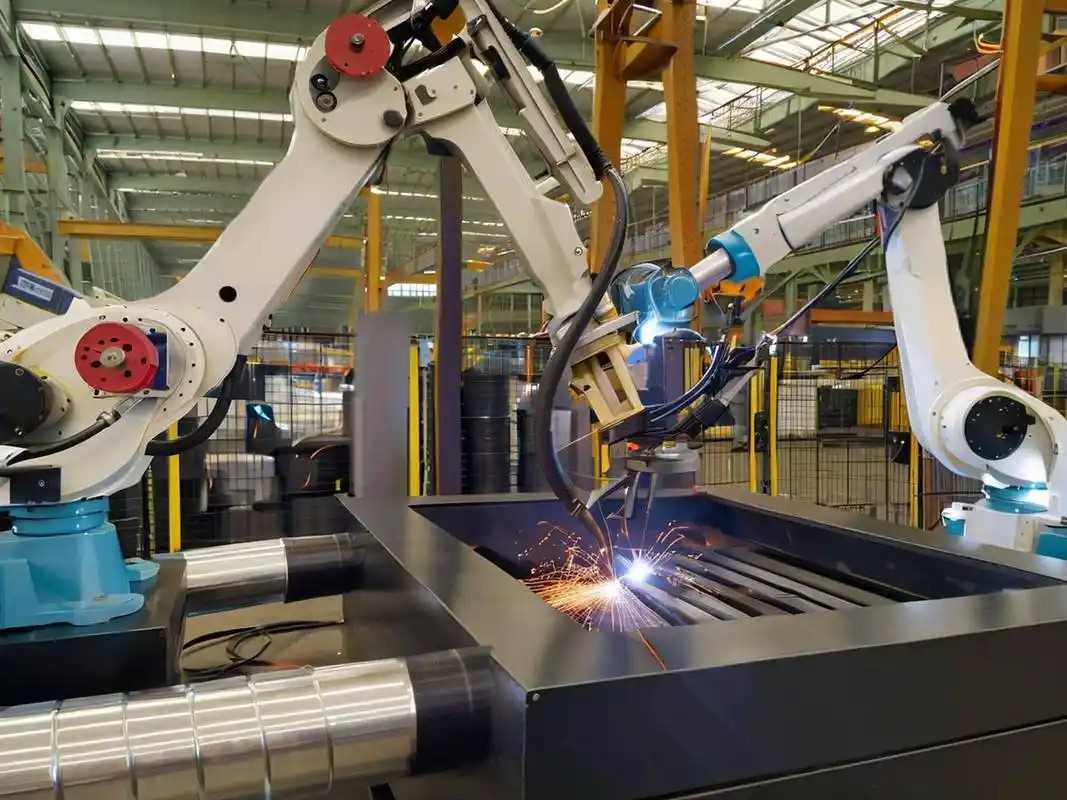
Robot welding automation
How Does Welding Automation Work?
Although automated welding systems can be configured in many different ways, the basic workflow is usually similar.
1. Workpiece Loading
The components are loaded into the welding area manually, mechanically, or by an automated material-handling system.For high-volume production, robots or other automated systems may transfer components directly from an upstream process.
2. Fixturing and Positioning
The workpieces are placed into a welding fixture.The fixture establishes the correct position of the components and helps maintain the required joint geometry during welding.Depending on the component, a welding positioner or rotary table may also rotate or reposition the workpiece.
3. Welding
The welding system follows a programmed path.Depending on the process, this may involve:
- MIG/MAG welding
- TIG welding
- Laser welding
- Resistance welding
- Other specialized processes
The controller coordinates movement with welding parameters such as power, current, voltage, travel speed, wire feeding, and shielding gas.
4. Inspection and Unloading
After welding, the component can be inspected manually or automatically.More advanced systems may use sensors or machine vision to check weld position, dimensions, surface defects, or component geometry.The finished component is then unloaded manually or transferred automatically to the next production stage.
Manual vs Semi-Automatic vs Automatic Welding
Not every welding application requires the same level of automation.
Manual Welding
In manual welding, the operator controls most of the welding process.The operator typically controls:
- Torch movement
- Welding speed
- Torch angle
- Welding position
- Start and stop points
- Workpiece positioning
Manual welding provides flexibility and is often practical for low-volume production, repairs, prototypes, and highly customized components.Its main limitation is that weld quality and productivity can depend strongly on operator skill and working conditions.
Semi-Automatic Welding
Semi-automatic welding combines manual work with automated control.For example, the operator may position and clamp the workpiece manually while an automatic mechanism moves the welding torch along a programmed path.The operator still performs some important tasks, but the welding movement or parameters are controlled more consistently.
Automatic Welding
In automatic welding, the equipment performs most of the welding operation according to a programmed process.The operator may still be responsible for loading parts, monitoring the system, changing fixtures, or handling finished components.Automatic welding is particularly useful when the same or similar components need to be welded repeatedly.
Common Welding Automation Systems
Different automated welding machines are designed around different production requirements.
Automatic Welding Machines
Dedicated automatic welding machines are often designed for repetitive production.The machine may use a fixed welding head, linear movement system, rotary mechanism, or customized tooling.They can be highly productive when the product geometry remains consistent.
CNC Welding Systems
CNC welding systems use programmable axes to control the movement of the welding torch or welding head.They are useful when the welding path requires multiple movements or when different welding programs need to be stored and recalled.
Robotic Welding Cells
Robotic welding cells use industrial robots to move the welding torch.They are suitable for components with complex geometries or multiple welding positions.A robotic welding cell can also integrate:
- Automatic fixtures
- Positioners
- Sensors
- Vision systems
- Safety enclosures
- Material handling
Rotary Welding Systems
Rotary welding systems rotate cylindrical or circular workpieces during welding.They are commonly used for:
- Pipes
- Tubes
- Flanges
- Cylindrical housings
- Circular joints
The rotation of the workpiece can simplify the welding path and maintain a more consistent welding position.
MIG/MAG Welding Automation
This is one of the most widely used welding processes for automated metal fabrication.In automated MIG/MAG welding, the system controls the welding torch movement while a wire feeder continuously supplies filler metal.Automation can improve the consistency of:
- Travel speed
- Torch position
- Wire feeding
- Welding current
- Arc voltage
- Welding sequence
MIG/MAG automation is widely used for steel structures, automotive components, machinery, frames, and other fabricated metal products.
However, the welding process still produces relatively significant heat input compared with some laser welding applications, and fixture design and weld sequencing remain important for controlling distortion.
TIG Welding Automation
It can also be automated, particularly when high control of the welding arc and weld appearance is required.An automated TIG system may control:
- Torch movement
- Welding current
- Travel speed
- Filler wire feeding
- Shielding gas
- Welding sequence
TIG automation is commonly considered for precision components, stainless steel, aluminum, and applications where weld appearance and process control are important.
Compared with MIG/MAG, TIG generally has lower deposition rates, so production requirements need to be considered when determining whether TIG automation is appropriate.
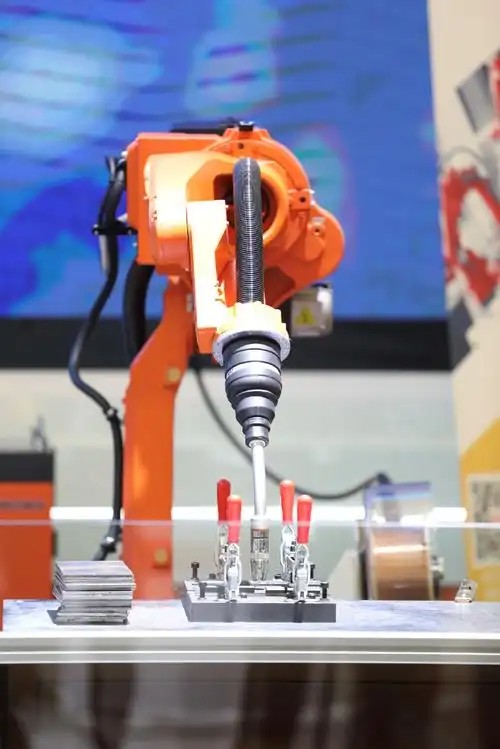
TIG automatic welding
Laser Welding Automation
Laser welding is particularly attractive for automated production because the laser beam can be precisely controlled and integrated with CNC systems, robots, scanners, and other motion systems.An automated laser welding system may include:
- Fiber laser source
- Laser welding head
- CNC or robot controller
- Welding fixture
- Rotary or linear axes
- Wire feeder when filler is required
- Shielding gas system
- Safety enclosure
- Monitoring or vision system
It can provide a narrow and localized heat source, which can be advantageous for thin materials, precision components, and applications where heat input and distortion need to be controlled.
Laser welding automation is used for applications involving materials such as:
- Stainless steel
- Carbon steel
- Aluminum alloys
- Copper and copper alloys
- Titanium
- Other laser-weldable metals
However, laser welding is not automatically suitable for every component. Joint fit-up, material properties, thickness, surface condition, laser configuration, and process parameters all influence the final result.
Welding Fixtures and Positioners
One of the most important parts of a welding automation system is often not the welding machine itself, but the fixture.Automation works best when every workpiece is placed in a predictable and repeatable position.A welding fixture can:
- Locate components
- Clamp parts
- Maintain joint alignment
- Control the welding gap
- Prevent movement
- Improve repeatability
For more complex components, a welding positioner can rotate or tilt the workpiece during welding.Common examples include:
- Rotary tables
- Two-axis positioners
- Headstock-tailstock systems
- Rotary fixtures
- Linear positioning systems
- Customized clamping fixtures
A poorly designed fixture can limit the performance of an otherwise advanced welding machine.For this reason, fixture design should be considered together with the welding process rather than treated as an afterthought.
Sensors and Vision Systems
Sensors can provide additional information to an automated welding system.Depending on the application, sensors may be used for:
- Workpiece detection
- Position verification
- Seam tracking
- Weld monitoring
- Dimensional inspection
- Part presence detection
Machine vision can also be integrated into automated welding systems.For example, a vision system can identify the position of a component before welding or verify whether the component has been correctly loaded into the fixture.More advanced systems may combine vision, laser sensors, or other measurement technologies to compensate for variations in workpiece position.The required level of sensing depends on the production process. Not every welding application needs an advanced vision system.
PLC, CNC, and Robot Control
The control system is the central part of an automated welding machine.Different systems may use PLC, CNC, robot controllers, or a combination of these technologies.
PLC Control
PLC systems are widely used to control machine sequences, sensors, cylinders, clamps, safety systems, and other automated functions.
CNC Control
CNC systems are useful when precise multi-axis movement and programmable welding paths are required.A CNC welding system can store different programs for different products and control the movement of the welding head along programmed coordinates.
Robot Control
Robotic welding systems use dedicated robot controllers to coordinate robot movement with welding equipment, positioners, sensors, and other devices.The control architecture should be selected according to the complexity of the application rather than simply choosing the most advanced controller available.
Advantages of Welding Automation
Welding automation can provide several important benefits when the application is suitable.
Consistent Welding
Automated systems can maintain more consistent welding parameters and movement than manual welding under repetitive production conditions.This can improve weld repeatability from one component to the next.
Higher Productivity
Automation can reduce repetitive manual operations and allow equipment to perform welding continuously according to programmed cycles.The actual productivity improvement depends on loading, unloading, fixture changes, welding speed, and the overall production cycle.
Reduced Dependence on Manual Welding
Automation can reduce the amount of continuous manual welding required.Operators can instead focus on machine monitoring, loading, inspection, maintenance, and process management.
Repeatability
For high-volume production, repeatability can be one of the most important benefits of automated welding.Once a process has been properly developed, the same welding program can be repeated across many similar components.
Better Process Control
Automated systems can precisely control movement and welding parameters.This makes it easier to establish and maintain a defined welding procedure.
Limitations of Welding Automation
Automation also has limitations.
Higher Initial Investment
An automated welding system generally costs more than a basic manual welding setup.The total investment can include:
- Welding equipment
- Motion system
- Fixtures
- Positioners
- Controllers
- Safety equipment
- Sensors
- Programming
- Integration
Fixture Development
Custom fixtures may be necessary for stable and repeatable production.For highly customized products, fixture development can become a significant part of the project.
Programming and Process Development
Automation does not automatically produce good welds.The welding parameters and motion path still need to be developed and tested.Materials, thickness, joint design, laser or arc parameters, welding sequence, and fixture conditions all need to be considered.
Less Flexible for One-Off Production
A fully automated system may not be economical for very small quantities or constantly changing products.Manual welding can remain more practical when components are highly customized and production volumes are low.
Which Applications Benefit from Welding Automation?
Welding automation is particularly attractive when the following conditions exist:
- Repetitive components
- Medium- or high-volume production
- Consistent joint geometry
- Stable upstream processes
- Defined welding paths
- High repeatability requirements
- Significant manual welding time
- Suitable fixtures
Typical applications include:
Automotive Components
Automated welding is widely used for repetitive automotive components and assemblies.
Depending on the component, manufacturers may use robotic MIG/MAG welding, laser welding, or other automated processes.
Sheet Metal Fabrication
Enclosures, cabinets, frames, brackets, and metal structures can benefit from automated welding when component geometry is consistent.
Tube and Pipe Assemblies
Rotary and multi-axis welding systems can automate welding around cylindrical components.
Industrial Machinery
Machine frames, equipment housings, structural components, and fabricated assemblies are potential applications for automated welding.
Metal Furniture and Fixtures
Tables, frames, racks, cabinets, and other repetitive products can benefit from automated welding when production volumes justify the investment.
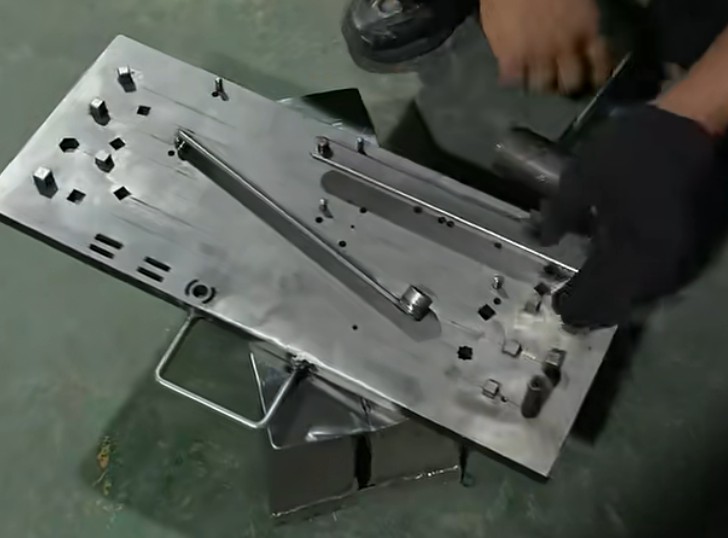
CNC Laser Welding effects
When Is Welding Automation Not the Best Choice?
Automation should not be selected simply because it is technologically advanced.Manual or semi-automatic welding may remain appropriate when:
- Production volume is very low
- Products change frequently
- Components have highly variable dimensions
- Joint locations are difficult to fixture
- The cost of automation cannot be justified
- Operators need to make frequent adjustments during welding
The goal is not to eliminate manual welding in every application.The goal is to choose an appropriate level of automation for the production requirements.
How to Choose a Welding Automation System
Choosing an automated welding machine requires more than selecting a welding power rating.Several factors should be evaluated.
1. Material
Determine whether the components are made from carbon steel, stainless steel, aluminum, copper, titanium, or another material.
Material properties influence the choice of welding process and parameters.
2. Material Thickness
Thickness affects welding power, penetration requirements, heat input, travel speed, and joint design.
3. Joint Type
Consider whether the application involves:
- Butt joints
- Lap joints
- Fillet welds
- Corner joints
- Circumferential welds
- Complex three-dimensional joints
4. Production Volume
Production volume is one of the most important factors when deciding the appropriate level of automation.
A high-volume repetitive product may justify a dedicated automatic welding machine or robotic welding cell, while a low-volume custom product may be better suited to manual or semi-automatic welding.
5. Part Size and Geometry
Large or complex components may require gantry systems, robots, rotary axes, or multi-axis welding systems.
6. Fixture Requirements
Determine how the workpiece will be positioned, clamped, rotated, and released.
In many projects, fixture design is just as important as the welding equipment.
7. Required Welding Accuracy
Precision applications may require CNC motion, laser welding, vision systems, seam tracking, or other technologies.
8. Future Production Requirements
It is also worth considering whether the machine may need to handle additional products in the future.
A highly specialized machine may provide excellent performance for one product but limited flexibility for future production.
Welding Automation Is More Than an Automatic Welding Machine
A common misunderstanding is that welding automation simply means purchasing an automated welding machine.In reality, successful automation is a combination of several elements:
Welding Process + Motion System + Fixture + Control System + Workpiece + Process Parameters
If one part of the system is poorly designed, the overall production result can be affected.For example, a high-power laser welding machine cannot compensate for a fixture that produces inconsistent joint gaps.Likewise, an advanced robot cannot compensate for unstable upstream parts.Good welding automation therefore starts with the complete manufacturing process rather than the welding machine alone.
Final Thoughts
Welding automation covers a wide range of technologies, from simple automatic welding machines to CNC systems, robotic welding cells, and automated laser welding platforms.The right solution depends on the material, component geometry, welding process, production volume, required accuracy, and fixture requirements.
For repetitive production, automation can improve welding consistency, repeatability, and productivity. However, automation also requires appropriate fixture design, programming, process development, and investment.
ZS Laser focuses on automated laser welding solutions for different production requirements, including automatic welding systems, CNC and multi-axis laser welding equipment, robotic integration, and customized welding fixtures. Each system can be configured according to the workpiece, welding process, and level of automation required.

WhatsApp
Scan the QR Code to start a WhatsApp chat with us.