 ZS Laser Equipment

Alloy welding refers to the process of joining metal alloys using a suitable welding method. Unlike pure metals, alloys contain two or more metallic or non-metallic elements, and their composition can significantly affect melting behavior, thermal conductivity, cracking tendency, hardness, and weld microstructure.
Laser welding is increasingly used for alloy welding because its highly concentrated energy source allows manufacturers to control heat input and weld geometry precisely. However, not every alloy has the same laser weldability. Some alloys are relatively easy to laser weld, while others require carefully selected parameters, filler wire, shielding, or even a different joining process.
This guide introduces the major types of alloys and explains which alloys are generally suitable for laser welding and which require greater process control.
What Is an Alloy?
An alloy is a metallic material made by combining a base metal with one or more additional elements to obtain specific properties.Common engineering alloys include:
- Aluminum alloys
- Stainless steels
- Low-alloy and high-strength steels
- Copper alloys
- Titanium alloys
- Nickel alloys
- Magnesium alloys
- Cobalt-based alloys
The addition of alloying elements can significantly change the material’s welding behavior. For example, aluminum alloys can be highly susceptible to solidification cracking, while copper alloys can be difficult to laser weld because of their high thermal conductivity and low absorption of common infrared laser wavelengths.
Therefore, alloy welding should always be considered according to the specific alloy grade rather than simply the name of the base metal.
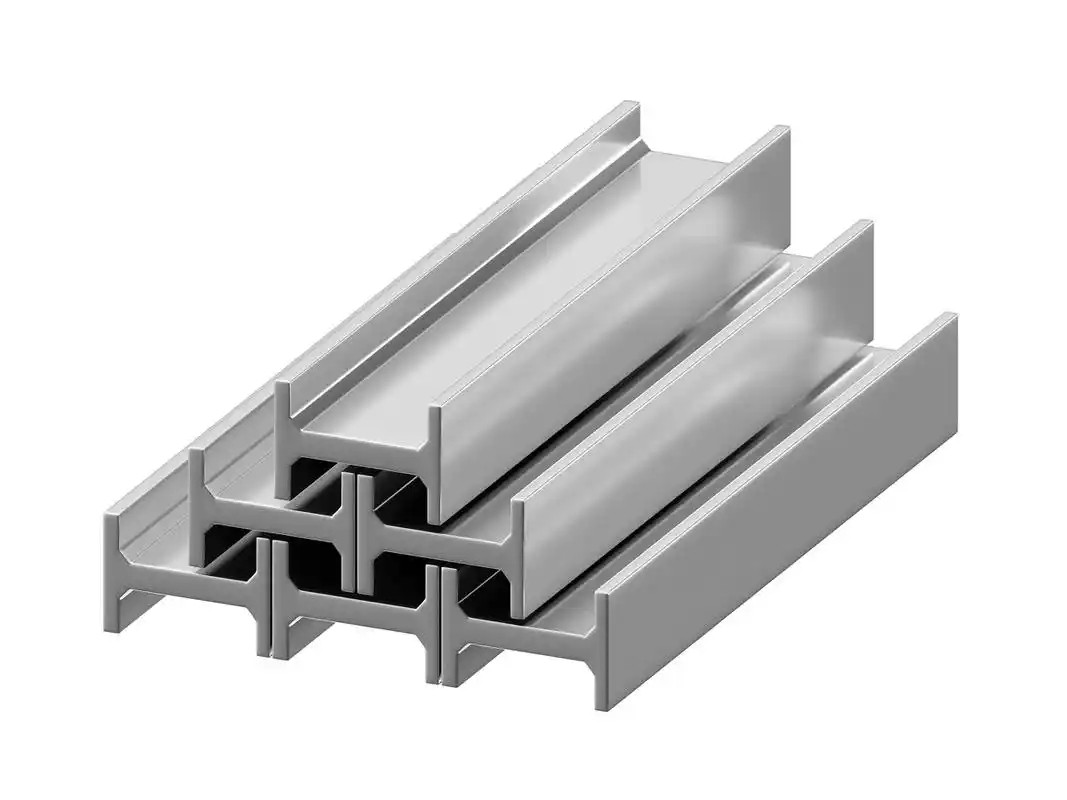
Aluminum alloy
Why Is Alloy Laser Welding Challenging?
The weldability of an alloy depends on much more than its melting temperature.Important factors include:
Thermal Conductivity
Materials with high thermal conductivity rapidly transfer heat away from the welding zone. Copper is a typical example. This can make it more difficult to establish and maintain a stable molten pool.
Laser Absorption
The amount of laser energy absorbed by the material depends on the material and laser wavelength. Copper, for example, has relatively low absorption of common near-infrared laser radiation at room temperature, making the initial stage of laser welding more challenging.
Solidification Cracking
Some alloys are particularly sensitive to cracking as the molten weld metal solidifies. Heat-treatable aluminum alloys and some precipitation-hardened nickel alloys are well-known examples.
Heat-Affected Zone Changes
Welding can alter the microstructure and mechanical properties of the HAZ. Heat-treatable alloys may experience local softening, while some high-strength steels can develop hard and crack-sensitive HAZ microstructures.
Alloying Element Evaporation
Some alloying elements can evaporate or redistribute during high-energy welding. Brass, for example, contains zinc, which has a much lower boiling point than copper. Zinc evaporation can contribute to spatter, porosity, and process instability.
These factors explain why laser welding power alone does not determine whether an alloy can be welded successfully.
Major Types of Alloys for Welding
1. Aluminum Alloys
Aluminum alloys are among the most widely used lightweight alloys in manufacturing.Common alloy series include:
- 1xxx series
- 2xxx series
- 3xxx series
- 5xxx series
- 6xxx series
- 7xxx series
Their applications include transportation, aerospace, automotive components, heat exchangers, rail vehicles, and general fabrication.
Are Aluminum Alloys Suitable for Laser Welding?
Some aluminum alloys are very suitable for laser welding, while others are significantly more challenging.
5xxx-series alloys are generally known for good weldability. Many 6xxx-series alloys can also be laser welded, but their susceptibility to solidification cracking means that filler selection and process parameters can be important.
The situation is different for many high-strength 2xxx and 7xxx alloys. These alloys can be highly susceptible to liquation and solidification cracking during fusion welding. Laser welding is possible for selected grades and applications, but it may require carefully selected filler wire and optimized laser parameters.
For example, aerospace research has demonstrated laser welding of 2xxx and 7xxx aluminum alloys, but porosity and solidification cracking remain important concerns.
Laser weldability:
5xxx aluminum: Generally favorable
6xxx aluminum: Good with appropriate process control
2xxx aluminum: Challenging
High-strength 7xxx aluminum: Challenging to difficult
The exact alloy grade, temper, joint design, thickness, and filler material should therefore be considered before production.
2. Stainless Steel Alloys
Stainless steel is an alloy family based primarily on iron and chromium, often with nickel, molybdenum, nitrogen, and other alloying elements.The major stainless steel groups include:
- Austenitic stainless steel
- Ferritic stainless steel
- Martensitic stainless steel
- Duplex stainless steel
- Precipitation-hardening stainless steel
Are Stainless Steels Suitable for Laser Welding?
Many stainless steels are highly suitable for laser welding.
Austenitic grades such as 304 and 316 are widely used in laser welding because they offer good weldability, corrosion resistance, and compatibility with precision manufacturing.Laser welding is particularly attractive for stainless steel when manufacturers need:
- Narrow welds
- Low distortion
- Clean appearance
- High welding speed
- Automated production
- Precise control of heat input
Ferritic and duplex stainless steels can also be laser welded, but their microstructure and heat-input requirements need to be considered.Martensitic and precipitation-hardening stainless steels require greater care because their hardness and mechanical properties can be sensitive to thermal cycles.
Laser weldability:
Austenitic stainless steel: Generally excellent
Ferritic stainless steel: Generally good
Duplex stainless steel: Good with controlled parameters
Martensitic stainless steel: More challenging
Precipitation-hardening stainless steel: Grade-dependent and process-sensitive
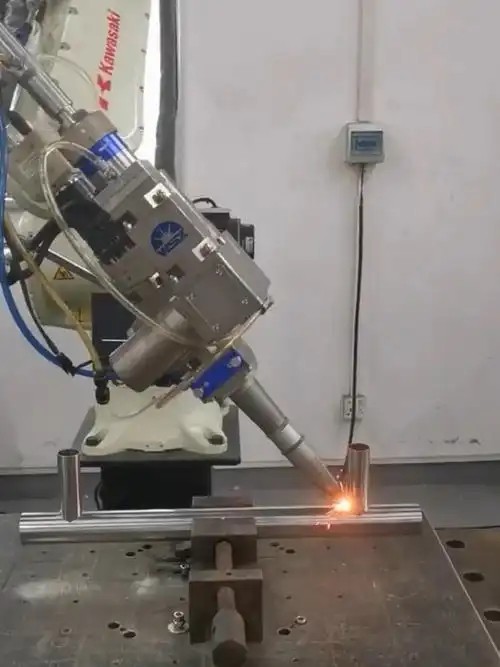
Stainless Steel Pipe Laser Welding
3. Low-Alloy and High-Strength Alloy Steels
Alloy steels are steels containing alloying elements such as chromium, nickel, molybdenum, manganese, and vanadium.Low-alloy steels commonly contain relatively small amounts of alloying elements and are widely used in:
- Automotive components
- Heavy machinery
- Structural components
- Pressure equipment
- Energy equipment
- High-strength components
Are Alloy Steels Suitable for Laser Welding?
Many low-alloy steels are suitable for laser welding.Laser welding can be particularly attractive for alloy steels because its concentrated heat source can produce narrow welds and relatively low overall heat input.However, higher-strength alloy steels require more attention to welding metallurgy. Quenched-and-tempered steels and precipitation-hardened steels can have high hardenability, which may lead to a hard HAZ and increased cracking risk.
Depending on the steel grade, thickness, restraint, and joint requirements, preheating, heat-input control, filler selection, or post-weld heat treatment may be required.
Laser weldability:
Low-alloy steels: Generally good
Medium/high-strength alloy steels: Grade-dependent
Quenched-and-tempered steels: Possible but process-sensitive
Very high-carbon/high-hardenability steels: Challenging
This means that a 2000W laser welder cannot simply be described as suitable for “all alloy steel.” The exact steel grade must be evaluated.
4. Titanium Alloys
Titanium alloys are valued for their high strength-to-weight ratio, corrosion resistance, and elevated-temperature performance.Common titanium alloy groups include:
- Commercially pure titanium
- Alpha alloys
- Alpha-beta alloys
- Beta alloys
The most widely used titanium alloy is Ti-6Al-4V, also known as Grade 5.
Are Titanium Alloys Suitable for Laser Welding?
Many titanium alloys have good fusion weldability and are well suited to laser welding.Ti-6Al-4V is widely used and has good weldability when appropriate welding procedures are followed.The main challenge is not necessarily melting the titanium. Instead, titanium is highly reactive with oxygen and nitrogen at elevated temperatures. Effective shielding and protection of the hot weld and surrounding material are therefore critical.
Titanium laser welding can provide narrow, precise welds with limited distortion, making it attractive for aerospace, medical, chemical, and precision manufacturing applications.However, highly beta-stabilized or very high-strength titanium alloys can be more difficult to weld.
Laser weldability:
Commercially pure titanium: Generally excellent
Alpha titanium alloys: Generally good
Ti-6Al-4V: Generally excellent with proper protection
Many alpha-beta alloys: Good
Highly beta-stabilized/high-strength grades: More challenging
5. Nickel Alloys
Nickel alloys are designed for applications requiring corrosion resistance, high-temperature strength, oxidation resistance, or other demanding properties.Important groups include:
- Nickel-copper alloys
- Nickel-chromium alloys
- Nickel-chromium-iron alloys
- Nickel-chromium-molybdenum alloys
- Nickel-based superalloys
Examples include Inconel 600, Inconel 625, Inconel 718, and Hastelloy alloys.
Are Nickel Alloys Suitable for Laser Welding?
The answer depends strongly on the alloy family.
Solid-solution nickel alloys are generally readily fusion welded. Many are therefore good candidates for laser welding.
Precipitation-hardened nickel alloys are more complicated. Some high-performance nickel superalloys can be highly susceptible to HAZ liquation cracking, weld-metal cracking, or cracking during subsequent heat treatment.
Laser welding can still be valuable for these materials because the concentrated heat source can help minimize the size of the HAZ. In fact, laser processes are used for repair and manufacturing of some difficult-to-weld nickel superalloys.However, “laser weldable” does not mean “easy to weld.”
Laser weldability:
Solid-solution nickel alloys: Generally favorable
Nickel-chromium alloys: Generally good, grade-dependent
Inconel 625: Generally favorable
Inconel 718: More process-sensitive
Precipitation-hardened superalloys: Challenging
For high-value turbine or aerospace components, process qualification and metallurgical evaluation are particularly important.
6. Copper Alloys
Copper and copper alloys are widely used because of their excellent electrical and thermal conductivity.Common copper alloy groups include:
- Pure copper
- Brass
- Bronze
- Silicon bronze
- Aluminum bronze
- Nickel silver
- Phosphor bronze
Are Copper Alloys Suitable for Laser Welding?
Copper alloys can be laser welded, but many are more challenging than steels and stainless steels.
The main difficulty with copper is its combination of high thermal conductivity and high reflectivity, particularly for commonly used near-infrared laser wavelengths.This means a laser may initially couple less efficiently into the copper surface while heat is rapidly conducted away from the weld zone.
Modern laser sources and process technologies can improve the situation. Higher-brightness sources, beam shaping, power modulation, and shorter-wavelength green or blue lasers can be advantageous for certain copper applications.Pure copper is therefore a challenging but commercially important laser welding material, particularly in batteries, electrical components, busbars, motors, and power electronics.
What About Brass?
Brass is a copper-zinc alloy and presents another challenge.During laser welding, zinc can vaporize because its boiling temperature is substantially lower than the melting temperature of the copper-rich alloy. This can cause vapor-induced instability, spatter, and porosity.Laser welding of brass is possible, but the exact alloy composition and process configuration are important.
Laser weldability:
Pure copper: Challenging
Copper alloys: Grade-dependent and often challenging
Bronze: Can be suitable with process optimization
Brass: Challenging because of zinc evaporation
Aluminum bronze: Application-dependent
Copper alloys should therefore generally be treated as process-development applications rather than straightforward laser welding materials.
7. Magnesium Alloys
Magnesium alloys are lightweight materials used in automotive, aerospace, electronics, and other applications where weight reduction is important.Common grades include:
- AZ31
- AZ61
- AZ91
- AM50
- AM60
Are Magnesium Alloys Suitable for Laser Welding?
Yes, many magnesium alloys can be laser welded, but they require careful process control.Research has demonstrated good laser weld profiles in alloys such as AZ91, AM50, and AM60. At the same time, magnesium laser welding can experience problems such as:
- Porosity
- Cracking
- Oxide inclusions
- Loss of alloying elements
- Microstructural changes
The exact behavior depends on the alloy and welding conditions.
Laser weldability:
Wrought magnesium alloys: Possible with appropriate process development
AZ31/AZ91 and similar grades: Demonstrated laser weldability
Cast magnesium alloys: More challenging because of casting defects and porosity
Complex/high-alloy grades: Require testing
Therefore, magnesium should be considered laser weldable but process-sensitive, rather than either universally easy or impossible.
Alloy Weldability for Laser Welding: Quick Comparison
The following table provides a practical overview. The categories are general guidance rather than absolute rules because weldability can change significantly between individual grades.
| Alloy family | Laser weldability | Main considerations |
|---|---|---|
| Austenitic stainless steel | Generally excellent | Heat input, corrosion resistance, weld profile |
| Ferritic stainless steel | Generally good | HAZ grain growth and toughness |
| Duplex stainless steel | Good with control | Phase balance and heat input |
| Low-alloy steel | Generally good | Carbon equivalent, HAZ hardness, cracking |
| High-strength alloy steel | Moderate to challenging | Hardenability, cracking, heat input |
| 5xxx aluminum | Generally favorable | Heat input, porosity, filler selection |
| 6xxx aluminum | Good with control | Solidification cracking, filler selection |
| 2xxx aluminum | Challenging | Hot cracking and porosity |
| High-strength 7xxx aluminum | Challenging | Solidification/liquation cracking |
| Titanium alloys | Generally favorable | Atmospheric protection and contamination |
| Solid-solution nickel alloys | Generally favorable | Cleanliness and metallurgy |
| Precipitation-hardened nickel alloys | Challenging | Liquation and weld/PWHT cracking |
| Pure copper | Challenging | Reflectivity and thermal conductivity |
| Brass | Challenging | Zinc evaporation and porosity |
| Bronze | Grade-dependent | Composition and heat input |
| Magnesium alloys | Possible with control | Porosity, cracking, oxidation |
| Zinc die-casting alloys | Generally unsuitable for conventional fusion welding | Low melting range and vaporization behavior |
The final category deserves particular attention. Zinc die-cast alloys are generally not considered straightforward fusion-welding materials; resistance and friction welding are among the joining methods reported for these materials. Therefore, they should not be treated like conventional laser-weldable structural alloys without specific development work.
Which Alloys Are Best Suited to Laser Welding?
If the objective is to identify alloys that are generally favorable for laser welding, several groups stand out.
Stainless Steel
Austenitic stainless steels such as 304 and 316 are among the most practical materials for laser welding. They combine good weldability with strong demand for precision and low-distortion fabrication.
Low-Alloy Steel
Many low-alloy steels can be laser welded effectively when their carbon equivalent and mechanical requirements are suitable.
Titanium Alloys
Commercially pure titanium and commonly used grades such as Ti-6Al-4V have good weldability, although excellent shielding and cleanliness are essential.
Some Nickel Alloys
Solid-solution nickel alloys are generally more forgiving than precipitation-hardened superalloys and can be good candidates for laser welding.
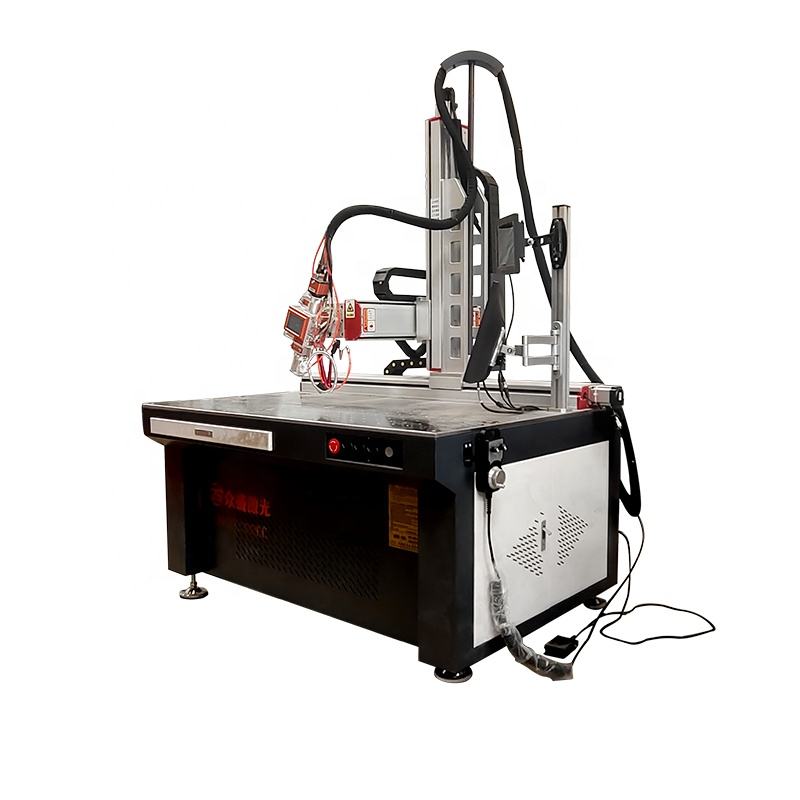
Which Alloys Are More Difficult to Laser Weld?
The most challenging materials tend to be those with strong cracking sensitivity, extreme thermal properties, volatile alloying elements, or significant changes in properties during the welding thermal cycle.Examples include:
High-strength 2xxx and 7xxx aluminum alloys: susceptible to solidification or liquation cracking.
Precipitation-hardened nickel superalloys: susceptible to liquation, weld-metal, and post-weld heat-treatment cracking.
Copper and some copper alloys: difficult because of high reflectivity and thermal conductivity.
Brass: zinc evaporation can destabilize the process and contribute to porosity.
High-hardenability alloy steels: may develop hard HAZ structures and cracking if the welding procedure is not properly controlled.
Some high-beta titanium alloys: weldability can be significantly poorer than that of common grades such as Ti-6Al-4V.
This does not mean that these materials cannot be laser welded. It means that the process window is narrower and welding trials become more important.
Can One Laser Welding Machine Weld Different Alloys?
Yes, a laser welding system can potentially be used for multiple alloy families, but this does not mean that the same parameters can be used for every material.A system may be configured to weld stainless steel, carbon steel, aluminum, copper, or titanium, but each application can require different:
- Laser power
- Welding speed
- Focus position
- Beam size
- Wobble pattern
- Shielding gas
- Filler wire
- Clamping method
- Joint design
For example, a laser configuration suitable for stainless steel cannot simply be transferred to copper without considering copper’s different optical and thermal properties.
This is why sample welding and process validation are important when introducing laser welding to a new alloy or alloy grade.
Can Laser Welding Replace Traditional Alloy Welding?
Laser welding can replace or complement traditional welding processes in many alloy applications, but it should not be regarded as a universal replacement.TIG, MIG, resistance welding, friction stir welding, and other processes continue to be valuable for particular alloys and production requirements.Laser welding becomes especially attractive when manufacturers need:
- High precision
- Low distortion
- High welding speed
- Narrow welds
- Small heat-affected zones
- Automated production
- Repeatable weld quality
- Welding of thin or precision components
For difficult alloys, however, the correct question is not simply whether laser welding is possible. The more important questions are whether the required weld quality can be achieved consistently, whether the process can be qualified, and whether the overall production cost is justified.
Conclusion
Alloy welding covers a very wide range of materials, and their suitability for laser welding varies significantly.
Stainless steels, many low-alloy steels, titanium alloys, selected aluminum alloys, and some nickel alloys are generally good candidates for laser welding. Copper alloys, high-strength aluminum alloys, precipitation-hardened nickel superalloys, high-hardenability steels, and some magnesium or titanium grades require more careful process development. Some materials, such as zinc die-cast alloys, may be poor candidates for conventional fusion welding altogether.
For this reason, alloy welding should always be evaluated based on the specific alloy grade, thickness, joint design, laser system, and required weld properties, rather than simply the material family.
ZS Laser provides laser welding solutions for a wide range of alloy materials, including stainless steel, carbon and alloy steels, aluminum alloys, copper, titanium, and other industrial metals. For applications with uncertain weldability, ZS Laser can also support sample welding and customized laser welding configurations to evaluate the actual material and joint before production.

WhatsApp
Scan the QR Code to start a WhatsApp chat with us.