 ZS Laser Equipment

Introduction
Welding stainless steel to mild steel is a common requirement in modern manufacturing. From food processing equipment and commercial kitchens to industrial machinery, automotive components, sheet metal cabinets, and piping systems, many products combine stainless steel with carbon steel to balance performance and cost.
In many cases, manufacturers use stainless steel only where corrosion resistance is required, while the remaining structure is fabricated from mild steel to reduce material costs. Although this combination is economical, joining these two different metals is much more challenging than welding two pieces of the same material.
Different chemical compositions, thermal properties, and corrosion resistance mean that the welding process must be carefully controlled. Choosing the right welding method, filler material, and welding parameters is essential for producing a strong, durable joint.
This guide explains why welding stainless steel to mild steel is difficult, the best welding methods for different applications, and whether laser welding is a suitable solution.
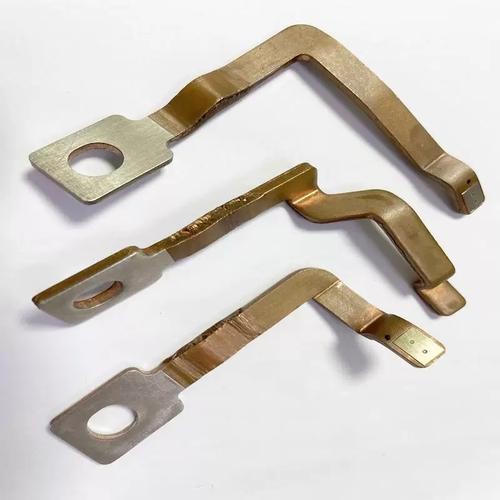
New energy copper-nickel welding
Can You Weld Stainless Steel to Mild Steel?
The short answer is yes.
Stainless steel and mild steel can be welded together successfully, and this type of joint is widely used throughout many industries.
However, unlike welding stainless steel to stainless steel or carbon steel to carbon steel, this is known as dissimilar metal welding, which presents additional technical challenges.
Because the two materials behave differently during heating and cooling, weld quality depends much more on proper process selection and welding technique.
Why Is Welding Stainless Steel to Mild Steel More Difficult?
Although both materials are steel, they have significantly different physical and metallurgical properties.
Understanding these differences is the first step toward producing reliable welds.
1.Different Thermal Expansion Rates
Stainless steel expands and contracts more than mild steel during heating and cooling.
During welding, this difference can generate significant internal stress around the joint.
As a result, manufacturers may encounter:
- Residual stress
- Distortion
- Misalignment
- Cracking in severe cases
This becomes particularly important when welding long sheet metal seams or large fabricated structures.
2.Different Thermal Conductivity
Mild steel transfers heat much faster than stainless steel.
Stainless steel retains heat near the weld area, while mild steel conducts heat away more quickly.
This uneven heat distribution makes it more difficult to control the molten weld pool and often requires different welding parameters than those used for either material alone.
3.Weld Metal Dilution
One of the most overlooked issues is weld metal dilution.
During welding, part of the base metals melts into the filler material.
If too much carbon steel mixes into the weld, the chromium concentration may decrease, reducing the corrosion resistance that stainless steel normally provides.
Controlling penetration and selecting the correct filler wire are therefore essential.
4.Galvanic Corrosion
Another challenge is galvanic corrosion.
When stainless steel and carbon steel are connected and exposed to moisture or corrosive environments, an electrochemical reaction can occur.
Over time, the carbon steel may corrode much faster than expected.
This problem is especially common in:
- Outdoor equipment
- Marine applications
- Food processing plants
- Chemical equipment
Proper joint design, protective coatings, and post-weld surface treatment can significantly reduce this risk.
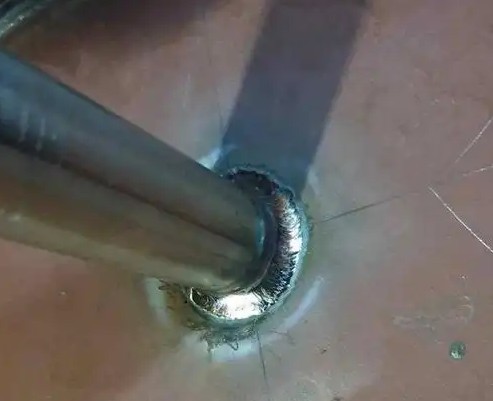
dissimilar metal welding
Typical Applications for Welding Stainless Steel to Mild Steel
Despite the challenges, welding these two materials together is common in many industries because it provides an excellent balance between performance and manufacturing cost.
Typical applications include:
1.Food Processing Equipment
Food-contact surfaces are usually manufactured from 304 or 316 stainless steel, while supporting frames are often fabricated from mild steel.
This reduces material costs without compromising hygiene.
2.Commercial Kitchen Equipment
Restaurant worktables, sinks, and kitchen cabinets frequently combine stainless steel panels with carbon steel support structures.
3.Sheet Metal Cabinets
Electrical cabinets, control panels, battery cabinets, and industrial enclosures may use stainless steel doors together with mild steel frames or bases.
4.Automotive Manufacturing
Exhaust systems, mounting brackets, reinforcement components, and structural assemblies sometimes require stainless steel to be joined with carbon steel.
5.Pipe Systems
Many industrial pipelines connect stainless steel pipes to carbon steel flanges or structural supports.
Best Welding Methods for Stainless Steel to Mild Steel
Several welding processes can produce good results.
The most suitable method depends on material thickness, production volume, appearance requirements, and budget.
1.TIG Welding
TIG welding is one of the most commonly recommended methods for joining stainless steel to mild steel.
Its precise heat control produces clean welds with excellent appearance.
Advantages include:
- Excellent weld quality
- Precise control
- Low spatter
- Ideal for thin materials
- Suitable for food and medical equipment
The main disadvantage is relatively low welding speed.
2.MIG Welding
MIG welding is widely used in industrial production because it offers much higher productivity.
It is suitable for:
- Medium and thick plates
- Structural fabrication
- Production welding
- Large components
Compared with TIG welding, MIG welding is faster but generally produces more spatter and requires additional finishing.
3.Stick Welding (SMAW)
Stick welding remains popular for outdoor construction, equipment repair, and field installation.
Its greatest advantage is portability.
However, compared with TIG and MIG welding, weld appearance and productivity are usually lower.
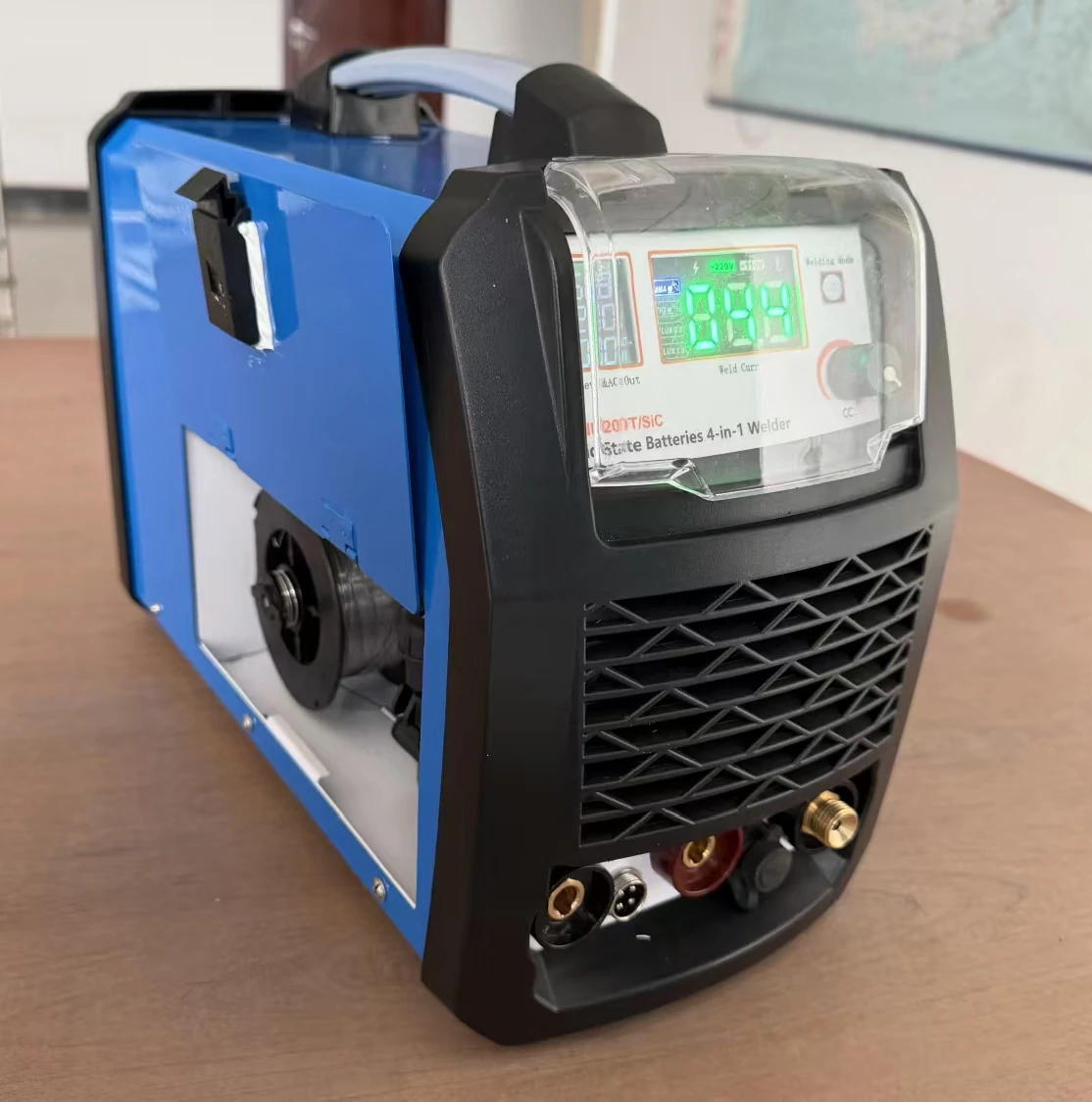
Portable stick welder
4.Laser Welding
Laser welding has become increasingly popular for precision sheet metal fabrication.
Compared with conventional arc welding, laser welding offers several advantages:
- High welding speed
- Small heat-affected zone
- Minimal distortion
- Narrow, attractive weld seams
- Easy automation
- Low post-processing requirements
Laser welding is particularly suitable for:
- Thin sheet metal
- Precision components
- Stainless steel cabinets
- Electrical enclosures
- Battery boxes
- Automotive sheet metal
However, laser welding also has certain limitations.
Because the laser beam is highly concentrated, it generally requires:
- Small joint gaps
- Accurate part positioning
- Good fit-up quality
- Stable fixtures
For stainless steel to mild steel joints, different material grades—such as 304 stainless steel with Q235 or A36 carbon steel—may require different welding parameters.
For this reason, sample welding and process testing are strongly recommended before mass production.
Which Filler Metal Should Be Used?
Selecting the correct filler metal is one of the most important factors in dissimilar metal welding.
In most applications, ER309L or E309L filler material is considered the preferred choice.
Because it contains higher chromium and nickel content than standard stainless fillers, it better accommodates dilution from the carbon steel side while maintaining corrosion resistance.
Other filler materials may also be suitable in specific situations:
- ER308L – Mainly used for stainless-to-stainless welding and only suitable for limited dissimilar applications.
- ER316L – Preferred when corrosion resistance is the highest priority and both materials require 316-grade performance.
Choosing the appropriate filler material helps reduce cracking, improve weld strength, and extend service life.
How to Prevent Rust After Welding
Many people assume that rust appearing after welding means the weld itself has failed.
In reality, surface corrosion is often caused by contamination or improper post-weld treatment.
Common causes include:
- Heat tint
- Oxide layers
- Iron contamination
- Surface damage during grinding
To improve corrosion resistance, manufacturers often perform:
- Pickling
- Passivation
- Mechanical polishing
- Laser cleaning
Among these methods, laser cleaning has become increasingly popular because it removes oxide layers without damaging the base material and prepares the weld for subsequent finishing processes.
Can Laser Welding Replace TIG Welding?
This is one of the most common questions manufacturers ask.
The answer depends on the application.
| TIG Welding | Laser Welding |
|---|---|
| Slower welding speed | Much faster welding speed |
| Higher heat input | Lower heat input |
| Larger heat-affected zone | Smaller heat-affected zone |
| More distortion | Less distortion |
| Excellent manual control | Excellent automation capability |
| Ideal for complex manual work | Ideal for mass production |
For thin sheet metal, precision parts, electrical cabinets, battery enclosures, and automated manufacturing lines, laser welding is increasingly replacing traditional TIG welding because of its higher efficiency and lower production costs.
However, for thick sections, large joint gaps, or applications requiring extensive filler material, TIG welding still offers advantages that laser welding cannot completely replace.
Rather than competing directly, the two processes complement each other in modern manufacturing.
Conclusion
Welding stainless steel to mild steel is entirely achievable, but it requires a clear understanding of the differences between the two materials.
Different thermal expansion rates, thermal conductivity, weld dilution, and galvanic corrosion all influence weld quality and long-term performance.
By selecting the appropriate welding method, using the correct filler material, controlling heat input, and applying proper post-weld treatment, manufacturers can produce strong, reliable, and corrosion-resistant joints.
Laser welding has become an increasingly attractive solution for many stainless-to-mild steel applications, particularly in precision sheet metal fabrication and automated production. Nevertheless, every project has unique material combinations and quality requirements, making process evaluation and sample testing an important step before full-scale production.
At ZS Laser, we provide professional laser welding solutions for sheet metal fabrication, cabinet manufacturing, automotive components, battery enclosures, and other precision welding applications. Our product range includes handheld laser welders, automatic laser welding systems, robotic laser welding workstations, and complete welding automation solutions. We also offer welding process testing and technical support to help manufacturers achieve higher weld quality, improved efficiency, and lower production costs.

WhatsApp
Scan the QR Code to start a WhatsApp chat with us.