 ZS Laser Equipment

Stick welding stainless steel, also known as SMAW (Shielded Metal Arc Welding), is one of the oldest and most widely used welding processes. Due to its simple equipment structure, low investment cost, and excellent outdoor adaptability, stick welding remains an important welding method for stainless steel repair, construction, and maintenance applications.
However, compared with carbon steel welding, stainless steel stick welding requires better control of welding parameters, electrode selection, and heat input.
This article will explain how stick welding stainless steel works, what electrodes should be used, the challenges involved, and when other welding methods such as TIG welding or laser welding may be a better choice.
What Is Stick Welding Stainless Steel?
Stick welding is a manual arc welding process that uses a consumable electrode covered with flux.During welding, an electric arc is generated between the stainless steel electrode and the workpiece. The heat produced by the arc melts both the electrode and the base metal, forming a weld pool.At the same time, the flux coating on the electrode burns and produces shielding gas and slag, protecting the molten metal from atmospheric contamination.
The basic process includes:
- Stainless steel workpiece
- Coated welding electrode
- Arc heat generation
- Molten weld pool formation
- Slag protection and removal
Unlike MIG welding and TIG welding, stick welding does not require external shielding gas, which makes it especially suitable for outdoor environments.
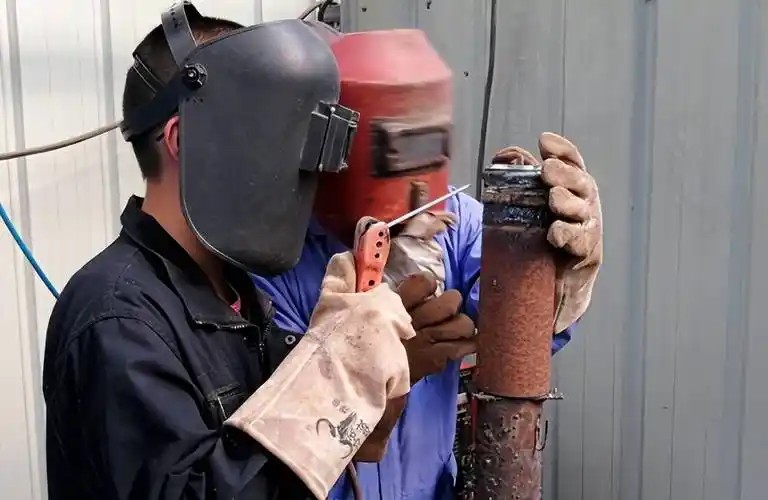
Stick Welding Outsite
What Types of Stainless Steel Can Be Stick Welded?
Different stainless steel grades have different welding characteristics.
Austenitic Stainless Steel
Austenitic stainless steel is the most commonly welded stainless steel group.Typical grades include:
- 304 stainless steel
- 316 stainless steel
- 321 stainless steel
These materials generally have excellent weldability.
Common applications include:
- Food equipment
- Chemical tanks
- Medical equipment
- Kitchen equipment
- Stainless steel structures
Common electrodes:
- E308L
- E316L
- E347
Ferritic Stainless Steel
Examples:
- 430 stainless steel
- 409 stainless steel
Ferritic stainless steels have lower thermal expansion but may experience grain growth during welding.
Potential problems include:
- Reduced toughness
- Cracking
- Lower corrosion resistance
Proper heat control is important.
Martensitic Stainless Steel
Examples:
- 410 stainless steel
- 420 stainless steel
These materials have high strength and hardness but are more difficult to weld.
They may require:
- Preheating
- Controlled cooling
- Post-weld heat treatment
Choosing the Right Stick Welding Electrode for Stainless Steel
Selecting the correct electrode is one of the most important factors in stainless steel stick welding.
Common stainless steel stick welding electrodes include:
| Stainless Steel Type | Recommended Electrode |
|---|---|
| 304 Stainless Steel | E308L |
| 316 Stainless Steel | E316L |
| Stainless Steel to Mild Steel | E309L |
| 321 Stainless Steel | E347 |
E308L Stainless Steel Electrode
E308L is one of the most commonly used stainless steel welding electrodes.
It is mainly used for:
- 304 stainless steel
- 304L stainless steel
Applications:
- Food processing equipment
- Stainless steel tanks
- Kitchen equipment
- General stainless fabrication
The low carbon content helps reduce the risk of corrosion caused by carbide precipitation.
E316L Stainless Steel Electrode
E316L provides better corrosion resistance compared with E308L.
It is commonly used for:
- Chemical equipment
- Marine applications
- Pharmaceutical equipment
- High-corrosion environments
316L stainless steel contains molybdenum, which improves resistance to chloride corrosion.
E309L Stainless Steel Electrode
E309L is especially important for welding:
stainless steel to mild steel
Because stainless steel and carbon steel have different chemical compositions, using the correct filler material is critical.
E309L provides a suitable transition layer between the two materials.
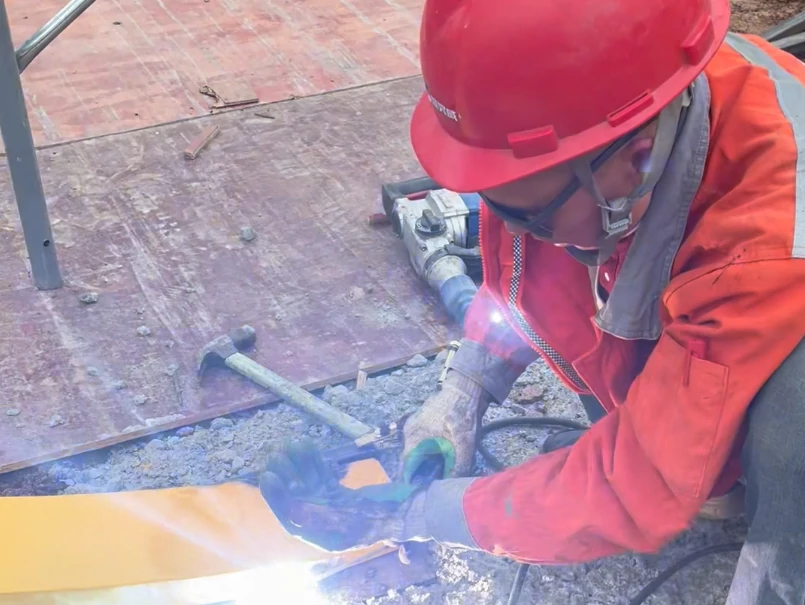
SMAW Welding
How to Stick Weld Stainless Steel?
Although stick welding equipment is simple, producing high-quality stainless steel welds requires proper technique.
1. Clean the Stainless Steel Surface
Before welding, the surface must be cleaned thoroughly.
Remove:
- Oil
- Grease
- Dirt
- Oxide layers
Contamination can cause:
- Porosity
- Weak welds
- Poor appearance
It is also recommended to use dedicated stainless steel tools to avoid iron contamination, which may cause surface rust after welding.
2. Select Proper Welding Current
The welding current depends on:
- Electrode diameter
- Material thickness
- Joint type
- Welding position
Too much current may cause:
- Excessive penetration
- Burn-through
- Distortion
Too little current may result in:
- Poor fusion
- Unstable arc
- Weak welds
3. Maintain a Short Arc Length
When stick welding stainless steel, maintaining a short arc is important.
A long arc can increase:
- Spatter
- Oxidation
- Heat input
A short and stable arc helps produce better weld quality.
4. Control Heat Input
Stainless steel has relatively low thermal conductivity compared with carbon steel.
Heat tends to concentrate in the welding area, increasing the risk of distortion.
For thin stainless steel sheets, operators often use:
- Lower welding current
- Intermittent welding
- Skip welding techniques
to reduce deformation.
Advantages of Stick Welding Stainless Steel
Simple Equipment
One major advantage of stick welding is its simple setup.
It does not require:
- Gas cylinders
- Wire feeders
- Complex control systems
This makes it affordable and easy to maintain.
Excellent for Outdoor Welding
Because stick welding does not rely on external shielding gas, it performs well in outdoor environments.
It is commonly used for:
- Construction sites
- Pipeline repair
- Equipment maintenance
Suitable for Repair Applications
Stick welding is widely used for repair work because the equipment is portable and easy to operate.
Typical applications include:
- Machinery repair
- Structural repair
- Stainless steel maintenance
Disadvantages of Stick Welding Stainless Steel
Although stick welding remains useful, it also has limitations.
Lower Welding Speed
Compared with MIG welding and laser welding, stick welding has lower productivity.
The operator must frequently:
- Replace electrodes
- Remove slag
- Clean weld surfaces
More Post-Welding Cleaning
Stick welding produces slag that must be removed after welding.
Additional processes may include:
- Slag removal
- Grinding
- Polishing
This increases labor cost.
Not Ideal for Thin Stainless Steel
Thin stainless steel sheets such as:
- 0.8 mm
- 1.0 mm
- 1.5 mm
are difficult to weld with stick welding.
Common problems include:
- Burn-through
- Excessive distortion
- Poor appearance
For thin sheet metal fabrication, TIG welding or laser welding is usually a better option.
Stick Welding Stainless Steel vs TIG Welding
TIG welding is another common method for stainless steel.
| Stick Welding | TIG Welding | |
|---|---|---|
| Equipment cost | Lower | Higher |
| Welding speed | Medium | Slow |
| Appearance | Average | Excellent |
| Thin stainless steel | Difficult | Excellent |
| Outdoor use | Excellent | Limited |
| Skill requirement | Medium | High |
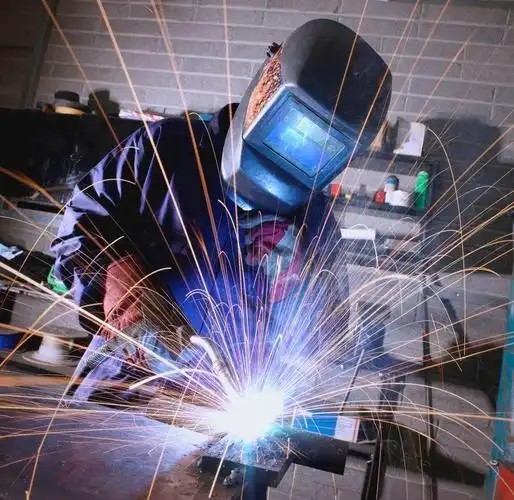
TIG Welding
Stick Welding Stainless Steel vs Laser Welding
With the development of modern manufacturing, laser welding has become increasingly popular for stainless steel applications.
| Stick Welding | Laser Welding | |
|---|---|---|
| Heat input | High | Low |
| Welding speed | Slow | Fast |
| Distortion | Higher | Lower |
| Weld appearance | Requires finishing | Smooth and clean |
| Automation | Limited | Easy integration |
Laser welding offers several advantages:
- Narrow heat affected zone
- Less deformation
- Higher welding speed
- Better appearance
- Reduced grinding requirements
For applications such as:
- Stainless steel cabinets
- Sheet metal enclosures
- Medical equipment
- Food processing equipment
handheld laser welding machines are becoming an increasingly attractive alternative.
When Should You Choose Stick Welding Stainless Steel?
Stick welding remains a good choice when you need:
- Low equipment investment
- Outdoor welding capability
- Repair work
- Construction welding
- Heavy fabrication
It is especially suitable when portability and simplicity are more important than appearance and production efficiency.
When Should You Consider Laser Welding Stainless Steel?
For modern manufacturing applications requiring:
- High-quality appearance
- Thin sheet welding
- Low deformation
- High production efficiency
laser welding is often a better solution.
Typical applications include:
- Stainless steel cabinets
- Kitchen equipment
- Medical devices
- Precision sheet metal parts
- Decorative stainless products
Handheld laser welding machines provide easier operation compared with traditional welding methods while achieving cleaner and more consistent weld results.
Conclusion
Stick welding stainless steel remains an important welding technology because of its simplicity, reliability, and excellent outdoor performance.
However, stainless steel welding requirements are becoming increasingly demanding. Products today require not only strong welds but also better appearance, lower deformation, and higher production efficiency.
For repair and construction applications, stick welding is still a practical solution.
For precision stainless steel fabrication and industrial production, TIG welding and laser welding often provide better results.
Choosing the right welding method depends on material type, thickness, production volume, and final product requirements.

WhatsApp
Scan the QR Code to start a WhatsApp chat with us.