 ZS Laser Equipment

When evaluating a welding process, many manufacturers focus mainly on the equipment investment, welding speed, and weld quality. However, the actual production cost of welding is determined by many factors, and welding consumables are one of the most important operating expenses.
For traditional welding processes such as MIG welding, TIG welding, and stick welding, consumables account for a significant part of daily production costs. Welding wire, electrodes, shielding gas, tungsten electrodes, contact tips, grinding discs, and cleaning materials are continuously consumed during operation.
With the rapid development of laser welding technology, many manufacturers are reconsidering their welding methods. Compared with traditional welding, laser welding has a completely different consumable structure because it uses a focused laser beam as the heat source instead of relying mainly on filler materials.
This article will provide a detailed comparison of:
- Traditional welding consumables
- Laser welding consumables
- Consumable costs between different welding technologies
- Why laser welding can reduce long-term production costs
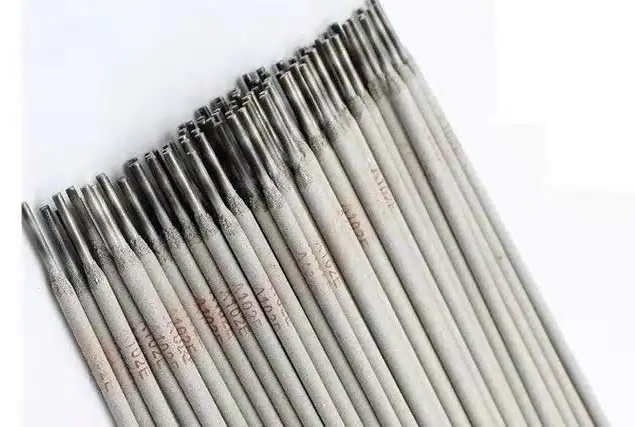
Welding rod
What Are Welding Consumables?
Welding consumables refer to materials and components that are consumed, replaced, or regularly maintained during the welding process.
Unlike welding machines, which are long-term investments, consumables directly affect daily operating costs.
Common welding consumables include:
- Welding electrodes
- Welding wire
- Shielding gas
- Tungsten electrodes
- Contact tips
- Welding nozzles
- Welding flux
- Grinding discs
- Polishing materials
- Cleaning chemicals
The type and amount of consumables depend heavily on:
- Welding method
- Material type
- Workpiece thickness
- Welding speed
- Production requirements
Different welding technologies have completely different consumption patterns.
Traditional Welding Consumables Analysis
Traditional welding methods mainly include:
- Stick welding (SMAW)
- MIG/MAG welding
- TIG welding
These processes usually rely on filler materials and additional components.
1. Welding Electrodes (Stick Welding Consumables)
Stick welding, also known as:
- SMAW (Shielded Metal Arc Welding)
- Manual Metal Arc Welding
uses a coated welding electrode to create an arc between the electrode and the workpiece.
During welding:
- The metal core melts and becomes filler material
- The coating produces shielding gas and slag
Common electrodes include:
- Carbon steel electrodes
- Stainless steel electrodes
- Cast iron electrodes
Consumption Characteristics
The welding electrode is directly consumed during welding.
For large-scale welding projects, electrode consumption can become a significant cost factor.
Additional costs include:
- Electrode storage
- Electrode drying
- Slag removal
- Post-weld cleaning
Additional Waste
Stick welding produces:
- Welding slag
- Spatter
- Electrode stubs
These materials do not contribute to the final weld and increase waste.
2. Welding Wire (MIG/MAG Consumables)
MIG and MAG welding use continuous welding wire as filler material.
Common welding wires include:
- Mild steel wire
- Stainless steel wire
- Aluminum wire
During welding:
The wire is continuously fed into the welding area and melted to form the weld joint.
Main Consumption Costs Include:
Welding Wire
The amount of wire depends on:
- Weld size
- Joint design
- Welding speed
- Material thickness
Contact Tips
MIG welding requires consumable components such as:
- Contact tips
- Nozzles
- Wire liners
These parts gradually wear due to:
- Electrical current
- Heat
- Mechanical friction
3. Shielding Gas Consumption
Shielding gas is another important welding consumable.
It protects the molten weld pool from contamination by oxygen and nitrogen in the atmosphere.
Common shielding gases include:
MIG/MAG Welding
- CO₂
- Argon + CO₂ mixture
TIG Welding
- Argon
Gas consumption depends on:
- Welding current
- Gas flow rate
- Welding environment
- Operator skill
Outdoor welding usually requires higher gas flow because wind can disturb shielding protection.
4. Tungsten Electrodes (TIG Welding)
TIG welding uses a non-consumable tungsten electrode.
Although tungsten does not melt like welding wire or electrodes, it still requires maintenance.
Common issues include:
- Electrode contamination
- Tip damage
- Grinding wear
Operators need to:
- Regrind tungsten tips
- Replace damaged electrodes
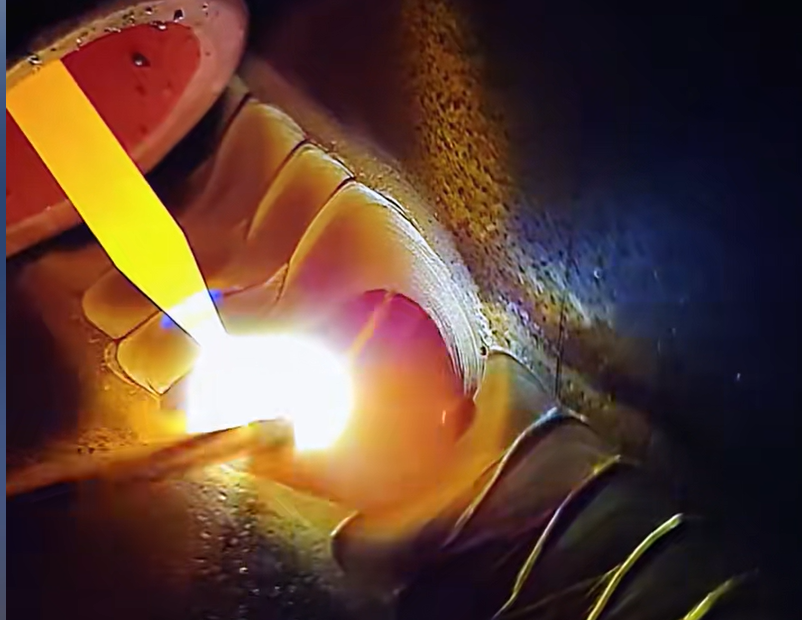
TIG Welding
5. Post-Welding Consumables
Many manufacturers overlook post-welding consumables.
However, for products requiring good appearance, post-processing can represent a large part of production costs.
Common consumables include:
Grinding Discs
Used for:
- Removing weld reinforcement
- Removing spatter
- Smoothing weld surfaces
Polishing Materials
Especially important for:
- Stainless steel products
- Decorative metal parts
Cleaning Chemicals
Examples:
- Stainless steel cleaners
- Pickling paste
- Surface treatment products
In many traditional welding applications, the welding process itself may only represent part of the total production time. Grinding and finishing can consume significant labor and materials.
Laser Welding Consumables Analysis
Laser welding uses a concentrated laser beam to generate heat and melt the base materials.
Because the welding principle is different, the consumable structure is significantly reduced.
1. Laser Welding Wire
One major advantage of laser welding is that many applications can use:
Autogenous Laser Welding
This means:
The base materials are melted and joined without additional filler wire.
Advantages:
- No filler material cost
- Higher welding speed
- Cleaner weld appearance
- Less material waste
However, filler wire may still be required when:
- The joint gap is large
- Additional reinforcement is needed
- Different materials require transition layers
Common laser welding wires include:
- Stainless steel wire
- Aluminum wire
- Carbon steel wire
2. Shielding Gas for Laser Welding
Laser welding usually also requires shielding gas.
Common gases include:
- Argon
- Nitrogen
The purpose is similar to traditional welding:
- Protect the molten pool
- Prevent oxidation
- Improve weld quality
However, compared with TIG welding, laser welding generally consumes less shielding gas because:
- The welding speed is higher
- The heat affected zone is smaller
- The molten pool is smaller
3. Protective Lens
Protective lenses are unique consumable components in laser welding systems.
In handheld laser welding machines, the protective lens protects the optical system from:
- Metal dust
- Smoke
- Welding spatter
If the lens becomes contaminated or damaged, it needs replacement to maintain:
- Laser transmission efficiency
- Welding quality
- Equipment safety
4. Copper Nozzles
Laser welding heads usually use copper nozzles.
Their functions include:
- Directing shielding gas
- Controlling welding position
- Protecting the welding area
Over long-term operation, nozzles may experience:
- Wear
- Heat damage
- Deformation
and require replacement.
5. Laser Welding Maintenance Materials
Other laser welding maintenance consumables include:
- Lens cleaning materials
- Protective covers
- Filters
- Maintenance accessories
Compared with traditional welding, these consumables are usually replaced less frequently.
Traditional Welding vs Laser Welding Consumables Comparison
| Consumable | Traditional Welding | Laser Welding |
|---|---|---|
| Welding electrodes | High consumption | Not required |
| Welding wire | Continuous consumption | Optional |
| Shielding gas | Required | Required |
| Tungsten electrode | Required for TIG | Not required |
| Contact tips | Required for MIG | Not required |
| Welding slag | Large amount | Minimal |
| Grinding discs | Frequently used | Rarely needed |
| Polishing materials | Often required | Usually reduced |
Why Does Laser Welding Reduce Consumable Costs?
1. Less Filler Material Consumption
Traditional welding often depends on filler materials to create the weld joint.
Laser welding can often achieve:
- Direct material fusion
- Minimal filler usage
- Lower material consumption
This is especially valuable for:
- Stainless steel sheet metal
- Precision components
- Thin metal fabrication
2. Less Grinding and Finishing Work
One of the biggest hidden costs of traditional welding is post-processing.
Traditional welding often requires:
- Slag removal
- Spatter cleaning
- Grinding
- Polishing
Laser welding produces:
- Narrow weld seams
- Low spatter
- Better appearance
Therefore, many applications require significantly less finishing work.
3. Lower Material Waste
Laser welding has:
- Low heat input
- Small heat affected zone
- Less deformation
This helps reduce:
- Scrap rate
- Rework
- Material waste
4. Lower Labor Cost
Consumables are not only physical materials.
Labor required for handling consumables is also part of the cost.
Traditional welding:
Welding → Cleaning → Grinding → Polishing
Laser welding:
Welding → Inspection → Finished product
The simplified workflow can significantly improve production efficiency.

Handheld laser welding machine protective lens
Which Welding Process Has Lower Consumable Costs?
The answer depends on the application.
Heavy Steel Fabrication
For:
- Large structures
- Thick steel plates
- Construction welding
MIG/MAG welding may still be more economical because:
- Large filler volume is required
- Equipment cost is lower
- Productivity is high for thick materials
Stainless Steel Sheet Metal Fabrication
For:
- Stainless steel cabinets
- Kitchen equipment
- Medical equipment
- Precision enclosures
Laser welding has significant advantages because:
- Appearance requirements are higher
- Grinding costs are expensive
- Thin sheets are sensitive to heat distortion
Precision Manufacturing
For industries such as:
- Battery enclosures
- Electronics housings
- Automotive components
Laser welding can provide:
- Better consistency
- Lower finishing costs
- Higher automation capability
Conclusion
Welding consumables are a critical factor in determining the real cost of welding production.Laser welding changes this cost structure by reducing filler material usage and minimizing post-welding processing.
Although laser welding still requires consumables such as protective lenses, nozzles, shielding gas, and optional filler wire, the overall consumption is usually much lower, especially for precision sheet metal applications.
For manufacturers producing:
- Stainless steel cabinets
- Metal enclosures
- Automotive components
- Medical equipment
- Precision sheet metal parts
laser welding can provide not only better weld quality but also lower long-term operating costs.

WhatsApp
Scan the QR Code to start a WhatsApp chat with us.