 ZS Laser Equipment

In the welding industry, users are constantly looking for more efficient, flexible, and cost-effective equipment solutions. Instead of purchasing separate machines for different processes, many manufacturers, workshops, and maintenance professionals prefer a multi-function welder that can handle multiple tasks with a single machine.This is why 3 in 1 welder has become an increasingly popular search term in the welding market.
This article will explain the different types of 3 in 1 welders, their functions, advantages, limitations, and how to choose the right solution for different applications.
What Is a 3 in 1 Welder?
A 3 in 1 welder is a multifunction welding machine that integrates three different functions into one system.The purpose of this design is to provide users with:
- Multiple processing capabilities
- Lower equipment investment
- Reduced workspace requirements
- Easier transportation
- Higher working flexibility
However, the term “3 in 1” does not represent a fixed combination.Different manufacturers may define their machines differently depending on the technology.
For example:
A traditional 3 in 1 welder may include:
- MIG welding
- TIG welding
- Stick welding
Another machine may combine:
- Welding
- Plasma cutting
- Inverter power supply
A laser 3 in 1 welder may include:
- Laser welding
- Laser cutting
- Laser cleaning
Therefore, when choosing a 3 in 1 welder, users should always check the actual functions rather than only the product name.
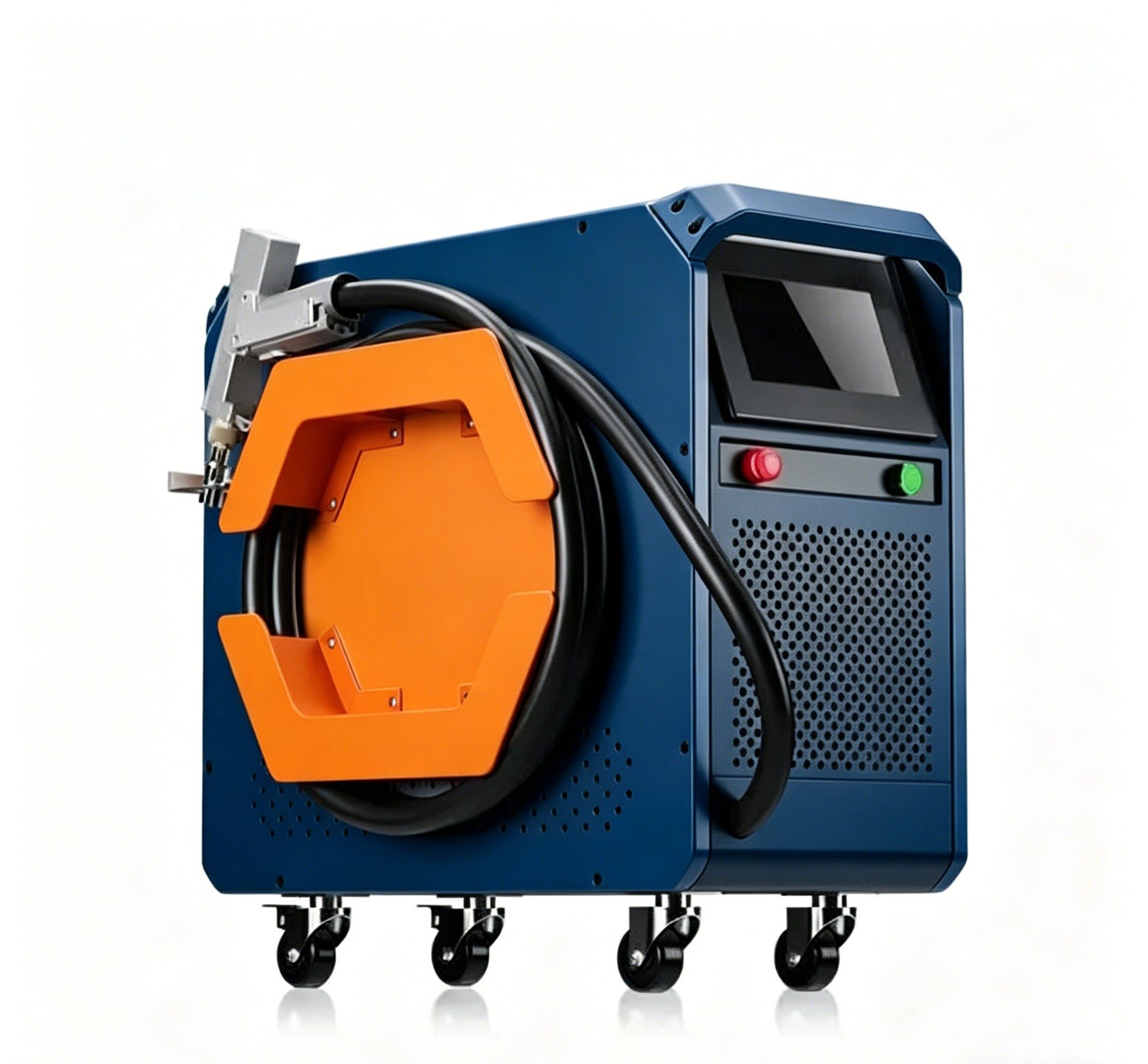
3 in 1 Laser Welder
Why Are Multi-Function Welders Becoming Popular?
The increasing demand for multifunction welding equipment is mainly driven by several trends.
1. Lower Equipment Investment
For small workshops and maintenance companies, purchasing multiple machines can require significant investment.
A multifunction welder allows users to replace several individual machines with one integrated solution.
This reduces:
- Initial equipment cost
- Installation requirements
- Maintenance expenses
2. Saving Workspace
Many small and medium-sized factories have limited production space.
Instead of arranging several machines separately, one multifunction welding system can complete multiple operations in a smaller area.
3. Improved Mobility
Portable multifunction welders are especially popular for:
- Outdoor repair
- Construction sites
- Field maintenance
- Remote welding operations
A compact machine can be transported easily and used in different working environments.
Type 1: Traditional 3 in 1 Welder
Traditional multifunction welders are based on conventional arc welding technologies.
The most common combinations include:
- MIG welding
- TIG welding
- Stick welding
- Plasma cutting
- Inverter power supply
These machines are widely used in:
- Metal fabrication
- Equipment repair
- Construction
- Maintenance applications
1.MIG + TIG + Stick Welding 3 in 1 Welder
One of the most common traditional combinations is:
MIG Welding
MIG welding (Metal Inert Gas Welding) uses a continuously fed welding wire as the electrode.
The advantages include:
- High welding efficiency
- Fast welding speed
- Easy operation
- Good productivity
MIG welding is commonly used for:
- Carbon steel fabrication
- Machinery manufacturing
- Structural welding
- General metal fabrication
Because the wire feeding process is continuous, MIG welding is suitable for long weld seams and higher production efficiency.
TIG Welding
TIG welding (Tungsten Inert Gas Welding) uses a non-consumable tungsten electrode and shielding gas.
Compared with MIG welding, TIG provides better control and cleaner weld appearance.
Advantages include:
- High weld quality
- Excellent appearance
- Precise heat control
- Low spatter
TIG welding is commonly used for:
- Stainless steel
- Aluminum
- Thin sheet metal
- Precision components
However, TIG welding requires higher operator skill and usually has a slower welding speed.
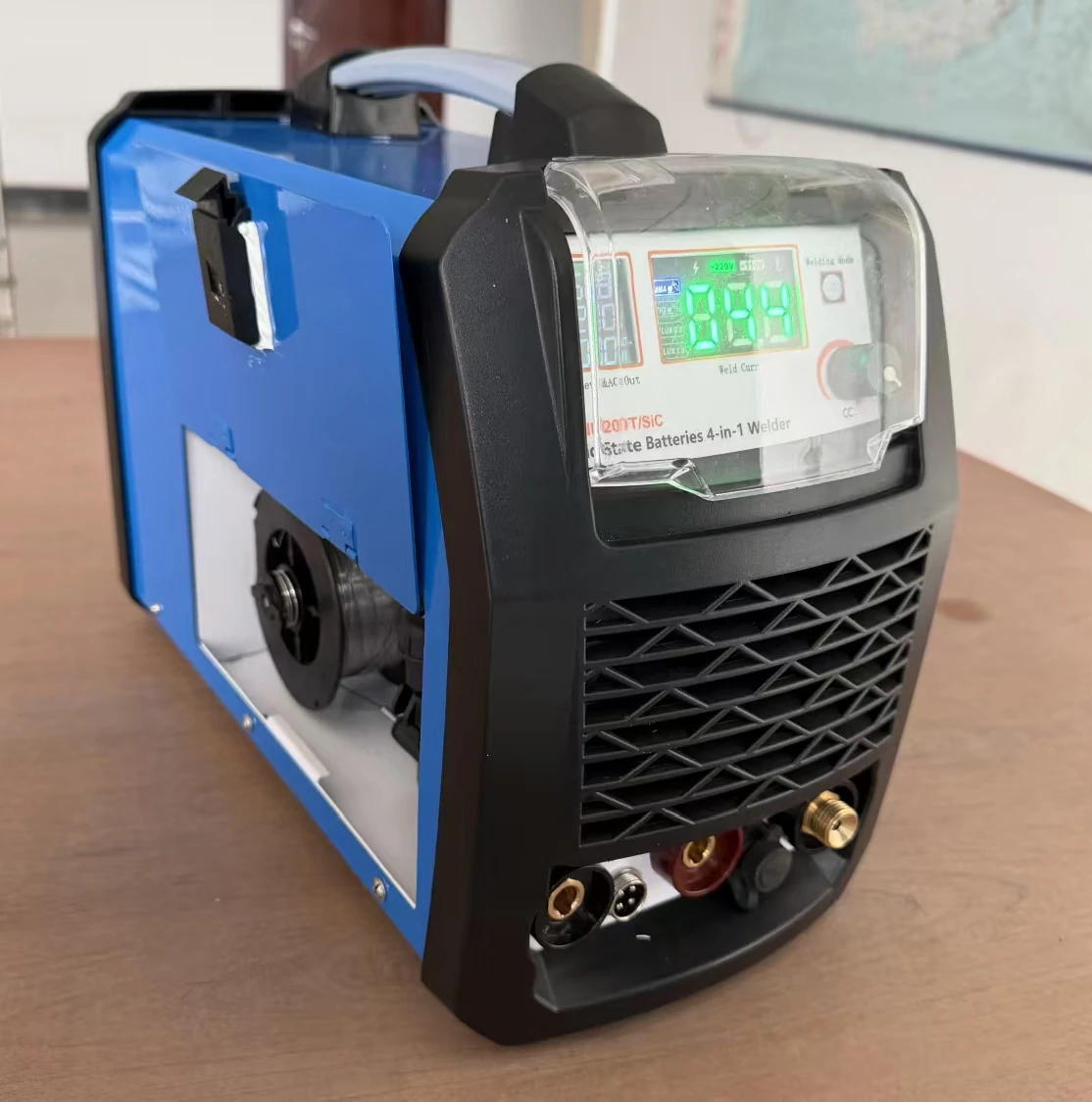
Portable stick welder
Stick Welding (MMA Welding)
Stick welding, also called MMA welding (Manual Metal Arc Welding), uses coated electrodes.
Its main advantages are:
- Simple equipment structure
- No external shielding gas required
- Good outdoor performance
Stick welding is widely used in:
- Construction
- Equipment repair
- Pipeline maintenance
- Outdoor welding
Because of its flexibility, stick welding remains an important process even with the development of newer welding technologies.
2.Welding + Plasma Cutting + Inverter Power Supply Combination
Another popular multifunction welding design combines:
- Welding function
- Plasma cutting function
- Inverter power supply function
By integrating these functions into one machine, users can complete welding, cutting, and auxiliary electrical work with a single portable system.
Welding Function
The welding function allows users to perform common welding operations for:
- Metal fabrication
- Equipment repair
- Maintenance work
- On-site welding applications
Depending on the machine design, welding processes may include:
- MIG welding
- TIG welding
- Stick welding (MMA)
Plasma Cutting Function
Some multifunction welders also integrate a plasma cutting system.
This allows users to perform basic metal cutting operations without purchasing a separate cutting machine.
Typical applications include:
- Cutting steel plates
- Removing damaged metal parts
- Modifying existing structures
- Preparing materials before welding
For example, a maintenance technician can cut a damaged component and immediately repair it using the same machine.
Inverter Power Supply Function
One important feature of some advanced multifunction welders is the built-in inverter power supply.
This function converts the machine into a portable AC power source, allowing users to operate common 220V electric tools even in locations without a stable power supply.
Compatible tools may include:
- Angle grinders
- Impact drills
- Hand grinders
- Electric hammers
- Other AC 220V power tools
This makes the machine especially valuable for:
- Outdoor construction
- Field maintenance
- Emergency repair
- Remote working environments
For example, workers can use one multifunction welding machine to:
- Cut metal with the plasma function
- Weld components with the welding function
- Use an angle grinder or electric drill through the inverter output for further processing
This greatly improves working efficiency and reduces the need to carry multiple separate devices.
Type 2: 3 in 1 Laser Welder
With the development of laser technology, a new generation of multifunction welding equipment has emerged.
A 3 in 1 laser welder usually combines:
- Laser welding
- Laser cutting
- Laser cleaning
Compared with traditional welding machines, laser multifunction equipment focuses on improving:
- Welding quality
- Production efficiency
- Surface quality
- Automation capability
Function 1: Laser Welding
Laser welding is the core function of a laser multifunction machine.It uses a high-energy laser beam to create a concentrated heat source that melts the base materials and forms a strong welded joint.Compared with traditional arc welding, laser welding provides several advantages:
Faster Welding Speed
The concentrated laser energy allows rapid heating and cooling.
This improves production efficiency, especially for thin metal fabrication.
Lower Heat Input
Because the laser energy is highly concentrated, the heat affected zone is smaller.
Benefits include:
- Less deformation
- Reduced thermal damage
- Better dimensional accuracy
Better Weld Appearance
Laser welding usually produces:
- Narrow weld seams
- Less spatter
- Smooth appearance
This reduces the need for post-welding grinding and polishing.
Laser welding is widely used for:
- Stainless steel products
- Metal cabinets
- Automotive components
- Precision sheet metal parts
Function 2: Laser Cutting
Many 3 in 1 laser welders also provide a laser cutting function.
However, users should understand that this cutting function is designed mainly for:
- Thin sheet metal
- Small cutting tasks
- Field modification
- Repair applications
For example:
During fabrication, workers may need to adjust a metal component or create a small opening.A multifunction laser welder allows this operation without moving the workpiece to another machine.
However, for:
- Thick metal plates
- High precision cutting
- Large production volume
a professional fiber laser cutting machine remains the better solution.
Function 3: Laser Cleaning
Laser cleaning is another important function of modern multifunction laser equipment.
It uses laser energy to remove unwanted materials from metal surfaces.
Common contaminants include:
- Rust
- Oil
- Paint
- Oxide layers
Laser cleaning can be used before welding to improve:
- Surface cleanliness
- Welding stability
- Joint quality
Compared with traditional cleaning methods such as grinding or chemical treatment, laser cleaning provides:
- No contact processing
- Less surface damage
- Better environmental performance
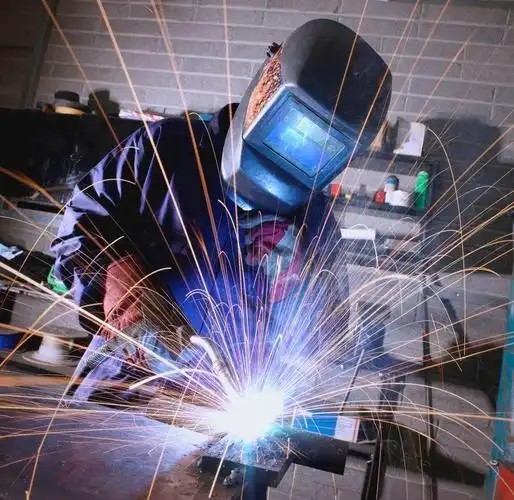
TIG Welding
What Are 4 in 1 and 5 in 1 Welders?
As multifunction welding technology develops, some manufacturers introduce 4 in 1 welder and 5 in 1 welder models by adding additional functions to traditional 3 in 1 welding machines.
For laser multifunction welders, a typical 3 in 1 laser welder usually combines:
- Laser welding
- Laser cutting
- Laser cleaning
Some manufacturers call their machines 4 in 1 laser welders by adding a weld seam cleaning function. Technically, weld seam cleaning is still based on laser cleaning technology, but it focuses specifically on removing welding discoloration and oxidation marks after welding.
A 5 in 1 laser welder usually adds a wire feeding welding function, which helps improve welding performance when dealing with larger gaps, uneven assembly, or applications requiring filler wire.
For traditional multifunction welders, the additional functions are usually different. A 3 in 1, 4 in 1, or 5 in 1 welder may combine:
- MIG welding
- TIG welding
- Stick welding (MMA)
- Plasma cutting
- Inverter power supply
This makes multifunction welders especially suitable for outdoor repair, maintenance work, and mobile welding applications.
Although manufacturers may define 3 in 1, 4 in 1, and 5 in 1 welders differently, the main purpose is the same: integrating more functions into one machine to improve flexibility, reduce equipment requirements, and make welding operations more convenient.
Traditional Multi-Function Welder vs Laser Multi-Function Welder
| Feature | Traditional Multi-Function Welder | Laser Multi-Function Welder |
|---|---|---|
| Welding technology | Arc welding | Laser welding |
| Main functions | MIG/TIG/MMA/Cutting | Welding/Cutting/Cleaning |
| Skill requirement | Higher | Lower |
| Heat input | Higher | Lower |
| Weld appearance | Depends on operator | More consistent |
| Spatter | More | Less |
| Post-processing | More grinding required | Less finishing required |
| Best application | Repair and fabrication | Precision manufacturing |
Limitations of Multi-Function Welders
Although multifunction welders provide many advantages, they are not always a replacement for specialized equipment.
Cutting Capability
Integrated cutting functions are suitable for:
- Small cutting jobs
- Maintenance work
- Thin materials
For industrial cutting production, specialized laser cutting machines provide better performance.
Welding Performance
For large-scale automated production, dedicated systems such as:
- Robot welding systems
- Automatic laser welding systems
may provide higher productivity.
How to Choose the Right 3 in 1 Welder?
Before purchasing a multifunction welder, consider the following factors.
1. Material Type
Common materials include:
- Carbon steel
- Stainless steel
- Aluminum
- Galvanized steel
Different materials require different welding technologies.
2. Material Thickness
Thin sheet metal applications often benefit from laser welding.
Thicker materials may still require traditional MIG or MMA welding.
3. Working Environment
Factory production:
Laser multifunction equipment may provide better efficiency.
Outdoor maintenance:
Portable traditional welders may be more practical.
4. Required Functions
Consider whether you need:
- Welding only
- Cutting
- Cleaning
- Weld finishing
- Power supply
The best machine is not necessarily the one with the most functions, but the one that matches your real application.
Conclusion
A 3 in 1 welder is a multifunction welding machine designed to combine multiple processing capabilities into one system. Depending on the technology, it can include traditional welding functions such as MIG, TIG, stick welding, cutting, and inverter power supply, or advanced laser functions such as laser welding, laser cutting, and laser cleaning.
As welding technology continues to develop, multifunction welders provide users with greater flexibility for fabrication, repair, and industrial applications. The best solution depends on the material, application requirements, working environment, and production needs.
At ZS Laser, we provide both multi-function laser welding machines and traditional multi-function welding machines to meet different customer requirements. With a complete range of welding solutions, we are committed to providing one-stop welding equipment and technical support, helping customers improve welding efficiency, reduce costs, and achieve more flexible manufacturing.
Looking for the right multifunction welding machine for your application? Contact ZS Laser today to discuss your welding requirements. Our team can recommend the most suitable solution based on your materials, production needs, and working environment.

WhatsApp
Scan the QR Code to start a WhatsApp chat with us.