 ZS Laser Equipment

Introduction
MIG welding cast iron is one of the most challenging welding applications in metal fabrication. Unlike mild steel or stainless steel, cast iron contains a high carbon content and unique graphite structures that make it susceptible to cracking, hardening, and porosity during welding.
Many fabricators ask:
- Can you MIG weld cast iron?
- What wire should be used?
- Should cast iron be preheated?
- Is MIG welding better than TIG or stick welding for cast iron?
The answer depends on the type of cast iron, the condition of the workpiece, and the repair requirements.
This guide explains why cast iron is difficult to weld, how MIG welding performs on cast iron, common welding defects, and the best practices to achieve reliable repairs.
What Is Cast Iron?
Cast iron is an iron-carbon alloy containing more than 2% carbon, although many industrial grades contain between 2.5% and 4.0% carbon. Silicon is also present in relatively high amounts, promoting the formation of graphite.
Compared with steel, cast iron offers:
- Excellent wear resistance
- Good vibration damping
- High compressive strength
- Excellent machinability (certain grades)
However, it also has disadvantages:
- Low ductility
- Poor toughness
- High brittleness
- Low tensile strength
- Poor weldability
These characteristics make welding considerably more difficult than welding ordinary steel.
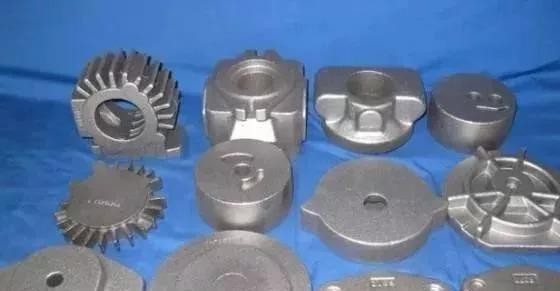
Cast iron parts
Types of Cast Iron
Different types of cast iron respond differently to welding.
Gray Cast Iron
Gray cast iron is the most common type used in machinery, engine blocks, pump housings, and machine bases.
Characteristics:
- Flake graphite structure
- Good machinability
- Brittle
- Most commonly repaired by welding
Ductile (Nodular) Cast Iron
Ductile iron contains spherical graphite nodules instead of flakes.
Advantages include:
- Higher tensile strength
- Better ductility
- Improved impact resistance
Although easier to repair than gray iron, it still requires careful heat control.
White Cast Iron
White cast iron contains carbide rather than graphite.
Characteristics:
- Extremely hard
- Very brittle
- Difficult to machine
- Rarely welded successfully
Malleable Cast Iron
Produced by heat-treating white cast iron.
Offers improved ductility but still requires specialized welding procedures.
Why Is Cast Iron Difficult to Weld?
Several metallurgical factors contribute to the poor weldability of cast iron.
1. High Carbon Content
The high carbon content creates one of the biggest welding challenges.
During welding, carbon migrates into the molten weld pool and heat-affected zone (HAZ). If cooling occurs too quickly, carbon combines with iron to form iron carbides (cementite) instead of graphite.
This results in an extremely hard and brittle microstructure known as white iron.
White iron is difficult to machine and highly susceptible to cracking.
2. Rapid Cooling Creates Hard Zones
Cast iron has relatively low ductility.
When welds cool rapidly, the heat-affected zone hardens significantly.
Consequences include:
- Difficult machining
- Brittle welds
- Reduced toughness
- Increased cracking risk
Controlling the cooling rate is one of the most important factors in successful cast iron welding.
3. High Thermal Stress
Cast iron expands during heating but cannot tolerate large internal stresses because of its brittleness.
Uneven heating and cooling generate thermal stress that often leads to:
- Hot cracking
- Cold cracking
- Cracks extending beyond the weld
- Complete fracture of repaired components
4. Graphite and Contamination
Old cast iron often contains:
- Oil
- Grease
- Rust
- Sand inclusions
- Casting impurities
During welding, these contaminants generate gases that can become trapped in the molten metal.
The result is:
- Porosity
- Blowholes
- Poor fusion
Thorough cleaning is essential before welding.
5. Silicon Oxides Reduce Weld Fluidity
Cast iron contains significant amounts of silicon.
During welding, silicon readily oxidizes and forms refractory silicon oxide films.
These oxide layers:
- Reduce weld pool fluidity
- Make bead formation more difficult
- Increase slag and inclusions
- Affect weld appearance
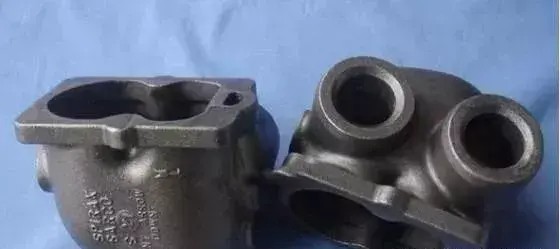
Cast iron fittings
Can You MIG Weld Cast Iron?
Yes—but with limitations.
MIG welding cast iron is possible, especially for repairing gray and ductile cast iron. However, it is generally not the preferred repair process for critical structural components.Compared with stick welding using nickel electrodes or TIG welding, MIG welding offers:
Advantages:
- Higher productivity
- Easier automation
- Faster welding speed
- Lower labor cost
- Easier operation for experienced MIG welders
Limitations:
- Higher heat input
- Greater dilution with the base metal
- Higher cracking risk
- Less forgiving on contaminated castings
- More difficult to control residual stresses
For non-critical repairs, MIG welding can provide excellent results when proper procedures are followed.
Best Filler Wire for MIG Welding Cast Iron
Filler metal selection plays a major role in repair quality.
Nickel-Based Wire
Nickel filler provides:
- Excellent crack resistance
- Good machinability
- Reduced dilution effects
- Better compatibility with cast iron
This is generally the best option for precision repairs.
Nickel-Iron Wire
Nickel-iron wire offers:
- Higher strength
- Better performance on ductile iron
- Improved resistance to cracking
It is widely used for heavy equipment and industrial castings.
Mild Steel Wire
Standard ER70S-6 steel wire is inexpensive but should only be used for limited applications.
It may be acceptable for:
- Cosmetic repairs
- Small brackets
- Non-machined areas
- Low-stress components
It is generally not recommended for engine blocks, gearboxes, machine tools, or pressure-bearing parts because dilution with the high-carbon base metal can create hard, brittle welds.
Shielding Gas Selection
Common shielding gases include:
75% Argon / 25% CO₂
The most popular choice.
Provides:
- Stable arc
- Good penetration
- Smooth bead appearance
High Argon Mixtures
Often preferred when using nickel wire because they:
- Produce less spatter
- Improve arc stability
- Reduce oxidation
How to MIG Weld Cast Iron
Step 1: Identify the Cast Iron Type
Determine whether the component is:
- Gray cast iron
- Ductile iron
- White iron
- Malleable iron
Different materials require different repair strategies.
Step 2: Remove All Contamination
Before welding:
- Remove oil
- Remove grease
- Grind away paint
- Eliminate rust
- Remove graphite contamination near cracks
A clean joint significantly reduces porosity.
Step 3: Stop Crack Propagation
For cracked components:
- Drill stop holes at crack ends
- Grind a V-groove
- Remove damaged material completely
This prevents cracks from extending during welding.
Step 4: Preheat the Workpiece
Preheating is one of the most effective methods for reducing cracking.
Typical recommendations are:
| Repair Type | Suggested Preheat |
|---|---|
| Small repair | 100–150°C |
| Medium repair | 200–300°C |
| Large repair | 300–400°C |
| Traditional hot welding | 600–700°C |
Higher preheat temperatures reduce thermal shock and slow cooling, helping graphite form instead of hard carbides.
Step 5: Use Short Weld Beads
Instead of running long continuous beads:
- Weld 20–30 mm at a time
- Allow partial cooling between passes
- Alternate welding locations
- Minimize heat buildup
This reduces residual stress.
Step 6: Peen Each Weld Pass
Lightly peening the weld bead immediately after welding helps relieve shrinkage stress.
This technique is widely used when repairing cast iron.
Step 7: Cool Slowly
Never quench cast iron.
Allow the part to cool gradually by:
- Wrapping it in an insulating blanket
- Covering it with dry sand
- Using vermiculite
- Cooling inside a furnace when available
Slow cooling minimizes the formation of white iron and reduces cracking.
Common Problems in MIG Welding Cast Iron
Cracking
Cause:
- Thermal stress
- Rapid cooling
- High carbon content
Solutions:
- Preheat
- Nickel filler
- Short beads
- Controlled cooling
White Iron Formation
Cause:
- Excessively rapid cooling
Solutions:
- Increase preheat
- Reduce cooling rate
- Use nickel filler
Porosity
Cause:
- Oil contamination
- Rust
- Moisture
- Graphite contamination
Solutions:
- Thorough cleaning
- Proper shielding gas
- Dry consumables
Poor Weld Appearance
Cause:
- Silicon oxide formation
- Improper settings
- Incorrect torch angle
Solutions:
- Clean thoroughly
- Optimize welding parameters
- Maintain consistent travel speed
MIG vs TIG vs Stick Welding for Cast Iron
| Process | Advantages | Disadvantages |
| MIG Welding | Fast, productive, suitable for automation | Higher cracking risk, requires strict heat control |
| TIG Welding | Excellent control, clean welds | Slow, requires greater operator skill |
| Stick Welding (SMAW) | Excellent repair capability, wide range of nickel electrodes | Lower productivity and more slag removal |
| Brazing | Lowest cracking risk because the base metal is not fully melted | Lower joint strength, not suitable for all applications |
For most industrial repairs, nickel stick welding remains the preferred method for critical cast iron components. MIG welding is often chosen when higher productivity is needed and the repair conditions are appropriate.
Is Laser Welding Better for Cast Iron?
Laser welding is increasingly used for precision cast iron repair, especially in mold manufacturing, tooling, and high-value components.
Compared with conventional MIG welding, laser welding offers:
- Smaller heat-affected zone
- Lower overall heat input
- Reduced distortion
- Higher precision
- Better control on localized repairs
However, cast iron still presents metallurgical challenges during laser welding. Proper filler material selection, preheating when necessary, and controlled cooling remain important to minimize cracking and hardening.
For large structural repairs, conventional welding processes may still be more practical, while laser welding is often preferred for high-precision restoration and low-distortion applications.
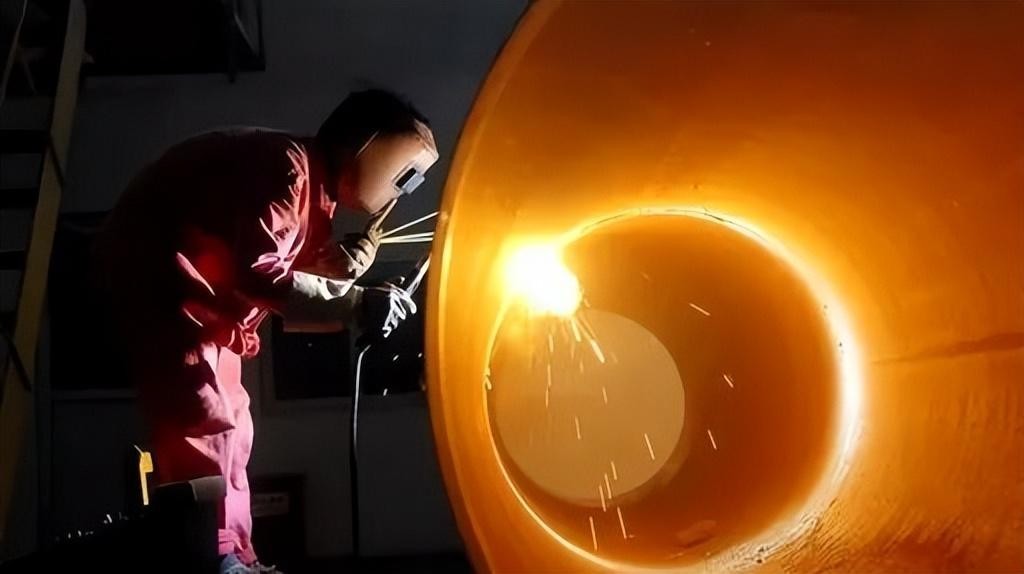
welding of gray cast iron parts
Frequently Asked Questions
Can you MIG weld cast iron without preheating?
Small cosmetic repairs may be possible with minimal preheating, but most repairs benefit from preheating to reduce cracking and improve weld quality.
What is the best filler for MIG welding cast iron?
Nickel-based and nickel-iron filler wires generally provide the best combination of crack resistance, machinability, and compatibility with cast iron.
Why does cast iron crack after welding?
Cracking is primarily caused by rapid cooling, thermal stress, and the brittle nature of high-carbon cast iron. Proper preheating, controlled welding techniques, and slow cooling significantly reduce this risk.
Can cast iron be welded permanently?
Yes. When the correct welding process, filler material, and heat control procedures are used, cast iron repairs can provide long-lasting service. However, highly stressed or safety-critical components should be evaluated carefully, and in some cases replacement may be more appropriate than repair.
Conclusion
MIG welding cast iron is entirely possible, but success depends on understanding the metallurgy of cast iron and applying proper welding techniques. High carbon content, rapid cooling, and residual stress make cast iron far less forgiving than steel.
Successful repairs require careful preparation, appropriate filler wire selection, controlled heat input, adequate preheating when necessary, short weld passes, and slow cooling after welding. By following these best practices, manufacturers and repair technicians can minimize cracking, reduce hard zones, and produce stronger, more reliable cast iron welds.
Contact ZS Laser today to discuss your welding project and receive professional recommendations from our experienced team.

WhatsApp
Scan the QR Code to start a WhatsApp chat with us.