 ZS Laser Equipment

A reliable weld does more than join two pieces of material together. In many industrial applications, the weld must also prevent liquids, gases, chemicals, dust, or other media from passing through the joint.This is where a seal weld becomes important.
A seal weld is a weld made primarily to prevent leakage through a joint. Depending on the application, a seal weld may also contribute to the mechanical strength of the assembly, but its defining function is to create a continuous barrier against leakage.
Seal welding is widely used in pressure-containing components, tanks, pipes, containers, heat exchangers, automotive components, electrical enclosures, and many other products. Different materials require different welding processes, and modern laser welding has become an increasingly important option for applications where low heat input, precision, cleanliness, and controlled weld geometry are required.
This guide explains what a seal weld is, how seal welding works, the difference between seal and structural welds, common seal welding methods, suitable materials, typical defects, and the growing role of laser welding.
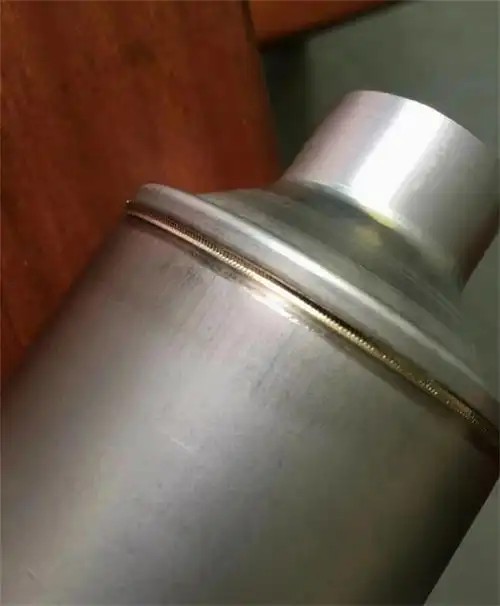
Spark plug sealing welding
What Is a Seal Weld?
A seal weld is a weld designed primarily to prevent the passage of a fluid, gas, or other substance through a joint.The material being contained may include:
- Water
- Oil
- Hydraulic fluid
- Fuel
- Air
- Gas
- Refrigerant
- Chemicals
- Vacuum
- Other process fluids
The exact requirements depend on the application.
For example, a welded tank may need to prevent liquid from leaking through a joint, while a gas-containing component may require a much tighter seal because even a very small leak can affect system performance or safety.The important point is that a seal weld is defined by its function.
A weld can be mechanically strong but still fail to provide adequate sealing if it contains:
- Porosity
- Cracks
- Incomplete fusion
- Lack of penetration
- Undercut
- Pinholes
- Discontinuities
- Unsealed portions of the joint
Therefore, seal welding requires more than simply producing a visually attractive weld.The welding process, joint design, material condition, welding parameters, surface preparation, and inspection method all influence the final sealing performance.
What Is Seal Welding Used For?
Seal welding is used whenever a welded joint must prevent unwanted leakage.Typical applications include:
Tanks and Containers
Storage tanks and containers may require seal welds to prevent liquids or gases from escaping.
Examples include:
- Water tanks
- Fuel tanks
- Hydraulic reservoirs
- Chemical containers
- Pressure vessels
- Process tanks
The required welding procedure depends on the material, thickness, service conditions, and applicable design requirements.
Pipes and Tubing
Pipe systems often rely on welded joints to contain fluids or gases.
Seal welding may be required in:
- Fluid pipelines
- Hydraulic systems
- Cooling systems
- Gas systems
- Refrigeration systems
- Process piping
In these applications, weld continuity and leak resistance are particularly important.
Automotive Components
Automotive manufacturing uses sealed welded assemblies in components such as:
- Fuel-related components
- Exhaust components
- Heat exchangers
- Battery housings
- Cooling components
- Fluid reservoirs
Laser welding is particularly useful for some automotive components because it can provide high welding speed and accurately controlled heat input.
Electrical and Electronic Enclosures
Some electrical and electronic products require welded housings to protect internal components from:
- Moisture
- Dust
- Air
- Chemicals
- Environmental contamination
Laser welding can be useful for small and precisely controlled enclosures because the heat-affected area can be relatively small.
Heat Exchangers and Cooling Components
Heat exchangers often contain channels through which liquids or gases flow.
The weld must provide reliable containment while minimizing distortion that could affect:
- Internal dimensions
- Flow channels
- Component alignment
- Sealing surfaces
Seal Weld vs. Structural Weld
One of the most important concepts to understand is the difference between a seal weld and a structural weld.
A structural weld is primarily designed to transfer mechanical loads between components.
A seal weld, in contrast, is primarily intended to prevent leakage.
However, these functions can overlap.
A weld can provide both:Mechanical strength And Leakage resistance
For example, a welded pipe joint may need sufficient strength to withstand operating loads while also preventing the internal fluid from escaping.Therefore, it is not always correct to say that a seal weld has no structural function.The correct distinction is based on the primary design purpose of the weld.
| Feature | Seal Weld | Structural Weld |
|---|---|---|
| Primary purpose | Prevent leakage | Carry mechanical loads |
| Leak resistance | Critical | May or may not be required |
| Strength requirement | Application dependent | Usually critical |
| Typical applications | Tanks, containers, enclosures, fluid systems | Frames, structures, load-bearing components |
| Inspection focus | Continuity and leak tightness | Strength, fusion, penetration, defects |
| Process selection | Depends on sealing requirements | Depends mainly on structural requirements |
Some components require both types of performance, so the welding procedure must address both.
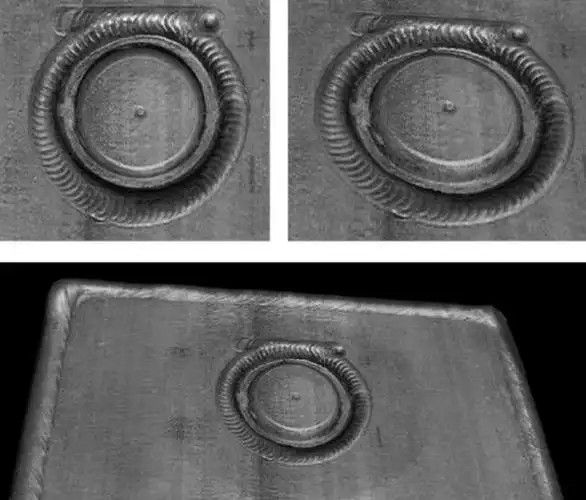
Aluminum-cased lithium battery sealing welding
Why Is Seal Welding Important?
A small discontinuity that might be acceptable in a non-sealed component can become a serious problem in a leak-tight assembly.For example, a tiny pore can become a leakage path when the component contains:
- Pressurized gas
- Hydraulic oil
- Fuel
- Refrigerant
- Water
- Corrosive chemicals
The consequences may include:
- Product contamination
- Loss of pressure
- Fluid leakage
- Environmental damage
- Reduced product life
- Equipment failure
- Safety risks
For this reason, seal welding often requires tighter control of the welding process than applications where leakage is not a concern.
Common Types of Seal Welds
The appropriate joint configuration depends on the component design.Common configurations include:
Fillet Seal Weld
A fillet weld can sometimes be used to provide a sealing function along the intersection of two components.
However, the weld must be continuous and free from leakage paths if sealing is the primary requirement.
Groove or Butt Seal Weld
Butt joints are widely used where two components are joined edge-to-edge.
They can provide a continuous welded barrier and are common in:
- Pipes
- Tubes
- Sheets
- Tanks
- Enclosures
For applications requiring high leak tightness, joint preparation and penetration control become particularly important.
Lap Joint Seal Weld
Lap joints overlap two components.
They may be used for sheet-metal assemblies and other applications where the geometry makes an overlapping joint practical.
Laser welding can be particularly useful for some thin-sheet lap joints because the process can be precisely controlled.
Circumferential Seal Weld
A circumferential weld runs around a cylindrical component.
Typical applications include:
- Tubes
- Pipes
- Cylinders
- Containers
- Automotive components
Rotary fixtures or automated welding systems can be used to maintain consistent welding speed and positioning.
MIG Welding for Seal Welding
MIG welding, also known as gas metal arc welding (GMAW), uses a continuously fed consumable wire electrode and shielding gas.
It can be used for seal welding applications involving materials such as:
- Carbon steel
- Stainless steel
- Aluminum
It is widely used because of its:
- High deposition rate
- Relatively high welding speed
- Continuous wire feeding
- Suitability for automation
- Versatility
However, seal welding with MIG requires careful control.
Potential problems include:
- Porosity
- Spatter
- Incomplete fusion
- Excessive heat input
- Undercut
- Inconsistent penetration
Gas shielding must also be stable. Contaminated surfaces, inadequate shielding gas coverage, or incorrect welding parameters can increase the risk of discontinuities.
For applications where leak tightness is critical, the welding procedure should be developed around the actual sealing requirement rather than simply selecting MIG because it is a common welding process.
Which Welding Processes Can Be Used for Seal Welding?
TIG Welding for Seal Welding
TIG welding, or gas tungsten arc welding (GTAW), uses a non-consumable tungsten electrode and shielding gas.TIG is well known for producing precise and clean welds.
It is often used for:
- Stainless steel
- Aluminum
- Titanium
- Thin metal
- High-quality fabrication
Advantages include:
- Excellent control
- Clean welds
- Low spatter
- Good control of heat input
- Precise filler metal addition
The main disadvantage is productivity.
Compared with many automated laser welding processes, TIG can be slower, especially when long weld seams must be produced in high-volume manufacturing.
Nevertheless, TIG remains an important seal welding process for applications where weld quality and operator control are more important than production speed.
MIG Welding for Seal Welding
MIG welding can be used for seal welding, particularly when the sealing joint is part of a larger metal fabrication project. It is commonly considered for tanks, frames, sheet-metal assemblies, enclosures, pipes, and other structures where the weld must provide a continuous barrier against the passage of liquids, gases, or contaminants.
One of the main advantages of MIG welding for seal welding is its relatively high deposition rate. Compared with some lower-deposition welding processes, MIG welding can deposit filler metal efficiently, making it suitable for production environments where longer welds or a larger number of joints need to be completed.
MIG welding also offers several practical advantages:
- Relatively high deposition rate — suitable for longer continuous welds and production work.
- Good productivity — the continuously fed wire reduces the need for frequent electrode replacement.
- Relatively low equipment cost — MIG equipment is generally accessible for general fabrication shops.
- Wide range of applications — MIG welding can be used with various common steels, stainless steels, and aluminum alloys when the appropriate wire, shielding gas, and parameters are selected.
- Suitable for larger structures — it can be practical for tanks, frames, enclosures, brackets, and other fabricated components.
However, MIG welding also has limitations when the primary objective is a clean, precise, and highly controlled seal weld.
Because MIG welding uses an arc and relatively substantial heat input, it can produce a larger heat-affected zone than some highly concentrated welding processes. This may increase the risk of distortion, particularly when welding thin sheet metal.
MIG welding can also produce more spatter than laser welding, depending on the transfer mode, material, shielding gas, wire, and welding parameters. As a result, additional cleaning or finishing may sometimes be necessary after welding.
For applications where appearance and dimensional accuracy are particularly important, these factors should be considered carefully.
Laser Welding for Seal Welding
Laser welding uses a concentrated laser beam to melt and join the material.
It has become increasingly important for seal welding because the process can provide:
- High energy density
- Narrow welds
- Low overall heat input compared with many conventional processes
- High welding speeds
- Precise energy control
- Small heat-affected zones
- Low distortion in suitable applications
- Easy integration with automation
A laser beam can concentrate energy into a relatively small area.This allows manufacturers to create narrow and controlled welds while limiting unnecessary heating of the surrounding material.For many thin-sheet and precision components, this is a major advantage.
Why Laser Welding Is Attractive for Seal Welding
One of the biggest advantages of laser welding is process precision.A laser welding system can control parameters such as:
- Laser power
- Welding speed
- Beam diameter
- Focus position
- Pulse characteristics
- Wobble pattern
- Shielding gas
- Focal position
The exact parameter set depends on the material, thickness, joint design, laser source, and welding head.
When properly developed, the process can produce a stable weld with consistent penetration and a narrow heat-affected region.
This can be especially valuable for components where excessive heat causes:
- Distortion
- Discoloration
- Dimensional changes
- Damage to nearby components
Laser Seal Welding vs MIG Welding
Both laser welding and MIG welding can be useful for sealing applications, but their characteristics are different.
| Factor | Laser Welding | MIG Welding |
| Heat concentration | Very high | Lower |
| Welding speed | High in suitable applications | Moderate to high |
| Heat-affected zone | Generally narrow | Generally wider |
| Distortion | Low in suitable applications | Can be higher |
| Filler wire | Optional depending on joint | Normally required |
| Automation | Excellent | Excellent |
| Joint gap tolerance | Often relatively sensitive | Generally more forgiving |
| Equipment cost | Higher | Lower |
| Precision | Very high | Good |
| Best suited to | Precision and production applications | General fabrication and many industrial applications |
This does not mean that laser welding is always better.
The best process depends on the component.
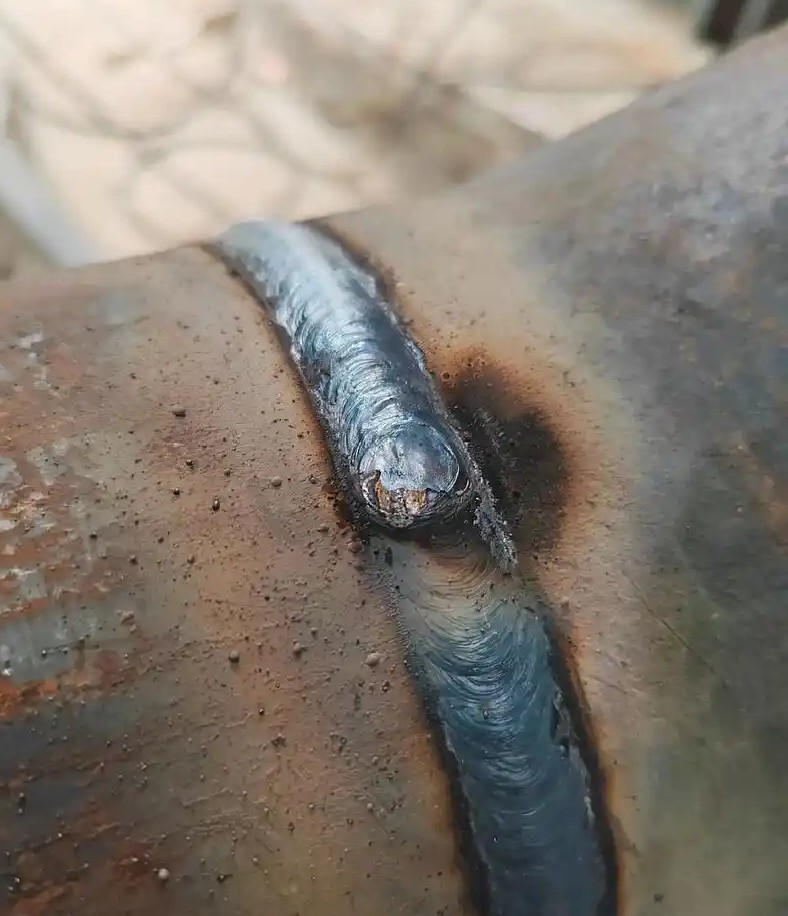
Pipe sealing welding
Laser Seal Welding for Different Materials
Laser Seal Welding of Stainless Steel
Stainless steel is widely used in sealed components because of its corrosion resistance and durability.
Common applications include:
- Tanks
- Food-processing equipment
- Medical components
- Automotive components
- Kitchen equipment
- Electronic housings
- Chemical equipment
Laser welding can be used to produce narrow and precise stainless-steel welds.
However, stainless steel laser welding still requires appropriate:
- Laser power
- Welding speed
- Focus position
- Shielding gas
- Joint fit-up
- Surface preparation
Poor parameter selection can result in defects such as incomplete fusion, excessive penetration, porosity, or distortion.
Therefore, laser welding should always be developed according to the specific grade and thickness of stainless steel.
Laser Seal Welding of Carbon Steel
Carbon steel is another common material for sealed welded components.
Applications include:
- Tanks
- Pipes
- Automotive parts
- Machinery components
- Industrial containers
Laser welding can provide high welding speed and concentrated heat input.
However, surface condition is particularly important.
Oil, rust, paint, scale, and other contaminants can negatively affect weld quality.
Proper cleaning and joint preparation are therefore essential.
Laser Seal Welding of Aluminum
Aluminum presents different challenges because of its high thermal conductivity and reflective surface characteristics.
Laser welding aluminum requires careful control of:
- Laser wavelength
- Power density
- Welding speed
- Focus
- Shielding gas
- Joint fit-up
Depending on the alloy and application, defects such as porosity, cracking, lack of fusion, or excessive penetration may occur if the process is not properly developed.
Laser welding can nevertheless be highly effective for aluminum components requiring lightweight construction and controlled distortion.
Common applications include:
- Automotive components
- Battery housings
- Heat exchangers
- Aluminum tanks
- Electrical enclosures
Laser Seal Welding of Copper
Copper is challenging for many laser welding processes because of its high thermal conductivity and high reflectivity, particularly at some common infrared laser wavelengths.
Modern laser welding systems can address some of these challenges through appropriate laser sources, beam characteristics, process control, and parameter development.
Copper laser welding is increasingly relevant to:
- Electrical components
- Busbars
- Battery systems
- Heat-transfer components
- Power electronics
For copper sealing applications, the process must be carefully validated because small changes in penetration or porosity can affect electrical, mechanical, and sealing performance.
Laser Welding of Plastic for Sealing Applications
Plastic should be considered separately from metal welding.For many plastic applications, the relevant materials are thermoplastics, which can be softened or melted by heat and then fused together.Laser welding is increasingly used to join plastic components where a clean, controlled, and potentially particle-free process is required.
Typical applications include:
- Automotive components
- Medical devices
- Sensors
- Fluid containers
- Electronic housings
- Microfluidic components
- Plastic reservoirs
A common method is transmission laser welding.In this process, one plastic component is sufficiently transparent to the laser wavelength, while the mating component absorbs the laser energy. The absorbed energy generates heat at the interface and melts the thermoplastic surfaces, allowing them to fuse.
The exact optical properties of the plastic are extremely important.Not every plastic is suitable for every laser wavelength.
Factors such as:
- Polymer type
- Additives
- Pigments
- Filler materials
- Transparency
- Absorption characteristics
- Part thickness
- Joint design
can significantly affect laser weldability.
Therefore, it would be incorrect to claim that laser welding can directly weld every type of plastic.For suitable thermoplastic combinations, however, laser welding can provide excellent control and is particularly attractive for clean sealing applications.
Limitations of Laser Seal Welding
Laser welding is not automatically the best solution for every seal weld.
Potential limitations include:
- Higher initial equipment cost
- Greater sensitivity to joint fit-up
- Need for process development
- Material-specific laser absorption
- Optical alignment requirements
- Requirement for appropriate safety controls
For example, a conventional MIG or TIG process may be more practical for a large, low-volume fabrication job, while laser welding may be more advantageous for a high-volume precision component.
The correct welding process should therefore be selected according to the complete application.
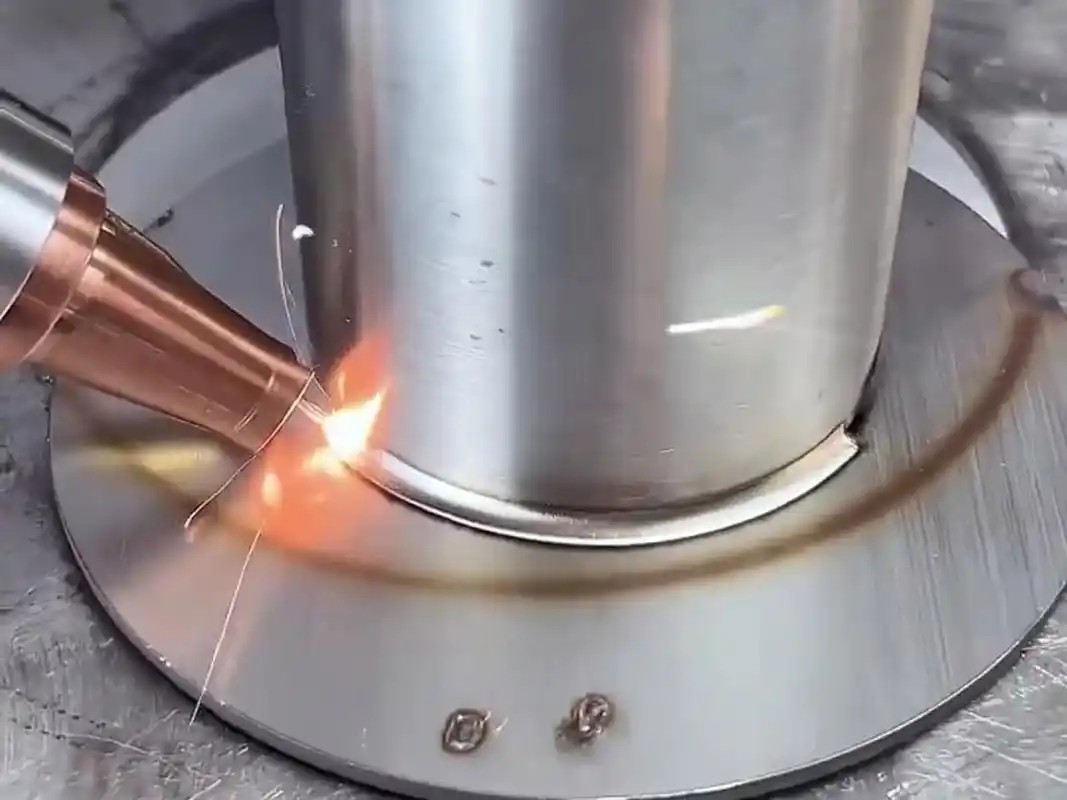
Tube flange laser welding
What Makes a Good Seal Weld?
A good seal weld is not determined only by appearance.Important characteristics include:
Continuous Weld Path
The weld must adequately cover the required sealing area.Any unsealed section can become a leakage path.
Adequate Fusion
The joined materials need sufficient metallurgical or polymer fusion for the intended application.
Controlled Penetration
Too little penetration can result in incomplete joining.Too much penetration can cause:
- Burn-through
- Excessive distortion
- Damage to internal components
Low Porosity
Porosity can create internal discontinuities and, depending on its location and severity, may compromise sealing performance.
No Cracks
Cracks are particularly serious for sealed components because they can provide direct leakage paths.
Stable Process Parameters
Changes in power, speed, shielding gas, focus, wire feeding, or joint fit-up can affect the weld.
Common Seal Weld Problems
Porosity
Porosity consists of gas-related voids within the weld.Possible causes include:
- Contaminated surfaces
- Moisture
- Inadequate shielding
- Improper welding parameters
- Gas entrapment
- Contaminated filler material
For critical sealing applications, porosity must be carefully controlled.
Incomplete Fusion
Occurs when the weld metal does not adequately fuse with the base material or adjacent weld region.Possible causes include:
- Insufficient energy
- Excessive welding speed
- Poor joint preparation
- Incorrect focus
- Improper torch or beam position
Incomplete Penetration
Incomplete penetration means the weld does not extend through the intended joint depth.
This can be particularly important for butt joints where full penetration is required for the design.
Cracking
Cracks can occur because of:
- Material characteristics
- Excessive thermal stress
- Improper parameters
- Unsuitable filler material
- Joint restraint
- Metallurgical reactions
The exact mechanism depends heavily on the material.
Undercut
Undercut is a groove formed along the edge of the weld.
Severe undercut can reduce effective joint quality and may become problematic in applications where continuous sealing is required.
Burn-Through
Burn-through occurs when excessive heat causes material to melt through the joint.
It can be caused by:
- Excessive laser power
- Excessively low welding speed
- Excessive arc energy
- Excessively thin material
- Poor joint fit-up
How to Improve Seal Welding Quality
A reliable seal welding process usually requires control of the entire production chain.
Step 1: Select the Correct Material
Verify the exact material grade and its weldability.
Step 2: Design the Joint Correctly
The joint should be designed around both mechanical and sealing requirements.
Step 3: Prepare the Surface
Remove oil, grease, rust, moisture, and other contaminants.
Step 4: Control Fit-Up
Maintain consistent gaps and alignment.
Step 5: Select the Appropriate Welding Process
Consider MIG, TIG, laser welding, or another suitable process.
Step 6: Optimize Parameters
For laser welding, parameters may include:
- Laser power
- Speed
- Focus
- Beam diameter
- Wobble
- Shielding gas
For MIG and TIG, relevant parameters include:
- Current
- Voltage
- Travel speed
- Shielding gas
- Electrode or wire selection
Step 7: Control the Process
Monitor important parameters during production.
Step 8: Inspect the Weld
Use appropriate visual, dimensional, non-destructive, or leak-testing methods.
Step 9: Validate the Final Assembly
The finished product should meet its actual pressure, leakage, and service requirements.
Frequently Asked Questions About Seal Welds
What is the main purpose of a seal weld?
The main purpose of a seal weld is to prevent leakage through a welded joint. The leakage may involve liquids, gases, air, refrigerants, chemicals, or other media.
Is a seal weld the same as a structural weld?
No. A seal weld is primarily intended to prevent leakage, while a structural weld is primarily intended to carry mechanical loads. However, one weld can perform both functions.
Can MIG welding be used for seal welding?
Yes. MIG welding can be used for many seal welding applications involving materials such as carbon steel, stainless steel, and aluminum, provided the joint design and welding procedure are suitable.
Is laser welding good for seal welding?
Laser welding can be an excellent option for suitable seal welding applications, especially where precision, low distortion, high production speed, and automation are important.
Can plastic be seal welded?
Yes. Suitable thermoplastics can be joined by several welding processes, including laser welding. The plastic must have appropriate optical and thermal characteristics for the selected laser welding method.
Can laser welding create hermetic seals?
Laser welding can be used in applications requiring very high leak tightness, including some hermetic sealing applications. However, hermetic performance depends on the complete component design, materials, welding procedure, and leak-testing requirements. A laser weld should not automatically be considered hermetic simply because it is made with a laser.
Does every seal weld need to be fully penetrated?
Not necessarily. The required penetration depends on the joint design and sealing specification. Some applications require full penetration, while others may use a different joint configuration. The engineering specification should determine the required weld geometry.
How do you test a seal weld?
Depending on the application, testing may include visual inspection, pressure testing, vacuum testing, bubble testing, helium leak testing, or other appropriate inspection methods.
Looking for a Welding Solution for Seal Welding?
ZS Laser provides many welding solutions for a wide range of industrial applications, including precision metal welding, sheet-metal welding, automated welding, and specialized laser welding systems.
Whether you need a handheld laser welding machine for flexible production or an automated laser welding system for high-volume manufacturing, the welding process should be selected according to your material, joint design, thickness, and sealing requirements.
Contact ZS Laser to discuss your application and find a suitable welding solution.

WhatsApp
Scan the QR Code to start a WhatsApp chat with us.