 ZS Laser Equipment

A square groove weld is one of the simplest types of groove welds used to join two components, particularly when the material is relatively thin or when the joint can achieve the required penetration without extensive edge preparation.Unlike V-groove, U-groove, or J-groove joints, a square groove joint generally uses straight, square edges rather than angled or curved bevels. This makes the joint preparation relatively simple and can reduce machining, grinding, and preparation costs.
Square groove welds can be produced using several welding processes, including MIG welding, TIG welding, stick welding, and laser welding. The most appropriate process depends on the material, thickness, joint fit-up, required penetration, production requirements, and acceptable heat input.
For manufacturers looking for high-speed and low-distortion welding, laser welding can be particularly attractive when the joint design and material thickness are suitable for the process.
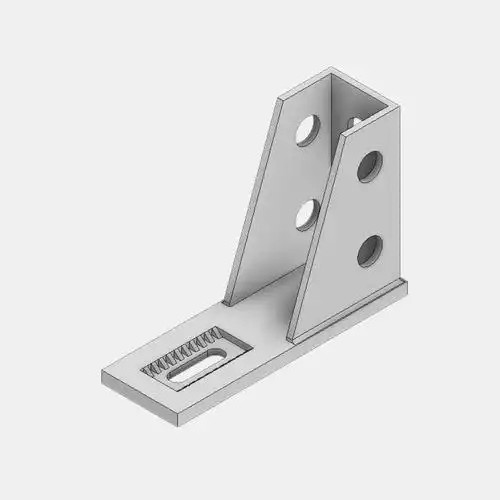
Square groove welding joint
What Is a Square Groove Weld?
A square groove weld is a groove weld made between two workpieces whose joint edges are prepared as straight, square edges rather than beveled edges.The two components are typically positioned in a butt-joint configuration, with the weld deposited into the joint between them.The basic configuration can be described as:
- Two relatively flat or square joint edges
- A controlled root opening when required
- A weld that fills the joint between the two components
- No V-shaped bevel on the joint edges
The exact joint configuration depends on the material thickness, welding process, required penetration, and applicable welding procedure.
One important distinction is that a butt joint describes how two components are positioned relative to each other, while a square groove weld describes the groove or edge preparation used for the weld.Therefore, a square groove weld is commonly associated with a butt joint, but the two terms are not interchangeable.
What Does a Square Groove Weld Look Like?
A typical square groove joint has two straight edges facing each other.The joint may be assembled with the edges touching or with a controlled root opening between them, depending on the welding process and the required penetration.Important factors include:
- Material thickness
- Root opening
- Joint alignment
- Edge condition
- Required weld penetration
- Welding process
For thin materials, the joint may sometimes be welded with little or no root opening. For other applications, a controlled gap may be necessary to achieve the required penetration.
The correct joint configuration should therefore be established according to the welding procedure rather than assuming that one root gap works for every application.
Square Groove Weld vs. Other Groove Welds
Square groove welds are one of several common groove configurations used in welding.
Square Groove Weld
The joint edges remain essentially square.
Advantages:
- Simple edge preparation
- Low preparation cost
- Less machining
- Suitable for many thin-material applications
The main limitation is that penetration can become more difficult as material thickness increases.
V-Groove Weld
A V-groove is created by beveling the edges of the workpieces.
This provides more access to the joint and can make full penetration easier in thicker materials.
However, V-groove preparation requires additional cutting, machining, or grinding.
U-Groove Weld
A U-groove uses curved preparation on the joint edges.
It can reduce the amount of filler metal required compared with some deep V-groove configurations, but the preparation process is more complex.
J-Groove Weld
A J-groove has a curved groove on one side of the joint.
It is often used when joint accessibility, penetration, or reduced weld volume makes this configuration advantageous.
Bevel Groove Weld
A bevel groove generally involves preparing one or both joint edges at an angle.
The specific geometry depends on the welding application and joint design.
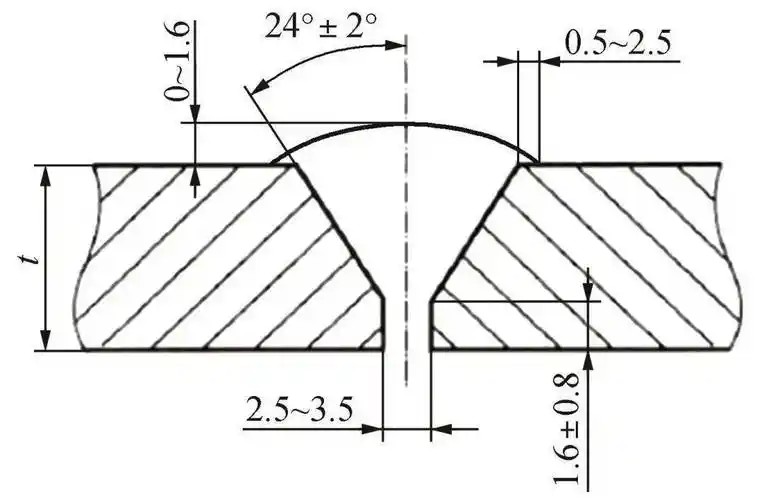
V-groove welded joint
When Is a Square Groove Weld Used?
A square groove weld is generally attractive when the material and joint geometry allow the required weld penetration without extensive edge preparation.Common applications include:
- Sheet metal fabrication
- Thin plates
- Tubes
- Pipes
- Metal enclosures
- Machinery components
- Automotive components
- Frames and brackets
- General metal fabrication
The material thickness is one of the most important considerations.For relatively thin material, the welding process may be capable of achieving sufficient penetration through a square joint.As thickness increases, however, obtaining full penetration becomes more difficult. In these situations, a V-groove, U-groove, J-groove, double-sided welding procedure, or another joint preparation may be more appropriate.
This does not mean that square groove welds are limited to one specific thickness range. Their suitability depends on the welding process, material, joint gap, penetration requirements, equipment capability, and qualified welding procedure.
How to Make a Square Groove Weld
Step 1: Prepare the Workpieces
The joint surfaces should be properly prepared before welding.
Depending on the material, contaminants may include:
- Oil
- Grease
- Rust
- Paint
- Oxide
- Scale
- Dirt
Contamination can affect arc stability, laser absorption, shielding, penetration, and weld quality.
For laser welding in particular, clean and consistent surfaces are important because the process operates with a highly concentrated heat source.
Step 2: Align the Workpieces
The workpieces should be accurately aligned before welding.
Important factors include:
- Joint alignment
- Root opening
- Edge condition
- Part positioning
- Fixturing
Excessive or inconsistent gaps can make it more difficult to obtain stable penetration, particularly when using a highly focused laser beam.
Step 3: Select the Welding Process
Several welding processes can be used for square groove joints.
Common options include:
- MIG welding
- TIG welding
- Stick welding
- Laser welding
The best process depends on the material, thickness, production volume, required weld quality, and available equipment.
Step 4: Set the Welding Parameters
Parameters must be selected according to the specific material and joint.
Depending on the process, these may include:
- Welding current
- Voltage
- Travel speed
- Wire feed speed
- Laser power
- Focus position
- Shielding gas
- Torch or beam position
Step 5: Perform the Weld
During welding, consistent travel speed and positioning are important for maintaining stable weld penetration and appearance.
For automated laser welding, accurate fixturing and consistent part dimensions become especially important.
Step 6: Inspect the Weld
The completed weld should be inspected according to the requirements of the application.
Inspection may include:
- Visual inspection
- Dimensional inspection
- Penetration verification
- Leak testing
- Dye penetrant testing
- Ultrasonic testing
- Radiographic testing
The appropriate inspection method depends on the application and required quality level.
MIG Welding for Square Groove Welds
MIG welding can be used to produce square groove welds in many fabrication applications.It is widely used for carbon steel, stainless steel, and aluminum when appropriate filler wire, shielding gas, and welding parameters are selected.
Advantages of MIG Welding
MIG welding offers several benefits for square groove joints:
- Relatively high deposition rate
- Continuous filler wire feeding
- Good productivity
- Widely available equipment
- Suitable for production environments
- Relatively straightforward operation
However, MIG welding also introduces heat into the workpiece and may produce more spatter than some other welding processes.
Depending on the application, this can result in:
- Greater heat input
- A wider heat-affected zone
- More thermal distortion
- Spatter
- Additional post-weld cleaning
For general fabrication and applications where productivity and equipment cost are important considerations, MIG welding remains a practical choice.
TIG Welding for Square Groove Joints
TIG welding can also be used for square groove joints, particularly when precise control of the welding arc and weld pool is important.Compared with MIG welding, TIG generally provides greater control over the weld pool and can produce clean, high-quality welds.It is commonly used for:
- Stainless steel
- Aluminum
- Thin sheet metal
- Precision components
- High-quality fabrication
The main disadvantage is productivity.
TIG welding is generally slower than MIG welding and requires greater operator skill. For high-volume production, other processes may provide higher productivity.
Laser Welding a Square Groove Joint
Laser welding is another option for square groove joints and can be particularly effective when the material thickness, joint fit-up, and penetration requirements are compatible with the process.A laser welding system concentrates energy into a small area, allowing high power density and relatively localized heating.Potential advantages include:
- High welding speed
- Concentrated heat input
- Narrow weld profile
- Small heat-affected zone
- Reduced thermal distortion
- Good repeatability
- Clean weld appearance
- Potentially reduced post-weld finishing
Laser welding can be especially attractive for automated manufacturing and precision components.However, laser welding does not eliminate the need for proper joint preparation.
Why Joint Fit-Up Is Important for Laser Welding
A common misconception is that the high energy density of a laser means that it can easily bridge any joint gap.In reality, laser welding can be sensitive to joint fit-up.If the gap between two workpieces is too large for the selected process, the laser may not be able to create stable bridging and adequate fusion.Therefore, manufacturers should carefully control:
- Root gap
- Edge alignment
- Material thickness
- Laser focus
- Laser power
- Welding speed
- Shielding gas
For production applications, fixtures and automated positioning systems can help maintain consistent joint geometry.
Square Groove Weld Joint Design
Joint design plays an important role in determining whether a square groove configuration is suitable.
Root Opening
The root opening is the gap between the joint members.
A controlled root opening can influence:
- Penetration
- Weld pool behavior
- Heat distribution
- Weld formation
The ideal gap depends on the welding process and material.
It should therefore be determined through an appropriate welding procedure rather than applying a universal value.
Material Thickness
Material thickness strongly affects the feasibility of a square groove joint.
Thin material may be welded successfully without extensive edge preparation.
Thicker material may require deeper joint preparation to achieve complete penetration.
Joint Fit-Up
Good fit-up is particularly important for laser welding.
Variation in the joint gap can cause variation in:
- Penetration
- Weld width
- Fusion
- Weld appearance
For automated production, consistent material dimensions and accurate fixturing are therefore essential.
Welding Position
Welding position can also influence weld pool control and penetration.
Common positions include:
- Flat
- Horizontal
- Vertical
- Overhead
The welding procedure should be developed for the actual position in which the joint will be welded.
Advantages of Square Groove Welds
Square groove joints can provide several practical advantages when used under suitable conditions.
Simple Joint Preparation
One of the biggest advantages is the relatively simple edge preparation.
Unlike V-groove or U-groove joints, square edges generally do not require extensive beveling.
Lower Preparation Cost
Simpler preparation can reduce the need for:
- Machining
- Grinding
- Edge milling
- Additional cutting operations
This can be particularly valuable in high-volume fabrication.
Reduced Weld Volume
When a square groove joint is suitable for the material thickness, the amount of weld metal required may be lower than that required for a deeper beveled joint.
This can reduce:
- Filler material consumption
- Welding time
- Heat input
The actual benefit depends on joint geometry and welding procedure.
Suitable for Automation
Square groove joints can be attractive for automated welding when the parts can be manufactured with consistent dimensions.
This makes them relevant to:
- Robotic welding
- Automated MIG welding
- Automated TIG welding
- Laser welding systems
Limitations of Square Groove Welds
Despite their simplicity, square groove welds are not suitable for every application.
Limited Penetration in Some Thick Materials
As material thickness increases, obtaining complete penetration through a square joint becomes more challenging.
A deeper groove preparation may be required.
Sensitivity to Joint Gap
The joint gap must remain within the capability of the selected welding process.
This is especially important for laser welding because of its highly concentrated beam.
Fit-Up Requirements
Poor alignment or inconsistent joint dimensions can lead to inconsistent weld quality.
Potential Lack of Fusion
If the welding parameters are not suitable, defects such as lack of fusion or incomplete penetration may occur.
Therefore, joint design and welding parameters should always be considered together.
Common Square Groove Weld Defects and How to Prevent Them
A square groove weld can develop many of the same defects found in other weld configurations.
| Weld Defect | Possible Cause | Possible Prevention |
|---|---|---|
| Lack of fusion | Insufficient heat input or poor process control | Optimize welding parameters |
| Incomplete penetration | Insufficient penetration capability or unsuitable joint design | Adjust joint design and process parameters |
| Porosity | Contamination or inadequate shielding | Clean the joint and optimize shielding |
| Undercut | Excessive heat or improper travel conditions | Adjust current, speed, and technique |
| Cracking | Material, restraint, thermal, or metallurgical factors | Develop a suitable welding procedure |
| Distortion | Excessive heat input | Reduce heat input and improve fixturing |
| Excessive penetration | Excessive heat input or unsuitable gap | Optimize power/current and travel speed |
The exact cause of a defect should always be investigated rather than assuming that one parameter is responsible.
Applications of Square Groove Welds
Square groove welds are used in many areas of metal fabrication when the joint design is appropriate.
Automotive Manufacturing
Applications may include:
- Sheet metal components
- Frames
- Brackets
- Tubes
- Enclosures
Machinery Manufacturing
Square groove joints can be found in:
- Machine frames
- Covers
- Structural components
- Fabricated assemblies
Metal Fabrication
Common applications include:
- Panels
- Cabinets
- Containers
- Tanks
- Sheet metal assemblies
Pipe and Tube Fabrication
Square groove joints may be used for suitable pipe and tube applications where the material thickness and penetration requirements allow the configuration.
Precision Manufacturing
Laser welding can be useful for square groove joints in applications requiring:
- Low distortion
- High repeatability
- Narrow welds
- High production speed
Examples include precision sheet metal components, stainless steel parts, aluminum components, and electronic housings.
Which Welding Process Is Best for a Square Groove Weld?
There is no single welding process that is best for every square groove weld.
The appropriate process depends on:
- Material
- Material thickness
- Joint gap
- Required penetration
- Production volume
- Weld appearance
- Distortion requirements
- Equipment availability
- Automation requirements
MIG Welding
Best suited to many general fabrication and production applications where productivity and relatively high deposition rate are important.
TIG Welding
A good option when precise control and high-quality weld appearance are important, particularly for thinner materials and precision fabrication.
Stick Welding
Useful for certain repair, maintenance, structural, and field applications where equipment portability and versatility are important.
Laser Welding
Particularly attractive for suitable materials and joint configurations where high welding speed, concentrated heat input, low distortion, and automation are important.
Robotic Laser Welding
Can be highly effective for repetitive production applications where consistent joint geometry and automated positioning are available.
How to Choose Between Square Groove and V-Groove Welding
The choice between a square groove and a V-groove should be based on the actual welding requirements.
A square groove may be preferable when:
- The material is relatively thin
- Required penetration can be achieved
- Edge preparation needs to be minimized
- Production efficiency is important
- Joint fit-up can be controlled
A V-groove may be more appropriate when:
- Material thickness is greater
- Full penetration is required
- The selected process cannot achieve the required penetration through a square joint
- Additional access to the joint is needed
In other words, the simplest joint preparation is not necessarily the best joint preparation.
The goal is to select a joint design that provides the required weld performance while balancing preparation cost, welding productivity, material usage, and quality requirements.
Frequently Asked Questions About Square Groove Welds
What is a square groove weld?
A square groove weld is a groove weld made between components with essentially square, un-beveled joint edges. It is commonly used with butt joints when the material thickness and welding process allow the required penetration.
Can you MIG weld a square groove?
Yes. MIG welding can be used for square groove welds when the material, thickness, joint fit-up, shielding gas, filler wire, and welding parameters are appropriate.
Can you laser weld a square groove joint?
Yes. Laser welding can be used for suitable square groove joints. It is particularly attractive when high welding speed, localized heat input, low distortion, and repeatability are important.
Is a square groove weld suitable for thick metal?
It can be suitable in some applications, but thickness is an important limitation. As material thickness increases, achieving complete penetration becomes more difficult, and a V-groove, U-groove, J-groove, or another joint preparation may become more appropriate.
Does a square groove weld require a root gap?
Not always. The appropriate root opening depends on the material, thickness, welding process, required penetration, and welding procedure.
What is the difference between a square groove weld and a V-groove weld?
A square groove weld uses essentially straight joint edges, while a V-groove weld uses beveled edges that form a V-shaped groove. V-groove preparation is commonly used when greater access or penetration is required, particularly for thicker materials.
What are common square groove weld defects?
Common defects can include lack of fusion, incomplete penetration, porosity, undercut, cracking, and distortion. The causes depend on the material, joint design, welding process, and welding parameters.
Final Thoughts
A square groove weld provides a simple and efficient joint configuration when the material thickness, penetration requirements, and welding process are suitable. Its main advantage is the relatively simple edge preparation, which can reduce machining and preparation requirements compared with more complex groove designs.
ZS Laser provides laser welding solutions for different materials, thicknesses, and production requirements. Our team can help evaluate your joint design, material, welding thickness, and production needs to determine whether laser welding is suitable for your application.
If you are considering laser welding a square groove joint, contact ZS Laser to discuss your specific welding requirements and develop a suitable solution.

WhatsApp
Scan the QR Code to start a WhatsApp chat with us.