 ZS Laser Equipment

Introduction
Structural welding is one of the most important welding disciplines in modern manufacturing and construction. From steel buildings and bridges to heavy machinery, automotive frames, and industrial equipment, structural welding plays a critical role in ensuring strength, stability, and long-term reliability.
Many people assume that structural welding simply means welding parts together. In reality, structural welding involves much more than creating a connection. The weld itself becomes part of the load-bearing structure, meaning its quality directly affects safety, durability, and overall performance.
As industries continue to pursue higher productivity, better precision, and increased automation, new technologies such as laser welding are gradually being adopted alongside traditional welding methods for structural applications.
In this article, we will explain what structural welding is, how it differs from ordinary welding, common structural welding processes, industry standards, applications, and how laser welding is changing the future of structural fabrication.
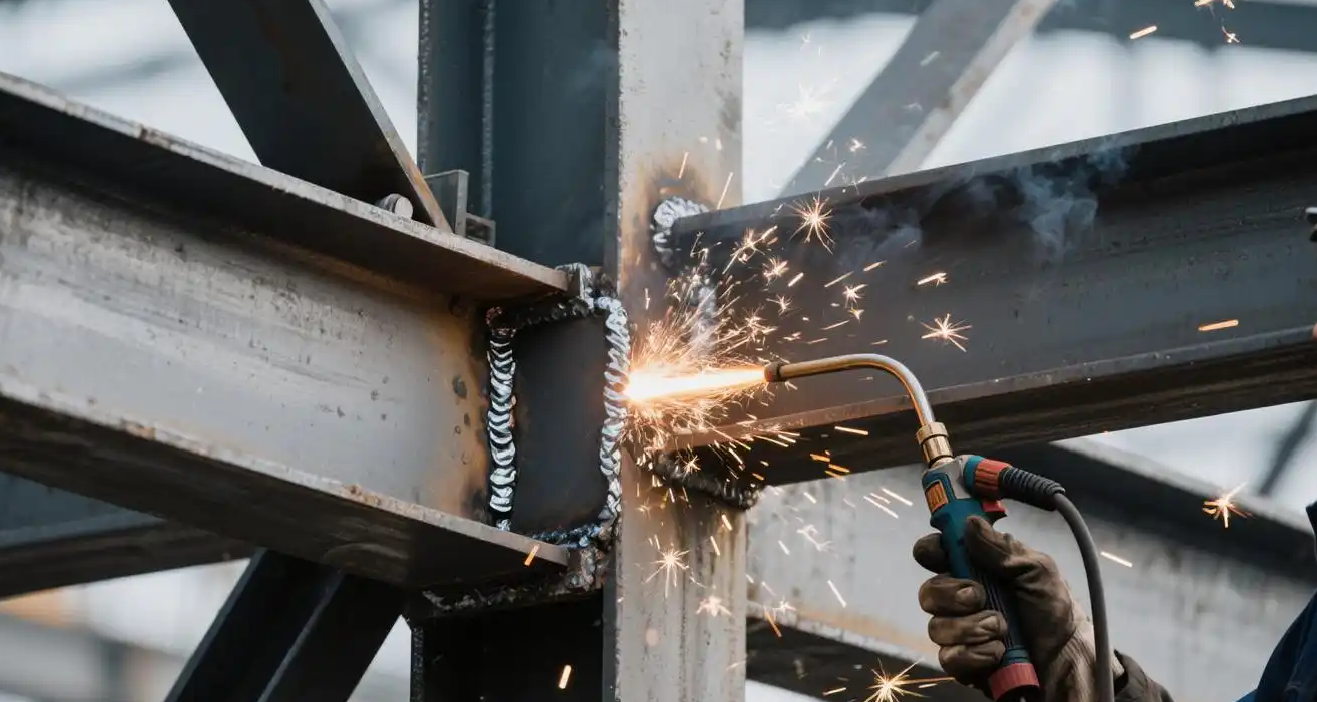
Steel structure beam welding
What Is Structural Welding?
Structural welding refers to the process of joining metal components that form part of a load-bearing structure.
Unlike decorative or non-critical welds, structural welds are designed to transfer loads and maintain the integrity of the overall assembly. If a structural weld fails, the strength, stability, or safety of the entire structure may be compromised.
In simple terms:
Structural welding is welding used to fabricate, assemble, repair, or reinforce structures where weld quality directly affects structural performance.
Structural welding is commonly used in:
- Buildings
- Bridges
- Industrial equipment
- Heavy machinery
- Automotive structures
- Rail transportation
- Aerospace components
- Energy infrastructure
Because these structures are subjected to static loads, dynamic loads, vibration, fatigue, and environmental conditions, structural welding requires strict quality control and engineering standards.
Structural Welding vs Ordinary Welding
One common misconception is that structural welding is simply any weld that carries force.
Technically, almost every weld carries some level of force. Even decorative stainless steel products experience weight, vibration, or thermal stress.
The real distinction lies in whether the weld is part of the primary structural load path.
Structural Welding
In structural welding:
- Welds transfer critical loads
- Weld failure can affect safety
- Engineering standards must be followed
- Inspection requirements are stricter
- Long-term durability is essential
Examples include:
- Steel beams
- Vehicle chassis
- Crane structures
- Bridge components
- Excavator arms
Non-Structural Welding
In non-structural welding:
- Appearance may be the priority
- Loads are usually secondary
- Failure typically affects function rather than safety
Examples include:
- Decorative stainless steel products
- Kitchen equipment
- Furniture
- Signage
- Metal enclosures
The key difference is not whether the weld experiences force, but whether the weld is a critical part of the structural system.
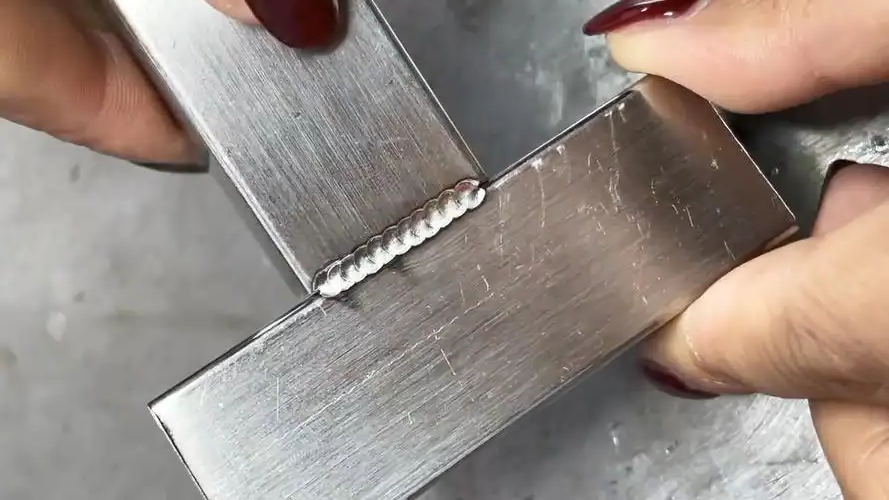
Stainless Steel Welding
Common Applications of Structural Welding
1.Building Construction
Structural welding is extensively used in steel-frame construction.
Applications include:
- H-beams
- Columns
- Trusses
- Roof structures
- Industrial buildings
Proper welding ensures the building can safely withstand loads from occupants, equipment, wind, and seismic activity.
2.Bridge Fabrication
Bridges are constantly subjected to:
- Vehicle loads
- Wind loads
- Thermal expansion
- Fatigue stress
Structural welds in bridge fabrication must meet extremely high quality requirements to ensure long service life and public safety.
3.Heavy Equipment Manufacturing
Construction and mining equipment rely heavily on structural welding.
Examples include:
- Excavator booms
- Loader frames
- Crane arms
- Mining machinery
These components experience repeated impact loads and severe working conditions.
4.Automotive Manufacturing
Modern vehicles contain numerous structural welds.
Typical applications include:
- Vehicle frames
- Chassis components
- Battery trays
- Crash structures
- Suspension components
As lightweight materials become more common, manufacturers increasingly adopt advanced welding technologies to maintain structural strength while reducing weight.
5.Aerospace Industry
Aircraft structures demand exceptional strength-to-weight ratios.
Structural welding is used for:
- Support structures
- Engine components
- Frames
- Specialized assemblies
Precision and consistency are critical due to strict aerospace safety requirements.
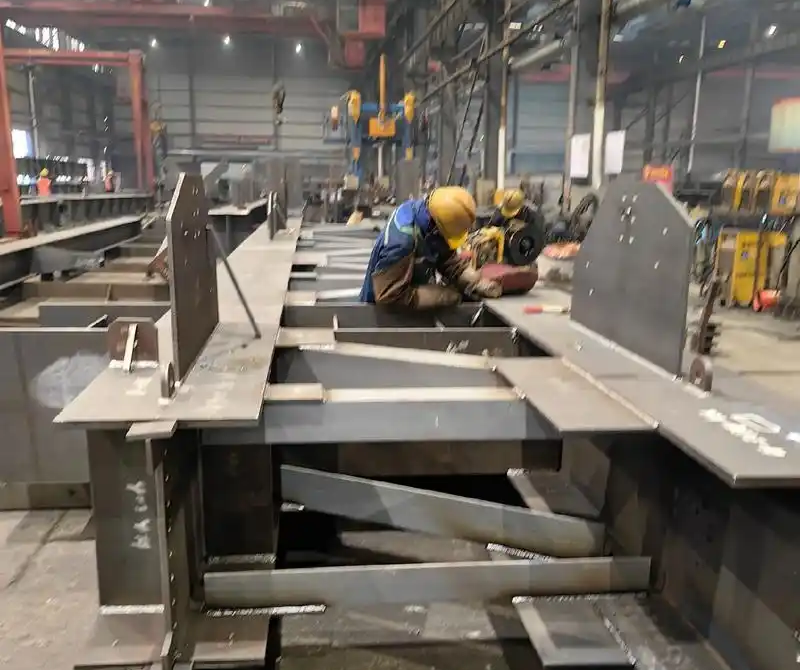
Structural welding prefabrication plant
Common Structural Welding Processes
Several welding technologies are used for structural applications.
Shielded Metal Arc Welding (SMAW)
Also known as stick welding.
Advantages:
- Portable
- Suitable for outdoor work
- Low equipment cost
Commonly used in construction and field repair.
Flux-Cored Arc Welding (FCAW)
One of the most popular methods for structural steel fabrication.
Advantages:
- High deposition rates
- Excellent productivity
- Suitable for thick materials
Widely used in steel fabrication shops.
MIG/MAG Welding
MIG and MAG welding are common in industrial production.
Advantages:
- High welding speed
- Easy automation
- Consistent weld quality
Frequently used in machinery and vehicle manufacturing.
TIG Welding
TIG welding offers excellent precision and appearance.
Advantages:
- High-quality welds
- Precise control
- Suitable for stainless steel and aluminum
Commonly used for specialized structural components.
Laser Welding
Laser welding is becoming increasingly important in structural manufacturing.
Advantages include:
- Low heat input
- Minimal distortion
- High welding speed
- Excellent automation capability
- Consistent weld quality
Laser welding is particularly attractive for modern industries focused on automation and lightweight design.
Does Structural Welding Always Require Full Penetration?
A common misconception is that every structural weld must be fully penetrated.
This is not always true.
The required penetration depends on engineering design and loading conditions.
Full Penetration Welds
Used when:
- Maximum strength is required
- Fatigue resistance is critical
- Safety requirements are high
Common applications:
- Bridges
- Cranes
- Pressure equipment
- Critical steel structures
Full penetration welds can achieve strength comparable to the base material.
Partial Penetration Welds
Used when:
- Loads are moderate
- Joint design permits reduced penetration
- Cost efficiency is important
Applications include:
- Equipment frames
- Support structures
- Industrial machinery
When properly designed and engineered, partial penetration welds can fully satisfy structural requirements.
Therefore:
Structural welding does not automatically mean full penetration welding.
The appropriate weld design depends on engineering calculations and application requirements.
Structural Welding Standards
Because structural weld quality directly affects safety, welding operations are typically governed by industry standards.
Common standards include:
AWS D1.1
Structural Welding Code – Steel
One of the most widely recognized standards worldwide.
ISO Standards
Various ISO standards govern:
- Welding quality
- Qualification procedures
- Inspection requirements
EN Standards
Commonly used throughout Europe for structural steel fabrication.
These standards define:
- Weld acceptance criteria
- Welder qualifications
- Procedure qualifications
- Inspection methods
Compliance helps ensure reliability and safety throughout the service life of the structure.
Challenges in Structural Welding
Structural welding often presents several technical challenges.
Distortion
Large heat input can cause:
- Warping
- Shrinkage
- Dimensional inaccuracies
This is particularly problematic for precision assemblies.
Residual Stress
Uneven heating and cooling generate internal stresses that can reduce fatigue performance.
Cracking
Certain materials are susceptible to:
- Hot cracking
- Cold cracking
- Hydrogen-induced cracking
Proper welding procedures are essential to minimize these risks.
Productivity
Traditional welding methods can be time-consuming, especially for high-volume manufacturing environments.
Manufacturers continuously seek faster and more efficient solutions.
How Laser Welding Is Transforming Structural Fabrication
Laser welding is increasingly being adopted for structural applications, especially where precision and automation are priorities.
Compared with conventional arc welding, laser welding offers several advantages.
Reduced Heat Input
The concentrated laser beam minimizes thermal influence on surrounding materials.
Benefits include:
- Less distortion
- Smaller heat-affected zones
- Improved dimensional accuracy
Higher Productivity
Laser welding speeds can be several times faster than TIG welding and significantly faster than many traditional processes.
This improves production efficiency and reduces manufacturing costs.
Superior Automation
Laser welding systems integrate easily with:
- CNC platforms
- Robotic arms
- Vision systems
- Automated production lines
This makes laser welding highly suitable for Industry 4.0 manufacturing environments.
Consistent Quality
Computer-controlled laser welding provides:
- Repeatable weld geometry
- Stable penetration
- Reduced operator dependence
Consistency is particularly valuable for structural components produced in large quantities.
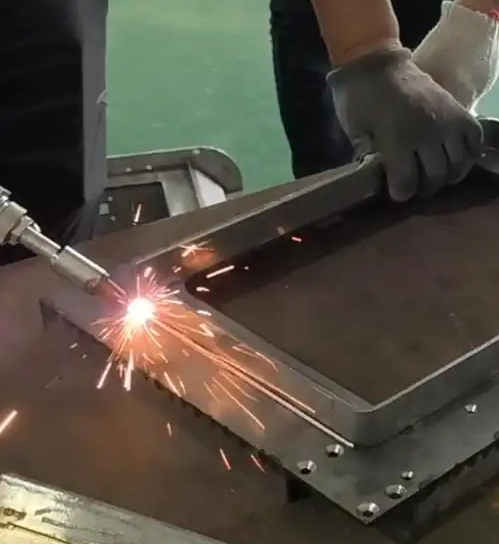
Laser welding carbon steel
Structural Welding Applications for Laser Technology
Today, laser welding is widely used in structural manufacturing applications such as:
- Automotive body structures
- Battery trays
- Chassis components
- Electrical cabinets
- Sheet metal assemblies
- Industrial equipment frames
- Transportation equipment
As laser power continues to increase, more structural applications that traditionally relied on arc welding are becoming suitable for laser welding solutions.
Why Structural Manufacturers Are Adopting Laser Welding
Manufacturers are increasingly investing in laser welding because it helps achieve:
- Higher productivity
- Better consistency
- Lower rework rates
- Reduced distortion
- Easier automation
- Lower long-term production costs
For companies facing labor shortages and growing quality requirements, laser welding provides a practical path toward intelligent manufacturing.
Conclusion
Structural welding is far more than simply joining metal parts together. It is a critical manufacturing process that directly affects the strength, stability, durability, and safety of load-bearing structures.
Whether used in buildings, bridges, heavy machinery, automotive manufacturing, or aerospace applications, structural welding requires careful engineering, qualified procedures, and strict quality control.
While traditional processes such as SMAW, FCAW, MIG, and TIG remain important, laser welding is rapidly becoming a preferred solution for many structural fabrication applications due to its speed, precision, low heat input, and automation capabilities.
As manufacturing continues to evolve, laser welding is expected to play an increasingly important role in the future of structural welding.
Looking for a Structural Welding Solution?
ZS Laser provides advanced laser welding solutions for structural fabrication, including handheld laser welders, automated welding systems, robotic laser welding cells, and customized production line integration.
Contact our team today to discuss your project and discover how laser welding can improve productivity, weld quality, and manufacturing efficiency.

WhatsApp
Scan the QR Code to start a WhatsApp chat with us.