 ZS Laser Equipment

In today’s manufacturing industry, product quality requirements continue to rise. Whether producing medical devices, aerospace components, battery enclosures, automotive parts, or precision sheet metal products, manufacturers are no longer satisfied with welds that are simply “strong enough.” They also expect consistent weld quality, minimal distortion, attractive weld appearance, and repeatable production results.This is why precision welding has become one of the most important technologies in modern manufacturing.
Achieving precision welding is not just about purchasing an advanced welding machine. It requires selecting the right welding process, controlling heat input, designing proper fixtures, using suitable inspection tools, and implementing standardized production procedures.
In this article, we’ll explore what precision welding really means, how different fusion welding processes compare, why welding gauges are essential for quality control, and how modern laser welding technology is helping manufacturers achieve higher productivity and better weld quality.
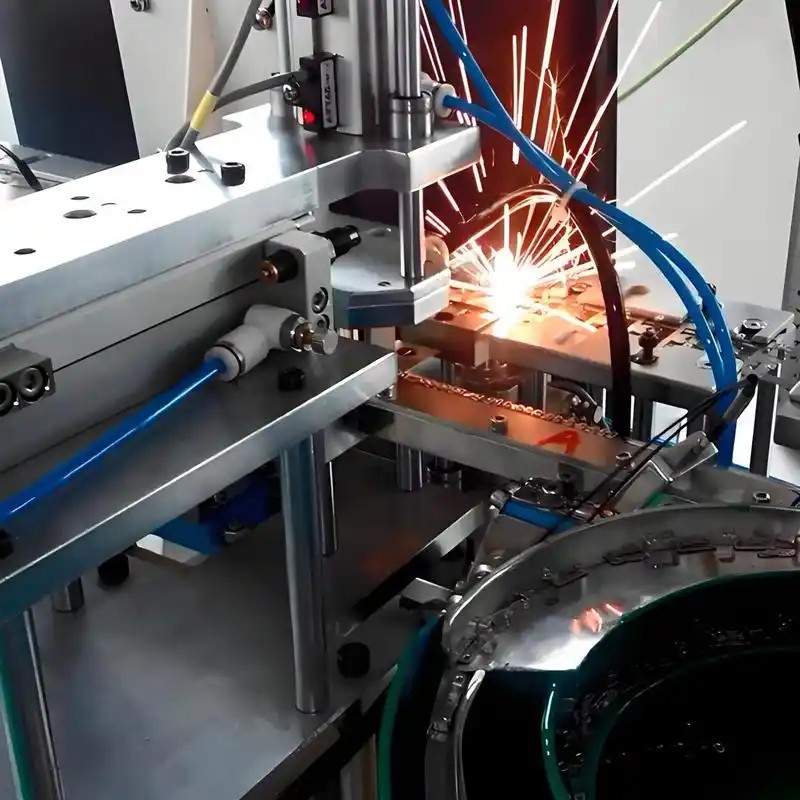
Automatic Laser Precision Welding
What Is Precision Welding?
Precision welding refers to a welding process that produces highly accurate, consistent, and repeatable welds while minimizing distortion and maintaining tight dimensional tolerances.Compared with conventional welding, precision welding places greater emphasis on the following tips:
1.Accurate weld positioning
2.Stable penetration
3.Consistent weld bead appearance
4.Minimal heat-affected zone (HAZ)
5.Low distortion
6.High repeatability
7.Excellent mechanical strength
Precision welding is commonly used in industries where dimensional accuracy and product appearance are critical, including:
1.Automotive manufacturing
2.Aerospace
3.Medical equipment
4.Electronics
5.Lithium battery production
6.Stainless steel fabrication
7.Precision sheet metal manufacturing
8.Industrial cabinets and electrical enclosures
As manufacturing becomes increasingly automated, precision welding is evolving from a specialized process into a standard requirement for many production lines.
Fusion Welding: The Foundation of Most Modern Welding Processes
Many people confuse fusion welding with a specific welding machine. In fact, fusion welding is a broad category of welding processes.
Fusion welding joins metals by melting the base material with a concentrated heat source. Depending on the process, filler metal may or may not be added. Once the molten metal solidifies, a permanent joint is formed.
The most common fusion welding processes include:
- TIG Welding (Gas Tungsten Arc Welding)
- MIG Welding (Gas Metal Arc Welding)
- Laser Welding
- Plasma Arc Welding
- Shielded Metal Arc Welding (Stick Welding)
Each process has its own advantages and is suitable for different applications.Let’s take a look with ZS Laser.
TIG Welding
TIG welding provides exceptional control over the weld pool and produces clean, attractive welds. It is widely used for stainless steel, aluminum, titanium, and thin sheet metal components.
However, TIG welding is relatively slow and requires highly skilled operators, making it more suitable for high-quality fabrication than mass production.
MIG Welding
MIG welding offers higher productivity and faster deposition rates than TIG welding. It is commonly used in structural steel fabrication, automotive manufacturing, and general industrial production.
Although efficient, MIG welding generates more spatter and a larger heat-affected zone, which may require additional finishing work.
Laser Welding
Laser welding has become one of the fastest-growing precision welding technologies.
Its advantages include:
- Extremely high welding speed
- Small heat-affected zone
- Minimal thermal distortion
- Narrow and attractive weld seams
- Low spatter
- Excellent repeatability
- Easy integration with robotic automation
Laser welding is particularly suitable for precision sheet metal, stainless steel products, battery enclosures, electrical cabinets, medical devices, and many automated manufacturing applications.
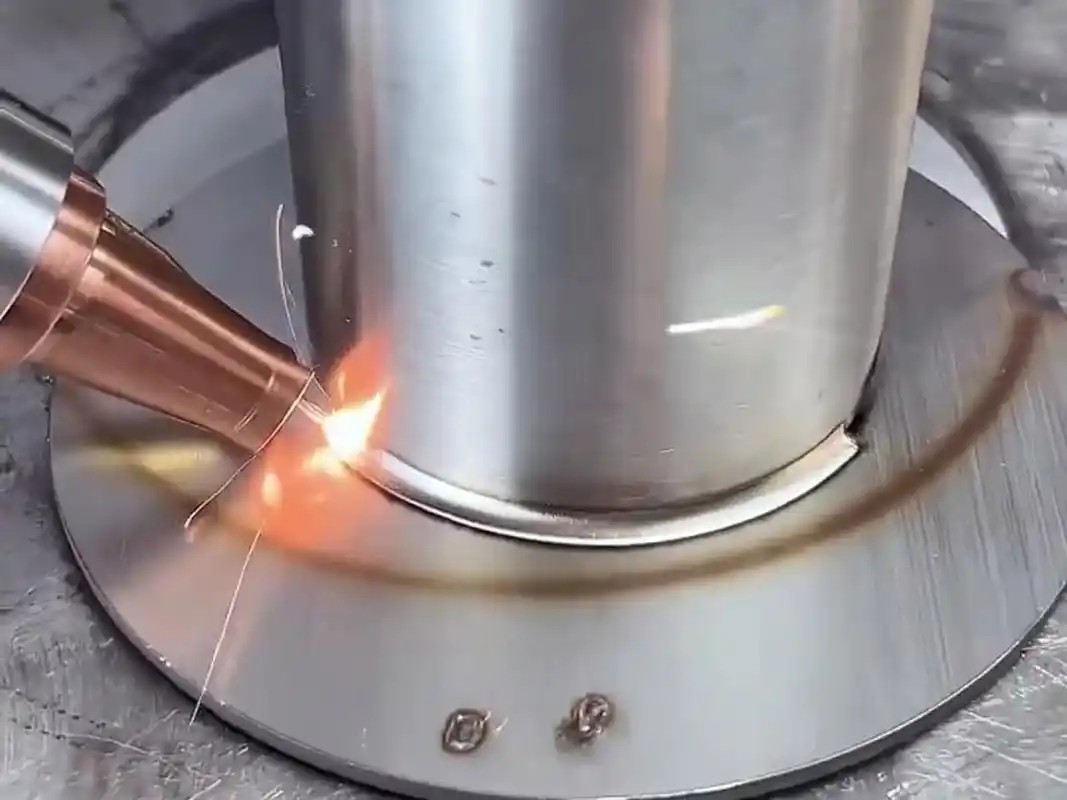
Tube flange laser welding
What Determines Precision Welding Quality?
Purchasing an expensive welding machine alone cannot guarantee precision welds.
Several factors work together to determine final weld quality.
Heat Input
Heat input is one of the most important factors affecting weld quality.Excessive heat can cause:
- Distortion
- Warping
- Grain growth
- Excessive heat-affected zones
- Reduced dimensional accuracy
Insufficient heat may lead to:
- Lack of penetration
- Incomplete fusion
- Weak weld joints
Modern laser welding minimizes heat input while maintaining sufficient penetration, making it an excellent solution for precision manufacturing.
Joint Design
Proper joint preparation significantly improves welding consistency.Common joint types include:
- Butt joints
- Lap joints
- Fillet joints
- Corner joints
- Edge joints
Selecting the appropriate joint design reduces stress concentration and improves weld strength.
Fixturing and Positioning
Even the best welding process cannot compensate for poorly positioned workpieces.
Professional manufacturers often use customized fixtures that ensure:
- Accurate positioning
- Repeatable alignment
- Stable clamping
- Reduced dimensional variation
For automated production, dedicated fixtures are just as important as the welding equipment itself.
Shielding Gas
Shielding gas protects the molten weld pool from atmospheric contamination.
Choosing the correct gas mixture helps improve:
- Arc stability
- Weld appearance
- Penetration
- Mechanical properties
- Spatter control
Different materials require different shielding gases. Stainless steel, aluminum, carbon steel, and titanium all have unique shielding requirements.
Why Welding Gauges Are Essential for Quality Control
Producing a weld is only the first step.Professional manufacturers must verify that every weld meets design specifications.This is where welding gauges play an essential role.Rather than relying solely on visual inspection, welding gauges allow operators and quality inspectors to accurately measure critical weld dimensions.Common inspections include:
- Fillet weld leg length
- Throat thickness
- Reinforcement height
- Undercut depth
- Misalignment
- Root opening
Using welding gauges helps manufacturers:
- Improve consistency
- Reduce inspection errors
- Meet customer specifications
- Comply with industry standards
- Reduce costly rework
Some of the most commonly used welding gauges include:
- Fillet Weld Gauge
- Bridge Cam Gauge
- Hi-Lo Gauge
- Adjustable Weld Gauge
Although these tools are relatively inexpensive, they play a crucial role in maintaining precision welding quality.
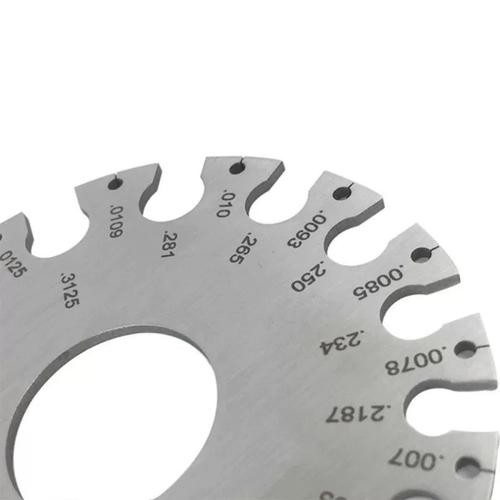
welding gauges
Quick-Change Welding Systems Improve Productivity
Many users search for snap-on welders, generally referring to welding systems or components designed for quick installation and replacement.
In modern manufacturing, reducing equipment downtime is just as important as improving welding speed.
Quick-change designs allow operators to rapidly replace:
- Welding torches
- Nozzles
- Contact tips
- Protective lenses
- Focusing lenses
- Wire feeders
This minimizes maintenance time and keeps production running efficiently.
Laser welding equipment, in particular, often incorporates quick-change consumables and modular components, making maintenance faster and more convenient than many traditional welding systems.
Why Laser Welding Is Becoming the Preferred Choice for Precision Welding
As manufacturing moves toward automation and higher quality standards, laser welding is increasingly replacing traditional welding methods in precision applications.Compared with conventional fusion welding processes, laser welding offers several significant advantages.
It delivers much lower heat input, greatly reducing distortion in thin materials and precision components. The narrow weld bead often requires little or no post-processing, while minimal spatter helps create a cleaner working environment.
Laser welding also offers exceptional repeatability, making it ideal for automated production lines. When combined with robotic systems, vision positioning, and CNC motion platforms, manufacturers can achieve consistent weld quality with minimal operator intervention.
Applications where laser welding excels include:
- Precision sheet metal fabrication
- Stainless steel products
- Electrical cabinets
- Battery enclosures
- Medical equipment
- Kitchen equipment
- Automotive components
- Electronic products
For manufacturers seeking both quality and productivity, laser welding has become one of the most effective precision welding technologies available today.
Conclusion
Precision welding is far more than simply making two pieces of metal stick together. It requires selecting the appropriate fusion welding process, carefully controlling heat input, designing reliable fixtures, inspecting weld quality with professional welding gauges, and optimizing the entire production workflow.
As industries demand tighter tolerances, cleaner weld appearance, and greater automation, laser welding continues to demonstrate significant advantages over many conventional welding methods.
At ZS Laser, we specialize in providing complete precision welding solutions for modern manufacturing. Our product range includes handheld laser welders, CNC automatic laser welding machines, robotic laser welding workstations, and customized automation systems designed for a wide variety of industrial applications.
Whether you’re manufacturing precision sheet metal parts, electrical cabinets, battery enclosures, automotive components, or other high-value products, our engineering team can help you select the right laser welding solution, optimize your welding process, and improve both production efficiency and weld quality.
If you’re looking to upgrade your precision welding capabilities, contact ZS Laser today to discuss your project and discover the ideal laser welding solution for your business.

WhatsApp
Scan the QR Code to start a WhatsApp chat with us.