 ZS Laser Equipment

When people search for best welder for beginners, they are usually not looking for a brand or a model.
They are asking a more practical question:
What is the easiest welding machine to learn and start using in real production?
Welding is not just a machine operation—it is a skill that combines material behavior, heat control, and hand coordination. That is why different welding methods have very different learning curves.
In this guide, we will explain welding difficulty, training time, and compare traditional welding methods with modern laser welding technology to help beginners understand which system is truly easiest to use.
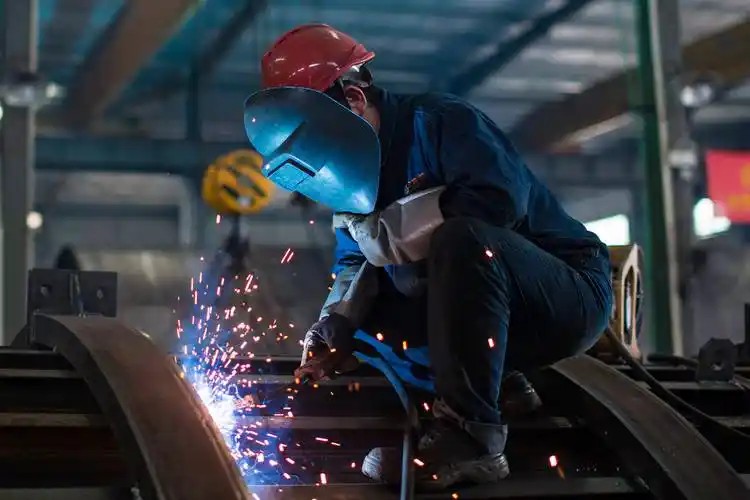
Welding on site
Why Welding Is Difficult for Beginners?
Although welding looks simple from the outside, in reality it requires controlling multiple variables at the same time:
- Heat input control
- Welding speed consistency
- Torch angle stability
- Molten pool behavior
- Material distortion control
- Weld bead formation quality
At the same time, different materials behave very differently:
- Carbon steel may deform or crack
- Stainless steel oxidizes easily
- Aluminum collapses under heat
- Galvanized steel produces toxic zinc vapor and spatter
This is why welding is considered a skill-based manufacturing process, not just equipment operation.
Do You Need Certification to Become a Welder?
In most industrial environments, welding is a certified skill job.
Common certifications include:
- AWS (American Welding Society) certification
- ISO 9606 welder qualification
- National vocational welding licenses
These certifications exist because welding directly affects structural safety.
For example:
- Pressure vessels must not leak
- Pipelines must withstand pressure
- Structural frames must not crack
Because of this, becoming a qualified welder usually requires:
Several months to several years of training and hands-on experience.
How Long Does It Take to Learn Welding?
Different welding methods require different learning time:
SMAW (Stick Welding)
- Basic learning: 1–3 months
- Proficiency: 6–12 months
- Key challenge: electrode control and arc stability
MIG Welding (CO₂ Welding)
- Basic learning: 2–4 weeks
- Proficiency: 3–6 months
- Key challenge: spatter control and parameter tuning
TIG Welding
- Basic learning: 1–3 months
- Proficiency: 1–2 years
- Key challenge: dual-hand coordination and precision control
Laser Welding (Handheld / Automated)
- Basic learning: 1–7 days
- Operational proficiency: 1–2 weeks
Laser welding significantly reduces manual skill dependency because the energy source is highly focused and stable.
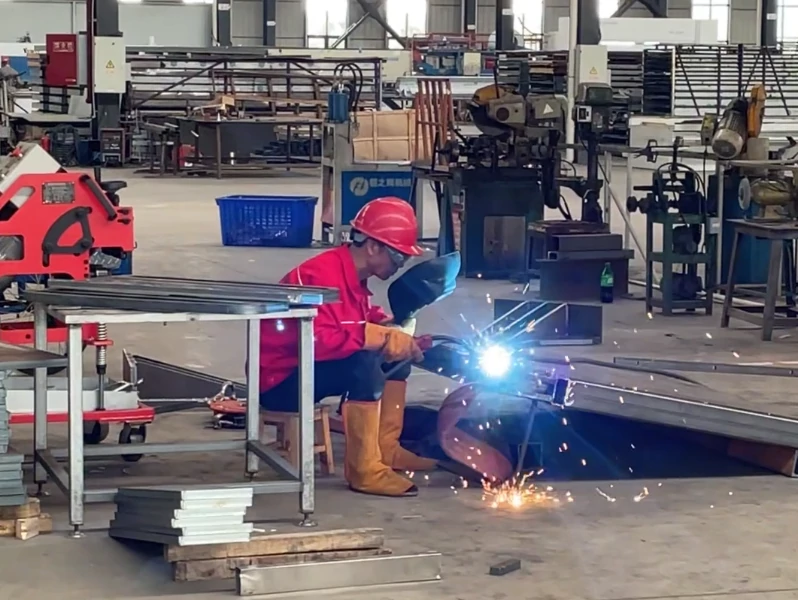
MIG / CO₂ Gas Shielded Welding
The Biggest Challenge in Traditional Welding
For beginners, the hardest part is not starting the arc—it is controlling the molten pool.
Common problems include:
- Unstable weld bead formation
- Burn-through on thin materials
- Incomplete fusion
- Excessive spatter
- Heat distortion
These issues are highly experience-dependent, which makes traditional welding difficult for beginners.
Best Welding Machine for Beginners
From an operational difficulty perspective, welding systems can be ranked like this:
1. MIG Welding Machine (Entry-Level Traditional Option)
Advantages:
- Easy to start
- Continuous wire feeding
- Lower learning curve
Disadvantages:
- Spatter is common
- Requires parameter adjustment
- Limited finish quality
Best for:
- Repair work
- Structural steel
- General fabrication
2. TIG Welding Machine (High Precision but Difficult)
Advantages:
- Excellent weld quality
- Clean appearance
- Suitable for stainless steel and aluminum
Disadvantages:
- Requires high coordination
- Slow learning curve
- Difficult for beginners
Best for:
- High-end fabrication
- Decorative and precision parts
3. Laser Welding Machine (Easiest to Operate for Beginners)
Among modern welding technologies, laser welding is the most beginner-friendly in terms of operation.
Why Laser Welding Is Easy to Learn
- No complex arc control
- Stable energy output
- Pre-set parameters
- Simple “point and move” operation
- Minimal skill required for molten pool control
Instead of manually controlling heat input, the machine does most of the work.
Learning Curve
- 1–2 days to start welding
- 1 week to achieve stable production
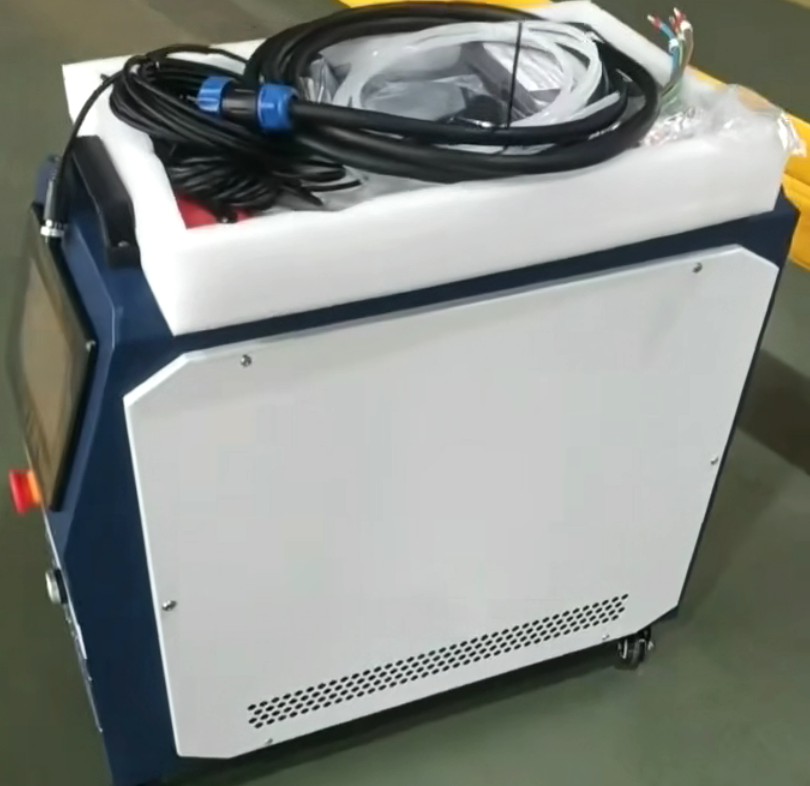
Handheld laser welding machine
Where Laser Welding Is the Best Choice
Laser welding is not suitable for every application, but it performs extremely well in specific industries.
Ideal Applications:
- Stainless steel sheet welding
- Kitchen equipment manufacturing
- Furniture production
- Sheet metal fabrication
- Electrical cabinets and enclosures
- Thin-wall metal components
- Mass production lines
Why It Works Well:
- Low heat distortion
- High welding speed
- Clean weld appearance
- Easy operation for workers
Where Laser Welding Is NOT Suitable
Even though laser welding is easy to use, it is not universal.
It is not ideal for:
- Very thick structural steel
- Large gap welding
- Heavy construction structures
- Low-cost repair environments
In these cases, MIG or arc welding may still be more practical.
MIG vs TIG vs Laser: Simple Summary
| Process | Difficulty | Learning Time | Best For |
|---|---|---|---|
| MIG | Easy | Weeks | General fabrication |
| TIG | Hard | Months–Years | Precision welding |
| Laser | Very Easy | Days | Production efficiency |
Why Laser Welding Is Becoming Popular for Beginners
Modern manufacturing is shifting from “skill-based welding” to “system-based welding”.
Laser welding allows:
- Reduced dependency on skilled welders
- Faster training for operators
- More stable production quality
- Lower defect rates
This is especially important in industries facing labor shortages.
Conclusion
When evaluating the best welder for beginners, the answer depends on the goal:
- If you want to learn welding skills → MIG or TIG
- If you want to enter production quickly → Laser welding
From a pure operational perspective, laser welding machines offer the easiest learning curve and the fastest transition into real manufacturing work.
However, no single welding method is suitable for all applications. The best choice always depends on material type, thickness, and production requirements.
FAQ
Is laser welding good for beginners?
Yes. It is one of the easiest welding technologies to operate because it requires minimal manual skill.
How long does it take to learn welding?
Traditional welding can take months or years, while laser welding can be learned in days.
What is the easiest welding machine to use?
MIG welding is the easiest traditional method, but laser welding is easier in industrial production environments.
Can laser welding replace MIG and TIG?
Not completely. It depends on material thickness and application requirements.
ZS Laser Solution
ZS Laser provides professional laser welding solutions for modern manufacturing, including:
- Handheld laser welding machines
- Automated laser welding systems
- Tube welding solutions
- Sheet metal welding systems
- Custom fixtures and automation integration
Our systems are designed to reduce operator difficulty, improve production efficiency, and deliver consistent welding quality across different industries.

WhatsApp
Scan the QR Code to start a WhatsApp chat with us.