 ZS Laser Equipment

Sheet metal welding is one of the most important processes in modern metal fabrication. From electrical cabinets and machine enclosures to automotive components, industrial equipment, HVAC systems, and stainless steel furniture, countless products rely on strong and reliable sheet metal welds.
However, welding sheet metal is often more challenging than welding thicker materials. Thin sheets are highly susceptible to distortion, burn-through, warping, and appearance defects. Selecting the right welding method and understanding proper fabrication techniques are essential for achieving high-quality results.
In this guide, we’ll explore the most common sheet metal welding methods, common challenges, and best practices for improving welding quality and production efficiency.
What Is Sheet Metal Welding?
Sheet metal welding refers to the process of joining thin metal sheets together using heat, pressure, or both. Depending on the application, sheet metal can be made from:
- Carbon steel
- Stainless steel
- Galvanized steel
- Aluminum
- Copper
- Brass
Typical sheet thickness ranges from 0.5 mm to 6 mm, although some heavy sheet metal applications may use thicker materials.
Unlike structural steel welding, sheet metal fabrication often places greater emphasis on:
- Dimensional accuracy
- Surface appearance
- Distortion control
- Production efficiency
- Automation compatibility
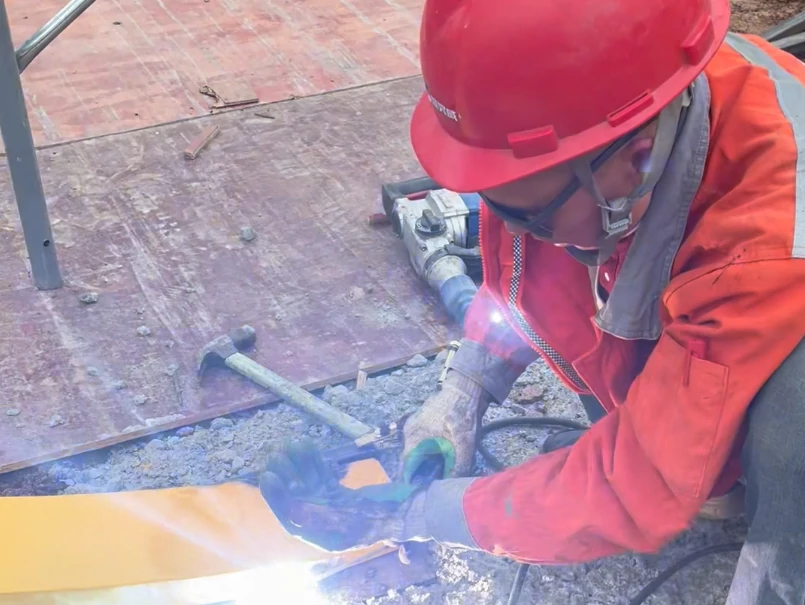
SMAW Welding
Common Welding Methods Used in Sheet Metal Fabrication
Several welding processes are widely used in the sheet metal industry. Each offers different advantages and limitations.
SMAW (Shielded Metal Arc Welding)
SMAW, commonly known as stick welding or manual arc welding, is one of the oldest welding methods.
The process uses a consumable electrode coated with flux. An electric arc forms between the electrode and the workpiece, melting both materials to create a weld.
Advantages
- Simple equipment
- Low investment cost
- No shielding gas required
- Suitable for outdoor environments
Limitations
- Lower productivity
- Higher operator skill requirements
- More spatter and slag
- Less suitable for thin sheet metal
Because of the high heat input, SMAW is generally not the preferred choice for precision sheet metal fabrication.
TIG Welding
TIG welding uses a non-consumable tungsten electrode and inert gas shielding, usually argon.
It is widely used for welding:
- Stainless steel sheet
- Aluminum sheet
- Copper sheet
- Thin precision components
Advantages
- Excellent weld appearance
- Minimal spatter
- High weld quality
- Narrow heat-affected zone
- Suitable for all-position welding
Limitations
- Slower welding speed
- Higher skill requirements
- Sensitive to wind and environmental conditions
- Lower productivity for mass production
For high-end stainless steel products where appearance is critical, TIG welding remains one of the most popular choices.
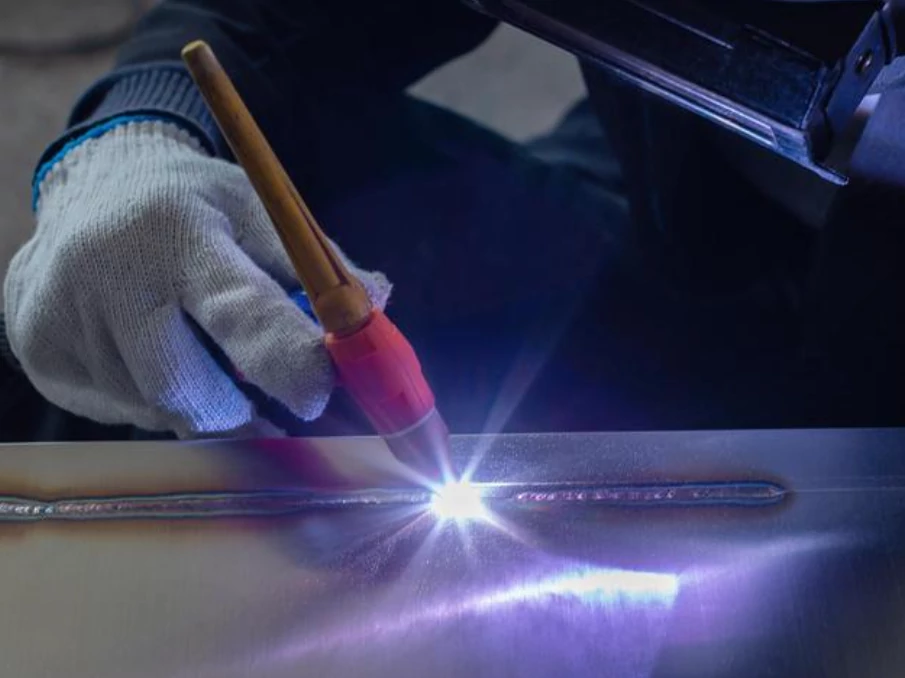
TIG Sheet Metal Welding
MIG / CO₂ Gas Shielded Welding
MIG welding and CO₂ gas shielded welding are among the most widely used welding processes in sheet metal manufacturing.
The process continuously feeds welding wire into the weld pool while shielding gas protects the molten metal.
Advantages
- Higher welding speed
- Lower labor cost
- Good productivity
- Easy automation integration
Limitations
- More spatter than TIG welding
- Sensitive to shielding gas flow
- Equipment maintenance requirements
- Lower weld appearance quality compared with TIG
For medium-thickness carbon steel sheet metal, MIG welding often provides an excellent balance between quality and productivity.
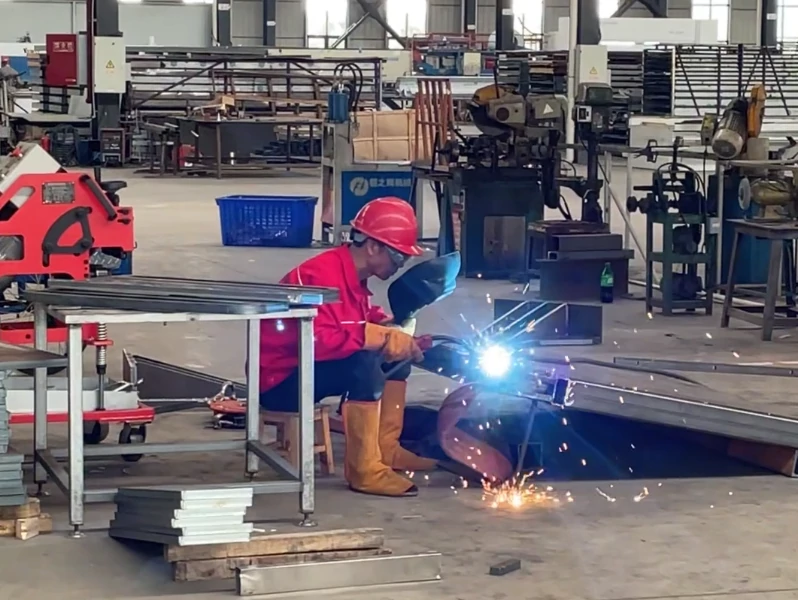
MIG / CO₂ Gas Shielded Welding
Laser Welding
Laser welding has become increasingly popular in sheet metal fabrication due to its speed and precision.
The process uses a highly focused laser beam to melt and join metal.
Advantages
- Extremely fast welding speed
- Very small heat-affected zone
- Minimal distortion
- Excellent weld appearance
- Easy automation integration
- Suitable for robotic production lines
Limitations
- Higher equipment cost
- Requires accurate part fit-up
- Gap tolerance is smaller than traditional welding
- Thick material welding may require higher laser power
For modern sheet metal manufacturing, laser welding is becoming one of the preferred solutions, especially for stainless steel cabinets, electrical enclosures, kitchen equipment, and precision metal fabrication.
Spot Welding
Spot welding, also known as resistance spot welding, joins overlapping metal sheets using electrical resistance heat.
It is widely used in:
- Automotive manufacturing
- Home appliances
- Metal cabinets
- Sheet metal assemblies
Advantages
- Extremely fast cycle time
- No filler material required
- Low operating cost
- Easy automation
Limitations
- Suitable only for lap joints
- Not ideal for thick materials
- Cannot provide airtight or pressure-tight joints
- Limited access requirements
For high-volume sheet metal production, spot welding remains one of the most economical solutions.
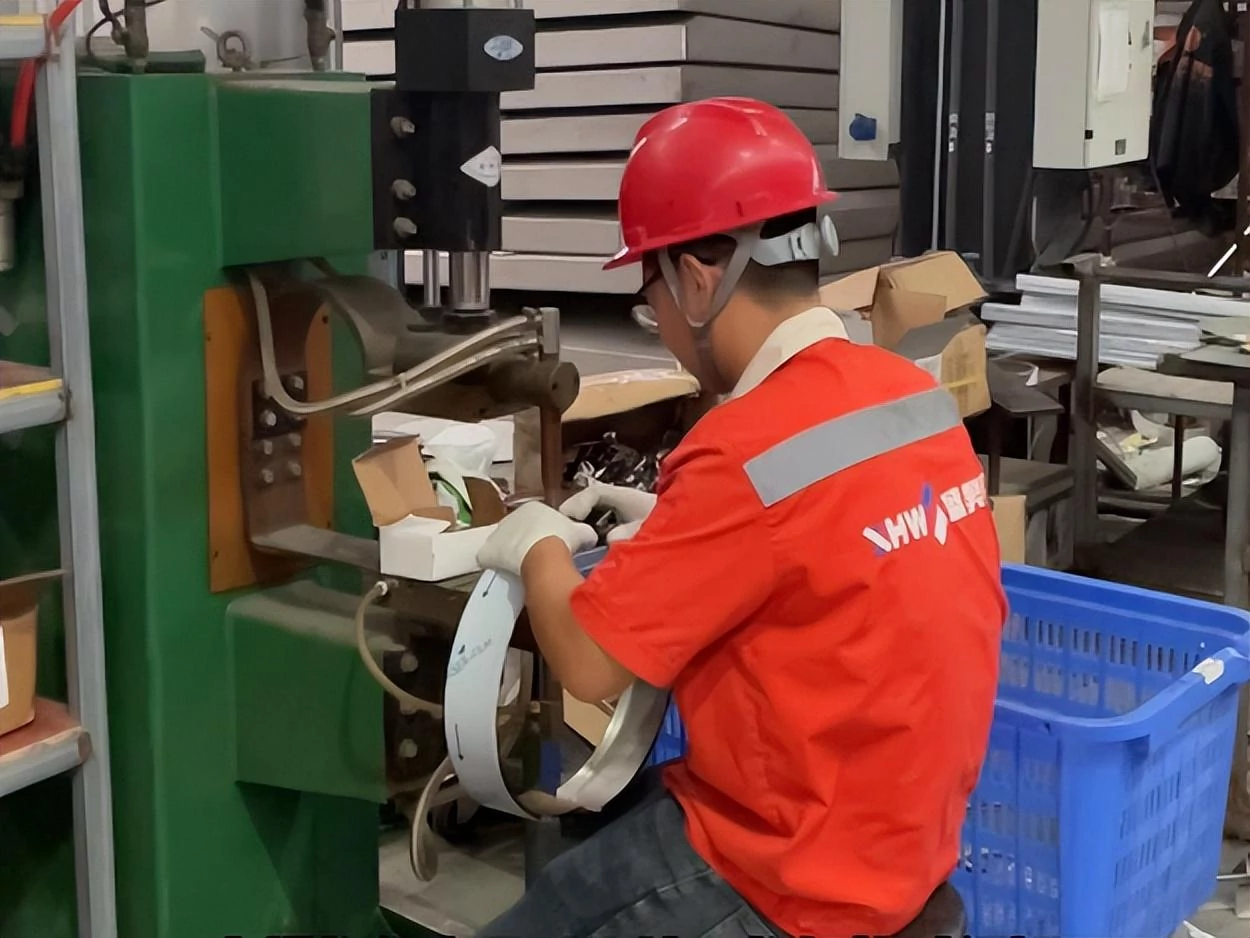
Spot Sheet Metal Welding
Common Challenges in Sheet Metal Welding
Because sheet metal is thin, welding defects can occur easily if process parameters are not properly controlled.
Welding Distortion
Distortion is one of the most common problems in sheet metal fabrication.
As metal heats and cools, thermal expansion and contraction occur. Thin sheets have limited stiffness, making them more susceptible to:
- Warping
- Twisting
- Buckling
- Dimensional inaccuracies
Burn-Through
Excessive heat input can completely melt through the sheet, especially when welding materials below 1 mm thickness.
Common causes include:
- Excessive current
- Slow travel speed
- Improper joint design
Porosity
Porosity forms when gas becomes trapped inside the weld metal.
Common causes include:
- Oil contamination
- Rust
- Moisture
- Insufficient shielding gas coverage
Poor Weld Appearance
Many sheet metal products are customer-facing components.
Visible defects such as:
- Excessive spatter
- Undercut
- Uneven bead profile
- Grinding marks
can significantly reduce product value.
Sheet Metal Design Considerations Before Welding
Successful sheet metal welding begins long before the welding process itself.
Proper Bend Design
Sheet metal bending directly affects subsequent welding quality.
During bending operations, the material experiences:
- Tensile stress on the outer surface
- Compressive stress on the inner surface
If bend radii are too small, cracking may occur.
In most applications, the minimum inside bend radius should not be smaller than the material thickness unless special requirements exist.
Hole Position and Weld Areas
Holes should be placed sufficiently far away from bend lines and welding zones.
If holes are located too close to bends:
- Hole deformation may occur
- Dimensional accuracy may be affected
A common design guideline is maintaining a minimum distance of three times the material thickness between holes and bending areas.
Flat Pattern Accuracy
Accurate flat pattern calculation is critical for ensuring proper fit-up before welding.
Incorrect bend allowance calculations often result in:
- Assembly difficulties
- Gap issues
- Poor weld quality
For precision fabrication, many manufacturers perform bend testing to establish accurate bend compensation values for different materials and tooling setups.
How to Reduce Distortion in Sheet Metal Welding
Several techniques can effectively minimize welding deformation:
Use Lower Heat Input
Processes such as laser welding naturally reduce thermal distortion because of their concentrated energy input.
Apply Proper Welding Sequence
Instead of welding continuously in one direction, staggered or segmented welding techniques can distribute heat more evenly.
Use Fixtures and Clamping Systems
Proper fixturing helps maintain dimensional stability during welding.
Add Reinforcement Structures
Large sheet metal panels often incorporate internal stiffeners to improve rigidity and reduce warping.
Select the Right Welding Process
For thin sheet metal, laser welding and TIG welding generally produce less distortion than SMAW.
Why Laser Welding Is Becoming Popular for Sheet Metal Fabrication
As labor costs rise and manufacturers pursue higher productivity, laser welding is increasingly replacing traditional welding methods in many sheet metal applications.
Compared with TIG welding and MIG welding, laser welding offers:
- Faster production speeds
- Reduced post-processing
- Lower distortion
- Better consistency
- Easier automation
This makes laser welding especially attractive for:
- Electrical cabinets
- Server racks
- Stainless steel furniture
- Kitchen equipment
- Elevator panels
- Automotive sheet metal components
- Precision metal enclosures
For manufacturers pursuing automated production, laser welding can significantly improve efficiency while maintaining excellent weld quality.
Conclusion
Sheet metal welding is far more than simply joining two metal sheets together. Material selection, bending design, flat pattern calculation, welding process choice, distortion control, and finishing operations all play critical roles in the final product quality.
Traditional methods such as SMAW, TIG welding, MIG welding, and spot welding continue to serve important roles in the sheet metal industry. However, as manufacturers seek greater efficiency, precision, and automation, laser welding is becoming an increasingly attractive solution for modern sheet metal fabrication.
At ZS Laser, we provide advanced laser welding systems, automated welding solutions, and professional welding process support for sheet metal manufacturers worldwide. Whether you’re producing stainless steel cabinets, electrical enclosures, industrial equipment, or precision sheet metal components, our team can help you achieve faster production, lower distortion, and higher-quality welds. Contact ZS Laser today to find the right sheet metal welding solution for your application.

WhatsApp
Scan the QR Code to start a WhatsApp chat with us.