 ZS Laser Equipment

Introduction
Industrial welding has always been one of the foundations of modern manufacturing. From construction and shipbuilding to automotive production and heavy machinery, welding technologies play a critical role in connecting materials and ensuring structural integrity.
However, the welding industry is currently undergoing one of its biggest transformations in decades.
Advances in laser technology, automation, robotics, artificial intelligence, and energy storage systems are changing how manufacturers approach welding. At the same time, labor shortages, rising production costs, and increasing quality requirements are pushing companies to adopt more efficient welding solutions.
As we move into 2026, several clear trends are emerging that will shape the future of industrial welding.
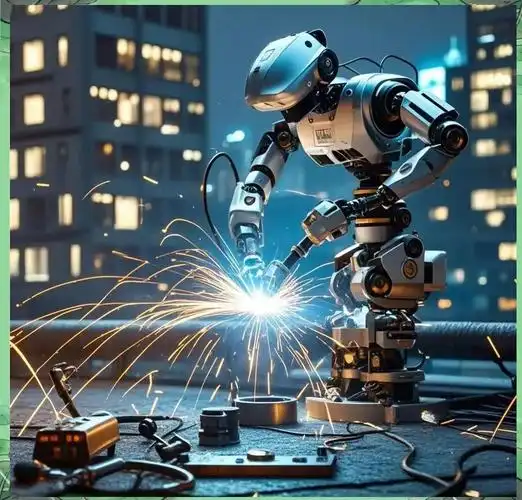
future of industrila welding
Trend 1: Laser Welding Continues to Replace Traditional Welding Processes
For many years, MIG welding, TIG welding, and stick welding dominated industrial production.
These traditional methods remain essential for many applications, especially thick structural steel fabrication. However, laser welding is rapidly gaining market share.
Compared with traditional arc welding, laser welding offers:
- Higher welding speed
- Smaller heat affected zones
- Lower distortion
- Better weld appearance
- Easier automation
- Lower post-processing costs
The rapid growth of fiber laser technology has also significantly reduced equipment costs compared with ten years ago.
As a result, manufacturers in industries such as:
- Sheet metal fabrication
- Stainless steel products
- Kitchen equipment
- Elevator manufacturing
- Automotive production
- Battery manufacturing
are increasingly switching from TIG welding to handheld laser welding systems.
In many thin and medium-thickness metal applications, laser welding is no longer an alternative technology—it is becoming the preferred solution.
Trend 2: Automation and Robotic Welding Will Accelerate
The shortage of skilled welders is becoming a global challenge.
Many factories struggle to recruit experienced welders, while labor costs continue to rise.
To address these issues, manufacturers are investing heavily in:
- Robotic welding systems
- Automatic welding stations
- CNC welding platforms
- AI-assisted welding control
Modern robot welding systems can operate continuously 24 hours a day while maintaining consistent weld quality.
In automotive manufacturing, robotic welding has already become standard practice.
The next stage of growth is expected in:
- Metal fabrication workshops
- Agricultural machinery production
- Construction equipment manufacturing
- Energy equipment production
As robot costs continue to decrease and programming becomes easier, robotic welding will become accessible even to medium-sized manufacturers.
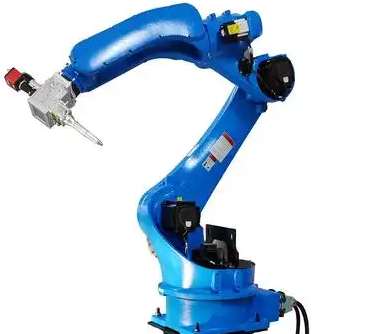
Robotic Laser Welding
Trend 3: Portable Welding Equipment Will Become More Important
One of the most interesting developments in industrial welding is the growing demand for portability.
Traditionally, welding equipment required access to grid power or large generators.
This limited mobility in:
- Construction sites
- Mining operations
- Pipeline maintenance
- Emergency repairs
- Military applications
- Remote infrastructure projects
Today, advances in battery technology are changing that reality.
Portable welding machines are becoming lighter, more powerful, and more practical than ever before.
Industries increasingly need equipment that can be transported quickly and used immediately without complex power infrastructure.
This trend is creating a growing market for:
- Portable stick welders
- Battery-powered welding systems
- Portable plasma cutters
- Mobile welding stations
In many field applications, portability is becoming just as important as welding performance.
Trend 4: Battery Technology Is Creating New Opportunities
The rapid development of electric vehicles has driven enormous investment into battery research.
As battery energy density improves, welding equipment manufacturers can now utilize technologies that were previously unavailable.
Modern lithium battery systems offer:
- Higher energy density
- Faster charging
- Longer operating time
- Improved safety
- Lower weight
Even more exciting is the development of solid-state battery technology.
Although large-scale commercialization is still progressing, solid-state batteries promise:
- Significantly higher energy density
- Greater thermal stability
- Improved safety
- Smaller battery size
A decade ago, many battery-powered welding machines could only consume several electrodes before requiring recharge.
Today, some advanced battery welding systems can operate for several hours continuously.
Future systems may provide an entire workday of welding from a compact battery pack.
This development could fundamentally change how field welding is performed.
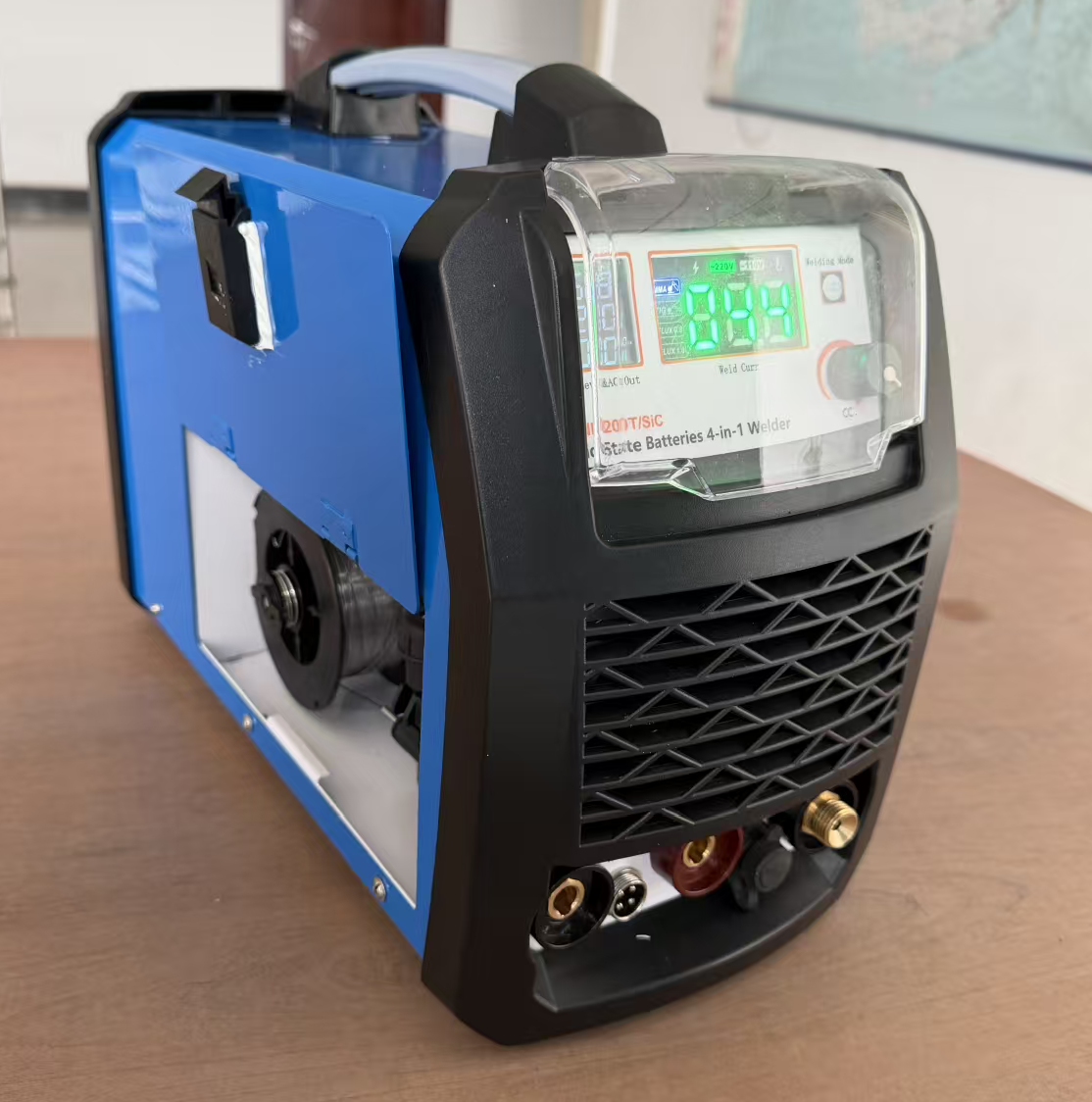
Portable stick welder
Trend 5: Mobile Battery Power Stations Will Support Next-Generation Welding
Another emerging trend is the rise of industrial mobile power stations.
Instead of integrating extremely large batteries directly into welding equipment, manufacturers can separate power storage from the welding machine itself.
This creates a flexible ecosystem consisting of:
- Compact welding equipment
- Portable laser welding machines
- Mobile battery stations
- Renewable energy charging systems
The concept is similar to how electric tools evolved.
Instead of carrying a large, heavy welding unit, operators may carry:
- A lightweight welding machine
- A backpack battery pack
- A mobile battery station
- A vehicle-mounted power supply
This approach provides greater flexibility while maintaining high output power.
For field maintenance and outdoor operations, mobile energy systems may become as important as the welding machines themselves.
Trend 6: Smaller and Smarter Machines Will Dominate Future Markets
Historically, industrial welding equipment was often large and heavy.
Future welding systems are moving in the opposite direction.
Manufacturers increasingly demand:
- Compact designs
- Lightweight structures
- Integrated control systems
- Intelligent parameter adjustment
- Cloud connectivity
- Remote diagnostics
Artificial intelligence is also beginning to influence welding technology.
Future welding machines may automatically:
- Detect material types
- Adjust welding parameters
- Monitor weld quality
- Predict maintenance requirements
- Optimize energy consumption
The goal is simple:
Reduce operator dependency while improving productivity.
Machines are becoming not only smaller, but also smarter.
Trend 7: Green Manufacturing Will Drive Welding Innovation
Sustainability is becoming a major factor in manufacturing decisions.
Governments and customers increasingly demand:
- Lower energy consumption
- Reduced emissions
- Higher material utilization
- Cleaner production methods
Laser welding naturally supports these objectives because it:
- Uses energy more efficiently
- Generates less spatter
- Produces less waste
- Requires fewer consumables
As environmental regulations continue to tighten worldwide, green manufacturing initiatives will accelerate the adoption of advanced welding technologies.
What Will Industrial Welding Look Like in 2030?
Looking ahead, the future welding workshop may look very different from today’s factories.
Instead of rows of conventional welding stations, manufacturers may rely on:
- Handheld laser welding systems
- Collaborative welding robots
- AI-assisted welding control
- Portable battery-powered welding machines
- Mobile energy stations
- Cloud-connected production systems
The welding industry is moving toward a future that is:
- More automated
- More precise
- More portable
- More energy efficient
- More intelligent
Conclusion
Industrial welding is entering a new era.
Laser welding technology continues to replace traditional processes in many applications. Automation and robotics are transforming factory production, while advances in battery technology are opening entirely new possibilities for portable welding equipment.
Perhaps one of the most exciting developments is the convergence of compact welding machines and high-capacity energy storage systems. As battery technologies continue to evolve, portable welding solutions may become a major growth segment of the welding industry over the next decade.
For manufacturers, understanding these trends today will help them make smarter investment decisions and remain competitive in the rapidly changing industrial landscape of tomorrow.
ZS Laser has always maintained a high level of attention to industry development. We will actively introduce and learn new technologies, continuously expand our product line, and become a one-stop welding solution provider.

WhatsApp
Scan the QR Code to start a WhatsApp chat with us.