 ZS Laser Equipment

Basic welding is one of the most essential manufacturing processes in modern industry. From steel structures and automotive manufacturing to pressure vessels, pipelines, sheet metal fabrication, and precision equipment, welding is used almost everywhere.
For beginners, however, welding often appears complicated. There are many welding processes, different materials require different techniques, and becoming a skilled welder traditionally takes years of hands-on experience.
This guide introduces the basics of welding, explains the most common welding methods, discusses the skills required, and helps you choose the right welding equipment for your application.
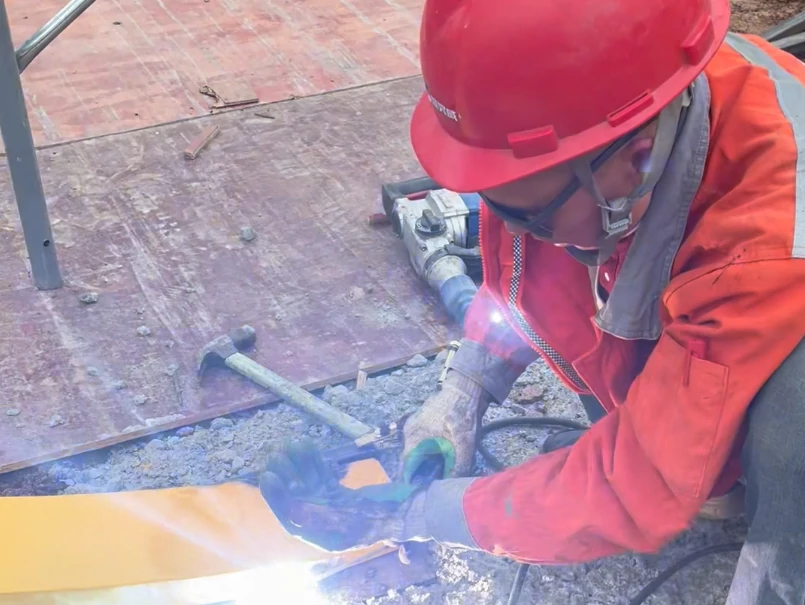
SMAW Welding
What Is Welding?
Welding is a fabrication process that joins two or more metal parts by applying heat, pressure, or both to create a permanent joint.
Unlike mechanical fastening methods such as bolts or rivets, welding creates a metallurgical bond between materials, resulting in high structural strength and long-term durability.
Depending on the process, welding may require:
- Heat source
- Filler metal
- Shielding gas
- Pressure
- Specialized equipment
Modern welding technology has evolved from traditional manual welding to highly automated laser and robotic welding systems.
The Basic Types of Welding
There are dozens of welding processes available today, but several methods dominate industrial manufacturing.
Stick Welding (SMAW)
Shielded Metal Arc Welding (SMAW), commonly called stick welding, is one of the oldest and most widely used welding methods.
A coated electrode creates an electric arc that melts both the base metal and the electrode.
Advantages
- Low equipment cost
- Excellent for outdoor work
- Works well on rusty or dirty materials
- Suitable for structural steel and maintenance
Limitations
- Slower welding speed
- More slag removal
- Higher operator skill required
- Less attractive weld appearance
MIG Welding (GMAW)
Metal Inert Gas (MIG) welding feeds a continuous wire electrode through a welding gun while shielding gas protects the molten weld pool.
MIG welding has become one of the most popular processes in manufacturing because it is relatively easy to learn.
Advantages
- Fast welding speed
- High productivity
- Easy to operate
- Suitable for beginners
- Good for thin and medium-thickness steel
Common Applications
- Automotive manufacturing
- Sheet metal fabrication
- Steel furniture
- Cabinet production
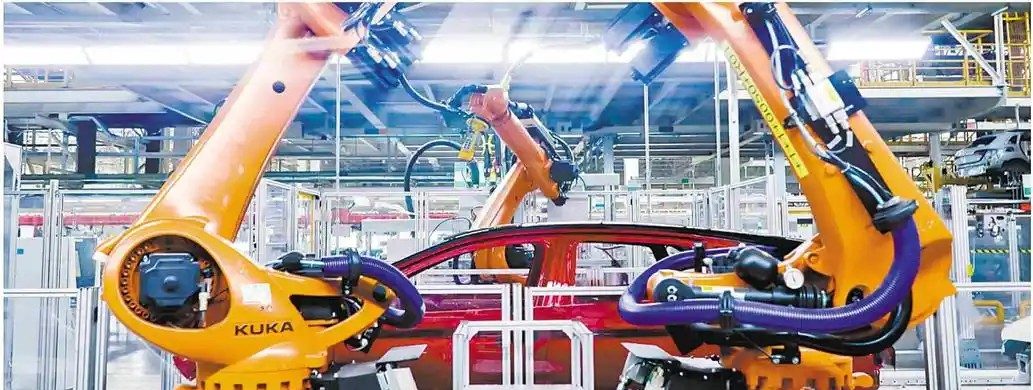
TIG Automatic Welding in Automotive Welding
TIG Welding (GTAW)
TIG welding uses a non-consumable tungsten electrode together with inert shielding gas.
Unlike MIG welding, filler wire is added manually when necessary.
Advantages
- Highest weld quality
- Beautiful weld appearance
- Excellent control
- Suitable for stainless steel, aluminum, titanium, and copper
Limitations
- Slow process
- Requires significant operator skill
- Higher equipment cost
TIG welding is commonly used in aerospace, food processing equipment, medical devices, and precision fabrication.
Laser Welding
Laser welding uses a highly focused laser beam as the heat source to join metals with exceptional precision.
Compared with conventional arc welding, laser welding has become increasingly popular in modern manufacturing because it combines speed, accuracy, and automation.
Advantages
- Extremely fast welding speed
- Small heat affected zone
- Minimal distortion
- Narrow, clean weld seams
- Little post-processing required
- Easy integration with robots and automated production lines
Best Applications
Laser welding is particularly suitable for:
- Sheet metal fabrication
- Stainless steel products
- Aluminum components
- Battery enclosures
- Kitchen equipment
- Electrical cabinets
- Precision metal parts
For manufacturers seeking higher productivity and easier operation, handheld laser welders have become one of the fastest-growing alternatives to traditional welding methods.
What Makes Welding Difficult?
Many beginners believe welding simply involves melting metal together. In reality, producing a strong, reliable weld requires understanding both materials and welding parameters.
Common welding challenges include:
- Porosity caused by contamination or inadequate shielding gas
- Cracks resulting from improper heat control or material properties
- Lack of fusion due to insufficient penetration
- Weld distortion caused by excessive heat input
- Burn-through when welding thin materials
- Poor weld appearance caused by unstable arc control
Different materials also present different challenges.
For example:
- Stainless steel requires oxidation control.
- Aluminum conducts heat rapidly and forms a stubborn oxide layer.
- Carbon steel may crack if welding parameters are incorrect.
- Galvanized steel can produce excessive spatter because the zinc coating vaporizes during welding.
Understanding these material characteristics is an important part of basic welding knowledge.
Does Welding Require Professional Training?
The answer depends on the welding process.
Traditional welding methods such as stick welding and TIG welding require substantial practice. Professional welders often spend months or even years developing the skills needed to consistently produce high-quality welds.
In many industries—including pressure vessels, structural steel, pipelines, and shipbuilding—welders must also pass qualification tests and obtain certifications before performing production work.
Key skills include:
- Maintaining a stable arc
- Controlling travel speed
- Selecting the correct welding parameters
- Managing heat input
- Understanding different welding positions, such as flat, horizontal, vertical, and overhead welding
These skills are developed through continuous training and practical experience.
Is Laser Welding Easier for Beginners?
Compared with traditional welding, handheld laser welding significantly reduces the learning curve.
Instead of maintaining a precise arc length or manually controlling filler rod movement, operators primarily focus on guiding the laser welding head along the joint.
As a result, many first-time users can produce acceptable welds after only a short period of training.
However, laser welding still requires knowledge of:
- Material compatibility
- Joint preparation
- Laser power selection
- Welding speed
- Shielding gas settings
- Safety procedures
Laser welding is easier to learn, but it is not completely skill-free.
How to Choose the Right Welder
The best welding machine depends on your materials, production requirements, and experience level.
If you mainly perform outdoor repair work, stick welding remains an economical and reliable choice.
For general steel fabrication and sheet metal work, MIG welding offers an excellent balance between productivity and ease of use.
When appearance and precision are critical, TIG welding provides superior weld quality, especially for stainless steel and aluminum.
If your goal is high productivity, minimal distortion, and easier operation, a handheld laser welder is an increasingly attractive solution. It is particularly well suited for stainless steel fabrication, sheet metal products, cabinets, kitchen equipment, and many precision manufacturing applications.
Conclusion
Basic welding is far more than simply joining two pieces of metal. Successful welding requires understanding materials, selecting the appropriate welding process, controlling heat input, and applying proper operating techniques.
Traditional processes such as Stick, MIG, and TIG welding continue to play essential roles across many industries, while laser welding is rapidly transforming modern manufacturing through higher efficiency, improved weld quality, and reduced operator skill requirements.
Whether you are just beginning your welding journey or looking to upgrade your production line, choosing the right welding technology is the foundation of achieving reliable, high-quality results.
ZS Laser provides professional laser welding solutions for manufacturers worldwide, including handheld laser welders, automated laser welding systems, robotic laser welding workstations, and customized welding solutions. Our experienced technical team can help you select the right equipment for your materials, production volume, and automation goals, ensuring higher productivity, better weld quality, and lower manufacturing costs.

WhatsApp
Scan the QR Code to start a WhatsApp chat with us.