 ZS Laser Equipment

When Sheet metal fabrication is one of the most widely used manufacturing processes in modern industry. From electrical enclosures and machine guards to automotive components, industrial equipment, and metal cabinets, sheet metal parts can be found almost everywhere.
Many people assume sheet metal fabrication simply involves cutting a metal sheet and welding it together. In reality, producing high-quality sheet metal products requires a series of carefully controlled manufacturing steps. Every stage directly affects dimensional accuracy, assembly quality, welding performance, and the final appearance of the product.
In this article, we’ll explore the complete sheet metal fabrication process and discuss several critical design considerations that are often overlooked but have a major impact on manufacturing success.
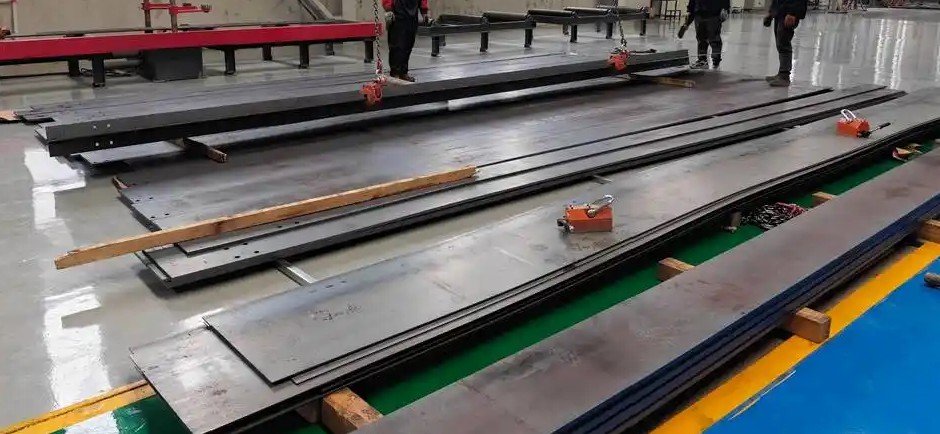
Sheet Metal Farbrication
What Is Sheet Metal Fabrication?
Sheet metal fabrication refers to the process of transforming flat metal sheets into finished products through cutting, bending, forming, welding, assembly, and surface finishing operations.
Common materials include:
- Carbon steel
- Stainless steel
- Galvanized steel
- Aluminum
- Copper
Depending on the application, fabricated sheet metal parts can range from simple brackets and covers to highly complex industrial structures.
Typical Sheet Metal Fabrication Process
A standard sheet metal fabrication workflow typically includes:
- Engineering Design
- Laser Cutting
- Punching (if required)
- Bending
- Assembly
- Welding
- Surface Finishing
Each step plays an important role in determining the final product quality.
Laser Cutting
Laser cutting is one of the most important processes in modern sheet metal manufacturing.
Using a high-energy laser beam, materials can be cut with exceptional precision and repeatability. Compared with traditional cutting methods, laser cutting offers several advantages:
- High dimensional accuracy
- Smooth cut edges
- Minimal heat-affected zone
- Higher material utilization
- Capability for complex geometries
Commonly processed materials include:
- Carbon steel sheets
- Stainless steel sheets
- Aluminum sheets
- Galvanized steel sheets
The quality of laser cutting directly affects downstream operations. Poor cutting accuracy may result in:
- Assembly difficulties
- Inconsistent weld gaps
- Lack of fusion
- Increased welding distortion
For this reason, precision laser cutting is the foundation of successful sheet metal fabrication.
Bending: The Most Critical Forming Process
After cutting, most sheet metal parts require bending to create three-dimensional shapes.
Examples include:
- Electrical cabinets
- Equipment enclosures
- Machine covers
- Industrial frames
- Battery housings
Although bending may appear straightforward, several engineering factors must be considered to ensure dimensional accuracy and manufacturability.
Bend Radius
When a sheet metal part is bent, the inside surface experiences compression while the outside surface experiences tension.
The smaller the bend radius, the greater the stress placed on the material.
If the bend radius is too small, problems such as the following may occur:
- Surface cracking
- Material fracture
- Reduced structural strength
As a general guideline, the minimum bend radius should not be smaller than the material thickness.
For stainless steel, high-strength steel, and aluminum alloys, larger bend radii are often recommended to prevent cracking and ensure consistent forming quality.
Bend Allowance
One of the most important calculations in sheet metal design is bend allowance.
During bending, the material stretches on the outside and compresses on the inside. However, the neutral axis remains relatively unchanged.
Because of this material deformation, the flat pattern length cannot simply be calculated by adding flange dimensions together.
Bend allowance is used to determine the correct flat blank size before laser cutting.
Incorrect bend allowance calculations can lead to:
- Dimensional inaccuracies
- Assembly issues
- Misaligned weld joints
- Poor production consistency
Many manufacturers establish their own bend allowance database through test bending to achieve higher production accuracy.
Hole-to-Bend Distance
Hole-to-bend distance is one of the most commonly overlooked design factors in sheet metal fabrication.
When holes are located too close to a bend line, the material surrounding the hole can deform during bending.
Common issues include:
- Hole distortion
- Oval-shaped holes
- Hole displacement
- Edge cracking
These problems can negatively affect:
- Bolt installation
- Riveting operations
- Assembly accuracy
A widely accepted design guideline is:
The distance from the hole edge to the bend line should be at least three times the material thickness (≥ 3T).
For example:
If the sheet thickness is 2 mm, the minimum recommended hole-to-bend distance is 6 mm.
When space limitations make this impossible, manufacturers often perform secondary machining after bending to maintain dimensional accuracy.
This seemingly simple design rule can significantly reduce production problems and improve final product quality.
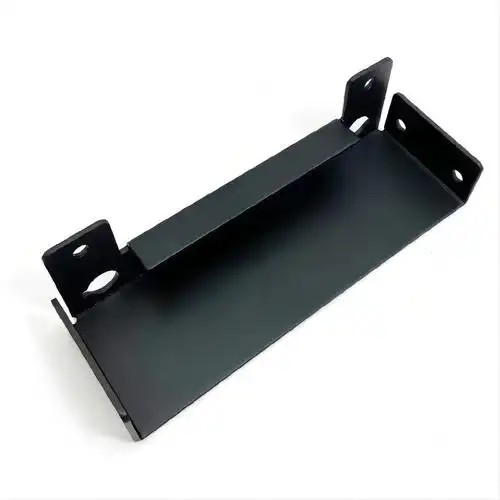
Sheet Metal Process
Why Bending Quality Affects Welding Quality
Many welding defects actually originate from earlier fabrication processes rather than from the welding equipment itself.
For example:
If bending angles are inaccurate:
- Parts may not fit together properly.
- Weld gaps become inconsistent.
When dimensions vary between parts:
- Assembly becomes difficult.
- Welding efficiency decreases.
If holes deform during bending:
- Fixtures may lose positioning accuracy.
- Automated welding systems may struggle to follow the correct weld path.
As a result, successful welding begins long before the welding process itself.
Accurate cutting and precision bending are essential for achieving strong, consistent, and visually appealing welds.
Welding and Assembly
After cutting and bending, components move to assembly and welding operations.
Common welding methods used in sheet metal fabrication include:
SMAW (Shielded Metal Arc Welding)
Advantages:
- Low equipment cost
- Strong adaptability
Disadvantages:
- Lower productivity
- Highly dependent on operator skill
TIG Welding
Advantages:
- High-quality weld appearance
- Minimal spatter
Common applications:
- Stainless steel products
- Precision sheet metal parts
MIG / CO₂ Welding
Advantages:
- Fast welding speed
- Cost-effective production
Common applications:
- Structural steel fabrication
- Equipment frames
Laser Welding
Advantages:
- High welding speed
- Low heat input
- Minimal distortion
- Easy automation integration
Laser welding is particularly suitable for:
- Thin sheet metal
- Precision enclosures
- Automated production lines
Spot Welding
Widely used in:
- Automotive body manufacturing
- Household appliances
- Thin-sheet assembly
Advantages include:
- High efficiency
- Low operating cost
- Excellent repeatability
Surface Finishing
After welding, sheet metal parts often undergo surface treatment to improve appearance and corrosion resistance.
Common finishing methods include:
- Grinding
- Polishing
- Sandblasting
- Painting
- Powder coating
Among these options, powder coating is one of the most popular solutions due to its durability, corrosion resistance, and attractive finish.
Conclusion
Sheet metal fabrication involves much more than simply cutting and welding metal sheets. It is a complete manufacturing process that includes engineering design, laser cutting, bending, assembly, welding, and surface finishing.
Among these operations, bending is often underestimated but plays a critical role in product quality. Proper consideration of bend radius, bend allowance, and hole-to-bend distance can significantly improve dimensional accuracy, assembly efficiency, and welding performance.
For manufacturers seeking high-quality sheet metal products, success depends not only on advanced equipment but also on a deep understanding of the entire fabrication process.
At ZS Laser, we provide professional laser cutting machines, laser welding systems, and automated metal fabrication solutions for customers worldwide. Whether you are producing industrial equipment, metal enclosures, machinery components, or custom sheet metal products, our team can help you achieve higher productivity, better quality, and more efficient manufacturing.

WhatsApp
Scan the QR Code to start a WhatsApp chat with us.