 ZS Laser Equipment

Introduction
In modern manufacturing, tubes have become one of the most important structural materials. From fitness equipment, bicycle frames, and medical devices to new energy vehicles, agricultural machinery, and construction structures, a wide range of products require the welding of round tubes, square tubes, stainless steel tubes, aluminum alloy tubes, and other tubular components.
Traditionally, tube welding primarily relied on TIG welding and MIG welding. However, with the rapid development of fiber laser technology, more and more manufacturers are adopting laser welding systems to complete various tube joining applications.
Compared with conventional welding methods, laser welding offers not only higher welding speeds but also significantly greater potential for automation. Especially when integrated with a Welding Positioner, laser welding systems can dramatically improve production efficiency, weld consistency, and overall product quality.
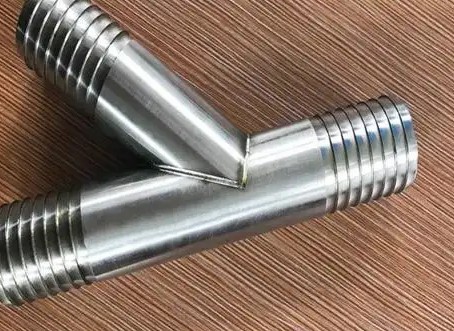
Stainless Steel tube laser welding
What Is the Difference Between a Tube and a Pipe?
In the welding industry, both “tube” and “pipe” can stand for pipeline. However, there are important differences between the two.
Tube
Tubes are commonly found in structural component manufacturing, such as fitness equipment, furniture, automotive parts, bicycle frames, and medical devices. Because these products often require assembly, bending, or welding, they demand high dimensional accuracy, roundness, and surface quality. Tubes are typically specified using outer diameter (OD) and wall thickness as their primary specifications.
Pipe
In contrast, pipes are primarily used for conveying liquids, gases, or other media, and are widely used in oil and gas, chemical equipment, water supply and drainage systems, and energy engineering. Pipes focus more on fluid conveying capacity and pressure resistance, and are typically classified according to nominal diameter (NPS) and pressure rating.
For laser welding equipment manufacturers, tube welding and pipe welding are very similar in structure. Equipment selection depends more on the material, diameter, wall thickness, and welding requirements of the workpiece.
For example, longitudinal seam welding of stainless steel decorative pipes, welding of automotive exhaust pipes, butt welding of industrial pipelines, and welding of pipe fittings to flanges can all be completed using automated laser welding technology.
What Tube Welding Applications Can Laser Welding Handle?
Many customers believe that laser welding can only weld a straight line. In reality, modern automated laser welding systems are capable of handling a wide variety of complex tube welding applications.
1. Tube Seam Welding
Tube Seam Welding is one of the most common applications of laser welding in the tube manufacturing industry.
During the production process, metal strips are roll-formed into an open tube profile. The seam must then be precisely welded to form a complete round tube, square tube, or special-shaped tube.
For tube forming and seam welding, laser energy alone is not sufficient to achieve stable welding quality. To ensure proper contact between both sides of the seam, appropriate clamping pressure must be continuously applied in the welding area. If the seam gap is too large or the clamping force is insufficient, problems such as lack of fusion, weak welds, porosity, and unstable weld formation can occur.
To address this requirement, ZS Laser has specially developed the ZS40 Seam Welding Fixture. This system provides stable and reliable clamping force to the tube seam area during the welding process, ensuring that the tube edges remain in close contact at all times. As a result, weld penetration consistency and weld strength are significantly improved. Combined with the high speed and high precision of laser welding technology, the system can effectively increase production efficiency and product yield.
Compared with traditional TIG welding, laser seam welding offers the advantages of higher welding speed, lower heat input, narrower welds, and reduced distortion.
It is particularly suitable for:
Stainless steel decorative tubes
Furniture tubes
Industrial welded tubes
Automotive exhaust pipes
Food-grade stainless steel tubes
Thin-wall precision tubing
Under automated production conditions, laser welding productivity can typically reach several times that of traditional TIG welding while achieving more consistent and aesthetically pleasing weld quality.
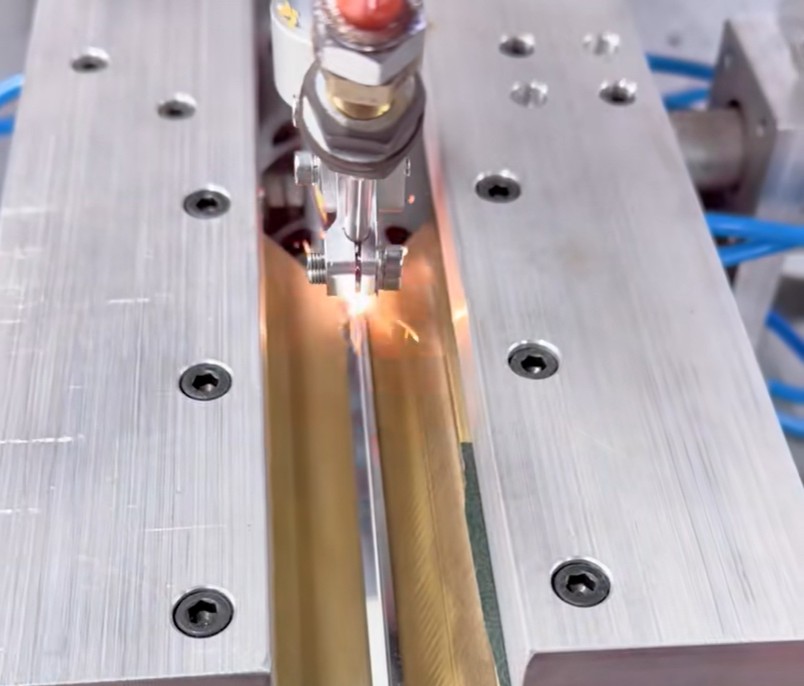
Tube Seam LaserWelding
2. Tube End Cap Welding
In addition to tube forming and seam welding, Tube End Cap Welding is another important application of automated laser welding systems.
In many industrial products, tubes not only provide structural support but also require sealing, pressure resistance, and leak-proof performance. Therefore, after tube fabrication, end caps, heads, or flanges often need to be welded to the tube body to create a completely sealed structure.
Common applications include:
Hydraulic cylinder end cap welding
Air tank sealing welding
Stainless steel pressure vessel welding
Battery enclosure sealing welding
Medical equipment chamber sealing welding
Vacuum equipment pipe fitting welding
Filter housing welding
Heat exchanger component welding
Unlike ordinary structural welding, end cap welding usually requires a much higher weld quality standard. In some applications, even a very small leak may cause product failure. For example, hydraulic systems may suffer oil leakage, pneumatic equipment may experience pressure loss, while medical devices, battery enclosures, and vacuum chambers may be directly affected in terms of safety and service life.
To obtain a uniform and continuous circular weld, automated systems typically use a Rotary Fixture or Welding Positioner in combination with the laser welding head. The workpiece rotates continuously at a preset speed while the laser beam remains fixed, creating a complete 360-degree circumferential weld.
It should be noted that laser welding cannot replace traditional welding methods in every application. For components with extremely high weld quality requirements or high-pressure operating conditions, careful evaluation and testing are necessary before determining whether laser welding is suitable.
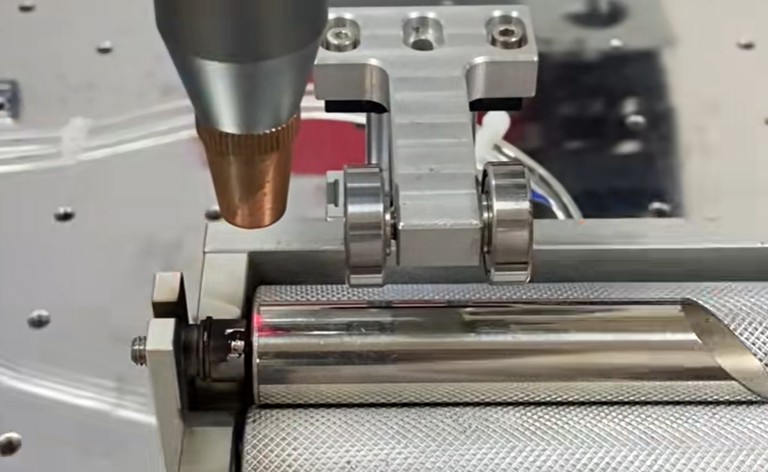
Tube End Cap Laser Welding
3. Tube-to-Tube Welding
In structural fabrication, many products are not made from a single tube. Instead, multiple round tubes, square tubes, or special-shaped tubes must be joined at specific angles to form a complete frame structure. As a result, Tube-to-Tube Welding has become one of the most important applications of automated laser welding.
Common products include:
Bicycle frames
Electric bicycle frames
Fitness equipment
Medical equipment supports
Industrial machine frames
Automation equipment structures
Agricultural machinery components
Construction machinery attachments
Stainless steel railings and handrails
Depending on the product design, tube-to-tube welding can take various forms, including T-joints, right-angle joints, angled joints, socket joints, and fish-mouth butt joints. For complex spatial structures, a single product may require dozens or even hundreds of welded connections.
Automated laser welding systems can complete tube-to-tube welding through dedicated clamping fixtures and positioning systems. Workpieces can be accurately positioned before welding, and the laser system automatically follows the programmed welding path, significantly reducing manual intervention.
For products with high appearance requirements, such as bicycle frames and fitness equipment, laser welding produces smoother and finer weld seams, significantly reducing subsequent grinding and polishing costs. For mechanical structures and industrial frames, laser welding improves overall production efficiency while maintaining sufficient weld strength.
When workpiece structures become more complex, robotic systems, multi-axis motion platforms, and Welding Positioners can be integrated to maintain the optimal welding angle for the laser welding head, enabling automated tube connection welding at multiple positions and orientations.
4. Tube-to-Flange Welding
Tube-to-Flange Welding is one of the most common welding applications in industrial manufacturing. It is widely used in fluid transportation systems, pressure vessels, machinery equipment, and automated production lines.
Whether for pumps, valves, filters, heat exchangers, or various industrial piping systems, reliable tube-to-flange connections are essential.
In automated production lines, tube-to-flange welding is typically combined with a Rotary Fixture or Welding Positioner. Instead of moving the welding head around the workpiece, the workpiece rotates while the laser welding head remains fixed, enabling a continuous 360-degree weld and achieving more stable welding quality and greater production consistency.
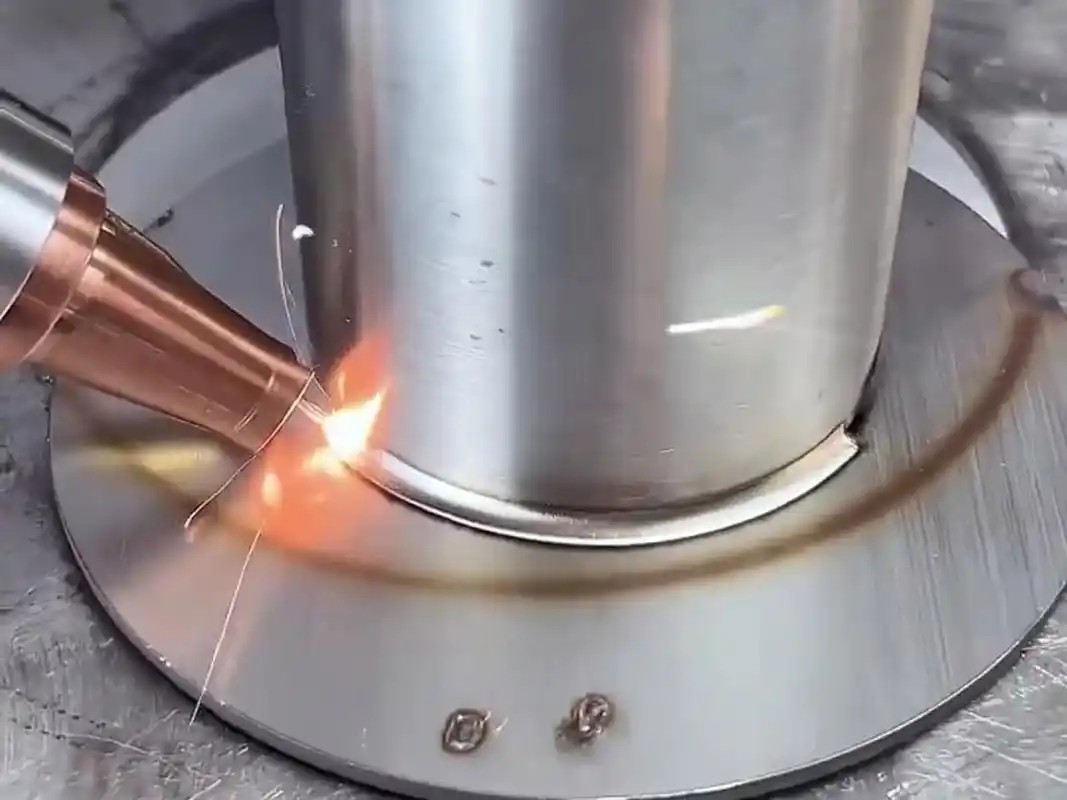
Tube flange laser welding
5. Special-Shaped Tube Welding
With the rapid development of the furniture industry and the new energy vehicle industry, more and more manufacturers are using:
Square tubes
Oval tubes
D-shaped tubes
Special-shaped aluminum profiles
Traditional welding methods often struggle to maintain consistent welding quality for these complex profiles.
By combining robotic laser welding systems with vision positioning technology, weld seam paths can be automatically recognized and tracked, enabling complex path welding for special-shaped tube applications.
6. Tube Laser Cladding
In addition to tube joining and sealing applications, laser technology is also widely used for tube surface enhancement and repair. Among these technologies, Laser Cladding has become an important manufacturing process in industries such as oil and gas, energy equipment, construction machinery, and advanced manufacturing.
Unlike conventional welding, the purpose of laser cladding is not to join two workpieces together. Instead, it deposits a layer of metal material with special properties onto the surface of a component, improving wear resistance, corrosion resistance, high-temperature resistance, and extending service life.
Common applications in tube manufacturing and repair include:
Wear-resistant cladding of oil drilling pipes
Hydraulic cylinder surface repair
Corrosion-resistant coating of transportation pipelines
Valve sealing surface enhancement
Remanufacturing of shafts and tubular components
Repair of critical energy equipment parts
Corrosion protection of chemical processing equipment
Surface enhancement of stainless steel and alloy tubes
Laser cladding uses a high-energy-density laser beam as the heat source. Through a synchronized wire feeding or powder feeding system, the cladding material is precisely deposited onto the workpiece surface. Due to the relatively small heat-affected zone, substrate deformation can be effectively controlled while achieving a more uniform cladding layer.
For round tubes and shaft-type components, the system is typically equipped with a Rotary Fixture or Welding Positioner, allowing uniform cladding to be performed while the workpiece rotates. By precisely controlling rotational speed, wire feeding speed, and laser power, a stable and consistent cladding layer thickness can be achieved.
For large pipelines, oil and gas equipment, and construction machinery components, robotic systems can also be integrated to achieve automated laser cladding, significantly improving production efficiency while reducing labor costs.
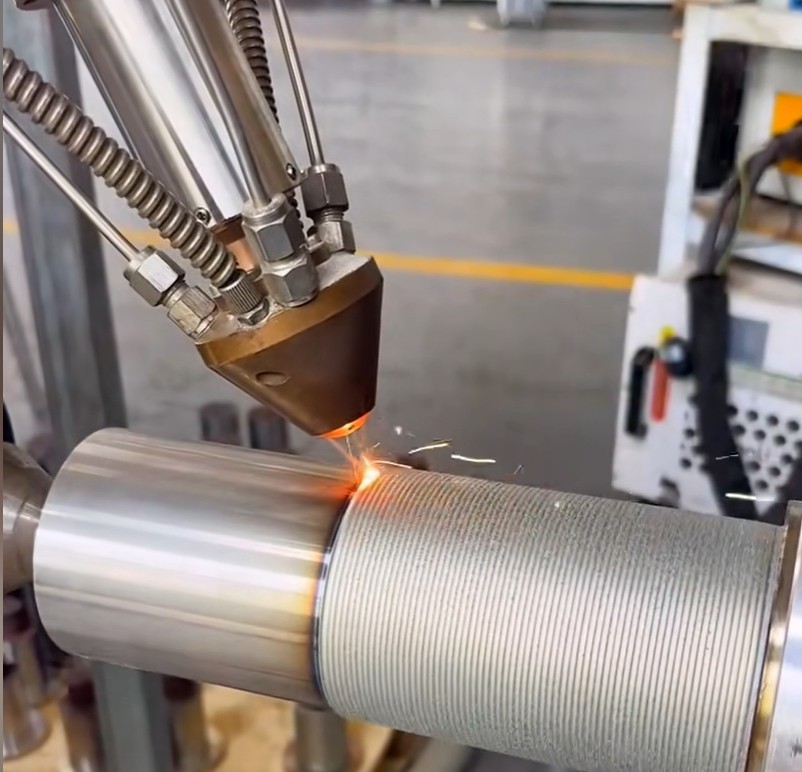
Laser cladding tube
What Is a Welding Positioner?
Many customers have heard of a Welding Positioner, but do not fully understand its function.
Simply put, a Welding Positioner is a device designed to place the workpiece in the optimal welding position.
Its core purpose is simple:
Bring the weld seam to the laser head, rather than forcing the laser head to chase the weld seam.
Why Is a Welding Positioner Essential for Tube Laser Welding?
In most tube welding applications, the weld seam is not a simple straight line. Instead, it forms a complete 360° circumferential weld around the tube.
These applications require continuous, uniform, and uninterrupted welds to ensure adequate strength, sealing performance, and long-term durability.
For laser welding, there are generally two methods to complete a full circumferential weld.
Option 1: Move the Laser Welding Head Around the Workpiece
In theory, a robot or multi-axis motion system can move the laser welding head around the outside diameter of the tube to complete a 360° weld.
However, in actual production environments, this approach presents several challenges:
- Complex motion paths
- Higher equipment costs
- More difficult programming
- Increased maintenance costs
- Weld consistency depends heavily on motion accuracy
- Higher requirements for robot dynamic performance
Especially when welding small-diameter tubes, the welding head must continuously perform complex circular movements and orientation adjustments. Even slight positioning errors can affect weld quality.
For this reason, this method is typically reserved for special structural components or complex three-dimensional welding applications.
Option 2: Rotate the Workpiece While Keeping the Laser Head Fixed
This is currently the most widely adopted solution in industrial manufacturing.
A Welding Positioner rotates the workpiece while the laser welding head remains fixed. As the workpiece rotates, the weld seam automatically passes through the laser focal point, creating a continuous circumferential weld.
This approach offers several significant advantages:
- Simpler mechanical structure
- More stable welding path
- Higher weld consistency
- Easier automation integration
- Lower equipment cost
- Higher production efficiency
For the vast majority of tube welding applications, the combination of “rotating workpiece + fixed laser head” has become the industry-standard solution.
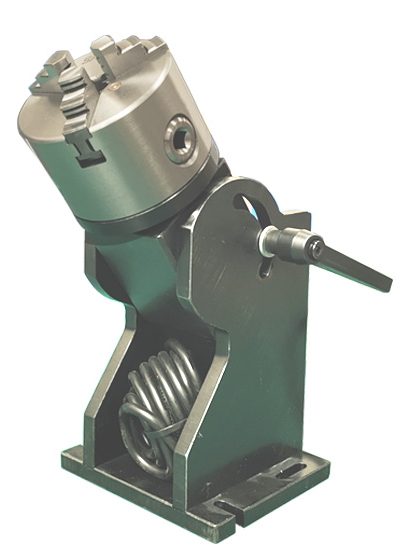
Rotary Axis Fixture
Common Types of Welding Positioners
Depending on workpiece size, production volume, and automation requirements, several types of welding positioners are commonly used in industrial applications.
Rotary Chuck
A Rotary Chuck is the most basic and economical tube rotation device.
Its operating principle is similar to a lathe chuck. The workpiece is clamped and rotated to complete circumferential welding.
This solution is commonly used for:
- Small-diameter tubes
- Medical device components
- Hardware products
- Sensor housings
- Precision metal parts
Due to its simple structure and low cost, rotary chucks are widely used in laboratories, small-batch production, and entry-level automated welding systems.
Pneumatic Rotary Fixture
In mass production environments, frequent loading and unloading of workpieces can consume a significant amount of production time.
A Pneumatic Rotary Fixture uses pneumatic cylinders to automatically clamp and release workpieces, greatly reducing changeover time and improving production efficiency.
Its key features include:
- Fast clamping and unloading
- Easy operation
- High repeatability
- Suitable for automated production lines
This solution is commonly used for large-volume welding of automotive components, sanitary products, stainless steel fittings, and other standardized products.
Servo Welding Positioner
For laser welding applications, rotational accuracy directly affects weld quality.
As a result, servo-driven positioners have become one of the most common configurations in modern tube laser welding systems.
Compared with conventional motor-driven systems, servo positioners provide much more precise motion control, including:
- Precise speed adjustment
- High repeat positioning accuracy
- Programmable motion control
- Synchronization with robots and laser systems
- Support for continuous circumferential welding and indexed positioning
For industries that require exceptional weld consistency, such as medical devices, food processing equipment, pressure vessels, and new energy products, servo welding positioners are often the preferred solution.
Heavy-Duty Welding Positioner
As workpiece size and weight increase, higher-capacity positioning systems become necessary.
Depending on application requirements, load capacities can range from several hundred kilograms to several tons or even tens of tons.
These systems are widely used for:
- Large industrial pipelines
- Pressure vessels
- Storage tank fabrication
- Oil and gas equipment
- Energy equipment
- Heavy machinery structures
With stable rotational control and reliable clamping systems, heavy-duty welding positioners can maintain smooth operation and consistent weld quality even when handling extremely large workpieces.
There is no absolute “best” type of Welding Positioner. The correct solution should be selected based on workpiece size, weight, production efficiency requirements, and automation level.
For most Tube Laser Welding projects, choosing the right welding positioner is often just as important as selecting the right laser source.
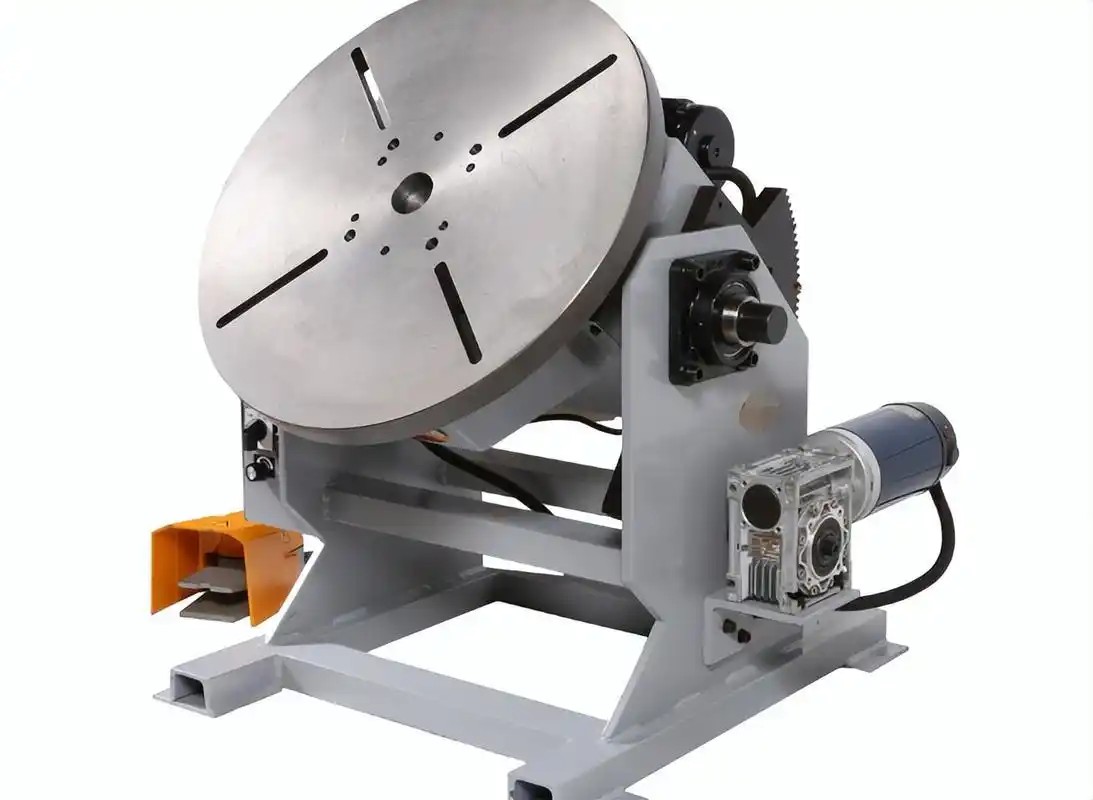
Large welding positioner
Future Trends in Automated Tube Welding
The future of Tube Welding is moving in three major directions:
Higher Automation
- Robotic loading and unloading
- Automatic weld seam detection
- Fully automated welding processes
Greater Intelligence
- Vision positioning systems
- Automatic deviation compensation
- Reduced manual adjustment requirements
Increased Flexibility
A single system will be capable of processing:
- Round tubes
- Square tubes
- Special-shaped tubes
This allows manufacturers to meet the demands of high-mix, low-volume production environments with greater efficiency.
Conclusion
Whether for tube seam welding, end cap welding, tube-to-tube connections, or tube-to-flange welding, laser welding can provide faster production speeds, more consistent weld quality, and lower post-processing costs.
At the same time, properly configured Welding Positioners and dedicated clamping fixtures are essential for building an efficient and reliable automated Tube Welding production line.
ZS Laser has specialized in laser welding technology for more than ten years. Our product range includes both compact automated welding platforms and large-scale laser cladding systems.
If your production process requires tube laser welding or laser cladding solutions, feel free to contact us for professional support and customized recommendations.

WhatsApp
Scan the QR Code to start a WhatsApp chat with us.