 ZS Laser Equipment

Tube welding is one of the most common joining processes in modern manufacturing. From stainless steel furniture and bicycle frames to hydraulic cylinders, food-grade piping, automotive exhaust systems, medical equipment, and plastic water pipes, almost every industry relies on reliable tube welding.
When people search for a tube welder, they often expect to find a single machine that can weld every type of tube. In reality, there is no universal tube welding machine. The best welding solution depends on several factors, including tube material, wall thickness, joint design, quality requirements, production volume, and the level of automation.
A welding machine that performs perfectly on stainless steel tubing may not be suitable for aluminum. Likewise, equipment designed for thin-wall precision tubes may not handle heavy structural steel pipes efficiently.
This guide explains how different tube materials and applications determine the most suitable welding process, helping manufacturers choose the right tube welding solution rather than simply purchasing the most expensive machine.
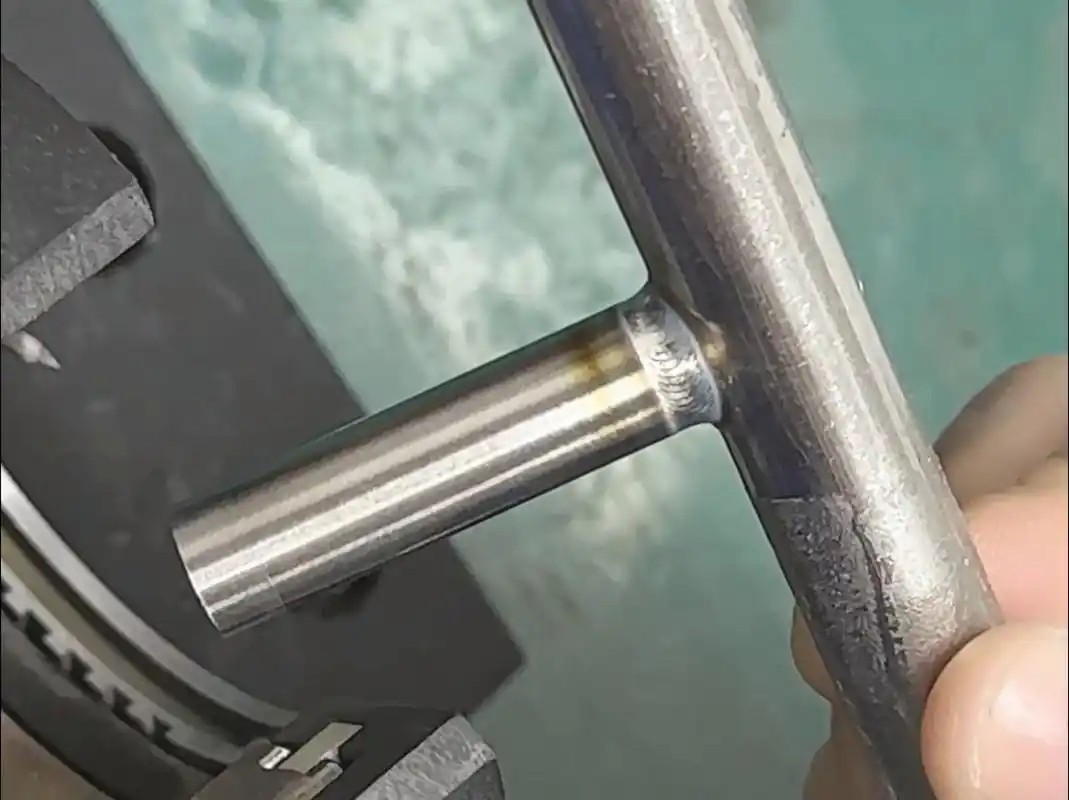
Thin wall tube welding
What Is a Tube Welder?
A tube welder refers to any welding equipment specifically used for joining metal or plastic tubes. Depending on the application, it may be a handheld welding machine, an automatic orbital welding system, a robotic laser welding workstation, a resistance welding line, or even a plastic pipe fusion machine.
Unlike flat sheet welding, tube welding introduces several additional challenges.
Most tubes require continuous circumferential welds instead of straight welds. The workpiece often needs to rotate during welding, demanding rotary fixtures or welding positioners. Many products also require airtight or pressure-resistant welds, making consistency more important than speed alone.
Because of these requirements, choosing the correct tube welder starts with understanding the tube itself.
Different Tube Materials Require Different Welding Solutions
Material selection has the greatest influence on welding process selection. Different metals behave very differently under heat, making some materials relatively easy to weld while others require specialized equipment.
Stainless Steel Tubes
Stainless steel tubing is widely used in food processing equipment, pharmaceutical production, medical devices, kitchen equipment, architectural decoration, and pressure piping.Its excellent corrosion resistance makes it popular, but stainless steel also demands higher weld quality. Excessive heat input may cause distortion, oxidation, or discoloration, reducing both appearance and corrosion resistance.Several welding methods are commonly used.
TIG welding has traditionally been the preferred process because it produces smooth, clean welds with excellent control. It remains the standard choice for sanitary tubing and high-quality manual fabrication.
Laser welding has rapidly become the preferred solution for automated production. Compared with TIG welding, fiber laser welding offers significantly higher welding speeds, lower heat input, narrower weld seams, and much smaller heat-affected zones. For thin-wall stainless steel tubes used in furniture, automotive components, and decorative products, laser welding often delivers superior productivity while reducing post-processing.
MIG welding is generally selected for thicker stainless steel structures where appearance is less critical and deposition rate is more important.
Carbon Steel Tubes
Carbon steel remains the easiest tube material to weld and is widely used in structural fabrication, agricultural machinery, industrial equipment, construction, and steel furniture.
Low-carbon steel usually requires little special preparation and can be welded using nearly every common process, including MIG, TIG, stick welding (SMAW), and laser welding.
Medium-carbon and high-carbon steels require additional attention because rapid cooling can produce hard martensitic structures, increasing the risk of cold cracking.
For these materials, manufacturers often apply:
- Preheating
- Low-hydrogen filler materials
- Controlled cooling
- Post-weld heat treatment
Laser welding can also be used successfully on carbon steel tubes, particularly in automated production lines. However, medium and high-carbon steels should always undergo welding trials before mass production due to their higher crack sensitivity.
Galvanized Steel Tubes
Galvanized steel presents unique welding challenges because of its zinc coating.
Although steel melts at approximately 1,500°C, zinc melts around 420°C and vaporizes long before the base metal begins to fuse. During welding, zinc vapor creates excessive spatter, unstable arc behavior, and porosity while contaminating optics and consumables.
Many customers ask whether laser welding can weld galvanized tubes.
The answer is yes—but it is not always the ideal solution.
Laser welding galvanized steel often produces severe spatter, which can quickly contaminate or even damage the protective lens inside the laser welding head. To reduce these problems, higher shielding gas flow, optimized focal position, and carefully adjusted welding parameters are usually required.
Because galvanized materials vary significantly between suppliers, sample testing before production is strongly recommended.
Aluminum Tubes
Aluminum tubing is widely used in aerospace, automotive lightweight structures, heat exchangers, bicycles, and electric vehicles.
Compared with steel, aluminum presents three major challenges.
First, its thermal conductivity is extremely high, meaning heat rapidly spreads away from the weld zone.
Second, aluminum forms a hard oxide layer with a melting temperature much higher than the aluminum beneath it.
Third, aluminum reflects laser energy more efficiently than steel.
AC TIG welding remains one of the most reliable methods for aluminum tube fabrication because alternating current continuously removes the oxide layer during welding.
Pulse MIG welding provides higher productivity for thicker aluminum structures.
Modern high-power fiber laser systems can also weld aluminum successfully, especially when combined with optimized process parameters and beam control technology.
Copper and Copper Alloy Tubes
Copper tube welding is becoming increasingly important in electrical equipment, refrigeration, power generation, and heat exchanger manufacturing.
Pure copper has extremely high thermal conductivity, requiring significantly higher heat input than steel. It also reflects laser energy, making welding more challenging.
Depending on the alloy, different welding solutions are recommended.
Pure copper often requires TIG welding with preheating for manual fabrication or high-power laser welding for automated production.
Brass contains zinc, introducing additional evaporation similar to galvanized steel. Proper filler materials and shielding gas become especially important.
Bronze and copper-nickel alloys generally offer better weldability but still require careful process control.
Before welding any copper alloy, oxide films, grease, and surface contamination should be thoroughly removed to minimize porosity and improve fusion quality.
Titanium Tubes
Titanium tubing is commonly found in aerospace, medical implants, chemical processing equipment, and high-end racing applications.And itself welds well, but only when oxygen contamination is completely eliminated.
Even small amounts of oxygen, nitrogen, or hydrogen absorbed during welding can significantly reduce ductility and mechanical performance.
For this reason, titanium tube welding typically uses:
- TIG welding with full argon shielding
- Orbital welding systems
- High-precision laser welding
Back purging is usually mandatory for critical applications.
Plastic Tubes
Not every tube welder joins metal.
Plastic tube welding has become essential for water supply systems, gas pipelines, chemical processing, and infrastructure projects.
Common materials include:
- HDPE
- PE
- PP
- PPR
- CPVC
These materials are not melted by electric arcs or lasers.
Instead, they use dedicated fusion technologies such as butt fusion welding, socket fusion welding, or electrofusion systems.
Although these machines are also classified as tube welders, they belong to an entirely different category from metal welding equipment.
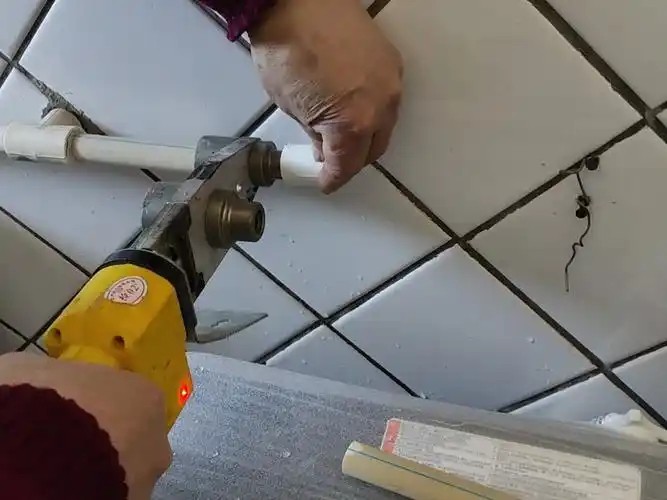
Plastic pipe hot melt welding
Tube Welding Solutions for Different Industries
Selecting the right tube welder also depends heavily on the industry.
Food processing and pharmaceutical manufacturers generally prioritize clean, oxide-free welds, making TIG welding and orbital welding the preferred choices.
Automotive manufacturers emphasize productivity, where robotic laser welding has become increasingly common for exhaust systems, battery components, and structural tubing.
Furniture manufacturers often combine laser tube welding with robotic handling systems to achieve high-speed production and minimize polishing work.
Oil and gas industries typically require thick-wall pipe welding, where MIG, submerged arc welding, and specialized pipeline welding equipment remain dominant.
Medical device manufacturers usually demand extremely precise tube joints with strict cleanliness standards, making orbital TIG and precision laser welding the preferred technologies.
Tube Shape Also Affects Welding Equipment Selection
Material is only part of the decision.
Tube geometry also influences the welding solution.
Round tubes are the easiest to automate because rotary fixtures or welding positioners can rotate the workpiece while the welding head remains stationary.
Square tubes and rectangular tubes are widely used in furniture and structural fabrication. Robotic laser welding systems are often preferred because they can follow multiple straight edges efficiently.
Oval tubes, D-shaped tubes, and custom extrusions are becoming increasingly common in electric vehicles and modern furniture. These irregular profiles usually require robotic motion combined with vision-guided seam tracking to maintain consistent weld quality.
Different Tube Joints Require Different Welding Systems
Not every tube weld is the same.
Straight seam welding is commonly used in tube manufacturing lines, where steel strips are continuously formed into tubes before being welded along the longitudinal seam.
Tube end cap welding is frequently used for hydraulic cylinders, pressure vessels, filters, and battery housings. Rotary welding positioners allow continuous 360° circumferential welds while keeping the welding head fixed.
Tube-to-tube welding is widely used in bicycle frames, fitness equipment, industrial machinery, and medical devices. These complex spatial joints often require robotic laser welding combined with dedicated fixtures.
Tube-to-flange welding appears throughout industrial piping systems and pressure equipment. Rotary positioners are commonly integrated to improve weld consistency.
For worn tubes and shafts, laser cladding systems provide an effective solution for rebuilding surfaces rather than joining components, extending service life while minimizing material waste.
Automation Is Changing Tube Welding
Modern tube welding is no longer just about generating heat.
Today’s production lines increasingly integrate laser welding machines with robots, welding positioners, rotary fixtures, seam tracking cameras, automatic loading systems, and intelligent control software.
Instead of asking welders to manipulate the torch around the tube, automated systems often rotate the workpiece itself while maintaining a fixed welding head. This approach simplifies motion control, improves repeatability, and produces more consistent circumferential welds.
As labor costs continue to rise, intelligent tube welding systems are rapidly replacing manual operations across many industries.
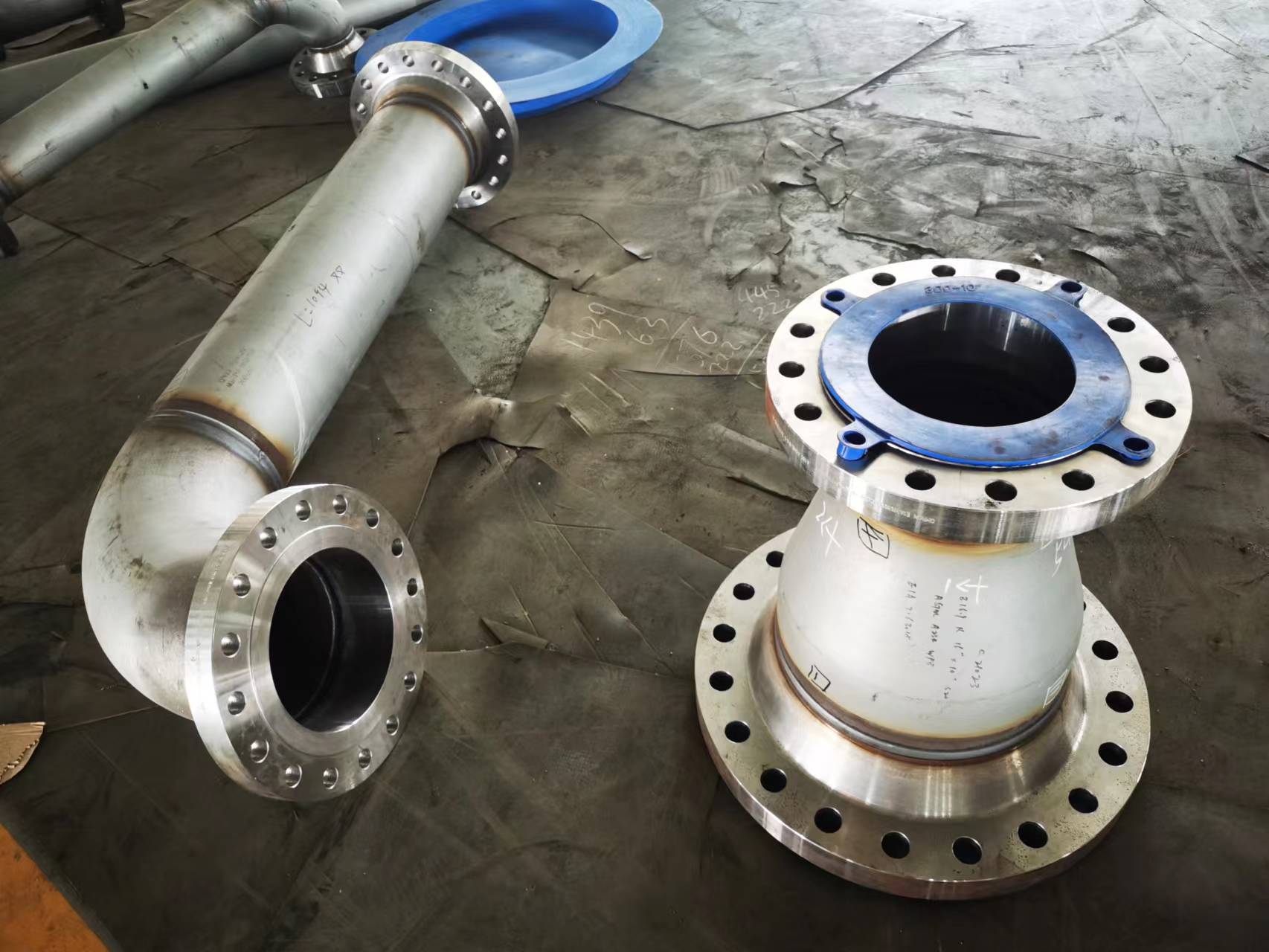
Pipe welding and fabrication
How to Choose the Right Tube Welder
There is no single welding machine suitable for every application.
Before selecting equipment, manufacturers should evaluate several key factors:
- Tube material
- Wall thickness
- Tube diameter
- Joint configuration
- Required weld appearance
- Pressure or leak-tightness requirements
- Daily production volume
- Manual or automated production
Answering these questions usually narrows the selection far more effectively than comparing machine specifications alone.
Conclusion
Choosing the right tube welder is not simply about selecting the latest technology—it is about matching the welding process to the material, application, and production requirements. Stainless steel, carbon steel, galvanized steel, aluminum, copper, titanium, and plastic tubes each present unique welding challenges, and no single process is ideal for every situation.
As manufacturing continues to move toward automation, tube welding solutions are evolving from standalone machines into fully integrated production systems that combine laser welding, robotic handling, welding positioners, rotary fixtures, and intelligent process control. The goal is no longer just to make a weld, but to produce consistent, high-quality joints with greater efficiency and lower operating costs.
At ZS Laser, we provide far more than laser welding machines. Our solutions include tube laser welding systems, robotic welding workstations, welding positioners, custom fixtures, process development, and sample testing tailored to your specific products. Whether you manufacture stainless steel furniture, automotive components, pressure vessels, bicycle frames, or precision industrial tubing, our engineering team can help you select the most suitable tube welding solution for your production needs.

WhatsApp
Scan the QR Code to start a WhatsApp chat with us.