 ZS Laser Equipment

Future Impacts on Laser Marking, Welding, and Cutting — and How ZS Laser Is Preparing
In recent years, global technology leaders have been investing heavily in artificial intelligence, with the long-term goal of achieving Artificial General Intelligence (AGI). Advances in computing power, algorithms, and multimodal perception are rapidly expanding AI’s capabilities beyond software and data-driven industries.
If this trend continues, its impact will extend deeply into the manufacturing sector. For mechanical equipment industries—especially laser marking machines, laser welding machines, and laser cutting machines—AI represents not just incremental improvement, but a fundamental shift from traditional automation toward intelligent manufacturing systems.
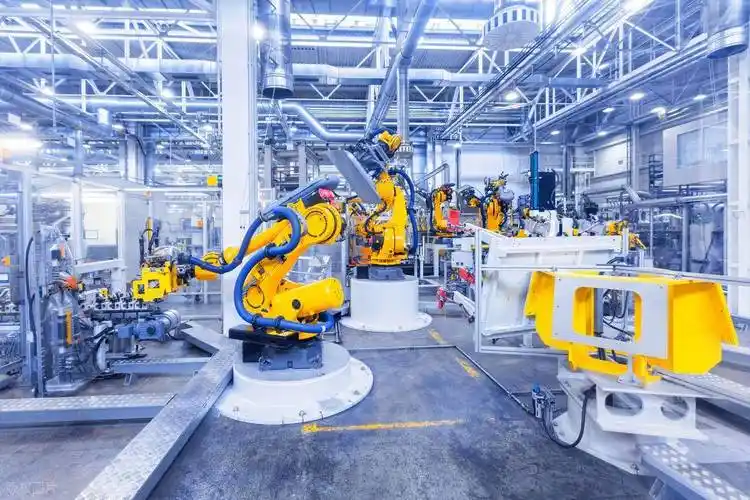
AI robot factory
1.From CNC Automation to Intelligent Decision-Making
Today’s laser machines already offer a high degree of automation:
CNC systems precisely execute preset programs
Automatic feeding and positioning are widely used
High consistency is achieved in repetitive production
However, most laser equipment still follows a clear division of labor:
Humans think, machines execute.
In real production environments, many situations still require human involvement:
Process parameters must be adjusted manually
Material variations rely on operator experience
Weld quality and cutting results require visual inspection
Deformation, reflection, or fixturing deviations require intervention
Traditional CNC systems excel at deterministic execution, but they lack the ability to handle uncertainty.
This is precisely where AI can create transformative value.
2.The Future Impact of AI on Laser Marking Machines
From Program-Based Marking to Intelligent Recognition
In the future, AI-driven laser marking systems may:
Automatically recognize part shape, material, and surface condition
Identify optimal marking positions, angles, and sizes
Automatically match power, speed, depth, and marking style
For example:
Irregular parts → automatic identification of suitable marking areas
Oily or oxidized surfaces → adaptive parameter adjustment
Mixed production lines → no manual program switching
Real-Time Marking Quality Inspection
With integrated vision systems, AI can continuously monitor:
Marking clarity and contrast
Position accuracy and distortion
Deviation from reference standards
The system can then adjust parameters for subsequent parts, transforming laser marking into a stable, self-correcting quality output process.
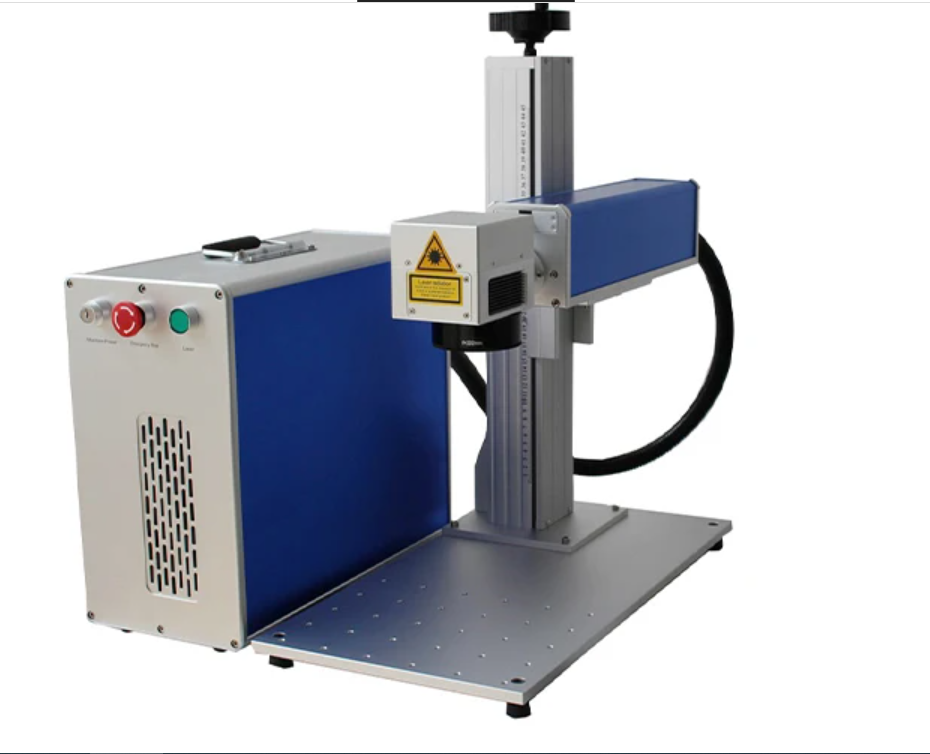
portable fiber laser marking machine
3.AI and the Evolution of Laser Welding Machines
Laser welding remains one of the most experience-dependent laser processes. Even with handheld laser welding machines, achieving consistent weld quality often relies heavily on operator skill.
Reducing Dependence on Human Experience
Future AI-enabled welding systems may:
Identify material type, thickness, and joint geometry automatically
Analyze weld pool behavior in real time
Dynamically adjust laser power, welding speed, and wire feeding
This would allow welding knowledge to be embedded into algorithms, rather than relying solely on individual operators.
From Post-Inspection to Real-Time Quality Control
By combining vision, acoustic signals, and molten pool feedback, AI systems could:
Detect porosity or lack-of-fusion trends during welding
Correct parameters before defects fully form
Reduce rework and improve inspection pass rates
For high-standard industries such as energy, pressure vessels, and structural components, this capability would be particularly valuable.
4.AI’s Role in the Future of Laser Cutting Machines
Intelligent Recognition of Materials and Conditions
AI-driven laser cutting systems may be able to:
Identify sheet or tube specifications automatically
Detect surface conditions such as rust, oil, or reflectivity
Select optimal cutting paths and piercing strategies
Adaptive Compensation and Fault Handling
In real-world cutting applications, challenges such as:
Material deformation
Fixturing deviations
Thermal distortion
still require human judgment. AI systems could compensate for these factors in real time, reducing downtime and manual intervention.
5.AI as the “Brain” of Laser Equipment
If traditional CNC systems are the nervous system of a machine, AI represents its brain.
This shift is not about adding isolated features, but about redefining roles:
Machines evolve from executors to decision-makers
Operators shift from manual control to system supervision
Production transitions from experience-driven to data- and model-driven
This transformation sets higher expectations for laser equipment manufacturers.
6.What the AI Era Means for ZS Laser
AI will not replace conventional laser equipment overnight, but the direction is clear and irreversible.
For ZS Laser, the key question is not whether to adopt AI, but how to prepare for it responsibly and sustainably.
From Selling Machines to Providing Evolvable Solutions
In the future, customers will care less about specifications alone, such as speed or power, and more about:
Long-term stability
Upgrade potential
Compatibility with intelligent systems
Hardware reliability remains the foundation of any intelligent upgrade.
Designing Equipment with AI Readiness in Mind
This includes:
Sensor integration capability
Data acquisition infrastructure
Open and flexible control architectures
Such design choices determine whether equipment can evolve alongside future AI technologies.
Application-Driven, Not Concept-Driven Innovation
The real value of AI lies in practical application scenarios.
ZS Laser’s strength is its deep understanding of real industrial working conditions—not chasing abstract concepts.
Key questions include:
Which industries benefit most from intelligent welding?
Where does adaptive cutting create the most value?
Which customers prioritize stability and long-term performance?
These considerations matter more than simply claiming “AI capability.”
7.AI Will Reshape Manufacturing, Not Replace It
AI will not eliminate manufacturing—it will redefine how responsibilities are shared between humans and machines.
For the laser equipment industry, AI will not reduce the importance of high-quality machines. Instead, it will amplify the value of reliable, well-engineered equipment.
ZS Laser will continue to focus on:
Stable and dependable machine foundations
Application-oriented engineering design
Long-term readiness for intelligent manufacturing
When AI technology fully matures, the manufacturers that endure will be those with solid engineering fundamentals, deep industry understanding, and respect for real-world production logic.

WhatsApp
Scan the QR Code to start a WhatsApp chat with us.