 ZS Laser Equipment

Laser welding has transformed modern manufacturing with high precision, repeatability, and minimal post-processing. While metal laser welding is well known, plastic laser welding is increasingly used in industries such as automotive, electronics, medical devices, and consumer products.
At ZS Laser, we provide advanced laser welding solutions for both plastics and metals, helping our customers achieve high-quality, efficient, and reliable welds tailored to their production needs.
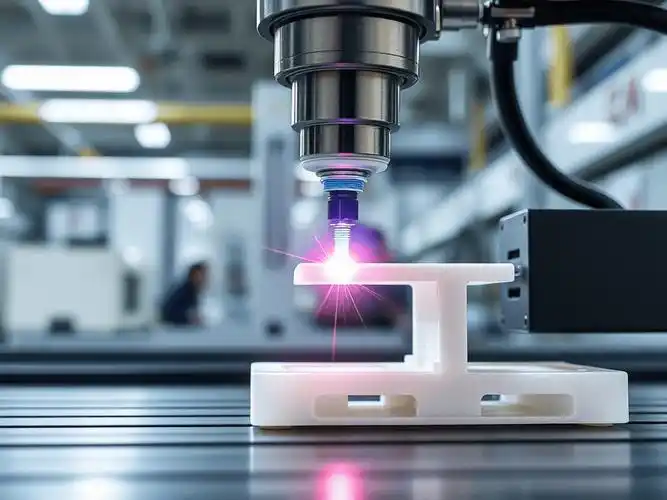
Laser welding of plastics
How Plastic Laser Welding Works
Plastic laser welding relies on localized heating to melt thermoplastic materials at the interface, allowing two parts to fuse seamlessly. The most widely used method is transmission laser welding:
1.Transparent top layer: Allows laser light to pass through.
2.Absorbing bottom layer: Captures laser energy, generating heat.
3.Fusion under heat and pressure: The interface melts and bonds.
4.Cooling and solidification: Forms a strong, durable weld.
ZS Laser advantage: Our systems precisely adjust laser parameters to suit different plastic types, thicknesses, and joint designs, ensuring consistent weld quality.
Temperature Control and Parameter Optimization
Plastic welding demands precise temperature management due to low thermal tolerance:
Laser power regulation: Typically tens to hundreds of watts, much lower than metal welding.
Pulsed or scanning modes: Adjust pulse duration, frequency, and speed for precise heat input.
Real-time temperature monitoring: Infrared sensors and thermocouples maintain stable welding temperature.
Pressure and clamping: Ensure proper fusion and prevent warping.
These controls allow ZS Laser systems to minimize defects like bubbles, carbonization, or warping, while producing high-strength, visually clean welds.
Common Defects and Industrial Solutions
Plastic laser welding can present challenges such as:
Bubbles and porosity → Solved by adjusting laser intensity and scanning speed.
Warping → Prevented using uniform heat distribution and precise clamping.
Carbonization or discoloration → Controlled via wavelength, pulse duration, and energy input.
ZS Laser engineers provide pre-production testing, parameter tuning, and technical guidance, ensuring consistent, defect-free production.
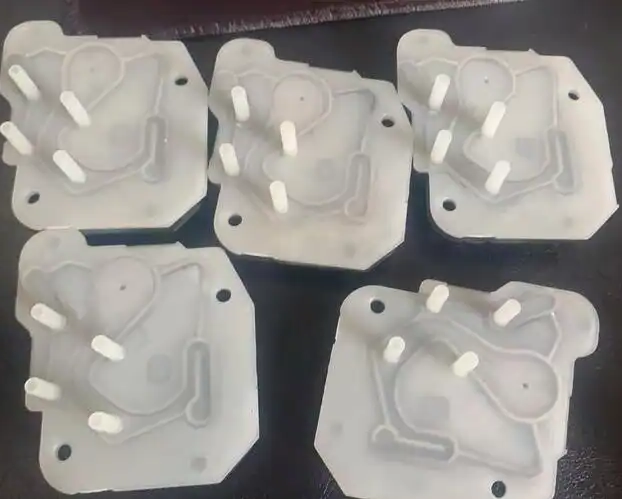
Laser welding effect on white plastic
Plastic vs. Metal Laser Welding
| Aspect | Plastic Laser Welding | Metal Laser Welding |
| Laser Power | Tens to hundreds of watts | Hundreds to thousands of watts |
| Heating Mechanism | Absorption + heat conduction | Local melting with molten pool |
| Temperature Sensitivity | ±1–2°C critical | Higher tolerance due to metal heat capacity |
| Clamping Requirement | Required | Optional in some cases |
| Materials | Thermoplastics | Metals (steel, aluminum, stainless steel) |
| Common Defects | Bubbles, warping, carbonization | Cracks, porosity, spatter |
Key takeaway: Plastic welding emphasizes precise heat management, while metal welding relies on high-energy melting.
Industrial Applications
Plastic laser welding is widely applied in:
Automotive parts: Interior panels, air ducts, sensor housings
Medical devices: Surgical instrument casings, diagnostic equipment
Electronics: Consumer devices, connectors, enclosures
Consumer goods: Appliances, wearables, toys
Metal laser welding complements plastic welding in mixed-material products, such as electronics or automotive assemblies. ZS Laser solutions integrate both plastics and metals, providing unified production workflows.
Future Trends: Automation and AI Integration
The next generation of laser welding will leverage AI and smart automation:
Real-time weld monitoring and automatic parameter adjustment.
Automatic defect detection to reduce scrap and rework.
Integration with robotic systems for fully automated production lines.
At ZS Laser, we are actively developing intelligent welding solutions to support efficient, high-quality, and scalable production.
Plastic laser welding offers a clean, precise, and versatile solution for modern manufacturing of thermoplastic components. By understanding its principles, temperature control, and differences from metal welding, manufacturers can achieve consistent quality and efficiency.
ZS Laser provides customized, reliable, and high-performance laser welding solutions for both plastics and metals, helping industries optimize production, reduce defects, and ensure long-term reliability.

WhatsApp
Scan the QR Code to start a WhatsApp chat with us.