 ZS Laser Equipment
A Dedicated Solution for Battery Pack Welding and Automated Production
The 3 Axis CNC Lithium Battery Laser Welding Machine is developed specifically for lithium battery manufacturing, where welding quality directly affects electrical performance, structural reliability, and long-term safety.
In battery production, most welding tasks are carried out in a vertical direction and involve multiple connection points such as tabs, busbars, and cell terminals. These requirements make conventional welding equipment difficult to use consistently. This machine combines a CNC motion platform with a galvanometer laser system, enabling stable, repeatable, and efficient welding across complex battery structures.
By placing the battery pack on the worktable and setting the welding parameters, the system can automatically complete the entire welding process. It is particularly suitable for battery pack assembly lines that require both precision and productivity.
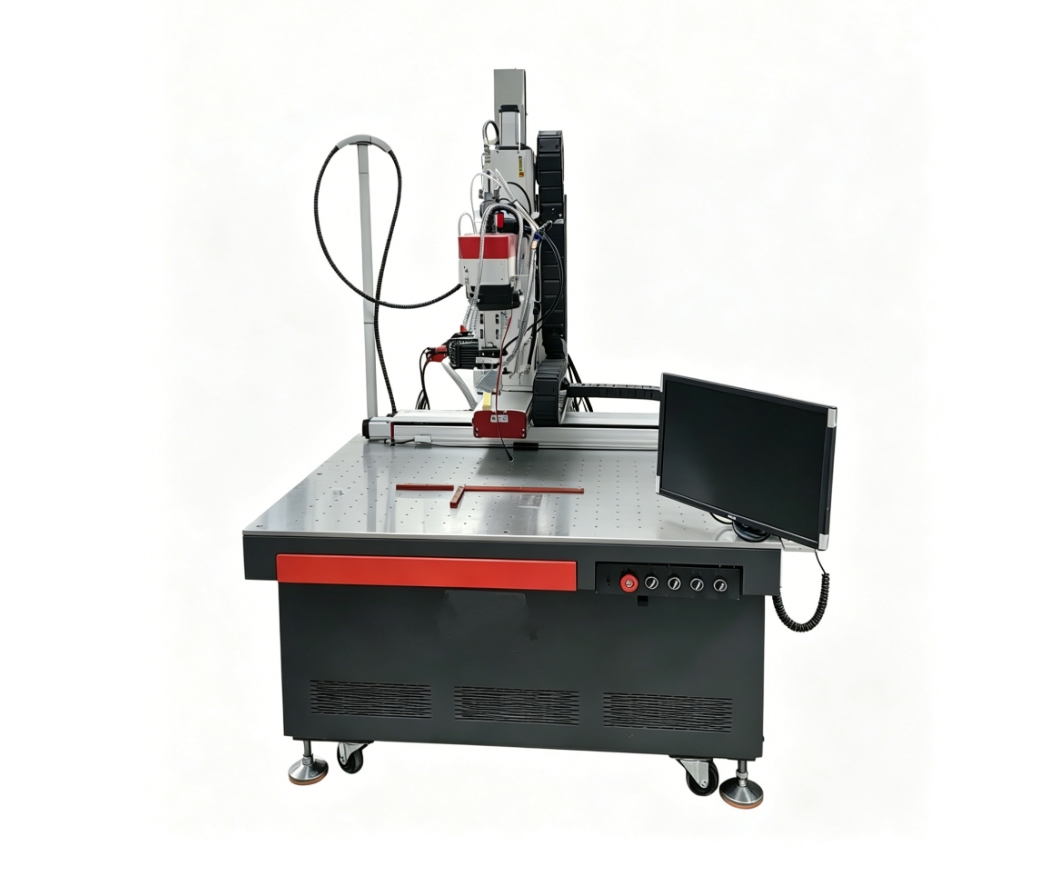
3 Axis CNC Lithium Battery Laser Welding Machine
Application-Oriented Design for Lithium Battery Manufacturing
In practical production environments, battery welding is not a single-point process but a continuous operation involving multiple materials and connection types. The 3 Axis CNC Lithium Battery Laser Welding Machine is designed to handle these real-world conditions.
In battery module assembly, the machine is used to weld busbars to cells, ensuring low resistance connections and stable current flow. For power battery packs used in electric vehicles, it supports high-current connection welding, where both penetration and consistency are critical. In energy storage systems, it ensures long-term reliability by maintaining uniform weld quality across large battery groups.
The system is also suitable for smaller battery packs used in consumer electronics, where precision and minimal heat input are required to avoid damaging sensitive components.
Because different battery designs vary in size and layout, the machine supports customized configurations, making it adaptable to both standardized production lines and non-standard battery structures.
Stable Mechanical Structure for High-Precision Welding
To ensure consistent welding quality, the machine adopts a gantry structure, which provides high rigidity and stable movement during operation. This is particularly important in lithium battery welding, where even small vibrations can affect weld formation and lead to defects.
The working area is designed to accommodate typical battery pack sizes:
Worktable size: 1300 × 1000 mm
X-axis travel: 1000 mm
Y-axis travel: 500 mm
Z-axis travel: 600 mm
This configuration allows flexible positioning of different battery packs while maintaining precise control over the welding path.
High-Speed Galvanometer Welding for Multi-Point Applications
Unlike traditional welding systems that rely only on mechanical movement, this machine integrates a galvanometer scanning system. The laser beam can be rapidly directed between multiple welding points without moving the entire welding head.
This significantly improves efficiency in applications such as:
Multi-point tab welding
Dense busbar connections
Repetitive welding patterns in battery modules
At the same time, the CNC system controls the overall positioning, ensuring that each weld is placed accurately according to the programmed path.
Controlled Heat Input for Sensitive Battery Materials
Lithium battery components are often made of materials such as nickel, aluminum, and copper, which have different thermal properties. Improper heat input can result in weak joints, deformation, or increased internal resistance.
The 3 Axis CNC Lithium Battery Laser Welding Machine provides adjustable laser parameters, allowing operators to control power, speed, and welding path according to the material and thickness. This ensures that the welding process remains stable while minimizing thermal impact on surrounding areas.
The available laser power range from 1500W to 3000W allows the machine to handle both thin materials and more demanding welding requirements.
Automated Workflow for Consistent Production
In actual production, consistency is often more important than single weld quality. This machine is designed to reduce manual intervention and ensure repeatable results.
Once the process is set:
The operator loads the battery pack onto the worktable
The welding program is selected
The system automatically executes the welding sequence
This approach reduces dependency on operator skill and helps maintain uniform quality across large production batches.
It also makes the machine suitable for integration into automated production lines, where it can work together with positioning systems, fixtures, and inspection processes.
Application scenarios
The 3 Axis CNC Lithium Battery Laser Welding Machine is widely used in battery-related industries where precision and consistency are essential.
In electric vehicle battery production, it is used for assembling power battery packs with high current requirements. In energy storage systems, it ensures reliable connections across large battery arrays. In consumer electronics, it supports compact battery designs where space is limited and accuracy is critical.
Its flexibility and stability make it suitable for both medium-scale production and fully automated manufacturing environments.
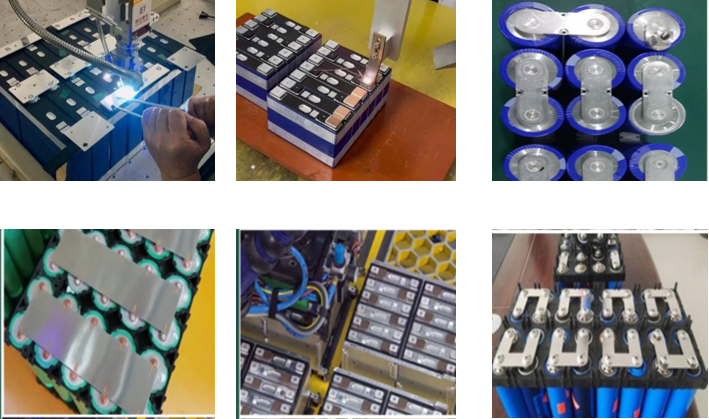
Lithium battery welding samples
Conclusion And Call To Action
The 3 Axis CNC Lithium Battery Laser Welding Machine is not a general-purpose welding system, but a dedicated solution developed for the specific requirements of lithium battery manufacturing.
By combining a rigid gantry structure, CNC motion control, and high-speed galvanometer welding, it provides a balance between precision, efficiency, and reliability. For manufacturers aiming to improve welding consistency, reduce defects, and support automated production, this machine offers a practical and scalable solution.
Contact Us
If you are looking for laser welding solutions for lithium battery production, or require customized designs based on specific battery structures, please feel free to contact us.
We can provide:
Process evaluation and selection advice
Welding prototype testing
Parameter optimization support
Automated production line integration solutions
You only need to provide the battery type, material, and structure information, and we will provide you with more targeted technical solutions.

WhatsApp
Scan the QR Code to start a WhatsApp chat with us.