 ZS Laser Equipment
A robot laser welding machine is a fully automated welding system that combines an industrial robotic arm with fiber laser welding technology to achieve high-speed, high-precision, and repeatable welding operations.
Compared with traditional manual welding, robotic laser welding systems provide better consistency, higher efficiency, lower labor dependency, and improved welding quality, especially for large-scale industrial manufacturing.
Today, robot welding machines are widely used in automotive manufacturing, EV battery production, sheet metal fabrication, kitchen equipment, aerospace components, metal furniture, and precision industrial parts.
With programmable motion control and multi-axis flexibility, robotic laser welding systems can complete complex welding paths, multi-angle welding, long weld seams, and continuous 360-degree welding without blind spots.
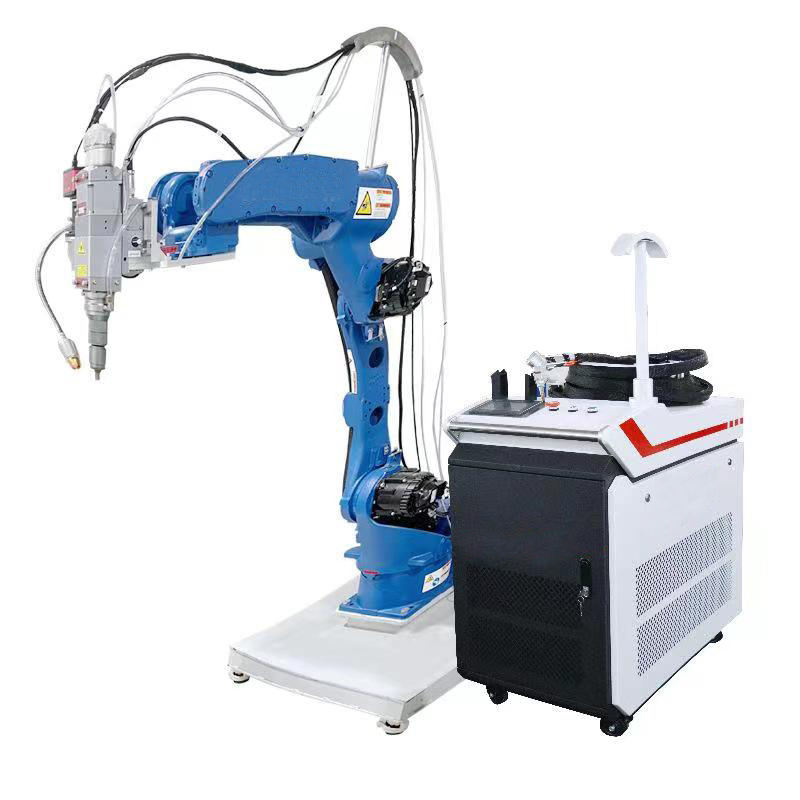
Robot Welding Machine
Why More Factories Are Switching to Robot Laser Welding
The manufacturing industry is rapidly moving toward automation.
Traditional welding methods increasingly face problems such as:
- shortage of skilled welders
- inconsistent weld quality
- rising labor costs
- low production efficiency
- unstable long-term production quality
Manual welding quality often depends heavily on operator experience. Different workers may produce different weld results, especially during long production cycles.
Robot laser welding machines solve these problems through automated process control and programmable welding paths.
Once welding parameters are configured, the robotic welding system can repeatedly perform the same welding process with extremely high consistency.
This is especially important for industries requiring:
- mass production
- precision welding
- continuous operation
- stable product quality
- automated manufacturing integration
Many automotive manufacturers, battery factories, and industrial equipment producers are already replacing traditional welding methods with robotic laser welding solutions.
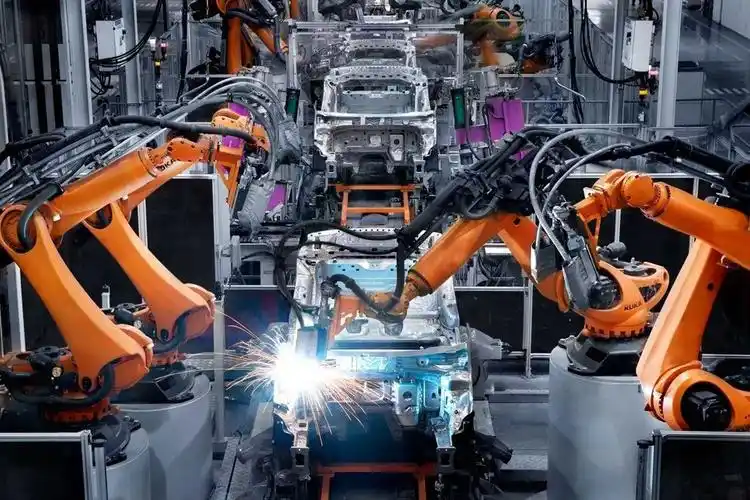
Robot Laser welding in automotive industry
What Is a Robot Laser Welding Machine
A robot laser welding machine combines several core systems into one automated welding platform.
Main Components of the System
The complete robotic welding system usually includes:
- industrial robot arm
- fiber laser source
- laser welding head
- water cooling system
- welding controller
- wire feeder system
- safety enclosure
- positioner or rotary fixture
- seam tracking system (optional)
- vision positioning system (optional)
The robotic arm controls the welding path and movement, while the fiber laser provides concentrated welding energy for precision welding applications.
Compared with traditional arc welding robots, laser welding robots offer:
- narrower weld seams
- lower heat input
- smaller heat affected zones
- faster welding speed
- cleaner weld appearance
Why Robot Laser Welding Is Better Than Manual Welding
Higher Welding Consistency
Manual welding quality can vary depending on operator skill, fatigue, and working conditions.
A robot laser welding machine performs welding according to pre-programmed paths and parameters, ensuring:
- uniform weld penetration
- stable weld width
- consistent welding appearance
- repeatable production quality
This is critical for automated industrial production.
24/7 Continuous Production
Unlike manual welders, robotic welding systems can operate continuously without fatigue.
This significantly improves:
- production efficiency
- production capacity
- delivery speed
- factory utilization rate
For large-scale manufacturers, continuous automated welding greatly reduces production bottlenecks.
Lower Labor Dependency
Many factories face increasing shortages of experienced welders.
Robot laser welding systems reduce reliance on highly skilled operators because:
- welding paths are programmable
- parameters are digitally controlled
- operation difficulty is reduced
Operators mainly monitor the system instead of manually performing the welding process.
Better Welding for Complex Structures
Industrial robotic arms provide multi-axis motion control, allowing flexible welding of:
- curved structures
- irregular parts
- corners and edges
- deep welding positions
- multi-angle joints
This makes robotic laser welding especially suitable for complex industrial components.
Common Welding Challenges in Automated Production
Aluminum Welding Challenges
Aluminum is one of the most difficult materials to weld because of:
- high reflectivity
- high thermal conductivity
- unstable molten pool behavior
- easy porosity formation
Traditional welding often causes:
- burn-through
- excessive deformation
- unstable penetration
- poor weld consistency
Robot laser welding systems help improve aluminum welding stability through:
- wobble welding technology
- precise energy control
- optimized shielding gas
- programmable welding speed
This is especially important in EV battery tray welding and aluminum structural fabrication.
Galvanized Steel Welding Problems
During galvanized sheet welding, zinc vapor may generate excessive spatter.
This can lead to:
- unstable weld seams
- lens contamination
- optical damage
- increased maintenance costs
Robot laser welding systems help stabilize the process through:
- accurate heat input control
- optimized gas flow
- programmable welding trajectories
- stable focal positioning
For galvanized materials, shielding gas parameters must be carefully controlled to reduce zinc vapor influence and protect optical components.
Stainless Steel Heat Discoloration
Traditional welding often creates excessive heat affected zones on stainless steel surfaces.
Laser welding minimizes:
- oxidation
- discoloration
- deformation
This improves final product appearance and reduces post-processing requirements.
Key Technologies in Robot Laser Welding
Wobble Laser Welding
Wobble welding technology moves the laser beam in controlled oscillation patterns during welding.
Benefits include:
- improved gap bridging ability
- wider weld seams
- more stable molten pools
- reduced porosity risk
- better welding consistency
This is especially useful for aluminum and thin sheet welding.
Seam Tracking System
In automated production, workpiece positioning errors may affect welding quality.
Seam tracking systems automatically adjust the welding path in real time, helping maintain:
- accurate weld alignment
- stable penetration
- reduced welding defects
This is essential for long weld seams and high-volume production lines.
Vision Positioning System
Vision systems improve robotic welding accuracy by detecting:
- welding positions
- joint locations
- part deviations
This helps improve automation flexibility and reduce fixture positioning requirements.
Typical Applications of Robot Laser Welding Machines
EV Battery Tray Welding
Robot laser welding is widely used for:
- aluminum battery trays
- battery housings
- cooling plates
- energy storage enclosures
The process requires:
- low deformation
- airtight welding
- stable penetration
- high production consistency
Automotive Manufacturing
Robot laser welding systems are commonly used for:
- automotive chassis
- seat frames
- exhaust systems
- structural reinforcements
- body components
Automotive production requires high repeatability and continuous automated operation.
Stainless Steel Cabinet and Enclosure Welding
Laser welding provides smooth and clean weld seams for:
- electrical cabinets
- metal enclosures
- kitchen equipment
- stainless steel furniture
Compared with traditional welding, post-polishing work can be significantly reduced.
Sheet Metal Fabrication
Robot laser welding machines are ideal for:
- thin sheet welding
- long seam welding
- precision metal fabrication
- high-speed automated production
The low heat input helps reduce deformation on precision sheet metal parts.
Robot Laser Welding vs Traditional Welding
| Item | Robot Laser Welding | Traditional TIG/MIG Welding |
|---|---|---|
| Automation Level | Fully Automated | Mostly Manual |
| Welding Speed | High | Medium |
| Heat Input | Low | Higher |
| Deformation | Small | Larger |
| Weld Consistency | Excellent | Operator Dependent |
| Labor Requirement | Low | High |
| Long Continuous Welding | Excellent | Limited |
| Thin Sheet Welding | Very Suitable | Difficult |
| Complex Geometry Welding | Excellent | Limited |
Why Choose ZS Laser Robot Welding Solutions
ZS Laser focuses on industrial laser welding automation solutions for modern manufacturing industries.
We provide:
- robotic laser welding systems
- aluminum welding solutions
- automated welding integration
- customized fixtures and positioners
- seam tracking solutions
- wire feeding systems
- turnkey automation projects
Our engineering team helps customers optimize:
- welding stability
- production efficiency
- welding quality
- automation integration
- long-term operating costs
Conclusion
Robot laser welding machines are transforming modern industrial manufacturing through automation, precision, and high production efficiency.
Compared with traditional manual welding, robotic laser welding systems provide:
- higher consistency
- lower labor dependency
- better welding quality
- improved automation capability
- continuous large-scale production capacity
As industries continue moving toward intelligent manufacturing and automated production, robot laser welding is becoming an essential solution for automotive, EV battery, sheet metal, and precision fabrication industries.
If you are looking for an automated robot laser welding solution for your production line, ZS Laser can provide customized systems based on your materials, welding requirements, and production goals.

WhatsApp
Scan the QR Code to start a WhatsApp chat with us.