 ZS Laser Equipment

The real technical principles behind plastic laser marking
In the livestock industry, animal ear tags play a crucial role in identification, traceability management, and disease control. These ear tags need to remain clearly legible in long-term outdoor environments, including harsh conditions such as sunlight, humidity, temperature changes, and mechanical wear.
Many buyers are initially recommended by equipment suppliers to use UV laser marking machines, as they claim that plastic ear tags require UV laser marking to achieve good results. Is this true?
While UV lasers do offer excellent marking quality, this isn’t entirely true in actual production. Many ear tag manufacturers actually use ordinary fiber laser marking machines. The core reason lies in the formulation design of the ear tag material itself. The following content will provide an in-depth analysis of the reasons for this discrepancy in the market.
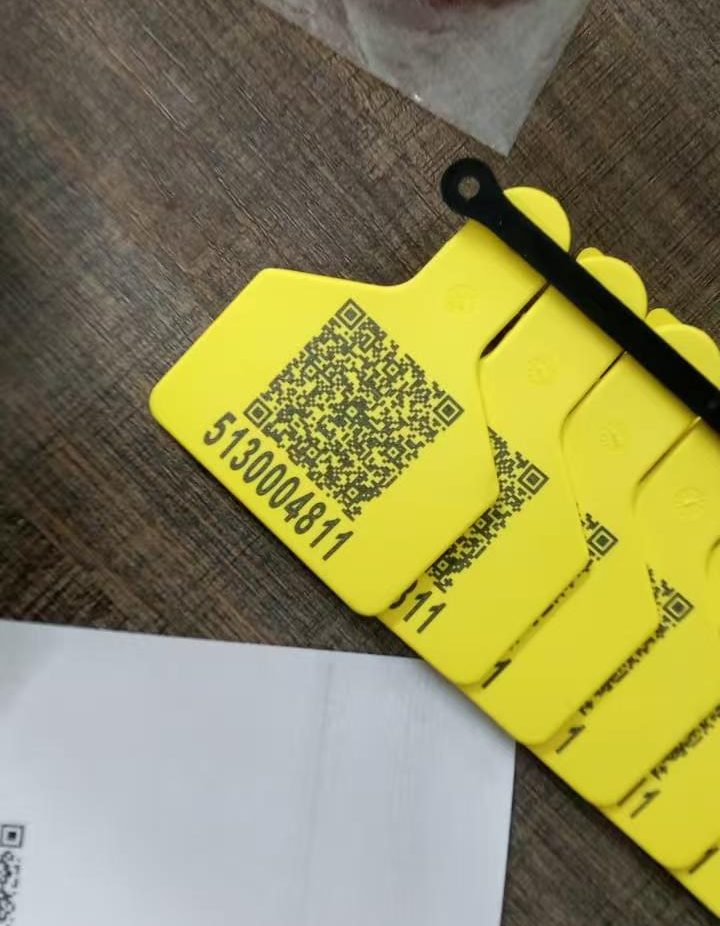
Ear tag laser marking
First, let’s look at common materials used for animal ear tags. Animal ear tags are typically made of thermoplastic materials with high durability and flexibility. Common materials include:
PP (Polypropylene)
PE (Polyethylene)
ABS
TPE (Thermoplastic Elastomer)
TPU (Thermoplastic Polyurethane)
EVA copolymer (Ethylene-Vinyl Acetate)
Other durable plastics and synthetic polymers.
These materials are chosen because they possess:
Excellent durability
Good weather resistance
UV resistance
Moisture resistance
Good flexibility, preventing cracking due to animal activity
High-quality ear tags are typically required to remain legible for many years in outdoor environments, and material warranties usually extend to three years or more.
Why is UV laser theoretically more suitable for plastics?
From a purely technical perspective, UV laser is a “cold processing” method, thus considered ideal for marking plastics.
Its advantages include:
Minimally low heat-affected zone
Clean edges
High contrast
Suitable for sensitive plastic materials
However, in industrial production, theory and practice often differ.
The key to fiber laser marking: laser marking additives
In modern plastic manufacturing, laser marking additives (also known as laser powder or laser-sensitive agents) are added to many ear tag materials.
These additives are widely used in engineering plastics and modified plastics, such as:
PP, PE, ABS
TPU
PA, PBT, POM
TPE/TPV/TPR
PET, PC, and various coating materials.
These additives alter how the material absorbs laser energy.
When irradiated by a laser, the material does not simply melt or char, but instead produces a controllable color reaction on its surface.
How laser additives improve marking results:
When laser marking additives are mixed into raw materials, they can achieve:
More stable laser absorption
Clearer surface contrast
Reduced material damage
Higher marking speed
Multiple color marking effects are possible, such as:
Black
White
Gray
Gold
Colored characters and patterns
This allows ordinary fiber laser equipment to achieve high-quality permanent marking on plastic surfaces that were previously difficult to mark.
Why Manufacturers Prefer Fiber Laser Marking Machines
Despite the superior performance of ultraviolet lasers, many factories still choose fiber laser equipment for very practical reasons:
1. Lower Equipment Costs
Fiber laser equipment offers a significant cost advantage over ultraviolet lasers.
2. Higher Production Efficiency
Fiber lasers are suitable for high-speed mass production, particularly for large-scale ear tag manufacturing.
3. Longer Lifespan
Fiber lasers have a long lifespan and low maintenance costs.
4. High Compatibility with Modified Plastics
When laser marking powder has been added to the material, fiber lasers can achieve stable and clear marking results.
Therefore, fiber laser marking has become one of the mainstream solutions in the ear tag industry.
Laser marking powder combined with fiber laser marking machines is not limited to animal ear tags. Laser marking additives have a wide range of applications, especially suitable for industries with high requirements for permanence and anti-counterfeiting, including: automotive buttons and interior parts; cosmetic packaging; anti-counterfeiting labels; appliance casings; switch panels and electrical components; HDPE and PET containers; nylon and PBT connectors; plastic seals and cables; 3C electronic products; charger and power supply casings; and plastic pipes. These fields all have high requirements for marking clarity, durability, and traceability.
How to Choose the Right Marking Solution
For ear tag manufacturers, the best solution depends on the material formulation:
Ordinary plastics without laser additives → UV laser recommended
Modified plastics with laser marking additives → Fiber laser offers better cost-effectiveness
Understanding the material itself is often more important than choosing the most expensive equipment.
For mass production, we recommend using a marking machine with vision recognition and a conveyor belt. This type of marking machine can greatly improve marking efficiency, and its production process is shown in the video below.
With the development of materials science, laser marking technology for animal ear tags is also constantly advancing. Although ultraviolet lasers are still considered a high-end solution, fiber laser marking machines can now achieve stable, durable, and cost-effective marking results thanks to the widespread use of laser engraving additives. For specific selection advice, please contact us directly, and we will recommend a suitable marking machine product based on your specific application.

WhatsApp
Scan the QR Code to start a WhatsApp chat with us.