 ZS Laser Equipment

In the process of laser welding, porosity is one of the most common and also the most difficult welding defects to completely eliminate. Even under conditions of optimized parameters and stable equipment, porosity may still exist to a certain extent. This is not simply a process issue, but a result determined by the physical mechanisms of laser welding.
The root causes can be summarized as the combined effect of molten pool characteristics, keyhole dynamic behavior, and the high sensitivity of materials and processes. ZS Laser will explain them one by one below.
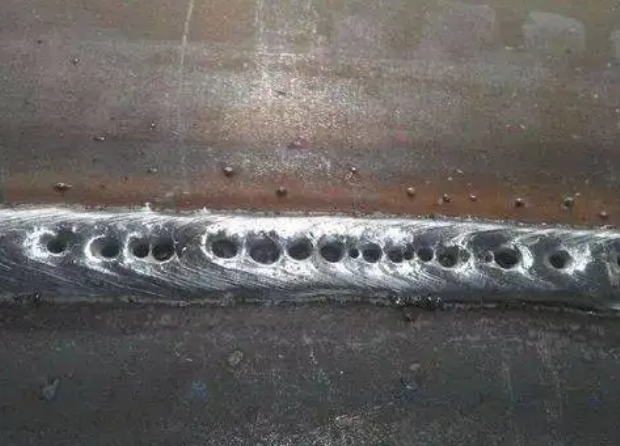
Hydrogen porosity in welding
1.Small molten pool and rapid cooling in laser welding make it difficult for gas to escape completely
Laser welding is a high energy density processing method. During welding, the high-energy laser beam acts rapidly on the workpiece, and it has the following typical characteristics:
The molten pool size is very small
The heating and cooling process is extremely fast
The solidification time is very short
Under these conditions:
The dissolved gases in the metal (such as hydrogen) and the metal vapor generated during the welding process often do not have enough time to evaporate and escape from the molten pool, and are locked inside the weld as the metal solidifies, which leads to the formation of porosity.
In contrast, traditional welding (such as TIG welding) has a larger molten pool and slower cooling, giving gases more time to float up and escape, so porosity is relatively easier to control.
2.Keyhole dynamic instability is the core reason
In deep penetration laser welding, the welding process relies on the “keyhole” structure: the laser energy causes local vaporization of the metal, forming a narrow channel, and the molten metal flows around the keyhole to complete the welding.
However, the keyhole is essentially a dynamic equilibrium system, affected by multiple forces, such as:
Metal vapor recoil pressure
Surface tension
Gravity
Forces generated by molten pool flow
When this balance is broken, the following may occur:
Keyhole oscillation
Keyhole shrinkage or collapse
Unstable vapor ejection
During these transient processes, gas can easily be entrapped into the molten pool and rapidly solidified, forming porosity. This is also why porosity in laser welding has randomness and is not completely predictable.
3.Material factors amplify the risk of porosity
Laser welding is highly sensitive to material conditions, and any small variation will be amplified. Common influences include:
(1) Surface contamination: oil and moisture decompose at high temperatures to generate gas, directly increasing the probability of porosity.
(2) Galvanized materials: the boiling point of zinc (about 907°C) is much lower than the melting point of steel, and it evaporates violently during welding, leading to: spatter, molten pool disturbance, and increased porosity.
(3) Aluminum alloys: aluminum alloys have a high solubility for hydrogen, and the solubility drops sharply during cooling, causing hydrogen to precipitate but not escape in time, thus forming porosity.
Therefore, it can be seen that:
The same material can be welded stably in traditional welding, but is more likely to have porosity problems in laser welding.
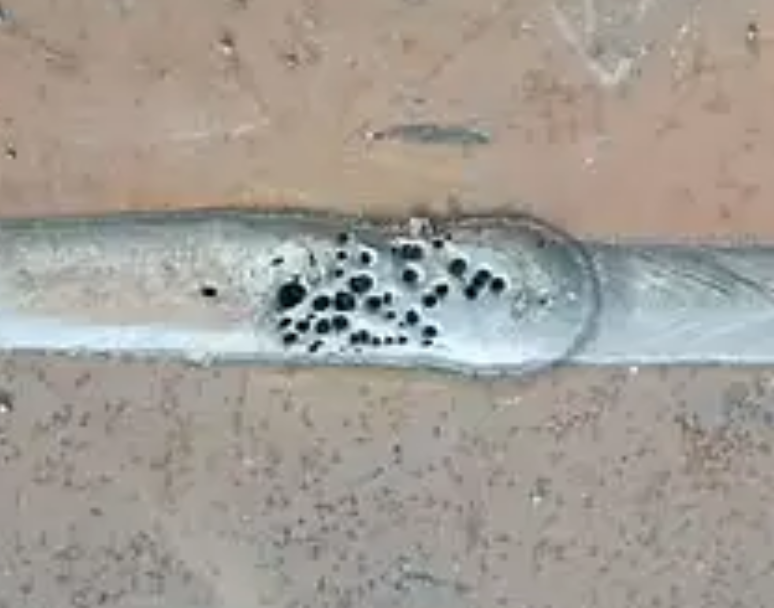
Nitrogen porosity in welding
4.Higher difficulty in shielding gas control
The role of shielding gas in laser welding is not only to prevent oxidation, but also directly affects the stability of the molten pool. If the following situations occur:
Excessive gas flow may disturb the molten pool
Improper flow direction may affect metal flow
Uneven gas coverage may lead to local oxidation
These issues may lead to:
Keyhole instability
Molten pool fluctuation
Gas entrainment
Ultimately increasing the risk of porosity.
5.Narrow process window and high sensitivity to disturbances
Another important characteristic of laser welding is that the process window is very narrow.That is to say: the allowable variation range of parameters such as power, speed, focal position, assembly gap, and material condition is very small.For example:
A slight deviation in focus can cause a significant change in energy density
A slightly larger gap may lead to unstable welding
Changes in material surface condition may cause fluctuations in absorptivity
These small variations will affect:
Keyhole stability, molten pool flow, and gas escape paths, thereby directly leading to porosity.
6.Uncertainty caused by absorptivity and plasma effects
During laser welding:The absorptivity of metal to the laser is not constant, and it changes with temperature, surface condition, and melting state.At the same time:Metal vapor may form plasma, which can absorb or scatter the laser.
This means that even if the laser output power is stable, the actual energy entering the molten pool may still fluctuate. This fluctuation further increases the uncertainty of porosity formation.
Since porosity is difficult to completely avoid, how can it be minimized?
From the above analysis, it can be seen that porosity is closely related to the physical mechanism of laser welding. Therefore, in most practical applications, it is not realistic to “completely eliminate porosity.”
However, porosity can be significantly reduced through process control. In actual production, the key to reducing porosity is to reduce gas sources at the origin and improve molten pool stability.
The following are the most direct and effective control directions:
1.Material pre-treatment: reducing gas sources from the origin
Among all influencing factors, material condition is the most fundamental and also the most easily overlooked.
Taking carbon steel as an example, the material surface usually has:
Oil (processing residue)
Dust or impurities
Oxide layer or rust
Galvanized layer or other surface coatings
These substances will rapidly decompose or evaporate under the high temperature of the laser, generating gas and entering the molten pool, thus forming porosity.
Therefore, necessary pre-treatment must be carried out before welding:
Degreasing (cleaning or wiping)
Dust removal (keeping the surface clean)
Rust removal (grinding or chemical treatment)
Pre-treatment or process adjustment for coated materials
As long as these surface factors are effectively controlled, the probability of porosity can be significantly reduced.
2.Shielding gas control: stabilizing the molten pool environment
The second key factor is the use of shielding gas.In laser welding, it is generally recommended to use inert gases, such as:
Argon (Ar)
Nitrogen (N₂)
Their main functions include:
Isolating air and preventing oxidation
Stabilizing the molten pool and keyhole structure
Reducing the entry of external gases (such as oxygen and hydrogen) into the molten pool
If the shielding gas is properly controlled, it can effectively reduce:
Gas entrainment, oxidation reactions, and molten pool disturbance, thereby greatly reducing the formation of porosity.
It should be noted that:
The gas flow rate should not be too high (otherwise it will disturb the molten pool)
The nozzle angle and position need to be reasonably designed
How to effectively control porosity in laser welding? Contact ZS Laser
Although porosity is difficult to completely avoid, it can be effectively controlled within an acceptable range through proper process and equipment configuration.
ZS Laser focuses on laser welding applications and provides customers with:
Free sample testing
Welding process optimization suggestions
Customized solutions
Welcome to contact us to obtain a more stable and reliable laser welding solution.

WhatsApp
Scan the QR Code to start a WhatsApp chat with us.