 ZS Laser Equipment

Laser spot welding vs resistance spot welding is a common comparison for manufacturers looking to improve welding quality, efficiency, and production flexibility.Both processes are used to join metal parts by creating localized weld points. However, their working principles, performance, and applications are fundamentally different.Understanding these differences is essential when choosing the right welding solution for your production.
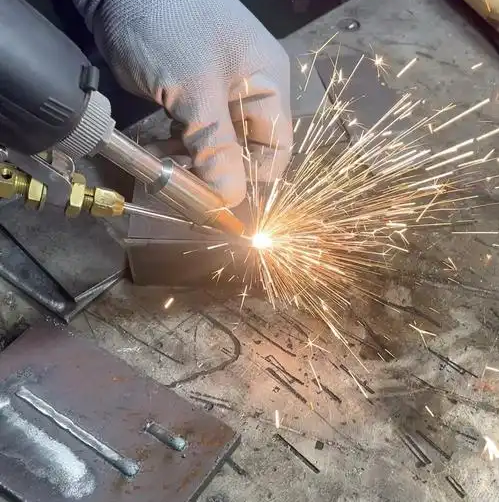
Laser spot welding
What Is Resistance Spot Welding?
Resistance spot welding is a traditional welding method that joins metal sheets by generating heat through electrical resistance.
In this process:
1.Two metal sheets are clamped together by copper alloy electrodes
2.A high electrical current passes through the contact point
3.Heat is generated due to resistance
4.The material melts and forms a weld nugget
This process typically occurs within milliseconds and is widely used in industries such as automotive manufacturing, where thousands of weld points are required on a single product.
What Is Laser Spot Welding?
Laser spot welding is a modern welding process that uses a focused laser beam to create a weld point.
In this process:
1.A high-energy laser beam is focused on a small area
2.The material absorbs the laser energy and melts locally
3.A precise and controlled weld spot is formed
Unlike resistance welding, this is a non-contact process, allowing greater flexibility and precision.
Key Differences Between Laser Spot Welding and Resistance Spot Welding
| Feature | Resistance Spot Welding | Laser Spot Welding |
| Working Principle | Electrical resistance heating | Laser energy melting |
| Contact | Contact (electrodes required) | Non-contact |
| Heat Input | High and less controlled | Highly concentrated and precise |
| Heat-Affected Zone | Larger | Very small |
| Weld Appearance | Visible electrode marks | Clean and refined |
| Electrode Wear | Yes (regular replacement) | No |
| Process Control | Limited | Highly controllable |
| Automation | Fixed structure | Flexible integration |
Process Characteristics and Technical Comparison
Resistance spot welding relies on the combination of high current and mechanical pressure, which makes it effective for high-speed production but limits flexibility.
Laser spot welding, on the other hand, uses focused energy without physical contact, enabling:
1.More precise energy control
2.Reduced thermal distortion
3.Better consistency across complex geometries
This makes laser welding more suitable for modern manufacturing environments where precision and quality are critical.
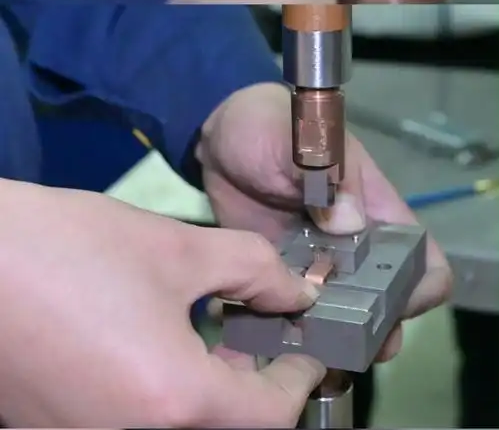
Spot welding
Application Comparison
Automotive Industry
Resistance spot welding is widely used in car body assembly due to its speed and low cost
Laser spot welding is used in precision components, sensors, and lightweight structures
Lithium Battery Manufacturing
Resistance spot welding is commonly used for nickel tab welding in cost-sensitive production
Laser spot welding is preferred for high-end battery applications requiring consistency and precision
Sheet Metal and Fabrication
Resistance welding is suitable for repetitive and simple joints
Laser welding offers better appearance and flexibility for customized production
Cost and Efficiency Comparison
Resistance Spot Welding
Lower initial equipment cost
Ongoing maintenance due to electrode wear
Limited flexibility in production
Laser Spot Welding
Higher initial investment
Lower maintenance cost
Higher efficiency and automation potential
Reduced rework and post-processing
In many modern applications, laser welding delivers better long-term value despite higher upfront cost.
How to Choose Between Laser Spot Welding and Resistance Spot Welding
Choosing between these two technologies should be based on application requirements rather than material alone.
Choose Resistance Spot Welding if:
You focus on large-scale production
Cost is the primary concern
Product structure is simple and repetitive
Choose Laser Spot Welding if:
You require high precision and consistency
Product appearance is important
You need flexible or automated production
You want to reduce labor dependency
Important Considerations
For thick materials, traditional welding methods may still be more suitable
For high-reflective materials (such as copper), laser welding requires parameter optimization and testing
Why Laser Spot Welding Is Growing Rapidly
With increasing demand for:Lightweight materials,high-quality finishes qne automation,More manufacturers are adopting laser welding solutions.Because laser spot welding provides:
Faster processing speed
Lower heat input
More stable and repeatable results
This trend is especially strong in industries such as electronics, automotive components, and battery manufacturing.
Conclusion And Contact Us
Both laser spot welding and resistance spot welding play important roles in modern manufacturing.
Resistance spot welding remains effective for high-volume, low-cost production. However, laser spot welding is becoming the preferred choice for applications requiring precision, flexibility, and higher quality.If your production demands better performance and long-term efficiency, laser spot welding is a future-ready solution.
Contact Us
If you are considering upgrading from resistance spot welding to laser technology, we can help you evaluate your application.
We provide:
Sample welding tests
Process optimization
Equipment recommendations
Customized solutions
Contact us to find the most suitable welding solution for your production needs.

WhatsApp
Scan the QR Code to start a WhatsApp chat with us.