 ZS Laser Equipment

A portable welder is widely used in workshops, construction sites, and repair jobs where flexibility and mobility are essential.
But with so many options available today, many users are asking:
What exactly is a portable welder?
Which type is best for my application?
Should I choose a traditional welder or a portable laser welder?
In this guide, we’ll break down everything you need to know about portable welders, including types, applications, and how to choose the right solution.
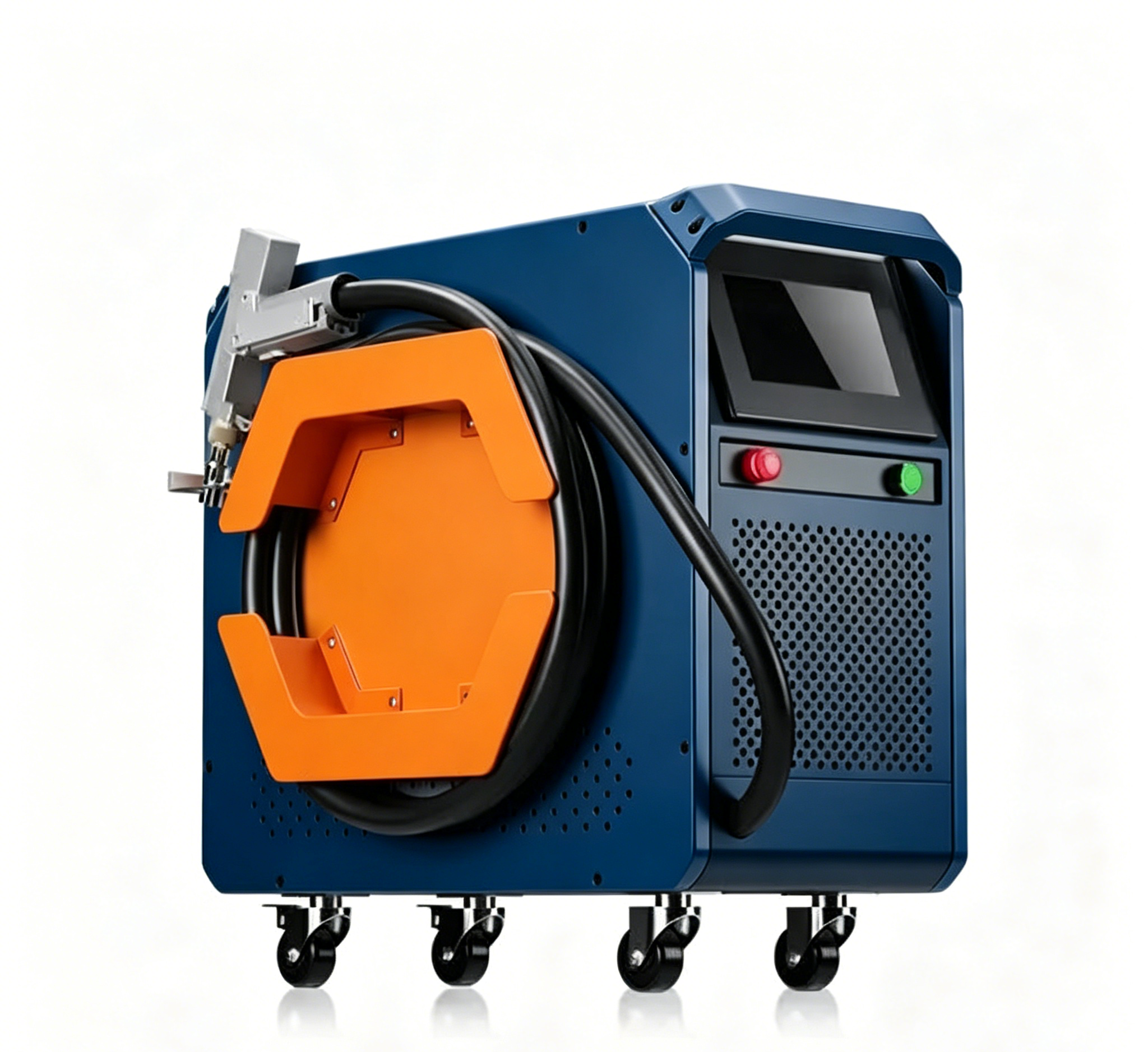
What Is a Portable Welder?
A portable welder is a compact and lightweight welding machine designed for easy transportation and on-site use.Compared with traditional stationary welding systems, a portable welder offers:
Smaller size and lighter weight
Easy setup and operation
Flexibility for different working environments
These make portable welders commonly used in:
Field repair work
Small workshops
Construction and installation projects
Types of Portable Welders
There are several types of portable welders available on the market, each suited for different applications.
1.MIG Portable Welder
MIG (Metal Inert Gas) welders are popular for general-purpose welding.
Advantages:
Easy to learn
Suitable for thin to medium metals
Fast welding speed
Limitations:
Requires shielding gas
Less precise for fine welding
2.TIG Portable Welder
TIG (Tungsten Inert Gas) welders are known for high-quality welds.
Advantages:
Clean and precise welds
Suitable for stainless steel and aluminum
Limitations:
Requires skilled operators
Slower welding speed
3.Stick Portable Welder
Stick welders are simple and robust.
Advantages:
Works in outdoor environments
Low equipment cost
Limitations:
Lower weld quality
More post-processing required
4.Portable Laser Welder (New Trend)
The portable laser welder is a new generation of welding technology.
Advantages:
High precision and speed
Minimal heat-affected zone
Very clean weld appearance
Easy to operate (low skill requirement)
Limitations:
Higher initial investment
Not suitable for thick materials
This type of portable welder is becoming increasingly popular in modern manufacturing.
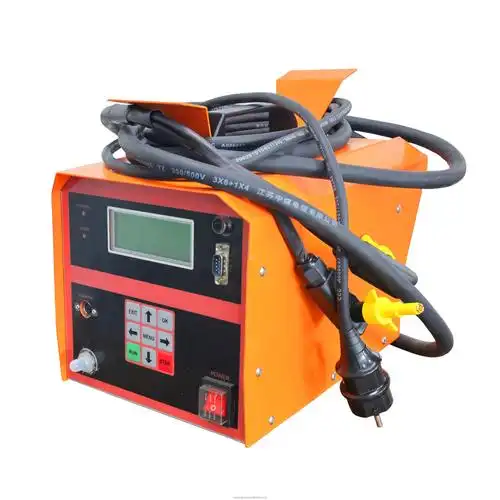
Images of Portable electrofusion welding machines
Portable Welder Applications
A portable welder can be used across many industries:
Metal Fabrication
Stainless steel structures
Cabinets and enclosures
Construction and Installation
Doors and windows
Railings and frames
Automotive Repair
Body repair
Component welding
Maintenance Work
On-site repair
Equipment maintenance
With the rise of laser technology, many industries are now shifting toward portable laser welders for higher efficiency and better quality.
Traditional Portable Welder vs Portable Laser Welder
Understanding the difference between traditional welders and laser welders is critical.
| Feature | Traditional Portable Welder | Portable Laser Welder |
| Welding Speed | Medium | High |
| Skill Requirement | High | Low |
| Weld Quality | Moderate | High |
| Heat Input | High | Low |
| Post-Processing | Required | Minimal |
A portable laser welder provides a more efficient and modern solution, especially for precision welding and high-quality requirements.
How to Choose the Right Portable Welder
Choosing the right portable welder is not just about the material. In reality, most welding machines can handle common metals like carbon steel, stainless steel, and aluminum.
The key decision should be based on your application, production requirements, and welding expectations.
1.Choose Based on Your Application Scenario
If your work requires:
High welding speed
Clean weld appearance
Minimal deformation
Easy operation with low skill requirements
Then a portable laser welder is the better choice.Laser welding delivers concentrated energy directly to the weld area, resulting in:
Faster processing
Smaller heat-affected zone
Little or no post-processing
This makes it ideal for:
Sheet metal fabrication
Stainless steel products
Decorative and visible welds
Small and medium batch production
2.Consider Material Thickness
Material thickness is a critical factor when selecting a portable welder.
For thin to medium materials → portable laser welding machine is highly efficient
For materials thicker than 8 mm → laser welding is generally not recommended
In thick plate applications, traditional welding methods may be more suitable.
3.Pay Attention to Special Materials
Some materials require additional evaluation.
For example:
High-reflective metals such as copper and certain aluminum alloys
These materials can be welded using laser technology, but require:
Careful parameter adjustment
Process verification
It is recommended to confirm with the supplier and perform sample testing before production.
4.Evaluate Operator Skill Requirements
Traditional portable welders (MIG, TIG, Stick):
Require experienced operators
Steeper learning curve
Welding quality depends heavily on skill
Portable laser welders:
Easier to operate
Short training time
More consistent welding results
For companies facing labor shortages or high training costs, laser welding offers a clear advantage.
5.Compare Efficiency and Production Cost
In real production environments:
Traditional welding:
Slower welding speed
Requires grinding and finishing
Higher labor cost
Portable laser welding:
Faster welding speed
Clean welds with minimal finishing
Lower overall operating cost
Although the initial investment is higher, the long-term efficiency gains often make laser welding more economical.
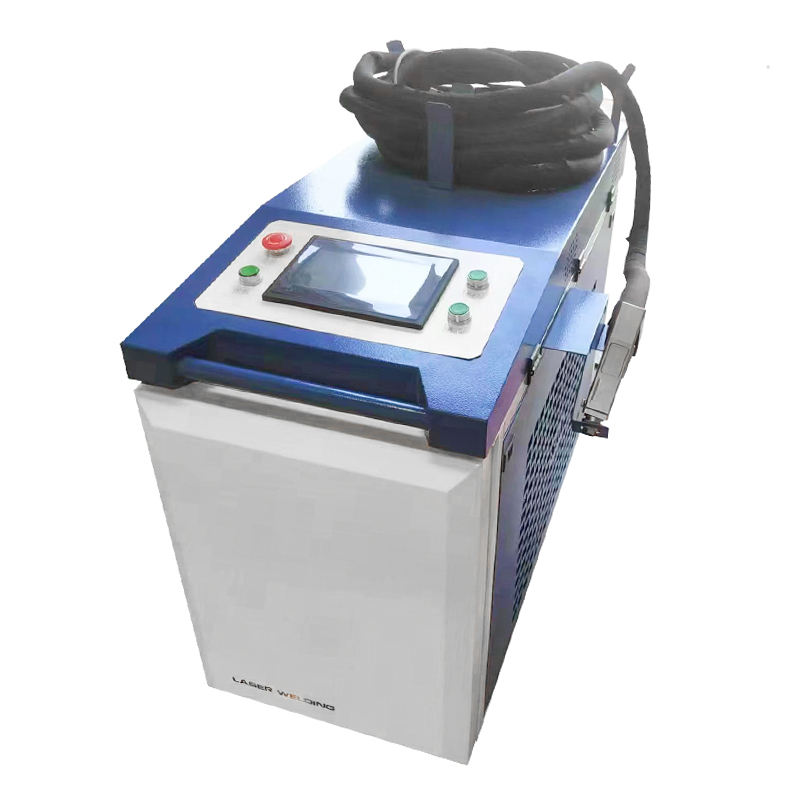
Entry-level handheld laser welding machine
Why Portable Laser Welders Are Gaining Popularity
In recent years, the portable laser welder has become one of the most popular types of portable welder.
Key reasons include:
Lightweight and compact design
No need for complex setup
Faster welding speed
Cleaner welds with minimal finishing
Suitable for a wide range of metals
Compared with traditional systems, a portable laser welding machine offers a better balance between performance and convenience.
FAQ About Portable Welders
What is the best portable welder?
The best portable welder depends on your application. For general use, MIG welders are common, while for precision and efficiency, portable laser welders are becoming the preferred choice.
Can a portable welder weld thick metal?
Yes, but it depends on the power. Higher power machines can handle thicker materials. For laser welders, thickness capability increases with power level.But if it exceeded 8mm,laser welder is not recommended.
Is a portable laser welder worth it?
Yes, especially for users who require high efficiency, clean welds, and reduced labor costs. It is ideal for modern manufacturing and fabrication.
How much does a portable welder cost?
Costs vary widely depending on type and power. Traditional welders are cheaper initially, while portable laser welders have higher upfront cost but lower long-term operating cost.
Conclusion And Contact Us
A portable welder is an essential tool for modern welding applications, offering flexibility, mobility, and efficiency.
While traditional welders like MIG and TIG are still widely used, the portable laser welder is rapidly becoming the preferred solution due to its:
Higher efficiency
Better weld quality
Easier operation
If you are looking for a future-proof solution, a portable laser welding machine is worth serious consideration.
Contact Us
If you are interested in a portable laser welder or want to evaluate whether it fits your application, feel free to contact us.
We offer:
Sample welding tests
Technical consultation
Customized solutions

WhatsApp
Scan the QR Code to start a WhatsApp chat with us.