 ZS Laser Equipment

In industrial manufacturing, laser welding is widely used due to its advantages of high precision, high efficiency, and low heat input. It is commonly applied in scenarios such as automotive electronics (MQB modules, sensors), 3C flexible and rigid boards, and plastic components.
However, many practitioners, especially beginners, often encounter various problems during operation or equipment selection. These issues may affect welding quality or lead to choosing unsuitable equipment.
Based on years of experience in laser welding equipment development, sample testing, and mass production, ZS Laser has summarized 5 of the most common and important questions. This guide can be used both as a practical reference for engineers and as a decision-making guide for buyers.
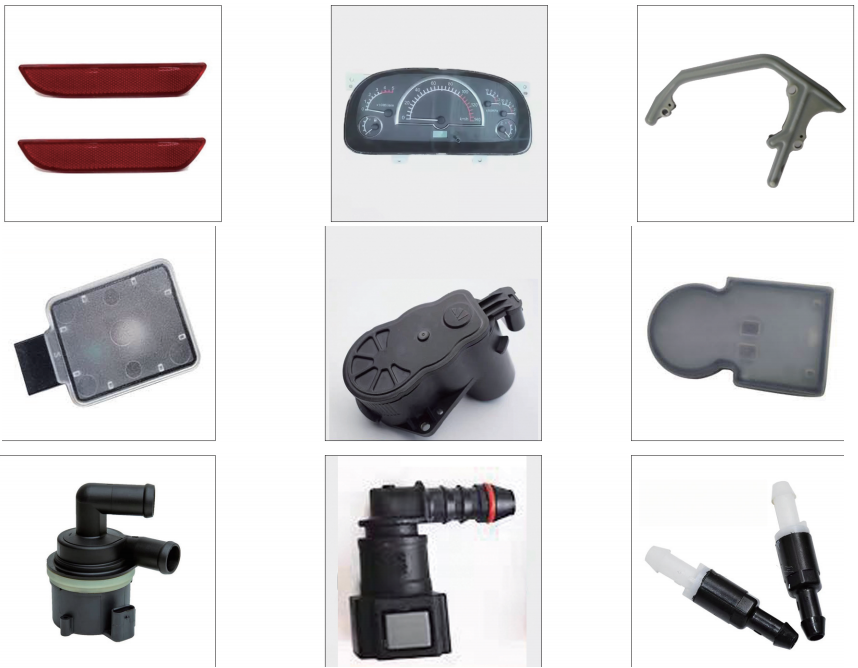
Automotive parts welding samples
1.Is laser welding suitable for all materials?
This is one of the most basic and most frequently asked questions.
The answer is clear: not all materials are suitable. The key depends on the material’s thermoplastic properties or thermal conductivity. However, most mainstream industrial materials can be covered.
Plastic materials
Laser welding is only suitable for thermoplastics, such as ABS, PP, PC, PE, PA, PVC, and PMMA. These materials can melt when heated and solidify after cooling, which matches the mechanism of laser welding.
Thermosetting plastics, such as epoxy resin, cannot be melted and therefore cannot be welded by laser.
Metal materials
Laser welding is suitable for most metals and alloys, including copper, aluminum, iron, stainless steel, gold, and silver. It is especially suitable for precision metal pins, such as automotive sensor pins and electronic component pins.
However, different metals have different thermal conductivity, so welding parameters must be adjusted. For example, aluminum has high thermal conductivity and requires higher laser power density.
Practical suggestion
If you are not sure whether your material (such as modified plastics or special alloys) is suitable, it is recommended to carry out small-batch sample testing first to avoid risks in mass production.
2.Why do cold soldering or bridging occur in laser welding, and how to solve it?
Cold soldering and bridging are common problems in laser welding and can seriously affect product quality, especially in automotive electronics and 3C precision applications.
The main causes are parameter mismatch, unstable feeding, and positioning deviation.
Solutions
First, adjust the key parameters
including laser power, welding speed, and defocus distance.
For low melting point materials such as PP, reduce power and increase speed.
For high melting point materials such as PC or metals, increase power and reduce speed.
Second, control the feeding process.
For solder wire welding, ensure stable and uniform feeding. Feeding too fast may cause bridging, while feeding too slow may result in weak joints.
For solder paste, the amount applied must be controlled precisely.
Third, ensure accurate positioning.
For precision products such as MQB modules and flexible circuit boards, a CCD vision positioning system is recommended to achieve high alignment accuracy and reduce defects caused by misalignment.
3.Will laser welding cause deformation or yellowing?
Many users worry that the high temperature of laser welding may cause deformation or yellowing, especially when welding precision plastic parts or thin substrates.
In fact, this can be avoided by properly controlling two key factors.
The heat generated by laser welding is concentrated at the welding interface, and the heat-affected zone is very small. As long as heat diffusion is controlled, deformation and yellowing can be avoided.
How to avoid it?
First, control laser parameters.
Avoid excessive power or long welding time. For thin materials and precision plastic parts, a low-power and high-speed welding mode is recommended.
Second, select the appropriate welding process.
For plastic welding, laser transmission welding can be used, where the upper layer is transparent and the lower layer absorbs the laser.
For thin metal parts, pulsed laser welding can help control heat input more precisely.
In practical applications, properly controlled laser welding can achieve no deformation and no discoloration, meeting industrial quality requirements.
4.Is laser welding suitable for prototyping or mass production?
This is a common question when selecting equipment.
The answer is that a well-designed laser welding system can be used for both small-batch prototyping and large-scale production. The key lies in the flexibility and stability of the equipment.
Small-batch prototyping
The main requirements are fast response, adjustable parameters, and low cost. A suitable machine allows quick parameter adjustment and product switching without complex tooling.
Mass production
The main requirements are efficiency, stability, and consistency. The equipment should support automation, such as automatic feeding, positioning, and inspection, to reduce manual operation and improve productivity.
In general, it is better to choose equipment that can handle both prototyping and mass production, so there is no need for additional investment later.
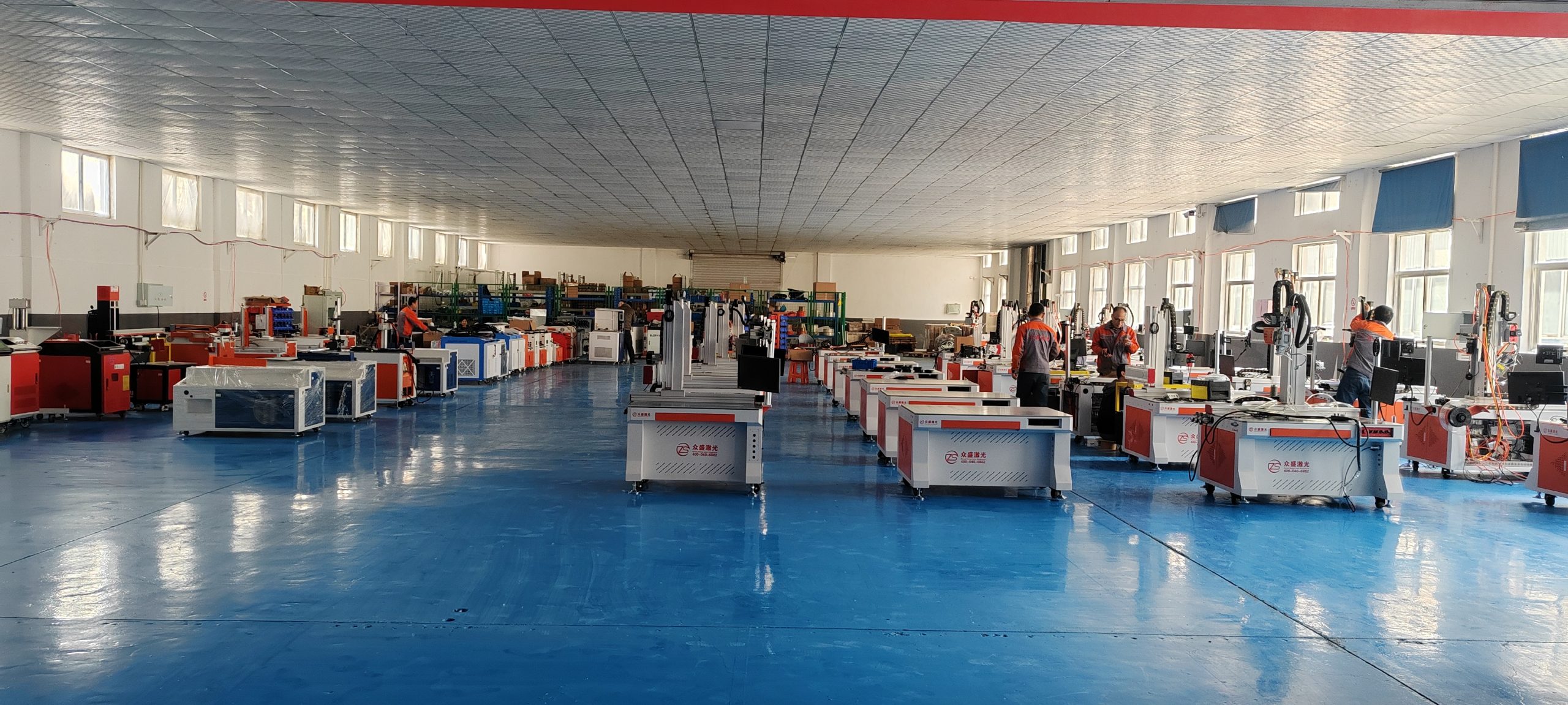
ZS Laser Welding Machines
5.What should you focus on when purchasing a laser welding machine?
Many beginners focus too much on power and price, while ignoring more important factors, which may lead to choosing unsuitable equipment.
There are four key factors to consider.
1.Temperature control capability
Precise control of laser power and welding speed is essential to ensure stable welding quality.
2.Positioning accuracy
For precision applications such as automotive electronics and 3C products, a CCD vision system is recommended to ensure accurate alignment.
3.Compatibility
The equipment should match your materials, product size, and application requirements, and support different types of products.
4.After-sales service
Laser welding equipment requires ongoing support for parameter adjustment and maintenance. It is important to choose a supplier that can provide technical support and sample testing.
Price should not be the main consideration. Stability and suitability are more important for long-term production.
6.Final Summary
The main advantages of laser welding are precision, efficiency, and low heat impact. Most common problems, such as weak welding, deformation, or incorrect equipment selection, are caused by improper parameters or unsuitable equipment.
For beginners, it is recommended to verify the process through sample testing before purchasing. For manufacturers with production needs, choosing equipment that is flexible, stable, and compatible with both prototyping and mass production can help improve efficiency and reduce costs.
If you have further questions about laser welding applications, operation, or equipment selection, you can continue to explore or seek professional advice before making decisions.
At ZS Laser, we offer free sample testing. Our platform laser welding machines can integrate multiple systems, including CCD positioning, precise temperature control, and custom fixture design. Our machines also come with a two-year warranty. Please feel free to contact us if you would like to learn more about our equipment.

WhatsApp
Scan the QR Code to start a WhatsApp chat with us.