 ZS Laser Equipment

Why Is Welding Aluminum to Steel So Difficult?
At first glance, aluminum and steel are both common engineering metals, so many people assume they can be welded together just like stainless steel or carbon steel. In reality, welding aluminum to steel is one of the most challenging applications in metal fabrication.
The biggest challenge comes from the huge difference in their physical and metallurgical properties.
Aluminum melts at approximately 660°C (1220°F), while steel melts at around 1,500°C (2732°F). During conventional fusion welding, aluminum melts long before steel reaches its melting temperature, making it extremely difficult to create a balanced weld pool.
More importantly, when molten aluminum comes into direct contact with molten steel, they rapidly form brittle iron-aluminum intermetallic compounds (IMCs), such as Fe₂Al₅ and FeAl₃. Although these compounds are very hard, they are also extremely brittle.
As the intermetallic layer becomes thicker, the joint loses ductility and strength, making it prone to cracking or failure under relatively small loads.
For this reason, traditional fusion welding methods are generally not recommended for directly joining aluminum to steel.
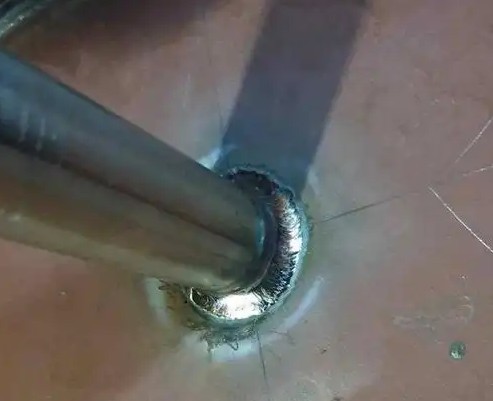
What Welding Methods Are Recommended for Joining Aluminum to Steel?
Although conventional fusion welding is not ideal, aluminum and steel can still be joined successfully using specialized joining technologies.
Laser Brazing
Laser brazing is one of the most widely used solutions in the automotive industry.
Instead of melting both base metals, the laser melts only the filler material, allowing aluminum and steel to be joined while minimizing the formation of brittle intermetallic compounds.
This process is commonly used for:
- Automotive body panels
- Lightweight vehicle structures
- Battery housings
- Dissimilar metal assemblies
Friction Stir Welding (FSW)
Friction Stir Welding is a solid-state welding process.
Because neither aluminum nor steel is fully melted, the amount of brittle intermetallic compounds is greatly reduced, resulting in stronger joints.
FSW is widely used in aerospace, rail transportation, and electric vehicle battery manufacturing.
Mechanical Fastening
For many industrial applications, mechanical joining is a more practical solution.
Common methods include:
- Riveting
- Self-piercing rivets (SPR)
- Clinching
- Bolted connections
These methods eliminate the metallurgical problems associated with fusion welding and are widely used in automotive manufacturing.
Adhesive Bonding
Structural adhesives are increasingly used to join aluminum and steel, especially when vibration resistance, corrosion protection, and lightweight construction are important.
Adhesive bonding is often combined with rivets or mechanical fasteners to improve overall joint performance.
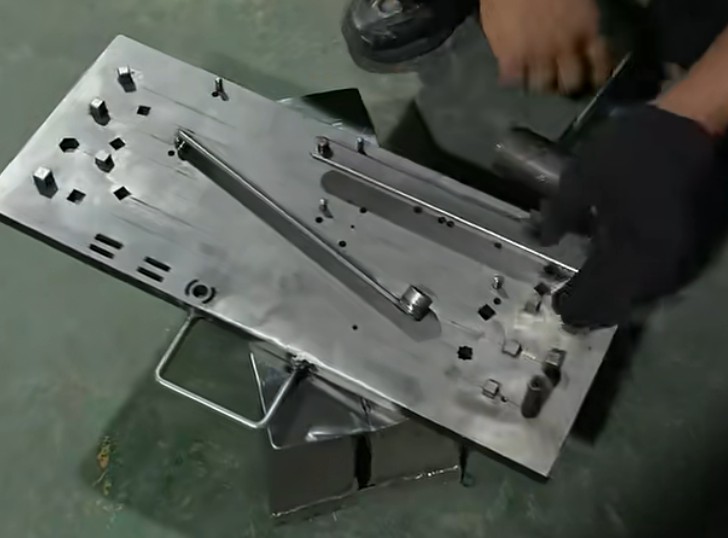
CNC Laser Welding effects
Can Laser Welding Directly Weld Aluminum to Steel?
Advanced industrial laser systems can join aluminum and steel under carefully controlled conditions using techniques such as beam offset, laser brazing, or specially designed process parameters.
However, standard handheld laser welding machines are generally not recommended for directly fusion welding aluminum to steel. The rapid formation of brittle intermetallic compounds makes it difficult to achieve stable and reliable weld quality.
If your application requires joining aluminum to steel, it is recommended to evaluate the material combination and perform welding trials before selecting the most appropriate joining process.

WhatsApp
Scan the QR Code to start a WhatsApp chat with us.