 ZS Laser Equipment

Introduction
With the development of smart manufacturing and industrial automation, welding technology is rapidly evolving toward higher precision and higher efficiency. Among them, the CNC Laser Welder has become one of the most important solutions in modern metal or non-metal joining processes.
Because it is controlled by a Computer Numerical Control (CNC) system, the equipment features extremely high positioning accuracy, excellent repeatability, and stable production quality. Compared with manual welding methods, CNC laser welding significantly reduces human errors and improves production consistency.
Today, CNC laser welding systems are widely used in sheet metal processing, automotive manufacturing, electronic components, and precision machinery industries.
What Is a CNC Laser Welder?
CNC generally refers to Computer Numerical Control, which has been widely applied in various automated machine tools. A CNC Laser Welder is an automated welding system that combines laser welding technology with computer numerical control.
It uses CNC programming to control the motion trajectory of the laser welding head, thereby changing the laser beam path and achieving precise welding.
This system mainly combines two core technologies:
CNC control system — responsible for motion path programming and automation control
Laser welding technology — uses a high-energy laser beam to melt and join workpieces
The final result is a high-precision, non-contact welding process with low thermal distortion and high weld quality.
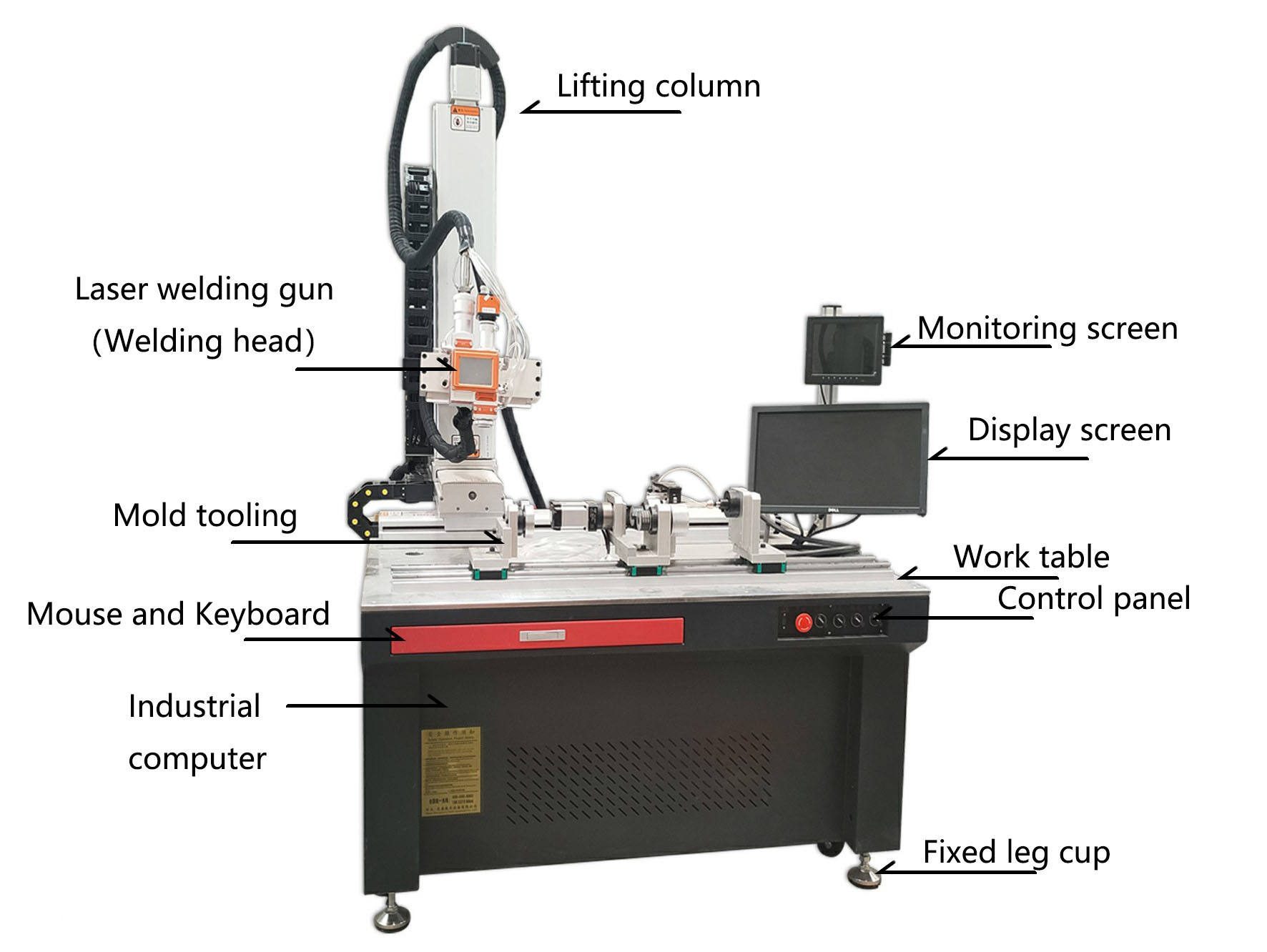
CNC Laser Welder
Working Principle of CNC Laser Welding
The CNC laser welding process typically includes the following steps:
1.Using CAD/CAM or CNC software for welding path programming
2.Generating laser energy through a fiber laser source (for metal welding; for plastic welding, hybrid laser sources are used)
3.Focusing the laser beam into an extremely small spot through an optical system
4.Heating the material with laser energy to form a molten pool
5.Cooling and solidification to form a strong weld seam
Because the energy is highly concentrated, the heat-affected zone is very small, which helps maintain material strength and surface quality.
Types of CNC Laser Welders
In industrial applications, CNC Laser Welders are mainly divided into two structural types:
1. CNC Laser Welding Platform Type
The platform-type CNC laser welder is one of the most common structures in industrial batch production.
This equipment usually consists of a fixed worktable and fixture system, where workpieces are placed at designated positions for processing. After operators load and fix the workpieces in position, the system automatically controls the laser head to complete welding according to pre-programmed paths.
Main features include:
Suitable for batch production and standardized parts
High stability and good repeatability
Suitable for factory environments
Supports multi-station production
Working Range and Axis System
The machining range mainly depends on the size of the working platform and system freedom. The larger the platform, the higher the flexibility, and the larger the workpiece.
The basic motion system usually adopts an XYZ axis structure, and the processing range depends on the travel of each axis. The travel is determined by the lead screw, guide rails, and mechanical structure. The larger the travel, the larger the processing range.
For inner corner welding or complex angle welding, an additional tilting mechanism (such as a pneumatic or motor-driven structure) can be installed on the welding head, allowing the torch to adjust its angle and perform multi-directional welding. This forms what is known as multi-axis welding. Click 3-Axis vs 4-Axis vs 5-Axis How To Choose the Right Laser Welding Machine?to learn the differences between
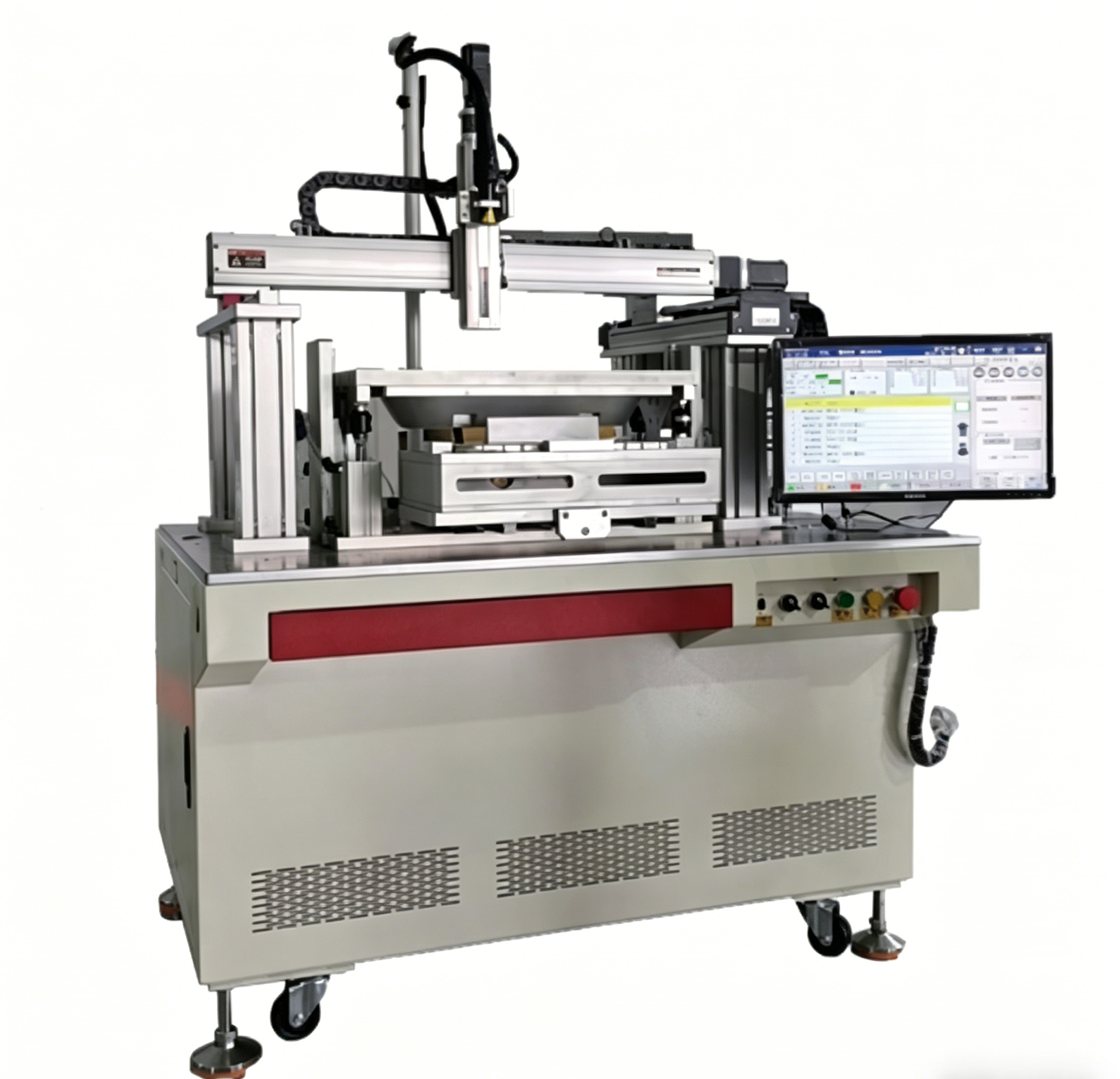
Gantry-type single-station plastic welding machine
different axis CNC laser welding machines.
2. CNC Laser Welding Robotic Arm Type
The second type is the robotic arm CNC laser welding system, which also uses CNC programming control but replaces the fixed platform with an industrial robot.
This system uses a single robotic arm, and its motion freedom can be customized. It combines laser welding with an industrial robotic arm.
Main features include:
High flexibility and strong multi-axis motion capability
Suitable for complex 3D welding paths
Easy integration into automated production lines
Suitable for high-volume continuous production
Compared with platform-type machines, robotic systems offer a larger working range and are more suitable for irregular or spatially complex workpieces.
This classification is based on structure. From the perspective of workpiece type:
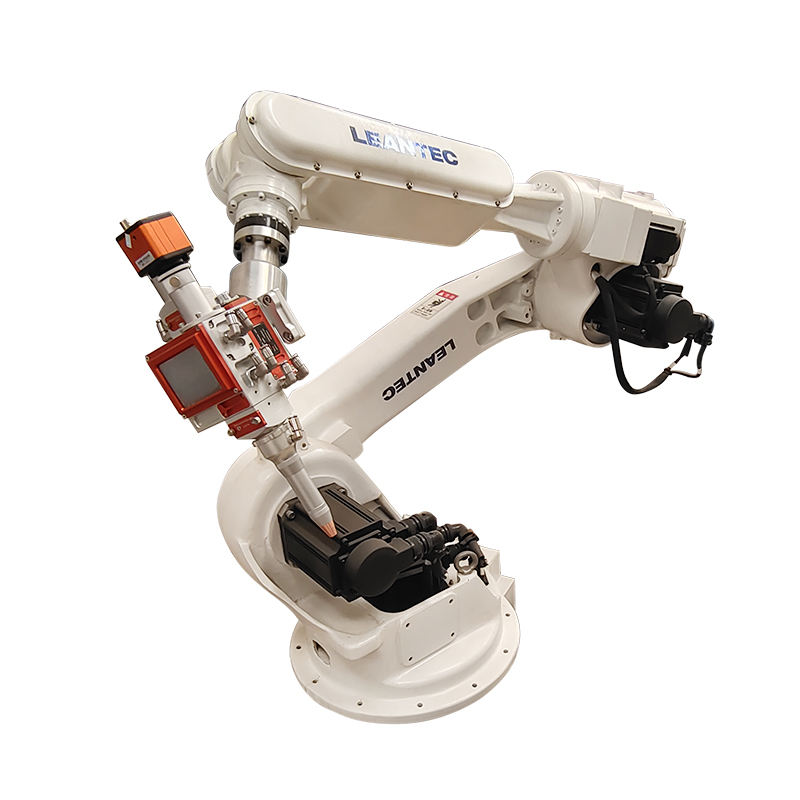
Robotic Laser Welder
3.CNC laser welders can also divid into metal CNC laser welders and plastic CNC laser welders.
Metal CNC laser welders use fiber laser sources, with power options typically ranging from 1500W to 3000W. They also include both platform and robotic arm types.
Plastic CNC laser welders generally use continuous semiconductor laser sources with lower power, typically 100W–500W, and also include platform and robotic arm types. However, since plastic welding requires precise thermal control and contamination prevention, the design is more sophisticated, including temperature control systems, enclosed structures, and integrated fixture systems.
Advantages of CNC Laser Welding
Compared with manual welding methods, CNC laser welding offers the following advantages:
High precision
Computer control ensures extremely accurate welding paths.
High repeatability
Each weld point is highly consistent, making it suitable for mass production.
Low thermal distortion
Concentrated laser energy reduces material deformation.
Aesthetic weld seam
Usually requires little or no post-processing.
Easy automation
It can easily integrated into intelligent production lines.
CNC Laser Welder Industrial Applications
Automotive Industry
Structural welding of new energy battery packs (battery housing, module frames)
Body structure welding (door frames, chassis reinforcements, A/B pillars)
Precision automotive component welding (sensor housings, actuator structures)
Sheet Metal Processing Industry
Overall welding of cabinets and enclosures (electrical cabinets, communication cabinets)
Sealed welding of distribution boxes and industrial control boxes
Batch welding of metal housings and structural frames
Aerospace Industry
Welding of lightweight structural parts (brackets, connectors)
Precision shell welding for aerospace equipment
High-strength load-bearing structural component processing
Medical Device Industry
Welding of surgical instruments and precision metal tools
Welding of medical equipment housings and internal structures
Processing of precision diagnostic components
New Energy Industry
Structural welding of power battery modules
Welding of battery trays and support structures
Welding of metal structures for energy storage systems
Hardware and Kitchenware Industry
Overall welding of stainless steel cookware (pots, tableware structures)
Welding of metal handles and connectors
Processing of decorative metal products
Industrial Equipment Manufacturing
Welding of industrial machine frames
Customized equipment housing structural parts
Welding of automation equipment brackets and bases
Electronics and Consumer Electronics Industry
Welding of electronic device housings
Processing of precision shells and internal support structures
Welding of small metal structural components

Photovoltaic power industry
Development Trends of CNC Laser Welding
With the rapid development of AI, CNC laser welding is moving toward the following directions:
AI-assisted welding path optimization
Fully automated robotic welding systems
Deep integration with smart factories
Real-time monitoring and quality control systems
In the future, CNC laser welding will become an important part of intelligent manufacturing systems.
Conclusion
A CNC Laser Welder is a high-end industrial welding equipment that combines computer numerical control and laser technology, featuring high precision, automation, and high efficiency.
Whether in platform-type structures or robotic arm systems, CNC laser welding plays an increasingly important role in modern manufacturing and continues to develop toward intelligent and flexible production.
As a manufacturer specializing in laser welding equipment, ZS Laser continuously pays attention to global industrial application needs, keeps innovating and optimizing products, follows market development trends, and actively promotes the application of laser welding equipment across more industries.

WhatsApp
Scan the QR Code to start a WhatsApp chat with us.