 ZS Laser Equipment

Pipeline welding plays a critical role in industries such as oil & gas, chemical processing, and energy infrastructure. The quality of welds directly affects safety, durability, and long-term performance.
Traditional welding methods like TIG (GTAW), MIG/MAG, and stick welding (SMAW) have dominated pipeline welding for decades. But with the rise of laser technology, many manufacturers are asking:
👉 Can laser welding replace traditional methods in pipeline welding?
The short answer is: in most cases today, not yet—but it depends on the application.
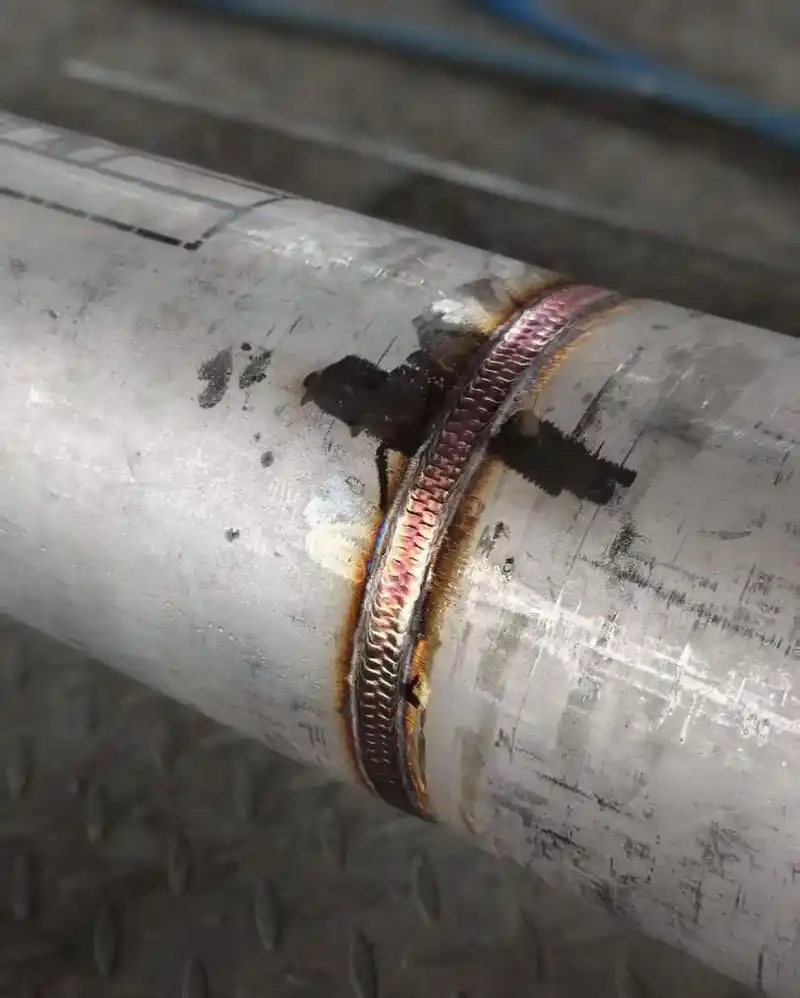
Pipeline welding
1. What Makes Pipeline Welding So Demanding?
Pipeline welding is not just about joining metals—it involves strict technical and safety requirements:
- Full penetration welds are required
- Zero or near-zero defect tolerance (porosity, cracks, lack of fusion)
- High pressure resistance
- Long-term reliability (often decades)
- Compliance with strict standards (e.g., ASME, API)
👉 This means the welding process must be extremely stable and repeatable, even under varying field conditions.
2. Why Traditional Welding Still Dominates Pipeline Welding
Traditional processes remain the industry standard for several reasons:
Stronger Process Tolerance
Methods like TIG and MIG have:
- Larger molten pools
- Slower cooling rates
- Better ability to tolerate gaps and misalignment
👉 This makes them more forgiving in real-world pipeline assembly.
Multi-Pass Welding Capability
Pipeline welding often involves thick materials (5 mm – 30 mm or more).
Traditional welding:
- Supports multi-pass welding
- Ensures complete root fusion
- Improves structural reliability
Mature Standards and Certifications
Industries like oil & gas rely on proven processes.
- Welding procedures are standardized
- Operators are certified
- Inspection systems are well established
👉 Laser welding does not yet have the same level of widespread certification in pipeline applications.
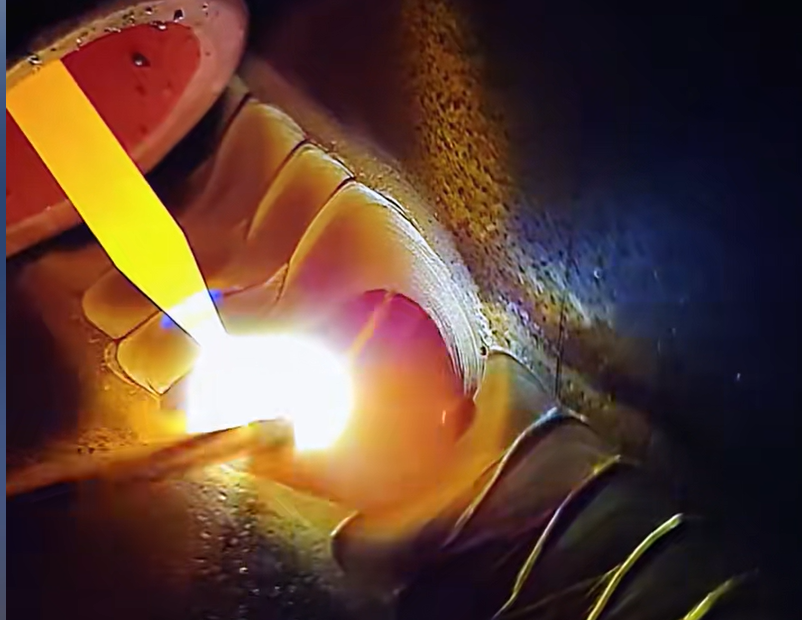
TIG Welding
3. Why Laser Welding Is Not Widely Used in Pipelines
Although laser welding offers high speed and precision, it faces several key limitations in pipeline welding:
3.1 High Sensitivity to Fit-Up and Gap
Laser welding requires:
- Extremely tight joint fit-up
- Minimal gap tolerance
In pipeline installation:
- Pipes may not be perfectly aligned
- Field conditions vary
👉 Even small gaps can lead to:
- Lack of fusion
- Porosity
- Unstable welds
3.2 Porosity and Keyhole Instability
As discussed earlier, laser welding is prone to:
- Keyhole instability
- Gas entrapment (porosity)
In pipeline applications, even small defects are unacceptable.
3.3 Limited Thickness Capability (Single Pass)
Laser welding can achieve deep penetration, but:
- Stability decreases with thickness
- Root quality is harder to guarantee
👉 Thick pipelines still require multi-pass welding, where traditional methods perform better.
3.4 Strict Surface and Material Requirements
Laser welding requires:
- Clean surfaces (no oil, rust, coating)
- Stable material conditions
But in pipeline environments:
- Outdoor conditions are common
- Surface contamination is difficult to avoid
3.5 Equipment and Cost Challenges
Compared to traditional welding:
- Laser systems are more expensive
- Setup is more complex
- Field deployment is more difficult
4. Where Laser Welding CAN Be Used in Pipeline Applications
Despite these limitations, laser welding is not completely unsuitable.
It can be applied in controlled environments, such as:
Factory Pre-Fabrication
- Pipe spools manufactured in workshops
- High precision fit-up
- Automated welding systems
Thin-Walled Pipes
- Stainless steel tubing
- Instrumentation pipelines
- HVAC systems
Hybrid Laser-Arc Welding (Laser + MIG)
This is a growing trend:
- Combines deep penetration of laser
- With gap tolerance of arc welding
👉 More suitable for pipeline applications than pure laser welding.
Pipe Cladding (Laser Cladding / Overlay Welding)
Laser technology is widely used and highly suitable in this area:
- Internal or external surface cladding of pipes
- Corrosion-resistant alloy overlay (CRA cladding)
- Wear-resistant coating for harsh environments
Typical applications include:
- Oil & gas pipelines (anti-corrosion layers)
- Chemical pipelines
- Offshore and subsea components
👉 Compared with traditional cladding methods, laser cladding offers:
- Lower dilution rate
- Precise heat input control
- Minimal distortion
- High bonding quality
👉 In many cases, laser cladding is already more mature than laser welding in pipeline-related applications.
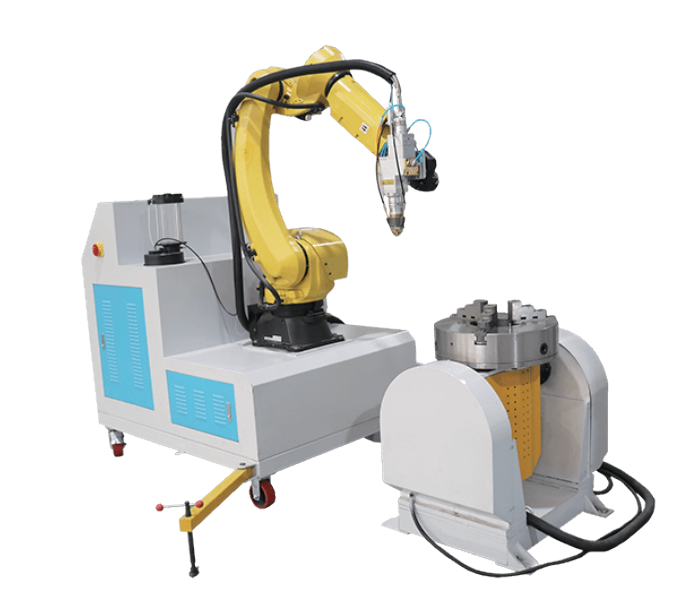
5. Laser Welding vs Traditional Pipeline Welding
| Factor | Laser Welding | Traditional Welding |
|---|---|---|
| Speed | Very fast | Moderate |
| Precision | Very high | Medium |
| Gap tolerance | Very low | High |
| Thickness capability | Limited (single pass) | Excellent (multi-pass) |
| Defect tolerance | Low | More controllable |
| Field adaptability | Poor | Strong |
| Industry adoption | Limited | Dominant |
6. Final Conclusion: Is Laser Welding Suitable for Pipeline Welding?
👉 Laser welding is not yet a mainstream solution for pipeline welding, especially in high-pressure and safety-critical systems.
The main reasons include:
- High sensitivity to joint conditions
- Risk of porosity and instability
- Limited tolerance in real-world environments
- Lack of widespread certification
However:
👉 Laser welding has strong potential in controlled environments and hybrid processes.
Call to Action
Choosing the right welding method depends on your specific application—not just technology trends.
At ZS Laser, we help manufacturers evaluate whether laser welding is suitable for their products, including:
- Pipe welding feasibility analysis
- Process comparison (laser vs traditional)
- Sample testing and parameter optimization
- Customized welding solutions
👉 Contact us today to find the most reliable and cost-effective welding solution for your pipeline projects.

WhatsApp
Scan the QR Code to start a WhatsApp chat with us.