 ZS Laser Equipment

Handheld laser welding machines are commonly available in two configurations: single wire feed and double wire feed. Although both systems use filler wire during welding, they differ significantly in welding efficiency, seam width, heat input, power requirements, and application range.
For many customers, especially those new to laser welding, choosing between a single wire and double wire laser welding machine can be confusing. Some suppliers even promote so-called “special laser welding wires,” claiming that only specific wires can achieve good welding results. In reality, most standard industrial welding wires are fully compatible with high-quality laser welding systems.
In this article, ZS Laser explains the real differences between single wire and double wire laser welding machines, their advantages, applications, and how to choose the right configuration for your production needs.
What Is Welding Wire In Laser Welding
In laser welding, welding wire acts as a filler material. During the welding process, the laser beam melts both the base material and the filler wire, allowing the molten metal to fill gaps, improve weld strength, and optimize seam formation.
For very small weld gaps, filler wire may not be necessary because the laser can directly fuse the base materials together. However, for wider gaps, thicker plates, or materials with poor fit-up conditions, filler wire becomes essential.
Common welding wire materials include:
Stainless steel – the most widely used, ideal for general metal welding with excellent strength and corrosion resistance.
Carbon steel wire – commonly used for welding mild steel and structural steel materials, offering good strength, stable welding performance, and cost-effective processing for industrial applications.
Aluminum wire – popular for its light weight and high conductivity, but requires more precise control due to aluminum’s welding difficulty.
Brass, copper, and other alloys – used for specialized applications where conductivity or decorative finishing is important.
Wire diameters typically range from 0.8mm to 2.0mm, making them compatible with most wire feed systems used in laser welding machines.
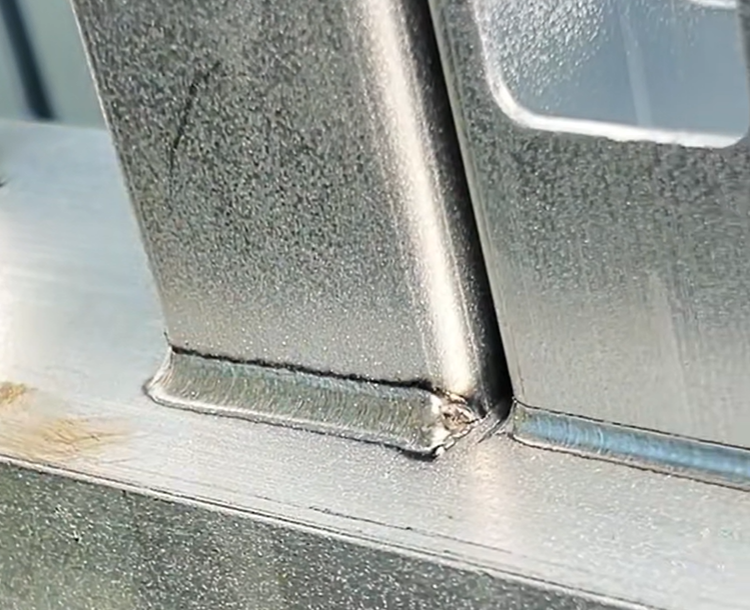
Comparison of single-wire welding and double-wire welding welds
What Is a Single Wire Laser Welding Machine?
A single wire laser welding machine uses one filler wire during the welding process. The welding head contains a single wire feeding channel connected to a standard wire feeder.
Single wire systems are currently the most common configuration for handheld laser welding machines because they are lightweight, easy to operate, and suitable for a wide range of thin-plate welding applications.
Compared with dual wire systems, single wire welding produces a narrower weld seam with lower overall heat input. This makes it particularly suitable for precision welding applications where deformation control is important.
Advantages of Single Wire Laser Welding
- Lighter welding gun for easier operation
- Lower machine cost
- Lower power consumption
- Better for thin plate welding
- Reduced risk of burn-through
- Easier parameter adjustment
Typical Applications
Single wire laser welding is widely used for:
- Stainless steel sheet welding
- Kitchenware manufacturing
- Metal cabinets
- Thin carbon steel welding
- Precision sheet metal fabrication
- Advertising letters and signs
What Is a Double Wire Laser Welding Machine?
A double wire laser welding machine uses two filler wires simultaneously during welding. The welding head contains dual wire feeding channels, and the wire feeder is specially designed to feed two wires at the same time.
Compared with single wire systems, dual wire laser welding introduces more filler material into the molten pool, allowing the machine to bridge larger weld gaps and achieve higher deposition efficiency.
Because more filler material must be melted simultaneously, double wire welding usually requires higher laser power, typically 2000W or above.
Advantages of Double Wire Laser Welding
- Wider weld seam
- Better gap bridging capability
- Higher welding efficiency
- Faster deposition rate
- Better for thick plate welding
- Improved welding stability for large joints
Typical Applications
Double wire laser welding is commonly used for:
- Thick plate welding
- Aluminum structure welding
- Trailer manufacturing
- Automotive components
- Steel structure fabrication
- Large-gap welding applications
Differences Between Single Wire and Double Wire Laser Welding Machines
The key differences between single wire and double wire welding systems are found in the gun head, wire feeding system, and feeder design.
Welding Gun Head
Single wire gun heads are lighter and more compact, making them easier for extended operation.
Double wire gun heads are bulkier and heavier, as they house two wire feeding channels. While larger, they allow higher welding throughput compared to single wire.
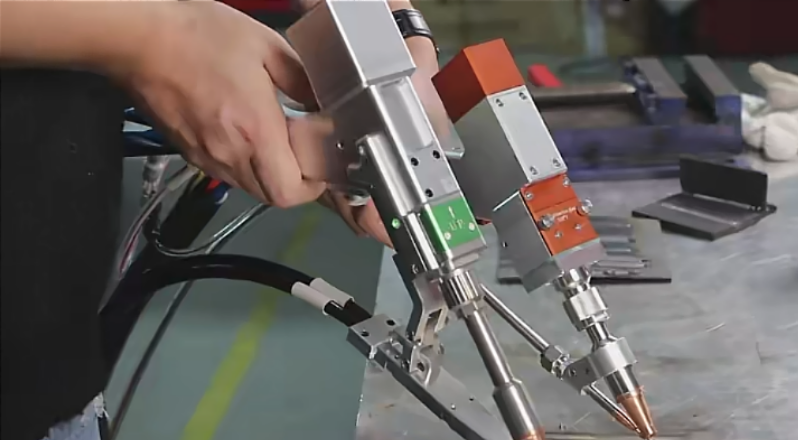
Comparison between single wire feed welding gun head and double wire feed welding gun head
Wire Feeding System
Single wire machines use a standard feeder with one feeding wheel.
Double wire machines require a dedicated feeder with two feeding wheels, one on each side, to feed wires simultaneously. These systems typically support wires between 0.8 mm and 2.0 mm.
Weld Seam & Efficiency
Single wire welding produces a narrower seam, ideal for precision welding of thin plates and smaller parts.
Double wire welding produces a wider seam, suitable for larger joints, thicker plates, and applications requiring higher efficiency.
Power Requirements
Single wire machines can run effectively at lower power levels, usually 1000–1500W.
Double wire welding demands more energy. At ZS Laser, we recommend using 2000W and above for double wire systems, since lower power machines may struggle to melt both wires properly, let alone form a strong weld.
Material Thickness Compatibility
For thin plates, single wire is preferred to avoid burn-through or distortion.
For thicker plates and larger seams, double wire welding is the better choice.
Why Double Wire Welding Is Better for Aluminum
Aluminum laser welding is more challenging than stainless steel welding because aluminum has:
- High reflectivity
- High thermal conductivity
- Faster heat dissipation
These characteristics make stable weld formation more difficult.
In many aluminum welding applications, dual wire systems are preferred because they provide better filler deposition and stronger gap filling capability.
Double wire feeding can help:
- Improve weld seam stability
- Reduce underfill
- Improve weld formation
- Increase deposition efficiency
- Improve welding consistency
For example, a 2000W handheld aluminum laser welder can typically weld around 3 mm aluminum comfortably, while 4 mm aluminum welding is possible but requires slower welding speed and optimized parameters.
Common Misunderstandings About “Special Laser Welding Wire”
Some suppliers claim that laser welding machines require “special laser welding wire.” In reality, this is largely a marketing strategy.
Most standard industrial welding wires can work perfectly with high-quality laser welding systems as long as:
- The wire material matches the base material
- The wire diameter is appropriate
- Welding parameters are properly adjusted
For example:
- Stainless steel → stainless steel wire
- Aluminum alloy → aluminum wire
- Carbon steel → carbon steel wire
The welding result depends far more on:
- Laser power
- Parameter optimization
- Wire feeding stability
- Shielding gas protection
- Operator experience
rather than any so-called “special laser wire.”
How to Choose Between Single Wire and Double Wire Welding
Choose Single Wire Welding If:
- You mainly weld thin plates
- You need lower heat input
- You focus on precision welding
- Your products require fine weld appearance
- Your production volume is moderate
Choose Double Wire Welding If:
- You weld thick materials
- Your workpieces have large gaps
- You need higher production efficiency
- You frequently weld aluminum structures
- You require wider weld seams
If you are unsure which system is better for your project, professional sample testing is strongly recommended before purchasing equipment.
Why Choose ZS Laser
ZS Laser provides professional handheld laser welding solutions for stainless steel, aluminum, carbon steel, galvanized sheet, and other metal materials.
Our systems support both single wire and double wire configurations with customized solutions based on customer applications.
We provide:
- Free sample welding tests
- Professional parameter optimization
- CE-certified laser welding machines
- Aluminum welding solutions
- Customized fixtures and automation options
- Technical training and after-sales support
Our engineering team helps customers choose the most suitable welding configuration based on material type, thickness, weld gap, and production requirements.
Conclusion
Both single wire and double wire laser welding systems have their own advantages. Single wire welding is better for precision thin-plate applications with lower heat input, while double wire welding offers higher efficiency and stronger gap filling capability for thick materials and aluminum welding.
Choosing the right configuration depends on your material, thickness, weld gap, and production goals.
If you are unsure which laser welding solution is best for your project, contact ZS Laser for professional advice, free sample testing, and customized welding solutions.

WhatsApp
Scan the QR Code to start a WhatsApp chat with us.