 ZS Laser Equipment

With the rapid development of industrial automation, new energy, power equipment, communication networks, and intelligent manufacturing, the demand for various metal cabinets continues to grow. From electrical control cabinets and power distribution cabinets to energy storage battery cabinets and server cabinets, almost every industrial system relies on high-quality sheet metal cabinets.
For cabinet manufacturers, welding cabinets not only determines the structural strength of the product but also directly affects its appearance, protection rating (IP rating), sealing performance, and production efficiency. Therefore, selecting the right welding process and welding equipment is essential for improving product quality and maintaining a competitive advantage.
In this article, we will explore the mainstream welding technologies and solutions used in modern sheet metal cabinet manufacturing.
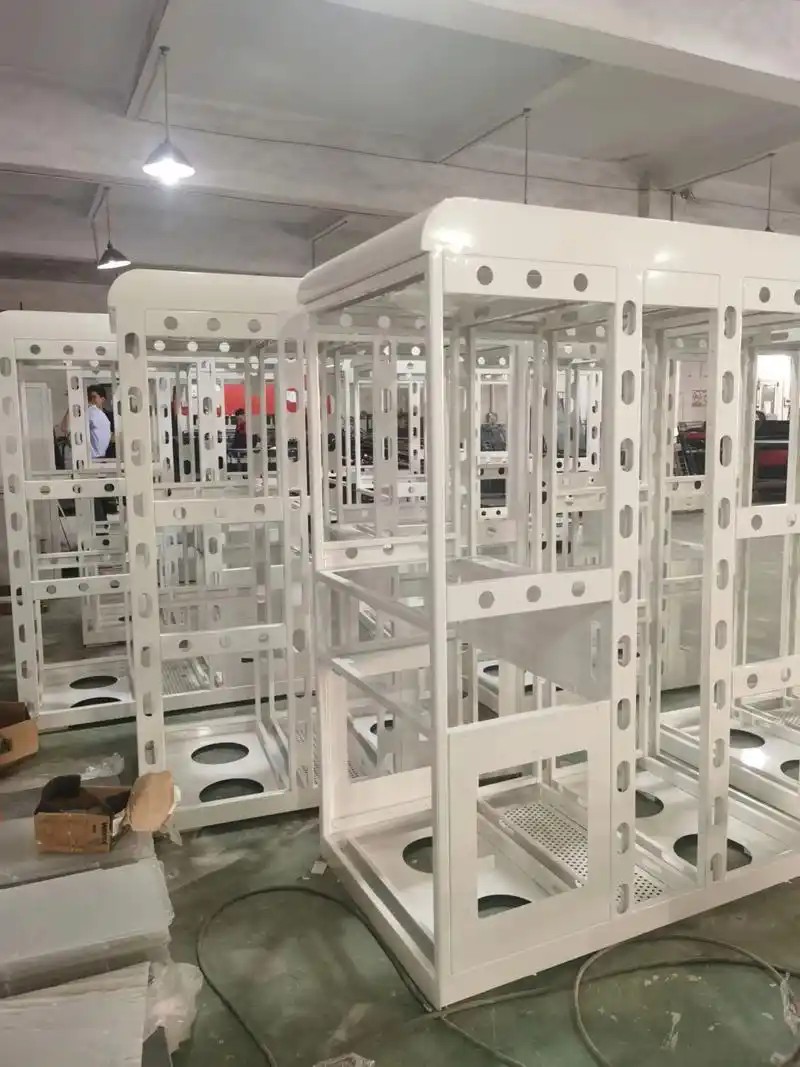
Sheet metal cabinet frame
What Is a Metal Cabinet?
Unlike household cabinets, an industrial metal cabinet is typically fabricated from steel sheet, stainless steel sheet, or aluminum sheet through various sheet metal fabrication processes. Its primary purpose is to protect electrical components, control systems, and industrial equipment.
Depending on the application, metal cabinets can generally be divided into the following categories.
Electrical Cabinet
Electrical cabinets are primarily used to house circuit breakers, PLCs, relays, and other electrical components. They are among the most common products found in automated production lines.
Typical characteristics include:
- Thin sheet metal construction
- High requirements for weld appearance
- Large-volume production
Control Cabinet
Control cabinets are widely used in automation equipment, robotic systems, packaging machinery, laser equipment, and many other industrial applications.
Typical requirements include:
- Smooth surface finish
- Hidden or clean weld seams
- Excellent powder coating quality after welding
Distribution Cabinet
Distribution cabinets are generally larger in size and are manufactured from thicker steel plates to provide sufficient mechanical strength.
As a result, they require more stable and reliable welding quality.
Network Cabinet
Server cabinets and network switch cabinets are typical examples of large sheet metal enclosures.
Their characteristics include:
- Numerous long weld seams
- Complex structural design
- High appearance standards
Battery Cabinet
Driven by the rapid growth of the new energy industry, battery cabinets have become one of the fastest-growing cabinet products.
Typical characteristics include:
- High sealing requirements
- Strict welding consistency
- Increasing levels of manufacturing automation
Stainless Steel Cabinet
Stainless steel cabinets are widely used in:
- Food processing equipment
- Medical equipment
- Pharmaceutical equipment
- Laboratory equipment
They are typically manufactured from 304 or 316 stainless steel, with particularly high requirements for weld color, surface finish, and overall appearance.
Outdoor Cabinet
Typical examples include:
- Telecommunications base station cabinets
- Solar equipment cabinets
- EV charging station cabinets
- Outdoor energy storage cabinets
Because these products operate in outdoor environments for extended periods, they require not only strong welds but also excellent waterproof and dustproof performance.
Although different types of cabinets serve different industries, their manufacturing processes are remarkably similar.
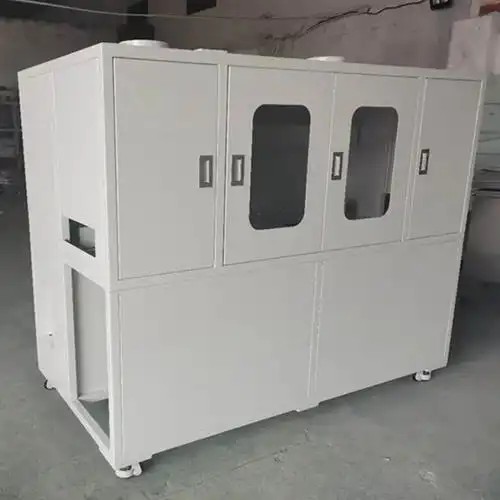
Finished enclosed cabinet
How Is a Sheet Metal Cabinet Manufactured?
A complete metal cabinet is not created simply by welding several metal panels together. Instead, it is manufactured through a series of sheet metal fabrication processes.
A typical production workflow is as follows:
Steel Sheet
↓
Cutting (Laser Cutting or Plasma Cutting)
↓
Punching
↓
Bending
↓
Component Assembly
↓
Welding
↓
Grinding
↓
Powder Coating or Painting
↓
Final Assembly
↓
Finished Cabinet
Among all these manufacturing steps, welding is the most critical process. It not only determines the structural strength of the cabinet but also has a direct impact on the final product quality.
What Are the Challenges of Welding Metal Cabinets?
Many people assume that a metal cabinet is simply a few steel panels welded together and that the welding process is relatively straightforward. In reality, cabinets are typical sheet metal fabrication products, where welding requires a high level of control over the welding process, dimensional accuracy, and surface finish.
A typical industrial cabinet consists of side panels, doors, base frames, top panels, reinforcement ribs, mounting brackets, and numerous other components. These parts must be joined through various types of welds performed in different positions. The welding quality not only affects the structural strength of the cabinet but also directly determines assembly accuracy and the overall appearance of the finished product.
1. Complex Welding Positions Cover Nearly Every Common Welding Position
A single cabinet may require dozens or even hundreds of individual welds. The welding process is far more complicated than simply making a straight weld.
Common welding positions include:
- Flat Welding – Used for bottom panels, top panels, and large flat joints. This is the easiest welding position to automate.
- Fillet Welding – Used for 90-degree joints between side panels, bottom panels, reinforcement ribs, and cabinet frames. It is the most common welding type in cabinet manufacturing.
- Vertical Welding – When large cabinets cannot be rotated, certain welds must be completed in the vertical position, requiring greater operator skill.
- Horizontal Welding – Commonly used for side-frame connections, where controlling the molten weld pool is more challenging than during flat welding.
- Lap Welding – Frequently used for reinforcement plates, mounting brackets, hinges, and other sheet metal components to improve joint strength.
For large electrical cabinets, server racks, and energy storage cabinets, multiple welding positions are often required within a single product. As a result, more manufacturers are adopting robotic welding systems capable of performing automatic multi-position welding with high consistency.
2. Thin Sheet Metal Is Highly Susceptible to Welding Distortion
Most cabinets are manufactured from cold-rolled steel, stainless steel, or galvanized steel, with common material thicknesses including 0.8 mm, 1.0 mm, 1.2 mm, 1.5 mm, and 2.0 mm.
Because these materials are relatively thin, excessive heat input during welding can easily lead to problems such as:
- Wave distortion
- Local bulging
- Edge warping
- Door frame deformation
- Dimensional inaccuracies during assembly
Particularly after welding long edges, even a deformation of just 1–2 mm may prevent the cabinet door from fitting properly, significantly affecting final assembly precision.
3. Long Weld Seams Can Cause Cumulative Distortion
Large industrial cabinets typically contain numerous continuous weld seams, including:
- Corner welds
- Base frame welds
- Top panel welds
- Reinforcement rib welds
- Internal mounting frame welds
If these welds are completed continuously in a single direction, heat gradually accumulates throughout the workpiece, resulting in issues such as:
- Overall structural bending
- Uneven weld shrinkage
- Out-of-tolerance diagonal dimensions
- Cabinet frame twisting
To minimize distortion, manufacturers typically use optimized welding sequences, segmented welding techniques, or automated welding systems to distribute heat more evenly throughout the welding process.
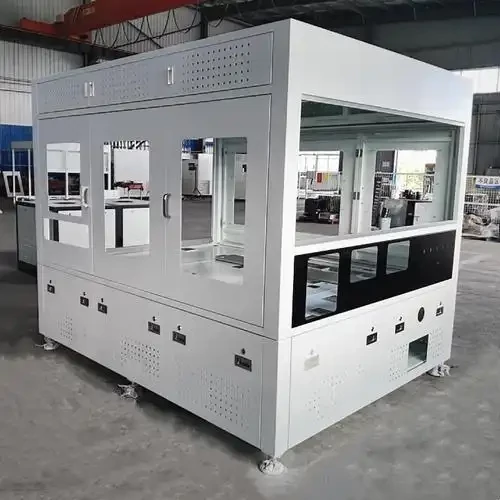
Sheet metal cabinet
4. Fillet Weld Quality Directly Affects Product Appearance
Most cabinet components are fabricated through sheet metal bending, making 90-degree joints one of the most common structural features.
Typical applications include:
- Door frames
- Cabinet corners
- Reinforcement ribs
- Base frames
- Mounting brackets
These joints are generally connected using fillet welding.
A high-quality fillet weld must provide sufficient structural strength while also maintaining an attractive appearance. Therefore, welds are typically expected to feature:
- Uniform leg size
- Continuous and consistent weld beads
- No undercut, porosity, or slag inclusion
- Minimal spatter
- Easy post-weld grinding and finishing
Poor fillet weld quality remains visible even after powder coating or painting. Raised or uneven weld beads can significantly reduce the overall appearance and perceived quality of the finished cabinet.
5. High Assembly Accuracy Is Required After Welding
Welding is only one step in the cabinet manufacturing process.
After welding, additional assembly operations typically include:
- Door installation
- Hinge installation
- Rail installation
- Electrical component installation
- Panel assembly
- Seal installation
For this reason, welding must do more than simply produce strong joints—it must also maintain the cabinet’s overall geometric accuracy to ensure that all subsequent assembly operations proceed smoothly.
6. Surface Finish Standards Continue to Increase
As industrial products continue to evolve, manufacturers are placing greater emphasis on appearance rather than simply achieving strong welds.
After traditional MIG welding or Shielded Metal Arc Welding (SMAW), significant post-processing is often required, including:
- Slag removal
- Spatter cleaning
- Weld grinding
- Surface polishing
These finishing operations increase labor costs and extend production time.
In contrast, laser welding produces narrow weld seams, minimal spatter, and a much smaller heat-affected zone. In many cabinet applications, little or no grinding is required after welding, making laser welding an increasingly popular solution for manufacturers seeking higher efficiency and better product quality.
What Welding Solution Is Best for Different Types of Cabinets?
Not every metal cabinet can be welded using the same equipment. The ideal welding solution depends on several factors, including the cabinet size, production volume, and level of automation required. Choosing the right welding method can significantly improve production efficiency, weld quality, and manufacturing costs.
Small Cabinets: Automatic Platform Laser Welding Offers the Highest Efficiency
For small-sized products manufactured in large volumes, such as:
- Electrical control boxes
- Junction boxes
- Instrument enclosures
- Battery boxes
- Small control cabinets
automatic platform laser welding machines are often the most efficient solution.
Because these products have standardized dimensions and high repeatability, platform laser welding systems can automatically complete positioning, welding, and repeated production cycles with minimal operator intervention.
Compared with manual welding, automatic laser welding delivers more consistent weld quality, higher production efficiency, and lower labor costs, making it an ideal choice for mass production.
Medium-Sized Cabinets: Handheld Laser Welding Provides Greater Flexibility
As cabinet size increases, such as:
- Network cabinets
- Power distribution cabinets
- Medical equipment cabinets
the advantages of a fixed welding platform gradually decrease.
These products usually contain longer weld seams and more complex welding positions, making flexible operation increasingly important.
In these applications, handheld laser welding machines provide a much more practical solution. Operators can freely move the welding gun around the workpiece, allowing difficult weld locations to be completed more easily while maintaining excellent weld quality.
For manufacturers producing multiple product models in small or medium production volumes, handheld laser welding has become one of the most widely adopted welding solutions due to its flexibility, ease of operation, and high productivity.
Large Cabinets: Robotic Laser Welding or Handheld Laser Welding Is the Better Choice
For large-scale products, such as:
- Battery energy storage cabinets
- Outdoor telecommunications cabinets
- Electrical power control cabinets
- Large industrial equipment enclosures
the workpieces are often too large and too heavy to fit onto a conventional automatic welding platform.
In these situations, two laser welding solutions are commonly used.
The first option is a handheld laser welding machine.
The operator moves the welding head directly around the cabinet, allowing welds to be completed without repositioning the workpiece. This solution requires relatively low investment, offers excellent flexibility, and is particularly suitable for high-mix, low-volume production.
The second option is a robotic laser welding system.
Industrial robots can automatically perform long straight welds, fillet welds, and complex welding paths with exceptional consistency. They can also be integrated with vision positioning systems, welding positioners, automatic loading and unloading systems, and other automation equipment to create fully automated production lines.
As cabinet manufacturing continues to move toward intelligent and automated production, robotic laser welding is becoming the preferred solution for an increasing number of large-scale manufacturers.
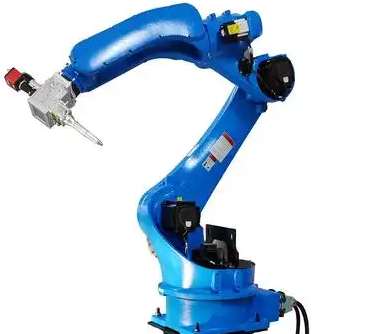
Robotic Laser Welding
Why are more and more cabinet factories choosing laser welding?
Compared to traditional MIG welding, TIG welding, and manual arc welding, laser welding offers increasingly clear advantages in sheet metal cabinet manufacturing.
These advantages primarily include:
Faster welding speed, significantly improving production efficiency.
Smaller heat-affected zone, reducing deformation of thin plates.
Narrower and more aesthetically pleasing welds, reducing subsequent grinding and polishing work.
Less spatter, improving the production environment.
Easier integration with robots, automated platforms, and automated loading and unloading systems for automated production.
For products such as stainless steel cabinets and precision sheet metal parts, higher consistency and appearance quality can be achieved.
Of course, laser welding is not the only answer for all cabinet projects. For thick plates, large-gap assemblies, or special materials, traditional MIG and TIG processes still have irreplaceable advantages. When choosing a welding solution, factors such as material, plate thickness, product size, batch size, and cost should be comprehensively considered.
Call To Action
ZS Laser has been deeply involved in the laser welding industry for over a decade, providing complete welding solutions for sheet metal cabinet manufacturers. These solutions include automated platform laser welding machines, handheld laser welding machines, robotic laser welding workstations, and supporting automation systems. Whether you are producing small electrical control boxes or large industrial cabinets, we can recommend the most suitable laser welding solution based on your product size, production cycle time, and automation requirements. We also provide process testing, equipment selection, and technical support to help companies improve welding quality, reduce production costs, and achieve more efficient and intelligent cabinet manufacturing.

WhatsApp
Scan the QR Code to start a WhatsApp chat with us.