 ZS Laser Equipment

A pulse welder is a welding machine that uses controlled pulses of electrical current or laser energy to manage the welding process. Unlike conventional welding with relatively continuous energy output, pulse welding periodically changes the energy level according to programmed parameters.
The term pulse welder can refer to different types of welding equipment, including pulse MIG welders, pulse TIG welders, and pulsed laser welders. Although these machines all use a pulsed welding process, their operating principles and applications are different.Pulse welding is widely used when welders need better control over heat input, molten metal transfer, weld penetration, or the appearance of the finished weld.
This guide explains the main types of pulse welders, how pulse welding works, its advantages and limitations, and how to choose the right pulse welding machine for your application.
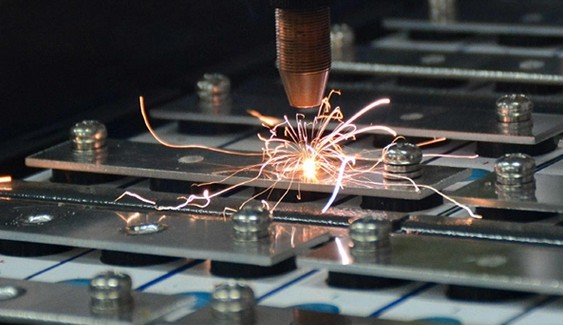
Pulse Laser Welding
What Is a Pulse Welder?
A pulse welder is a welding machine that periodically varies its welding current or energy output instead of maintaining a completely constant output.Depending on the welding process, a pulse welder may be:
- A pulse MIG/MAG welding machine
- A pulse TIG welding machine
- A pulsed laser welding machine
- Other specialized pulsed welding equipment
The purpose of pulsing is not simply to make the welding process “cooler.” Instead, controlled changes in energy allow the welding process to be adjusted more precisely.
For example, in pulse MIG welding, current changes can help control metal transfer from the electrode wire to the weld pool. In pulse TIG welding, current changes can help manage heat input and the weld pool. In pulsed laser welding, laser energy is delivered in controlled pulses to achieve precise energy deposition.
Therefore, pulse welding is a process-control method rather than one specific type of welding machine.
What Is Pulse Welding?
Pulse welding involves periodically changing the welding energy between different levels.Depending on the welding process, important pulse parameters may include:
- Peak current or peak power
- Background current or background power
- Pulse frequency
- Pulse duration
- Duty cycle
- Welding speed
In a typical pulsed process, a higher energy level is applied during the peak portion of the pulse, followed by a lower energy level.This repeated cycle allows the operator or welding system to control how energy is delivered to the workpiece.One important point is that pulse welding should not simply be described as low-heat welding.It can provide better control over heat input, but the actual heat delivered to the workpiece depends on the complete combination of power, pulse parameters, welding speed, material, thickness, joint design, and other process conditions.
Types of Pulse Welders
There are several major categories of pulse welding equipment.
1. Pulse MIG Welder
A pulse MIG welder is a MIG/MAG welding machine equipped with a pulsed arc welding mode.
It is widely used in industrial fabrication and production welding.
Common applications include:
- Aluminum welding
- Stainless steel welding
- Carbon steel fabrication
- Automotive manufacturing
- Machinery manufacturing
- Sheet metal fabrication
One important advantage of pulse MIG welding is controlled metal transfer.
Under suitable conditions, pulsed operation can help reduce spatter compared with some conventional transfer modes while providing useful control over heat input.
However, a pulse MIG welder is more sophisticated than a basic MIG welding machine and generally requires appropriate parameter selection.
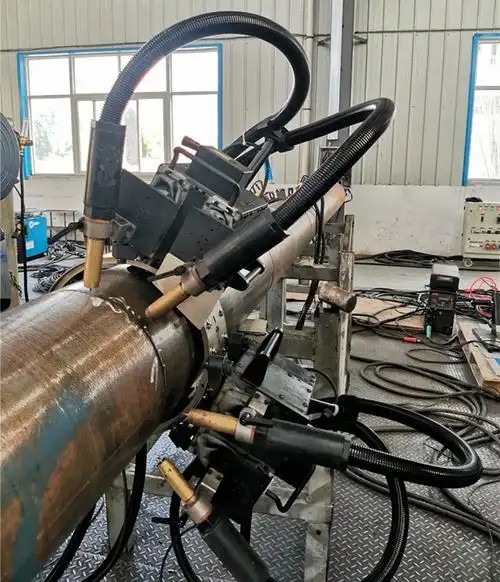
MIG Pulse Welding
2. Pulse TIG Welder
A pulse TIG welder controls the welding current through programmed pulses.
Pulse TIG is often used when heat control and weld precision are important.
Typical applications include:
- Stainless steel welding
- Aluminum welding
- Titanium welding
- Thin sheet welding
- Precision welding
- Fabrication of small components
The ability to adjust peak current, background current, pulse frequency, and pulse duration gives the welder greater control over the welding process.
3. Pulse Laser Welder
A pulse laser welder uses a pulsed laser source to deliver highly localized energy to the workpiece.
Compared with many conventional arc welding processes, laser welding can produce a concentrated heat-affected area and narrow weld.
Pulsed laser welding is commonly considered for:
- Precision metal components
- Electronics
- Medical components
- Jewelry
- Small stainless steel parts
- Thin metal components
- Battery-related components
For these applications, the ability to control pulse energy and pulse duration can be particularly valuable.
How Does a Pulse Welder Work?
The exact operating principle depends on the type of pulse welder.
1.Pulse MIG Welder
In pulse MIG/MAG welding, the welding power source rapidly changes between peak and background current.The peak current can promote controlled metal transfer, while the background current helps maintain the arc without maintaining the same high energy level continuously.With appropriate parameters, this can provide:
- More controlled droplet transfer
- Reduced spatter
- Better heat management
- Improved weld appearance
The actual result depends strongly on the material, wire diameter, shielding gas, current, voltage, pulse frequency, and other welding parameters.
2.Pulse TIG Welder
A pulse TIG welder periodically changes the welding current between higher and lower levels.The higher current level provides the energy needed for melting, while the lower current level reduces the average energy input during part of the welding cycle.Typical pulse TIG parameters include:
- Peak current
- Background current
- Pulse frequency
- Pulse duration
This provides the welder with additional control over the weld pool and heat input.Pulse TIG is particularly useful for applications where precise control is important, including thin materials and precision components.
3.Pulse Laser Welder
A pulse laser welder uses laser pulses rather than a continuously emitted laser beam.The laser source delivers controlled pulses of energy to the workpiece. Each pulse creates a localized heating and melting effect, depending on the laser power, pulse duration, spot size, frequency, material, and joint configuration.Important parameters may include:
- Peak laser power
- Pulse energy
- Pulse duration
- Pulse frequency
- Spot diameter
- Welding speed
- Focus position
Pulsed laser welding is particularly useful when precise and localized energy input is required.It can be used for applications involving small components, thin materials, precision parts, and materials where excessive heat input needs to be carefully controlled.
It is important to distinguish pulsed laser welding from pulse MIG or pulse TIG welding. Although all three use a pulsed energy pattern, the underlying welding processes are fundamentally different.
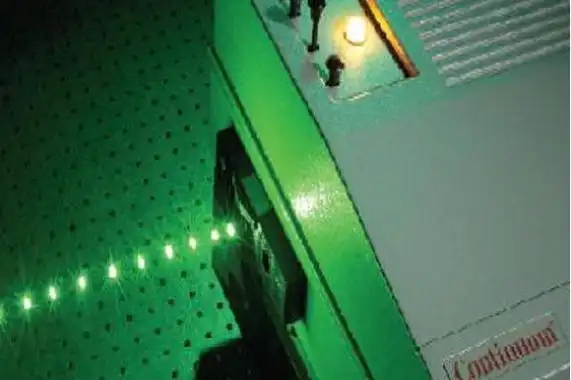
pulsed laser
Pulse Welder vs. Continuous Welder
Pulse welding and continuous welding are not necessarily competing technologies. The better choice depends on the application.
| Feature | Pulse Welder | Continuous Welding |
|---|---|---|
| Energy output | Periodically varied | Relatively continuous |
| Heat control | Highly adjustable | Depends on process and parameters |
| Thin materials | Often advantageous | Suitable for many applications |
| Precision applications | Often useful | Also possible |
| Production welding | Suitable for many applications | Often highly productive |
| Process complexity | Generally higher | Often simpler |
| Parameter requirements | More parameters may need adjustment | Usually simpler |
For example, a thin stainless steel component may benefit from the additional heat control provided by pulsed TIG or pulsed laser welding.
On the other hand, a long, continuous weld on a thick steel structure may be better suited to a conventional continuous welding process.Therefore, pulse welding is not automatically better than continuous welding.The correct process depends on the material, thickness, joint design, production requirements, and required weld quality.
Advantages of a Pulse Welder
Better Heat Control
One of the main reasons manufacturers use pulse welding is the ability to control how welding energy is delivered over time.Instead of maintaining the same high energy level continuously, the process can alternate between different energy levels.This can be useful for materials that are sensitive to excessive heat.
Reduced Spatter in Pulse MIG Welding
In pulse MIG welding, properly selected pulse parameters can promote a more controlled metal transfer process.This may reduce spatter compared with certain conventional arc transfer modes.Less spatter can mean:
- Cleaner welds
- Less post-weld cleaning
- Better appearance
- Improved production efficiency
However, spatter performance depends on the complete welding setup and should not be considered a guaranteed result of using a pulse function.
Better Control for Thin Materials
Thin metal can be difficult to weld because excessive heat can cause:
- Burn-through
- Distortion
- Excessive penetration
- Material deformation
A pulsed process can provide more control over average heat input and the weld pool.This can make pulse welding useful for certain thin-material applications.
Improved Weld Appearance
With suitable parameters, pulse welding can produce controlled and consistent welds.This is particularly valuable when appearance is important, such as:
- Stainless steel fabrication
- Aluminum welding
- Automotive components
- Precision products
The final weld appearance still depends on joint preparation, material condition, shielding gas, parameters, operator skill, and equipment quality.
Greater Process Control
A modern pulse welding machine may provide control over multiple parameters.This allows manufacturers to develop welding programs for different:
- Materials
- Thicknesses
- Joint types
- Welding positions
- Production requirements
This is particularly useful in industrial manufacturing where repeatability is important.
Limitations of Pulse Welding
More Complex Parameters
A pulse welding machine may provide significantly more parameters than a basic welding machine.Depending on the process, the operator may need to adjust:
- Peak current
- Background current
- Pulse frequency
- Pulse duration
- Voltage
- Wire feed speed
- Laser power
- Welding speed
Incorrect settings can result in unstable welding or poor weld quality.
Higher Equipment Cost
Advanced pulse welding equipment generally contains more sophisticated power electronics and control systems.
As a result, a pulse welder may cost more than a basic welding machine.
However, the additional cost can be justified when better process control, production consistency, or weld quality is required.
Requires Proper Parameter Development
Pulse welding does not automatically guarantee a high-quality weld.The welding process still needs to be developed according to:
- Material
- Material thickness
- Joint design
- Shielding gas
- Welding position
- Welding speed
- Required penetration
- Required appearance
Production applications should therefore be tested and validated before large-scale manufacturing.
Not Always Necessary
For simple welding applications, a standard continuous welding process may already provide satisfactory results.
If an application does not require advanced heat or metal-transfer control, purchasing a more sophisticated pulse welder may not provide enough additional value to justify the cost.
What Materials Can Be Welded with a Pulse Welder?
The materials that can be welded depend on the specific type of pulse welder.
Carbon Steel
Pulse MIG welding can be used for carbon steel applications where controlled arc characteristics and production efficiency are required.
Stainless Steel
Pulsed MIG, pulsed TIG, and pulsed laser welding can all be used for stainless steel, depending on the application.
Stainless steel applications often benefit from controlled heat input because excessive heat can contribute to distortion and undesirable thermal effects.
Aluminum
Aluminum is one of the important applications for pulse MIG welding.
Its high thermal conductivity and other material characteristics make controlled arc welding particularly useful in many fabrication applications.
Pulsed laser welding can also be used for suitable aluminum alloys when the process is properly developed.
Titanium
Titanium is commonly associated with TIG welding and can be welded using pulsed TIG techniques when precise heat control is required.
Proper shielding and contamination control are critical because titanium is highly sensitive to atmospheric contamination at elevated temperatures.
Copper
Copper presents challenges because of its high thermal conductivity and optical properties.
Specialized laser sources and carefully developed welding parameters may be required for pulsed laser welding of copper and copper alloys.
Applications of Pulse Welding
Pulse welding is used across many industries.
Automotive Manufacturing
Pulse MIG welding is widely used for automotive and transportation components where controlled welding and production efficiency are important.
Machinery Manufacturing
Manufacturers of machinery and industrial equipment may use pulse MIG or TIG welding for different components.
Stainless Steel Fabrication
Pulse TIG and pulse MIG welding can be useful for stainless steel structures and components where weld appearance and heat control matter.
Electronics and Precision Components
Pulsed laser welding can be suitable for small and precision components where localized energy input is required.
Medical Components
Some medical-device components require precise and controlled welding processes.
Pulsed laser welding can be considered for suitable metal components when cleanliness, precision, and process control are important.
Battery Components
Laser welding is increasingly used for battery-related components, including selected applications involving cells, tabs, busbars, and housings.
The appropriate laser source and welding process depend on the specific material and component design.
How to Choose the Right Pulse Welder
Choosing a pulse welder should begin with the application rather than the machine’s maximum power.
1. Identify the Material
Determine whether you will weld:
- Carbon steel
- Stainless steel
- Aluminum
- Copper
- Titanium
- Other alloys
Different materials require different welding processes and parameter ranges.
2. Check Material Thickness
Material thickness has a major influence on the required welding process.Thin sheet metal may benefit from highly controlled pulsed welding.Thicker materials may require greater energy input and a different welding process.
3. Select the Welding Process
Decide whether the application requires:
- Pulse MIG
- Pulse TIG
- Pulse laser welding
These are not interchangeable technologies.The choice should be based on the required welding speed, precision, penetration, material, and production environment.
4. Consider Production Volume
For occasional repair or workshop work, a basic welding machine may be sufficient.
For industrial production, advanced pulse welding equipment can provide programmable parameters and repeatable welding conditions.
5. Consider Automation
Pulse welding equipment can be integrated into:
- Welding stations
- Automated production lines
- Robotic welding systems
- CNC systems
For automated applications, parameter repeatability and process monitoring become particularly important.
6. Evaluate Weld Quality Requirements
Consider what the finished weld needs to achieve:
- Mechanical strength
- Leak tightness
- Appearance
- Dimensional accuracy
- Electrical conductivity
- Corrosion resistance
A process suitable for a structural weld may not be suitable for a precision sealing or electronic application.
Pulse Welder FAQs
What is a pulse welder?
A pulse welder is welding equipment that delivers welding current or energy in controlled pulses rather than using only a constant output.
The term can refer to pulse MIG, pulse TIG, pulsed laser welding, and other specialized welding systems.
Is pulse welding better than continuous welding?
Not necessarily.
Pulse welding provides additional control over energy delivery, which can be advantageous for certain materials and applications. Continuous welding can be more appropriate for other applications, especially where simple, high-productivity welding is required.
Can a pulse MIG welder weld aluminum?
Yes. Pulse MIG welding is commonly used for aluminum fabrication.
However, the correct wire, shielding gas, torch setup, welding parameters, and equipment configuration are necessary for good results.
What is the difference between pulse MIG and pulse TIG?
Pulse MIG uses a continuously fed consumable wire electrode, while pulse TIG uses a non-consumable tungsten electrode and a separate filler material when required.
Their pulse functions therefore control different aspects of the welding process.
What is a pulsed laser welder?
A pulsed laser welder uses laser energy delivered in controlled pulses to heat and melt the workpiece.
It is commonly considered for precision welding, thin materials, and small components where localized energy input is important.
Is pulse welding suitable for thin metal?
Pulse welding can be very useful for certain thin-metal applications because controlled energy delivery can help manage heat input.
However, the correct result depends on the material, thickness, joint design, and welding parameters.
Pulse Welder vs. Pulse Welding Machine: Is There a Difference?
The terms pulse welder and pulse welding machine are often used interchangeably.In commercial and technical contexts, however, “pulse welding machine” may be more descriptive because it clearly refers to a complete piece of welding equipment.
For example, manufacturers may use terms such as:
- Pulse MIG welding machine
- Pulse TIG welding machine
- Pulsed laser welding machine
- Pulse laser welder
- Pulse welding system
When searching for equipment, it is therefore useful to describe the welding process and material rather than searching only for “pulse welder.”
Conclusion
A pulse welder is not a single type of welding machine. It is a general term covering several welding technologies that use controlled pulses of current or energy.The main types include pulse MIG welders, pulse TIG welders, and pulse laser welders.
However, pulse welding is not automatically the best solution for every application. The correct choice depends on the material, thickness, joint design, required weld quality, production volume, and level of process control required.
For precision metal welding applications, pulsed laser welding can be an effective solution when the laser source, optical system, and welding parameters are properly matched to the material and application.
If you are looking for a pulse laser welder or need help selecting a laser welding solution, ZS Laser can provide customized laser welding equipment and technical solutions for different materials and applications.
Contact ZS Laser to discuss your pulse laser welding requirements.

WhatsApp
Scan the QR Code to start a WhatsApp chat with us.