 ZS Laser Equipment

Cast iron and cast steel are both iron-based casting materials widely used in machinery, industrial equipment, automotive components, construction, and other engineering applications.Because they look similar and are both produced by casting, cast iron and cast steel are sometimes treated as interchangeable materials. However, they have significant differences in carbon content, microstructure, mechanical properties, machinability, vibration damping, impact resistance, wear resistance, casting characteristics, and cost.
Understanding these differences is important when selecting a material for a particular application—and it is especially important when the component needs to be machined, repaired, or welded.
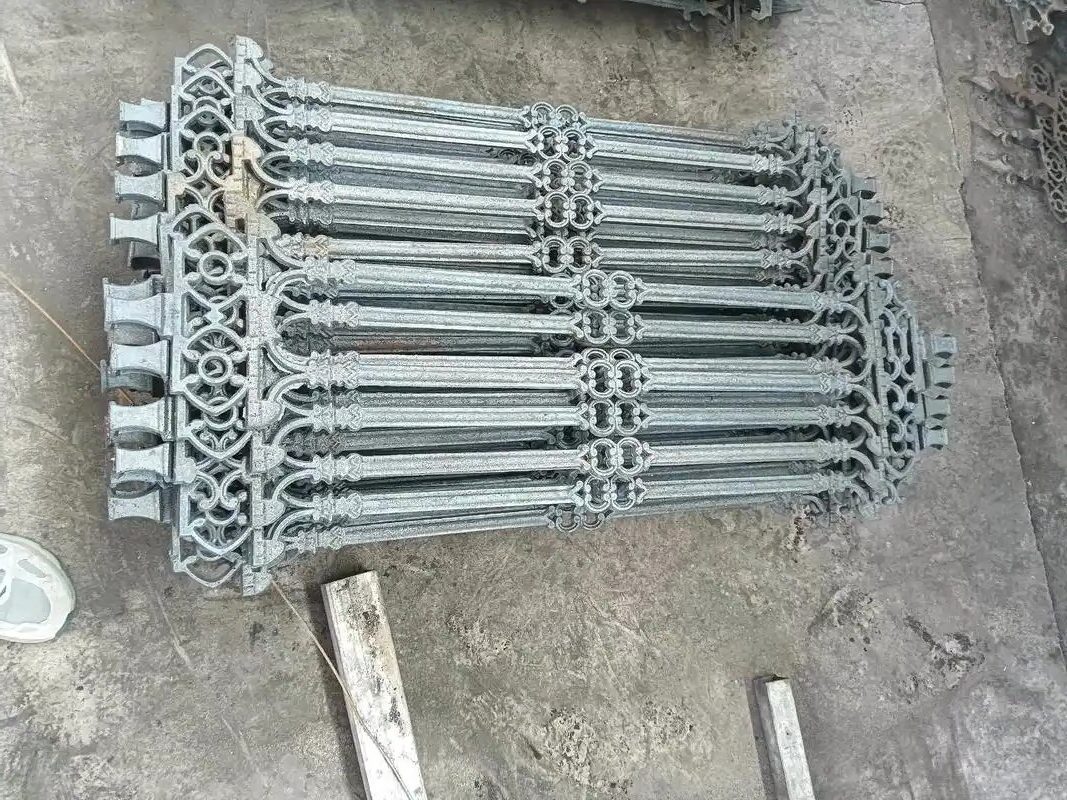
Cast iron gate parts
Cast Iron vs Cast Steel: Key Differences
The following table provides a general comparison.
| Property | Cast Iron | Cast Steel |
|---|---|---|
| Carbon content | Generally higher | Generally lower |
| Toughness | Generally lower | Generally higher |
| Impact resistance | Generally lower | Generally higher |
| Compressive strength | Generally high | High |
| Vibration damping | Excellent, especially gray iron | Generally lower |
| Machinability | Often good, depending on grade | Often lower than gray cast iron |
| Wear resistance | Can be excellent in suitable grades | Depends strongly on alloy and heat treatment |
| Casting complex shapes | Excellent | Good, but generally more demanding |
| Weldability | Often challenging | Depends strongly on grade |
| Cost | Often lower | Often higher |
These are general tendencies rather than absolute rules. Different grades of cast iron and cast steel can have very different properties.Next, ZS Laser will elaborate on the points in the table.
1. Carbon Content and Microstructure
The most fundamental difference between cast iron and cast steel is their carbon content.
Cast iron generally contains more than about 2% carbon, while cast steels normally contain less than about 2% carbon. In practical engineering, many common cast steels have carbon contents well below this level, although the exact composition varies considerably depending on the grade.The difference in carbon content has a major effect on the material’s microstructure and mechanical behavior.
Cast iron often contains carbon in the form of graphite, particularly in gray cast iron and ductile iron. Cast steel, by contrast, generally has a steel-type matrix with carbon primarily associated with the metallic matrix rather than large amounts of free graphite.This difference helps explain why cast iron and cast steel behave so differently under load, during machining, and during welding.
2. Mechanical Properties: Strength, Toughness and Impact Resistance
One of the major advantages of cast steel is its combination of strength and toughness.
Cast steel can withstand significant loads and, depending on its grade and heat treatment, can absorb impact and deformation better than many common cast irons.This makes cast steel attractive for components that may experience:
- Impact loading
- Dynamic loads
- Structural stresses
- Mechanical shocks
- Heavy-duty service
Cast iron, especially gray cast iron, is generally more brittle. It can have excellent compressive strength but is less capable of absorbing sudden impact without cracking.This difference is important when selecting materials for components such as machinery structures, heavy-duty mechanical parts, and impact-loaded components.However, ductile iron can have substantially better toughness and impact resistance than gray cast iron, so the specific cast iron grade must always be considered.
3. Casting Performance
Cast iron has traditionally been valued for its excellent casting characteristics.Molten cast iron generally has good fluidity, allowing it to fill relatively complex mold cavities effectively. Its lower shrinkage compared with many cast steels can also simplify certain casting designs.This makes cast iron suitable for producing components with:
- Complex shapes
- Large sections
- Intricate geometries
- Integrated structural features
Cast steel can also produce complex castings, but steel castings generally require more careful control of solidification and feeding because steel tends to have greater volumetric shrinkage.As a result, cast steel production may require more sophisticated gating and risering design, process control, inspection, and sometimes heat treatment.This does not mean cast steel is unsuitable for complex components. Rather, its casting process generally requires more careful engineering.
4. Machinability
Many common gray cast irons are relatively easy to machine. The graphite in the material can help break chips during machining and reduce friction at the cutting interface.As a result, gray cast iron is widely used for:
- Machine tool bases
- Engine blocks
- Housings
- Frames
- Machinery components
Cast steel is generally more difficult to machine than ordinary gray cast iron, although machinability varies significantly with carbon content, alloy composition, hardness, and heat treatment.High-alloy or hardened cast steels can be particularly demanding and may cause increased cutting-tool wear.
However, softer steel is not automatically easier to machine. Certain low-carbon steels can produce long, continuous chips and may be more difficult to machine under some conditions.Therefore, machinability should always be evaluated according to the specific grade and condition of the material.
5. Vibration Damping
Vibration damping is one of the most important advantages of cast iron.Gray cast iron contains flake graphite, which can help dissipate vibration energy within the material.This makes gray cast iron particularly useful for:
- Machine tool beds
- Engine blocks
- Cylinder blocks
- Machinery frames
- Bases and housings
Good vibration damping can help reduce unwanted vibration, noise, and dynamic movement.Cast steel generally provides higher toughness and impact resistance, but its vibration-damping capacity is typically lower than that of gray cast iron.This is one reason machine tool bases and other vibration-sensitive components are often manufactured from cast iron rather than cast steel.
6. Compressive Strength
Cast iron is well known for its ability to withstand compressive loading.This makes many cast iron grades suitable for components where the dominant load is compressive rather than tensile or impact-based.Typical examples include:
- Machine bases
- Structural housings
- Engine components
- Heavy machinery frames
Cast steel can also provide high compressive strength, but its major advantage is often the combination of strength, toughness, and ductility.Therefore, material selection should consider the complete loading condition rather than compressive strength alone.
7. Impact Resistance and Toughness
When sudden impact is a major concern, cast steel often has an advantage over gray cast iron.Toughness describes a material’s ability to absorb energy before fracturing.Cast steel generally has greater ductility and toughness, allowing it to deform to some extent before failure.Cast iron, particularly gray cast iron, is more brittle. Under a sufficiently large impact, it may crack or fracture rather than deform significantly.
This is why cast steel is commonly considered for components exposed to:
- Repeated impact
- Mechanical shock
- Heavy loads
- Dynamic stresses
However, ductile cast iron can provide significantly better toughness than gray cast iron and can be suitable for many demanding applications.
8. Corrosion Resistance
Neither ordinary cast iron nor ordinary carbon cast steel should be considered inherently corrosion-proof.When exposed to moisture and oxygen, both materials can oxidize and corrode.Corrosion resistance depends strongly on:
- Chemical composition
- Alloying elements
- Surface condition
- Environmental exposure
- Protective coatings
For applications requiring high corrosion resistance, alloyed cast steels or stainless cast steels may be selected instead of conventional carbon cast materials.Protective coatings such as paint or other surface treatments may also be used to improve corrosion protection.
9. Wear Resistance
Cast iron can provide excellent wear resistance in certain applications.The graphite present in some cast iron grades can contribute to favorable sliding and friction characteristics. Some specialized cast irons are also specifically designed for wear resistance.However, it would be inaccurate to say that cast iron is always more wear-resistant than cast steel.Wear resistance depends on:
- Material grade
- Hardness
- Microstructure
- Heat treatment
- Contact conditions
- Lubrication
- Type of wear
Alloyed and heat-treated cast steels can provide excellent wear resistance for demanding applications.Therefore, the correct material should be selected according to the actual wear mechanism.
10. Cost
Cost is another factor that often influences the choice between cast iron and cast steel.Common cast iron grades can be relatively economical because of their material composition, casting characteristics, machining behavior, and production requirements.Cast steel can require more energy and process control during melting, casting, heat treatment, inspection, and machining.As a result, cast steel components can often have a higher manufacturing cost.
However, initial purchase price should not be the only consideration.A cast steel component may provide better toughness, longer service life, or better resistance to impact and heavy loading in a demanding application.The best material is therefore the one that provides the required performance at an acceptable total cost over the service life of the component.
Common Types of Cast Iron and Cast Steel
It is important to remember that both “cast iron” and “cast steel” describe broad material families rather than a single material.
Common Types of Cast Iron
Gray Cast Iron
Gray cast iron contains flake graphite and is known for:
- Excellent vibration damping
- Good machinability
- Good castability
- High compressive strength
It is commonly used for machine bases, engine blocks, housings, and machinery frames.
Ductile Cast Iron
Ductile iron contains nodular graphite rather than the flake graphite found in gray iron.
This gives it significantly improved:
- Ductility
- Toughness
- Tensile strength
- Impact resistance
It is used for automotive, machinery, piping, and structural components.
White Cast Iron
White cast iron has carbon primarily present in carbide phases rather than free graphite.
It is extremely hard and wear-resistant but also very brittle and difficult to machine.
Common Types of Cast Steel
Cast steel can also be divided into different groups according to composition and application.
Carbon Cast Steel
Carbon cast steel contains carbon as the principal alloying element in addition to iron.
Its mechanical properties depend on carbon content and heat treatment.
Low-Alloy Cast Steel
Low-alloy cast steels contain additional elements such as manganese, chromium, nickel, or molybdenum to improve specific properties.
They may be used where higher strength, toughness, wear resistance, or hardenability is required.
Stainless Cast Steel
Stainless cast steels contain sufficient chromium to provide substantially improved corrosion resistance.
They are used in applications where conventional carbon cast materials would not provide adequate corrosion performance.
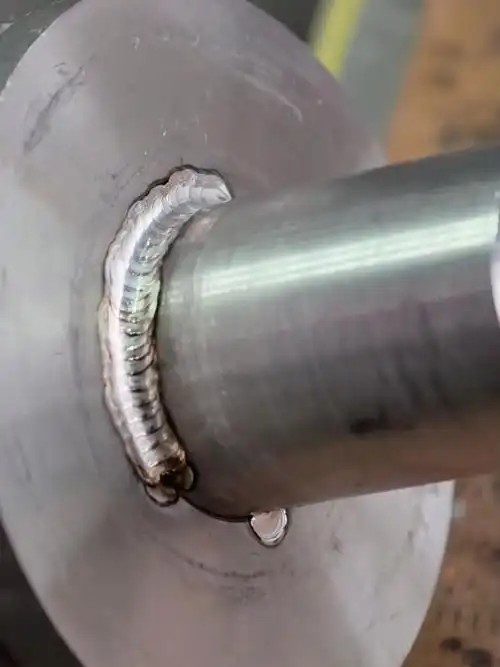
Cast steel welding
Cast Iron vs Cast Steel: Which One Should You Choose?
There is no universal winner.The correct choice depends on the operating environment and required properties.
Cast iron may be a better choice when you need:
- Excellent vibration damping
- Good machinability
- Good castability
- High compressive strength
- Cost-effective production
Cast steel may be a better choice when you need:
- Higher toughness
- Better impact resistance
- Greater ductility
- High structural strength
- Resistance to dynamic loading
The specific grade, heat treatment, component geometry, manufacturing process, and service conditions should all be considered before making a final material selection.
Welding Considerations for Cast Iron and Cast Steel
The difference between these materials is particularly important when a component needs to be repaired by welding.
Cast iron can be difficult to weld because its high carbon content, graphite structure, low ductility, and thermal characteristics can contribute to cracking, hard zones, and other welding problems.Different grades of cast iron may require different approaches, including controlled preheating, suitable filler metals, controlled heat input, and slow cooling.
Cast steel is not automatically easy to weld either.Its weldability depends strongly on carbon content, alloying elements, hardenability, casting condition, and the specific welding procedure.Some cast steels can be welded relatively easily, while higher-carbon or highly alloyed grades may have a higher risk of heat-affected-zone hardening and hydrogen-assisted cracking.
Therefore, before welding either material, it is important to identify the material grade and develop the welding procedure accordingly.For precision repair or production applications, processes such as MIG, TIG, or laser welding may be considered depending on the material, thickness, joint design, and production requirements.
Conclusion
Cast iron and cast steel are both important engineering materials, but they are designed for different performance requirements.Cast iron is valued for its castability, machinability, compressive strength, wear characteristics, and especially vibration damping, while cast steel is often selected for its strength, toughness, ductility, and impact resistance.
The key difference begins with their chemical composition, particularly carbon content, but the final properties depend on much more than carbon alone. Graphite morphology, alloying elements, microstructure, heat treatment, and manufacturing conditions can all significantly change material performance.
For this reason, selecting between cast iron and cast steel should always be based on the actual application rather than a simple assumption that one material is universally better than the other.When welding, machining, or repairing cast components, identifying the exact material grade is equally important because different grades can require completely different processing methods.

WhatsApp
Scan the QR Code to start a WhatsApp chat with us.