 ZS Laser Equipment

ThisSanitary welding is a specialized welding process used to manufacture and repair equipment, tanks, pipes, tubing, and other components where cleanliness, corrosion resistance, and weld integrity are critical.Unlike ordinary structural welding, sanitary welding is not simply about producing a strong joint. The finished weld must also minimize contamination risks, crevices, rough surfaces, and areas where bacteria, product residue, or corrosive substances can accumulate.
For this reason, sanitary welding is widely used in industries such as food and beverage processing, dairy production, pharmaceuticals, biotechnology, medical equipment, and chemical processing.This guide explains what sanitary welding is, which materials and welding processes are commonly used, how sanitary pipe welding is performed, and where laser welding can provide advantages for sanitary applications.
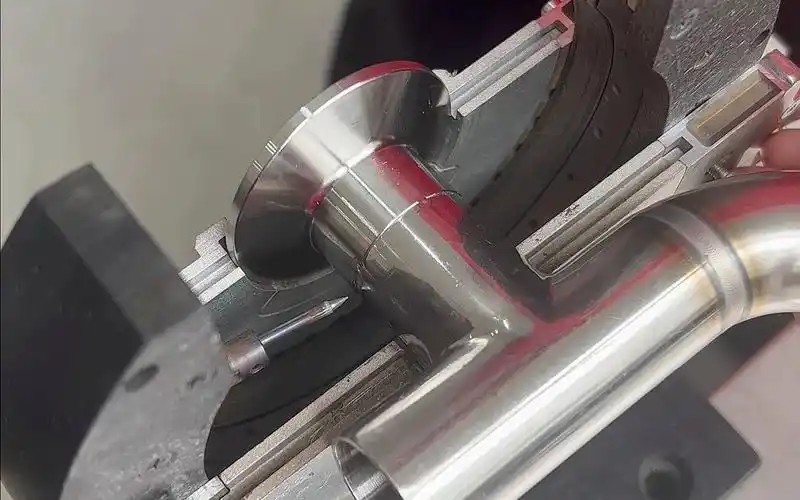
Sanitary stainless steel piping system welding
What Is Sanitary Welding?
Sanitary welding refers to welding used to fabricate equipment and components that must meet strict requirements for hygiene, cleanliness, corrosion resistance, and cleanability.The term is most commonly associated with stainless steel fabrication.Typical sanitary welded components include:
- Sanitary pipes
- Stainless steel tubing
- Process tanks
- Storage tanks
- Heat exchangers
- Food-processing equipment
- Pharmaceutical equipment
- Fluid-handling systems
- Medical equipment
- Stainless steel enclosures
The purpose is not only to create a mechanically sound weld but also to produce a joint that can be effectively cleaned and maintained.A sanitary weld should therefore avoid unnecessary:
- Crevices
- Sharp internal transitions
- Surface contamination
- Excessive weld reinforcement
- Porosity
- Cracks
- Incomplete fusion
- Oxidation and discoloration
The exact requirements depend on the application, material, equipment design, and applicable industry standards.
What Makes a Weld Sanitary?
A sanitary weld is determined by more than the welding process itself.Several factors influence whether a welded joint is suitable for a sanitary application.
Smooth and Clean Weld Surfaces
A sanitary system should have surfaces that are easy to clean.Excessive weld reinforcement, roughness, undercut, or irregular geometry can create locations where product residue or contaminants accumulate.For this reason, weld appearance and surface condition are particularly important in sanitary fabrication.
Proper Joint Design
Joint design has a major influence on sanitary performance.Poorly designed joints can create:
- Dead spaces
- Crevices
- Difficult-to-clean areas
- Internal pockets
- Unnecessary surface discontinuities
Sanitary tubing and piping therefore require careful control of joint geometry and fit-up.
Full and Consistent Fusion
A sanitary weld should have sufficient fusion through the joint.Incomplete fusion can create discontinuities that are difficult to inspect and may compromise both mechanical integrity and cleanability.The welding process must therefore be developed according to:
- Material
- Wall thickness
- Joint configuration
- Welding position
- Required penetration
- Heat input
Control of Heat and Oxidation
Stainless steel can develop heavy oxidation or discoloration when exposed to excessive heat without adequate shielding.During sanitary stainless steel welding, controlling the weld atmosphere is particularly important.Proper shielding gas and welding parameters help reduce oxidation and protect the weld area.For certain applications, the backside of a stainless steel tube or pipe may also require shielding to protect the internal surface during welding.
Common Materials Used in Sanitary Welding
Stainless steel is the dominant material used in many sanitary applications because of its corrosion resistance, durability, and cleanability.
304 Stainless Steel
304 stainless steel is widely used in food-processing equipment, tanks, tubing, and general sanitary fabrication.It provides good corrosion resistance and is relatively easy to fabricate and weld.
316 and 316L Stainless Steel
316L stainless steel is particularly important in pharmaceutical, chemical, food, and other demanding applications.The lower carbon content of 316L helps reduce the risk of sensitization associated with welding compared with higher-carbon stainless steel grades.Its corrosion resistance makes it suitable for many applications involving aggressive environments or cleaning processes.
Common Applications Of Sanitary Welding
1. Sanitary Pipe Welding
Sanitary pipe welding is one of the most important applications of sanitary welding.Sanitary piping is widely used to transport:
- Milk and dairy products
- Beverages
- Food products
- Pharmaceutical fluids
- Process water
- Chemicals
- Other clean or controlled fluids
The quality of the internal pipe weld is particularly important because the welded joint may come into direct contact with the transported product or process fluid.An improperly welded sanitary pipe can create:
- Crevices
- Surface irregularities
- Product accumulation areas
- Potential bacterial growth locations
- Corrosion sites
- Difficult-to-clean areas
For this reason, sanitary pipe welding generally requires accurate joint fit-up, controlled welding parameters, suitable shielding gas protection, and consistent weld penetration.In applications where the internal surface must remain smooth and easy to clean, the welding process must be selected according to the pipe material, wall thickness, joint configuration, and applicable sanitary requirements.
2. Sanitary Tank and Vessel Welding
Tanks and vessels are another major category of sanitary welding applications.They are used to store, mix, heat, cool, or process liquids and other materials.Typical products include:
- Milk storage tanks
- Beverage tanks
- Mixing tanks
- Pharmaceutical vessels
- Fermentation tanks
- CIP tanks
- Stainless steel process vessels
Tank welding involves more than simply joining the outer shell.The internal welds and transitions between components must be designed and manufactured to minimize areas where material can accumulate.Common welded components include:
- Tank shells
- Tank heads
- Manways
- Nozzles
- Pipe connections
- Internal fittings
- Drain connections
For sanitary tanks, weld quality must therefore be considered together with tank geometry, surface finish, drainage, cleaning requirements, and the intended process.
3. Sanitary Food and Beverage Equipment Welding
The food and beverage industry is one of the largest users of sanitary welded equipment.Sanitary welding is used in equipment such as:
- Dairy processing machines
- Beverage processing equipment
- Filling machines
- Mixing equipment
- Storage tanks
- Heat exchangers
- Stainless steel piping
- Product-contact components
For these applications, the welded surface should be suitable for the cleaning and sanitation procedures used by the facility.For example, dairy and beverage processing systems may require frequent cleaning and sanitation. Weld defects, rough surfaces, or poorly designed joints can make cleaning more difficult and may increase contamination risks.This makes weld quality and cleanability important considerations when selecting a welding process.
4. Pharmaceutical Equipment Welding
Pharmaceutical manufacturing places particularly demanding requirements on equipment that comes into contact with process fluids or products.Sanitary welding can be used to manufacture:
- Pharmaceutical process vessels
- Stainless steel tubing
- Fluid handling systems
- Mixing tanks
- Storage vessels
- Process skids
- Valves and pipe assemblies
The exact requirements depend on the equipment design, process, material, cleaning method, and applicable industry standards.In many pharmaceutical applications, weld consistency is especially important because equipment may undergo repeated cleaning, sanitization, or sterilization cycles.As a result, manufacturers typically pay close attention to:
- Weld penetration
- Internal weld condition
- Surface finish
- Porosity
- Cracking
- Distortion
- Cleanability
5. Sanitary Processing Equipment Welding
Sanitary welding is also widely used to manufacture complete processing machines rather than individual pipes or tanks.Examples include:
- Mixing machines
- Filling machines
- Blending equipment
- Product transfer systems
- Processing skids
- Heat-transfer equipment
- Stainless steel machine frames and components
The welding requirements depend on whether the welded component is a direct product-contact surface or simply part of the supporting structure.For product-contact components, surface condition and cleanability are particularly important.For structural components, mechanical strength, dimensional accuracy, and corrosion resistance may be more important.Therefore, not every weld on a sanitary processing machine necessarily has the same welding requirements.
6. Sanitary Heat Exchanger Welding
Heat exchangers are another important application involving sanitary welding.They are commonly used in:
- Dairy processing
- Beverage production
- Pharmaceutical manufacturing
- Food processing
- Biotechnology
- Chemical processing
Heat exchangers may contain large numbers of welded connections, tubes, manifolds, and chambers.The welding process must provide reliable joints while minimizing defects that could affect:
- Product contamination
- Fluid leakage
- Corrosion resistance
- Heat-transfer performance
- Cleaning efficiency
For this reason, welding process selection and joint design are important during heat exchanger manufacturing.
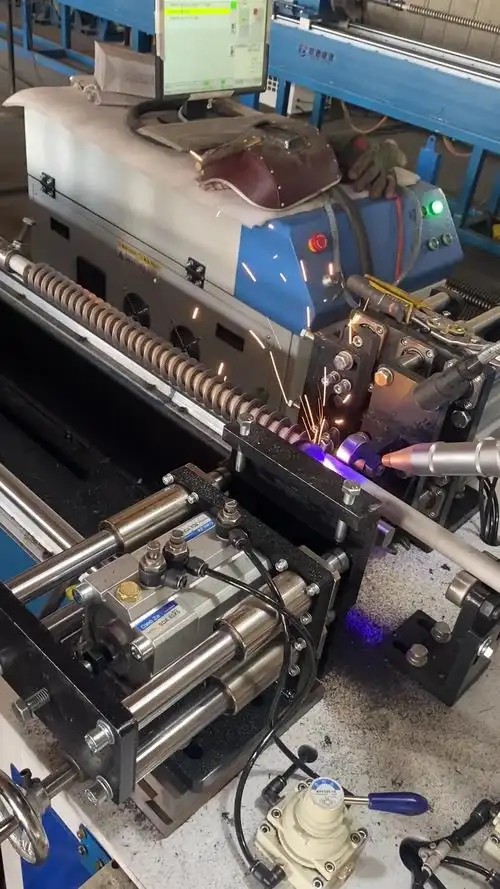
Laser welding of heat exchanger finned tubes
7. Sanitary Fittings and Connection Welding
Sanitary systems contain many small components that require precise welding, including:
- Elbows
- Tees
- Reducers
- Ferrules
- Nozzles
- Clamps
- Valve connections
- Instrument ports
These components are often welded into larger piping or processing systems.Because sanitary fittings frequently contain internal product-contact surfaces, poor alignment or inconsistent welding can create unwanted internal steps or irregularities.Accurate fixturing and controlled welding are therefore important for maintaining consistent geometry and internal surface quality.
8. Biotechnology and Laboratory Equipment Welding
Biotechnology and laboratory applications may also require sanitary or hygienic welded components.Examples include:
- Stainless steel process tubing
- Laboratory vessels
- Fluid handling equipment
- Small process tanks
- Bioprocessing equipment
- Controlled-environment fluid systems
These applications can involve relatively small components and complex geometries, making welding accuracy particularly important.Depending on the application, manufacturers may prioritize low distortion, precise penetration, clean surfaces, and repeatable weld quality.
9. Chemical Processing Equipment Welding
Sanitary and hygienic welding principles can also be relevant to certain chemical processing applications, particularly where corrosion resistance and controlled internal surfaces are important.Applications may include:
- Stainless steel process tanks
- Chemical piping
- Fluid handling systems
- Process vessels
- Storage equipment
However, chemical processing requirements vary significantly.Material selection should be based on the actual chemical environment because corrosion resistance depends on the stainless steel grade, chemical concentration, temperature, exposure time, and other operating conditions.Welding alone cannot compensate for an unsuitable material choice.
Sanitary Welding Methods
TIG Welding for Sanitary Applications
Thi is one of the most established processes for sanitary stainless steel fabrication.TIG welding provides good control over the welding arc and heat input, which makes it suitable for thin stainless steel tubing and precision joints.Advantages include:
- Excellent process control
- Clean weld appearance
- Good control of penetration
- Suitable for thin stainless steel
- Good suitability for tubing and pipe
- High-quality welds when properly performed
TIG is particularly common in applications where weld quality and control are more important than maximum welding speed.However, TIG welding can have relatively low productivity compared with some automated laser welding processes.This is one reason laser welding has become increasingly interesting for certain sanitary equipment manufacturing applications.
Laser Welding for Sanitary Applications
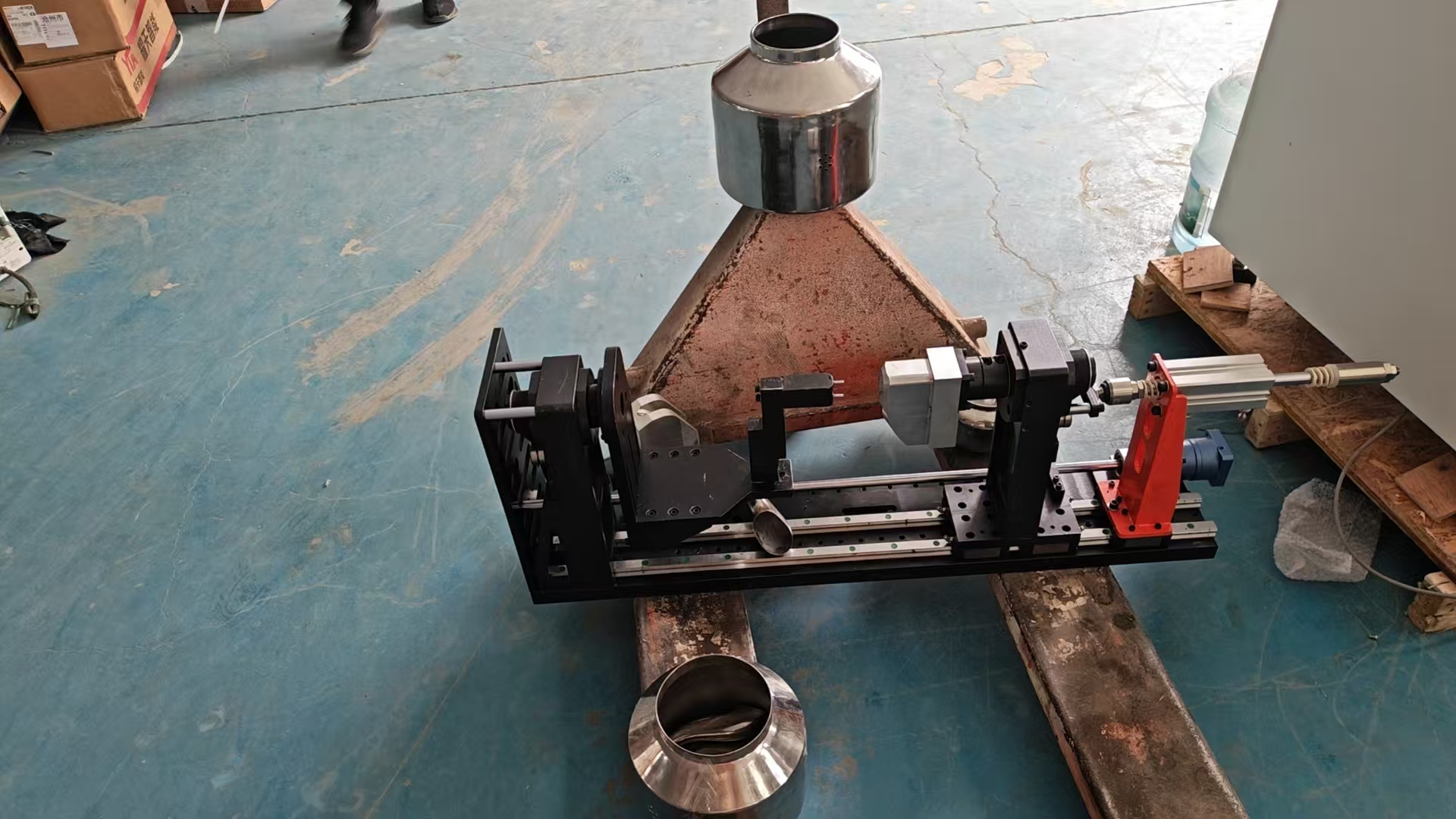
Both TIG and laser welding can be used for sanitary stainless steel fabrication, but they have different characteristics.
| Factor | TIG Welding | Laser Welding |
|---|---|---|
| Heat input | Relatively higher | Highly concentrated |
| Welding speed | Moderate | High in suitable applications |
| Weld width | Generally wider | Generally narrower |
| Heat affected zone | Relatively larger | Relatively smaller |
| Distortion | Can be higher | Often lower |
| Automation | Possible | Highly suitable |
| Thin material | Excellent | Excellent with proper parameters |
| Process control | Excellent | Highly precise |
| Equipment cost | Generally lower | Generally higher |
| Operator skill | High | High, especially for process setup |
The better choice depends on the application.
TIG remains an excellent choice for many sanitary pipe and tubing applications, especially where manual or orbital welding is practical.
Laser welding becomes increasingly attractive when manufacturers require high production efficiency, automation, low thermal distortion, and consistent weld geometry.
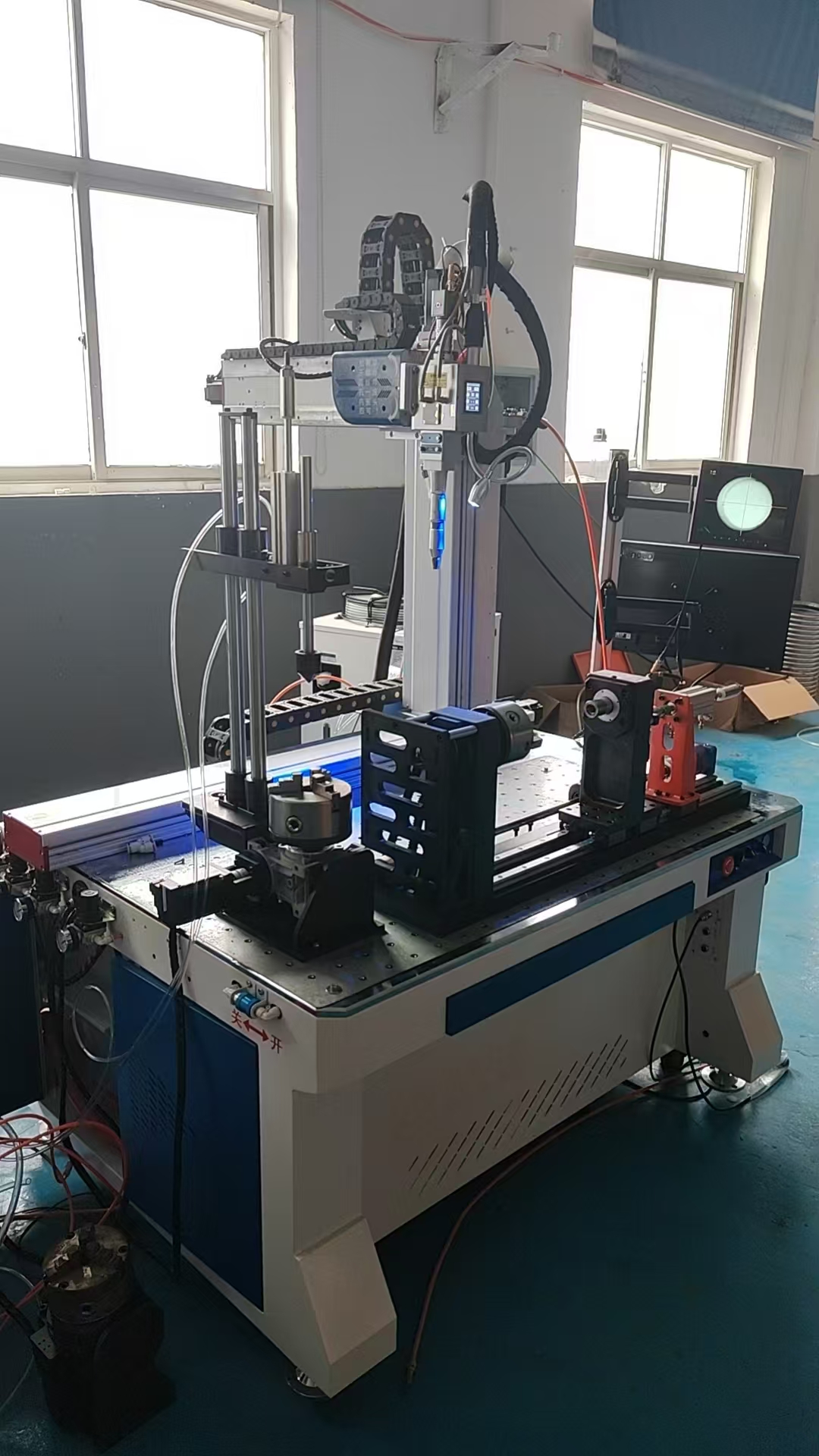
Six-axis platform laser welding machine
Surface Preparation in Sanitary Welding
Surface preparation is particularly important when welding stainless steel.Contamination from:
- Oil
- Grease
- Dirt
- Moisture
- Carbon steel particles
- Oxides
- Other foreign materials
can negatively affect weld quality and corrosion resistance.Before welding, the joint area should therefore be properly cleaned using a suitable procedure.Stainless steel should also be protected from contamination by carbon steel tools or other materials that can introduce iron particles onto the surface.For high-purity applications, cleaning and handling procedures may be much more stringent than those used for general fabrication.
Shielding Gas in Sanitary Welding
Shielding gas protects the molten weld pool from atmospheric contamination.Argon is commonly used for stainless steel welding, although the exact gas selection depends on the process and application.
For TIG and laser welding, shielding gas flow must be properly controlled.Too little shielding can result in oxidation.Excessive or poorly directed gas flow can also disturb the shielding environment.For tube and pipe welding, internal purging may be required to protect the backside of the weld from oxidation.This is especially important where the internal surface is part of the sanitary fluid path.
How to Choose a Sanitary Welding Process
There is no single welding process that is best for every sanitary application.The selection should consider:
Material
Different stainless steel grades have different welding and corrosion characteristics.
Thickness
Thin tubing may require very different parameters from thick tanks or structural components.
Joint Type
Tube-to-tube, tube-to-fitting, lap joints, butt joints, and other configurations may require different welding approaches.
Production Volume
For small quantities, manual TIG welding may be practical.
For high-volume production, automated TIG, orbital welding, laser welding, or robotic welding may provide better productivity.
Surface Requirements
If the weld must meet strict internal or external surface requirements, the process must be selected and developed accordingly.
Automation Requirements
Laser welding is particularly attractive when the welding process needs to be integrated into an automated production line.
Frequently Asked Questions About Sanitary Welding
What is sanitary welding used for?
Sanitary welding is used to fabricate equipment and piping systems where cleanliness, corrosion resistance, and cleanability are important, including food, dairy, pharmaceutical, biotechnology, medical, and chemical applications.
Is TIG welding suitable for sanitary welding?
Yes. TIG welding is widely used for sanitary stainless steel tubing, pipe, tanks, and other components because it provides precise control and can produce high-quality welds.
Is laser welding suitable for sanitary applications?
Yes, laser welding can be suitable for certain sanitary applications, particularly where high production speed, low thermal distortion, narrow welds, and automation are important.
However, the process must be properly developed for the specific material, thickness, joint design, and sanitary requirements.
What stainless steel is commonly used for sanitary welding?
304 stainless steel and 316/316L stainless steel are commonly used. The appropriate grade depends on the process environment, corrosion requirements, cleaning conditions, and applicable specifications.
Does sanitary welding require internal gas purging?
For many stainless steel tube and pipe applications, internal purging is used to protect the backside of the weld from excessive oxidation. Whether it is required depends on the application, material, joint design, and quality requirements.
Sanitary Welding Solutions
ZS Laser can provide customized laser welding solutions for stainless steel tanks, tubing, pipes, and other precision welded components. We can develop and manufacture laser welding equipment according to different materials, dimensions, welding requirements, and production needs.
Contact ZS Laser to discuss your sanitary welding application and find a suitable laser welding solution.

WhatsApp
Scan the QR Code to start a WhatsApp chat with us.